Home Blog Page 6593

Chapter 5 – Model United Nations

In the middle of the night, a light rain fell, leaving the ground slightly damp in the morning. Opening the window, the air felt exceptionally fresh.

“Why are you opening the window? It’s freezing!”

“Sorry, I just wanted to let some air in. If you’re cold, I’ll close it.” Zhai Jiajing turned around, offering an apologetic smile.

Seeing it was Zhai Jiajing, the guy paused, rubbed his nose, and mumbled, “It’s okay, you can keep it open. Ventilating is good.”

Zhai Jiajing was the class monitor, excelling academically, beautiful, and very understanding and gentle. Many guys in the class had a crush on her.

The girl sitting next to him rolled her eyes and pushed his elbow aside disdainfully, then looked up and asked, “Zhai Jiajing, I heard there’s a transfer student in your dorm. Where is she?”

“Oh, she should be coming over with Shi Qin.”

Shi Qin stayed up until three in the morning doing her winter break homework. The dormitory lights went out at eleven, but she managed to drain the battery of all four small desk lamps and finish her assignments.

When Zhai Jiajing left in the morning, Shi Qin still couldn’t be awakened.

Shen Xingruo woke up at the first call, but after checking the time, she calmly said from under her blanket, “I’ll sleep a bit longer.”

As a class cadre, Zhai Jiajing had a lot to do on the first day of school, so she couldn’t wait for them to wake up and ended up leaving first.

By 7:25, most of the class had arrived. Some were chatting, some were reviewing vocabulary, some were doing homework, and some were sneaking breakfast. The whole classroom buzzed like boiling water, bustling with activity.

“Lin Yu proposed publicly, and at a concert! Is he out of his mind? Why would he do something so reckless? His fan base has been dropping rapidly lately, and the engagement rate on his super-topic has plummeted!”

“…Huh? Weren’t there supposed to be ten sets of English test papers?

“I only have ten. I counted them when they were handed out—only ten!”

“…I randomly filled in the math multiple-choice questions.” Shouldn’t have bothered to check? It seems like all these winter break assignments we handed in have been treated as trash.”

And then there was gossip: “I heard Lu Xingyan and Xu Chengzhou from Class Three, and Chen Zhu went out together, to the beach. Do you think Lu Xingyan and Chen Zhu might be dating?”

Another girl looked puzzled. “But weren’t they already dating?”

“Who told you that? Not true.”

“Well then, I don’t know. I always thought they were together last semester. Oh, by the way, it seems like we have a transfer student in our class. She’s staying in Zhai Jiajing’s dorm.”

“I had no idea.”

“Li Ting mentioned it last night when we had dinner together.”

The girl looked around, perplexed. “Where is she…”

As if on cue, at 7:30, Shi Qin and Shen Xingruo entered the classroom one after the other as the bell for morning self-study rang.

When Shen Xingruo entered, the classroom was still bustling, but soon after, everyone quieted down—

Wang Youfu appeared at the classroom door, holding his red thermos cup and wearing a stern expression. Shen Xingruo was somewhat surprised; she hadn’t expected the class teacher, Wang Youfu, to be so intimidating.

The classroom was soon filled with the sound of reading, in both Chinese and English. Faintly, one could hear someone reciting the significance of the scientific development concept and the historical meaning of the Sino-Japanese War of 1894.

Wang Youfu looked satisfied as he leisurely walked to the platform and put down his cherished thermos cup—no, he picked it up again the next second.

“Let’s pause for a moment, everyone. Let me introduce our new classmate.” He waved to Shen Xingruo. “Come on up and introduce yourself.”

Shen Xingruo wasn’t nervous at all. She walked up to the platform, bowed lightly, and then turned to write three large characters on the blackboard. Gracefully, she said, “Hello, everyone. My name is Shen Xingruo. I hope to learn from everyone and progress together in the future.”

Three seconds of silence, and then applause broke out in the classroom.

Wang Youfu looked pleased again, scanning the room. He pointed to an empty seat. “Shen Xingruo, please sit there for now. We’ll rearrange the seating next week.”

Shen Xingruo nodded and headed towards her seat.

Once everyone was seated, Wang Youfu held his thermos cup and began his customary speech, the first spellbinding incantation of the new semester. “Next semester, you’ll be in your senior year. Don’t think that you’re still in junior year and that the college entrance exam is far away…”

He had just begun when a lazy voice interrupted from the doorway. “Reporting in.”

Lu Xingyan stood there casually in his school uniform, boneless, with his head slightly tilted. He wore his backpack with only one strap over his shoulder, and there was a basketball tucked under his arm.

Wang Youfu glanced at him, unsure if he intended to scold or what, but before he could say anything, his phone rang—

It was a call from the grade leader.

Wang Youfu didn’t have time to deal with Lu Xingyan. He hurriedly stepped out while answering the phone.

Lu Xingyan showed no intention of waiting for Wang Youfu to come back and reprimand him. He simply walked in, pausing slightly as he passed Shen Xingruo’s seat.

Shen Xingruo noticed. His basketball looked new, without a speck of dust. It wasn’t the one from last night.

At that moment, Lu Xingyan casually released the basketball, patting it lightly on the ground. The ball hit the floor with a dull, echoing thud.

Shen Xingruo remained unfazed, meeting Lu Xingyan’s gaze without changing her expression.

Lu Xingyan didn’t say anything, just stared at her for a few seconds. Then, he strangely tugged at the corner of his lips before continuing to walk towards the back row.

Shen Xingruo interpreted his gaze as “You wait for me.”

Their seats were separated by an aisle. Shen Xingruo sat in the fifth row of the second section, while Lu Xingyan sat in the seventh row of the first section, not too far apart. Whenever Lu Xingyan looked forward, he could always catch a glimpse of Shen Xingruo’s figure.

When Wang Youfu returned, his gaze swept around until he found Lu Xingyan. He said, “You’re late. Write out the political agenda ten times and hand it in.”

Lu Xingyan didn’t argue. He just replied with an “okay.”

Wang Youfu continued with his previous topic, droning on. Halfway through, Lu Xingyan couldn’t help but yawn.

“I heard you were playing basketball last night, and a girl threw the ball into the trash can. Damn, is this a new tactic to get your attention?” Li Chengfan, his deskmate, whispered.

It wasn’t surprising for Li Chengfan to think that way. Nowadays, female students are quite innovative, having read plenty of novels. They knew that ordinary gestures like sending love letters or chocolates couldn’t spark any excitement in the night sky.

Last semester, when Lu Xingyan finally made it to the cafeteria, he had a bowl of hot soup thrown at him by a girl from the science class.

There was also a bold freshman girl who approached Lu Xingyan with a bossy CEO-style confession, even attempting to kiss him on tiptoe. Unfortunately, she wasn’t tall enough, and Lu Xingyan lifted her away like a little chick.

Li Chengfan asked, “Which class is that girl from? What does she look like? Doing this right at the beginning of the semester, she’s quite impressive. Did you guys manage to get the ball back?”

“Didn’t ask for it.” Lu Xingyan twirled his pen casually, glancing at Shen Xingruo out of the corner of his eye.

“Damn, what a waste,” Li Chengfan remarked.

Seeing Lu Xingyan’s lack of response, Li Chengfan quickly shifted to a new topic. “Hey, you didn’t notice earlier, but in the second section, fifth row… that girl sitting with Ruan Wen, the new transfer student, she’s gorgeous!”

He discreetly pointed out the girl to Lu Xingyan, emphasizing the word “gorgeous.”

Not only Li Chengfan, but many students in the classroom were whispering about Shen Xingruo, occasionally sneaking glances at her.

Unfazed, Shen Xingruo listened to Wang Youfu while reading her book. At Hui Ze, the college entrance exam included self-made questions for the liberal arts subjects, so the textbooks for the three liberal arts subjects were different from those at Ming Li School.

She hadn’t had the chance to pick up the new books yet, so she borrowed them from Shi Qin before leaving home, taking this opportunity to compare them.

At exactly 8 o’clock, the bell rang, signaling the end of morning self-study. Wang Youfu finally finished his speech. “Alright, that’s all for now. You still need to think carefully about your studies. Oh, class monitor, where’s the class monitor—Ah Ruan Wen, I won’t collect the winter break homework for politics yet. I’ll discuss the exam papers during class.”

“Okay, Mr. Wang,” Ruan Wen responded gently and obediently.

Shen Xingruo turned her head slightly, and Ruan Wen sensitively met her gaze, politely and somewhat awkwardly smiling. “Hello, I’m Ruan Wen.”

She opened her book, showing Shen Xingruo her name. “This one.”

Shen Xingruo nodded. “Hello, I’m Shen Xingruo.”

Ruan Wen nodded twice. “Your name sounds very nice. Is it from Cao Cao’s ‘Observing the Sea,’ where the stars are shining brightly as if coming from within?”

Shen Xingruo wasn’t sure, but she just smiled faintly.

As Wang Youfu left the platform, the classroom buzzed with activity again.

Just as Shen Xingruo finished greeting Ruan Wen, a boy from the back patted her shoulder.

She turned around.

The boy had a gentle smile, revealing white and neatly aligned teeth. He looked sunny and clean, with a hint of familiarity.

“Shen Xingruo, do you remember me?” His voice sounded somewhat familiar.

“I’m He Siyue.”

The name sounded vaguely familiar too.

He Siyue smiled helplessly. “Looks like you don’t remember. We met at the Model United Nations conference before. You were from Huize First High School, right?”

He tried to provide more details to jog her memory. “The theme of that Model UN conference was ocean environmental protection and development. You were the representative of New Zealand, and I was the representative of Nigeria. We both received the Best Delegate award. After it ended, we had dinner together.”

Shen Xingruo finally remembered. “Oh, it’s you.”

She felt a bit dry and added, “What a coincidence.”

“YeAh too coincidental. It’s been a year since we last met, but I recognized you at first sight,” Siyue said.

“Sorry, but you… um… have changed a bit since the Model UN,” Shen Xingruo said, refusing to admit that her memory wasn’t great.

Siyue chuckled again. “Just got a new hairstyle.”

As he spoke, he slightly lowered his head and ruffled his hair.

People nearby appeared to mind their own business, but they were all secretly listening to their conversation.

When they heard keywords like “Best Delegate,” everyone was surprised. A student transferred from Huize First High School, who had won the Best Delegate award at the Model UN conference, seemed to be quite a high achiever…

Lu Xingyan and Li Chengfan also overheard, but they were typical latecomers and had no idea what a Model UN conference was.

Liu Xingyan didn’t know, but he wouldn’t say it. Li Chengfan, on the other hand, was different. With a puzzled expression, he asked, “What’s the Model United Nations Conference? The Model Alliance Conference?”

The voice came out during a brief lull, sounding a bit abrupt.

He Siyue and Shen Xingruo both glanced over, seemingly spontaneously.

Liu Xingyan licked his molars, expressionless as he rolled up the textbook on the table and tapped Li Chengfan’s head. “If you don’t know, then shut up.”

At this moment, Li Chengfan displayed a strong thirst for knowledge. “You know? Then tell us what it is.”

Liu Xingyan: “…”

Damn, you’re annoying as hell.

Chapter 4 – Basketball

Inside the stationery store.

“That’ll be one hundred seventy-three yuan and fifty cents. Cash or mobile payment?”

“Mobile.”

“Then please scan this.”

Shen Xingruo scanned the code and entered the payment amount. However, her fingers were icy cold, and there was no response during the fingerprint verification. After spending some time at the checkout counter, she finally settled the bill and pushed open the glass door.

A gust of wind rushed into her collar, making her feel wet and cold. The figure under the tree was nowhere to be seen.

The words echoed in her mind like a spell, and even now, her thoughts couldn’t focus. Absentmindedly dragging her suitcase, she headed towards Shuxiang Road where Mingli was located.

Shuxiang Road was a narrow and long one-way street lined with evergreen camphor trees on both sides. On the right side of the road was the Mingli campus, where the school playground and basketball court could be seen through the gaps in the fence. On the left were some shops and Mingli’s dormitories.

It was only when she got closer that Shen Xingruo realized that Mingli’s dormitory building was not inside the school but across the street.

With the arrangements made by Lu Shan earlier, the transfer process wasn’t too complicated. In the office of the High School Class Two Politics Group, Shen Xingruo met the new homeroom teacher.

The new homeroom teacher was named Wang Youfu, who looked to be in his forties or fifties, not very tall, and a bit chubby, with a kind and approachable demeanor. He moved a bit slowly and took five minutes to find the forms. He also spoke slowly, never letting go of the thermos, “Don’t worry, here at Mingli, we’re not inferior to Huize No.1 Middle School.”

Shen Xingruo flipped through the stationery she had just bought. …Why were they all pencils?

“I graduated from South City Normal University back then, you know. At that time, it was all state-assigned placements, you understand? I went to Huize first after graduation. Huize No.1 Middle School was a school for children of migrant workers at that time. The faculty and teaching were quite ordinary, and the salary was low. It was only in the past twenty or thirty years, with the support of the Huize government, that it developed quickly.”

Shen Xingruo found a black water-based pen on the desk and began filling out the form. “I’m quite familiar with Huize No.1 Middle School. The current principal there, Shen Zhibo, was assigned to Huize No.1 with me. We used to live in the staff dorms together, and he was next door to me. Can you believe someone with his level of incompetence is now the principal…”

Shen Xingruo: “…”

“The situation at Mingli is different. It has some background. It was founded during the Republic of China era, called the Provincial Higher Secondary School at that time. Over the years, it has produced many academicians and leaders.”

As she filled out the form, Shen Xingruo made a few “Hmm” sounds.

Wang Youfu, unsure if he missed something, held onto his thermos for a while, muttering to himself, “The salary is also high.”

Shen Xingruo’s hand holding the pen paused for a moment. After finishing the form, Wang Youfu took Shen Xingruo to the office at the west end of the corridor.

After completing the procedures, she obtained a form required for enrollment.

Wang Youfu seemed to have some free time and even gestured as if he were going to take her to get school uniforms and dormitory supplies.

Shen Xingruo politely declined, knowing that if she let this homeroom teacher lead the way, she might not even have time for dinner tonight.

After leaving the office, Shen Xingruo first went to the library to collect her school uniform and then proceeded to the dormitory.

The dormitory area at Mingli included connected male and female dormitory buildings arranged in a U-shaped structure, a row of faculty dormitories, and a cafeteria.

When Shen Xingruo arrived at Room 403 on the fourth floor, the door was wide open.

“Jingjing, just wait a moment! I’ll be done copying it soon!” A girl in a pink hoodie was fervently writing at the desk.

“I’m just wearing a coat, take your time writing, it’s okay,” someone responded, their voice seeming to come from the bathroom.

The girl sitting by the door was curling her bangs with a curling iron. Suddenly remembering something, she leaned back and shouted in the direction of the bathroom, “Hey? Ajing, did Wang Youfu say we have to submit the social practice form? I forgot to get it stamped.”

“When I went to see him today, he didn’t mention collecting it, but you’d better get it stamped just in case. He might start collecting them in a few days.”

“The school is annoying. Who goes to do social practice during the New Year? It’s all just formalities!” The girl with the curling iron seemed annoyed and threw the mirror onto the table.

Taking advantage of the lull in conversation, Shen Xingruo knocked on the door.

Ajing, who had just come out of the bathroom, and the girl in the pink hoodie, both turned to look at the door.

“Hello, I’m Shen Xingruo, and I’ll be living here from now on.”

There was a moment of silence in the air.

The three roommates stared at Shen Xingruo for about ten seconds, exchanging looks of confusion and blankness.

“Oh… you’re the new transfer student, right?” The girl who had just come out of the bathroom realized, “I heard Mr. Wang mention it today, almost forgot.”

She hurried forward to welcome the new roommate who had suddenly appeared at the door, apologizing as she introduced herself, “Hello, I’m Zhāi Jiājìng.”

The other two still hadn’t come to their senses, their faces expressing disbelief at the fact that a transfer student had come to their class.

Once Zhāi Jiājìng led Shen Xingruo into the room, the girl in the pink hoodie reluctantly shook off her stunned expression and adjusted her glasses. “Um, hello, I’m Shí Qìn.”

Then came another voice from behind, “Listen.”

Shen Xingruo turned to look.

“Her name is Lǐ Tīng, Tīngzi Lǐ.” Zhāi Jiājìng quickly explained.

Oh, got it.

Shen Xingruo nodded.

While most people might feel awkward in a new environment and with unfamiliar people, Shen Xingruo was not like most people. If anyone was going to feel awkward, it would be the others.

She quietly made her bed and organized her desk.

The three roommates were each engrossed in their activities, yet they couldn’t help stealing glances at her from time to time.

The corner of the blanket stubbornly refused to lay flat, sticking up defiantly, much like the arrogant attitude of that insufferably conceited one from the Lu family who knew nothing of manners.

Shen Xingruo stood for a few seconds, contemplating, then grabbed a stack of books and pressed them firmly on top.

Zhao Jiajing hesitated, then asked, “Um… do you need any help?”

Shen Xingruo instinctively wanted to refuse, but as the words reached her lips, they transformed into a “Thank you.”

It was strange, Shen Xingruo seemed to have a certain allure, standing there with her cool demeanor, making people involuntarily drawn to her.

Within minutes, Shi Qin also set aside her winter vacation homework and took the initiative to help tidy up her desk.

Li Ting didn’t bother to approach, engrossed in her phone, though her eyes occasionally flickered towards the opposite side.

With the assistance of Zhao Jiajing and Shi Qin, Shen Xingruo finally managed to tame the stubborn corner of her blanket.

Just as she straightened up, Pei Yue’s call came in.

Glancing at the caller ID, she stepped out.

Shi Qin leaned her head out to look outside, making sure Shen Xingruo was out of earshot before turning back and sighing, “Shen Xingruo is so stunning! I was completely mesmerized when she walked in earlier!”

Zhao Jiajing chimed in, “She has such a great temperament, like someone who dances.”

Shi Qin agreed, “Exactly! She has this incredibly unique vibe! So ethereal!”

Li Ting scoffed, seemingly uninterested, “You’re exaggerating. I still think Chen Zhu from Class Three is prettier.”

“She’s way prettier than Chen Zhu, come on! I don’t find Chen Zhu appealing at all.” Shi Qin had transformed into a little fan of Shen Xingruo, “Ahhh Jiajing! Should we ask her to join us for dinner? She seems a bit aloof!”

Zhao Jiajing suggested, “Let’s ask her when she gets back.”

Li Ting sighed, adjusted her newly styled bangs, grabbed her bag, and stood up. “I’m heading out.”

Shen Xingruo finished her call and bumped into Li Ting at the staircase.

They exchanged a brief nod, both staying silent.

Li Ting seemed indifferent towards her.

Well, that was understandable, considering Shen Xingruo’s clash with Lu Xingyan from the Lu family.

In the evening, Shen Xingruo, Shi Qin, and Zhai Jiajing had dinner together.

Shi Qin was quite the chatterbox, talking non-stop throughout the meal. Even as they walked back to the dormitory along the campus outskirts, her mouth didn’t cease, covering topics ranging from the living conditions in Mingli Dormitory to the scandal of the former grade leader having an affair with the senior English teacher and getting caught red-handed.

The night breeze carried the laughter and footsteps from inside the school grounds over the protective fence.

“…You wouldn’t believe it! He always had this serious demeanor, like a seasoned party cadre, but he ended up getting involved with the English teacher! Back in freshman year, he used to pick on our class all the time, lecturing us during morning exercises. If it weren’t for this guy in our class…” Shi Qin glanced casually toward the basketball court and suddenly paused, “Hey? Isn’t that Lu Xingyan?”

Zhai Jiajing looked up.

Shi Qin craned her neck, peering through the railing gaps, “It is!”

“Xingruo, see that guy in the black T-shirt dribbling the ball? That’s him,” Shi Qin pointed him out to Shen Xingruo, “Remember when our grade leader accused our class of not exercising properly, and after the lecture, he confronted the grade leader? Our classmates got all riled up, throwing their uniforms around, and demanding the grade leader demonstrate first. It almost escalated into a fight with the PE teacher who came to support the grade leader!”

Shen Xingruo imagined the scene of the chickens pecking at each other but didn’t say anything, nor did she show much expression.

“After that incident, the grade leader realized our class wasn’t to be messed with. Oh, and Lu Xingyan… that guy, he’s also in Class One. He’s quite famous in our school. I was in the same class as him in freshman year, and back then, many girls liked him.”

Shen Xingruo asked, “What about you?”

Shi Qin replied, “Me? He’s not my type.”

Shen Xingruo glanced at her.

Although wearing glasses, she had a sharp gaze.

Shi Qin continued, “Last semester when we moved to Build Two, some freshmen from Class One would come over and pretend to pass by our classroom. It was ridiculous. If they just wanted to see a handsome guy, fine, but they always had to use the restroom too, making us wait in line during breaks!”

Zhai Jiajing remained silent for a while, then suddenly asked, “Xingruo, do you want to go inside the school and take a look?”

“No need—”

Before Shen Xingruo could finish, there was a sudden “bang” beside her!

The basketball bounced off her arm, soared three feet high, bounced a few times, and then rolled under a tree, playing dead.

Both Zhai Jiajing and Shi Qin were startled!

Xu Chengzhou exclaimed, “Damn, you threw the ball outside the school! Did you take a blue pill or something?”

Lu Xingyan didn’t respond, he adjusted his headband, panting, and looked outside the protective fence.

The figure outside seemed familiar.

A guy squinted and asked, “Did it just drop under the tree?”

The sky was dimming, and the basketball court’s floodlights provided ample illumination from the outside, making it clear to see in, but rather blurry when looking out.

Someone quickly chimed in, “Seems like it. There are a few girls over there. Just ask them to throw it in.”

So, the guys waved towards the outer school wall, shouting, “Hey, ladies! Can you help us out? Throw the ball in!”

Zhai Jiajing instinctively went to pick up the basketball under the tree.

The gaps in the protective fence were too narrow to fit the ball through. She glanced at the height of the wall and hesitated, “How are we going to throw it over…”

Shi Qin suggested, “Just toss it up… oh well, you don’t seem like someone good at throwing. Give it to me, give it to me, I’ll do it.”

But before Shi Qin could reach out, Shen Xingruo took the ball from Zhai Jiajing’s hand and then simply tossed it—

Into the trash can.

Zhai Jiajing and Shi Qin were both stunned.

“This…”

“Let’s go.” Shen Xingruo’s expression remained unchanged.

Chapter 3 – Don’t pretend

Their gaze held for several seconds. Suddenly, Lu Xingyan took a step back, casually strolling towards another guest room as if nothing had happened. After a few steps, he stopped, his reflexes kicking in as he turned back towards the room he had just left, leaning against the door frame.

“Who are you, coming to my balcony for a late-night visit?” His tone was unfriendly, his tall, slender figure clad in a dark hoodie. Leaning against the door, he revealed half his face, his fair skin betraying a hint of impatience in his expression.

Shen Xingruo quickly equated this unfriendly visitor with the name “Lu Xingyan.”

Without responding, she remained silent for a moment before descending from the bay window, nodding towards him.

Meanwhile, outside the room, Pei Yue was adjusting the desk lamp at Lu Xingyan’s desk, striving to find the perfect lighting for a selfie. Upon hearing the commotion, she quickly pocketed her phone and hurried out.

“What’s going on? Making a scene at a girl’s doorstep late at night. So, you knew I was waiting inside? I’ve never seen your brain work so fast when it comes to studying, but you sure have your way with me,” she said, advancing towards Lu Xingyan, grabbing his ear, and launching into a scolding.

“Mom, let go!” Lu Xingyan frowned.

Seeing Shen Xingruo emerge from inside, Pei Yue patted Lu Xingyan’s head, then put on a smile, turning to Shen Xingruo with concern. “Ruo, why are you still awake? Are you not used to this side yet, or is this boy bothering you?”

Shen Xingruo replied, “No, Auntie Pei, I just got up to drink water.”

Seeing Lu Xingyan’s face conveying “I’m freaking annoyed,” Shen Xingruo maintained her composure and politely nodded. It was only then that Pei Yue remembered to introduce them properly.

“Oh, right, this is my son, Lu Xingyan. I don’t know who he takes after, always in a bad mood and never knows how to talk. Ruo, I hope you don’t mind,” Pei Yue said.

“And this is Shen Shushu’s daughter, Xingruo. She came back to Xing City this year because she needed to take the college entrance exam in her registered residence. She’ll be staying with us from now on. Oh, and Xingruo also attends Mingli School. Please look out for her there,” Pei Yue continued.

Lu Xingyan remarked, “The college entrance exam is still a year and a half away. Why did she transfer so early?”

His unwelcoming demeanor was almost as if he wanted to start sweeping the floor in front of Shen Xingruo’s door with a broom. Pei Yue gave him another firm pat on the head and shot him a look that screamed, “Shut up.”

In Pei Yue’s eyes, these two could be considered childhood sweethearts. They were born on the same day, one in the early morning and the other at midnight. Their families even joked about them becoming in-laws in the future, with both their names containing the character “xing.” However, Shen Guangyao later moved his family to Huize for development, and while the adults stayed in touch, the kids never met again.

As Pei Yue delved into these memories, she underestimated the children’s memories, getting carried away as she enthusiastically recounted how “you two skinny kids were blowing bubbles in a small pool” until she noticed their expressions crumbling to varying degrees.

It wasn’t just a little awkward. It was double awkwardness.

“Cough, well, it seems it’s getting late. Ruo, you should rest early,” Pei Yue said, patting her freshly permed curls from this morning and giving Lu Xingyan a playful pinch.

Lu Xingyan remained expressionless, his face cold as stone, seemingly unaffected.

Amidst his mom’s comments about being “skinny” and wearing “matching split-crotch pants,” it finally clicked for him—

This girl was the same one from the high-speed train earlier today, the one who splashed a bottle of mineral water on the middle-aged man who was getting a bit pudgy. Yet, this “white peacock” seemed to have a memory as fleeting as a goldfish’s.

The shower poured down from above, streams of water converging at his neck and chest, trickling down his torso. Lu Xingyan faced the showerhead, memories flashing through his mind, some fleeting, some interconnecting.

No wonder Xu Chengzhou mentioned seeing his family’s car when they left the high-speed train station.

After stepping out of the shower, he towel-dried his hair while scrolling through his phone’s photo album. Among the photos was one of Chen Zhu, leaning on a guy’s shoulder, smiling brightly.

This morning, when he asked Chen Zhu about the photo, she was surprisingly candid. “Oh, that’s the boy next door. Haven’t I mentioned him before? Is he handsome or what?”

Before Lu Xingyan could react, she continued, “You haven’t seen him in person. He’s cool and cute! Stands straight as a pine tree! Even though he’s at the National Defense University now, distance doesn’t matter. I have to send him photos from time to time so he remembers his childhood sweetheart!”

Lu Xingyan didn’t know how to feel about it, but the term “childhood sweetheart” didn’t sit well with him.

Scrolling down, he stumbled upon another childhood sweetheart of his.

He chuckled softly, tossing his phone onto the bed.

Lu Xingyan didn’t sleep well the whole night. As dawn broke, casting a pale glow across the sky, he finally buried his face in his pillow and drifted into a deep sleep.

When he woke up again, it was already noon. After freshening up, he headed downstairs.

As he reached the corner of the staircase on the second floor, he heard Lu Shan’s voice from below, “Green in color, fragrant in aroma, sweet in taste, and shaped like a sparrow’s tongue. What a good tea!”

“Dad said Uncle Lu, you love Longjing tea the most, so I brought it especially for you,” another voice replied.

Lu Xingyan smirked and tugged at the corner of his lips.

Shen Xingruo stood directly facing the staircase landing. With a glance upward, she saw Lu Xingyan descending in a loose black T-shirt and gray sweatpants, hands in his pockets, lazily making his way down.

She discreetly averted her gaze and poured another cup of tea for Lu Shan.

“Xingruo, do you like chicken?” Pei Yue’s voice came from the kitchen.

“I’m fine with anything, Aunt Pei,” Shen Xingruo replied.

Setting down the teapot, she greeted Lu Shan and then went to help Pei Yue in the kitchen.

Lu Xingyan walked to the fridge, poured himself a glass of milk, and grabbed a slice of toast. He then wandered around the living room in a circular motion, performing an act of sorts—

But nobody paid him any attention.

All he heard were calls of “RuoRuo” and “Xingruo” from one side, and even Lu Shan, in the middle of sipping his tea, got up to admire Pei Yue’s cooking.

His gaze drifted towards the kitchen, and he smirked slightly.

In truth, Pei Yue rarely cooked herself. If it weren’t for the fact that the family’s maid had gone back home for the Lunar New Year and hadn’t returned yet, it would have been rare to see her in the kitchen. Stir-fried vegetables, braised beef with potatoes, clear duck soup…

Lu Xingyan paused with his chopsticks in the bowl. None of these were his favorites.

Finally, after what seemed like ages, Pei Yue brought out a small dish of diced chicken, surprisingly without any chili peppers.

It lacked soul.

“I heard the tastes over in Huize are still relatively mild. I met your dad in Nan City last time. He used to be a big fan of spicy food. He used to down three cups of water after eating chopped chili fish head,” Pei Yue remarked, placing the dish of diced chicken in front of Shen Xingruo. “Ruo, try this.”

Lu Shan pointed and said, “This is Aunt Pei’s specialty dish. Xingruo, Uncle is benefiting from your presence today.”

Shen Xingruo smiled softly. “Thank you, Aunt Pei.”

Seeing her gentle demeanor, Pei Yue became even more attentive. “And drink more of this duck soup. It’s good for your health. Look at you, so delicate. With the pressure of your sophomore year, you need to take care of yourself first. Don’t just focus on studying…”

Before Pei Yue could finish her sentence, Shen Xingruo coughed twice.

“What’s wrong, Ruo? Are you catching a cold?” Pei Yue asked anxiously.

Lu Shan added, “The weather has been changing a lot lately. You should wear more layers.”

“Aunt Pei, Uncle Lu, I’m fine… *cough cough*… It’s just a bit itchy in my throat. Some hot water will do the trick. *cough cough*…” Shen Xingruo said, turning her head away to cover her mouth as she coughed.

“…”

Pei Yue had just called her delicate, and now she was coughing.

Lu Xingyan held his chopsticks, lost in thought for a moment. In his mind, there was the arrogance of the “white peacock” splashing water yesterday, and then there was the sight of Shen Daiyu coughing delicately before him.

“Lu Xingyan, go pour a cup of hot water.”

“No, make it warm.”

“What are you standing there for? Hurry up.”

Finally acknowledged, Lu Xingyan felt like a person again.

By the time he returned with the water, Miss Shen Daiyu had already been comforted by his overly concerned parents.

*Bang*—the glass landed heavily on the table, emitting a crisp sound. A few water droplets splattered, one landing neatly on Shen Daiyu’s hand.

Shen Daiyu softly thanked him, grasping the cup and sipping from it.

Lu Xingyan stood by the table with his hands in his pockets for a moment, then licked the back of his molars, shaking his head slightly.

Well then.

It seemed a gem from the film industry had arrived in the household.

Throughout the meal, Lu Shan and Pei Yue lavished attention on Shen Xingruo. Lu Xingyan, feeling nameless and unnoticed, finished his meal in a few bites. He had intended to head upstairs, but he paused when he heard Lu Shan and Shen Xingruo discussing her transfer.

“All the paperwork is done. Originally, the head of the grade wanted her to take a little test first, but as soon as they checked her file, they arranged her into a class without a second thought.”

Lu Xingyan looked up.

Lu Shan’s gaze shifted slightly. “What are you looking at? She’s in the same class as you. You should learn from her. She ranked in the top five in the city’s third-tier exam. She’s never fallen out of the top five since she transferred to Huize First High School. What about you? Every time you take an exam, you’re just hanging around. Your mom and I are just grateful you’re not flunking.”

During exams at Mingli School, the seating arrangement was based on previous exam scores. The higher floors had worse testing conditions, with the top floor, affectionately called the “Peak of Enlightenment,” being the worst.

Unfortunately, Lu Xingyan was a seasoned resident of the Peak of Enlightenment.

Lu Shan took a few bites of his food and continued, “School starts the day after tomorrow. I’ll check my schedule for the day after tomorrow. If I’m free, I’ll take you both to school. If not, I’ll have Lao Liu drive you. Xingruo, since you just arrived, it’s better to move into the dormitory a day early to get acquainted with your roommates.”

Lu Xingyan didn’t respond, his face clearly expressing, “I hope you don’t have any free time.”

“What’s with that expression?” Lu Shan asked.

“The expression of hoping you’ll be too busy handling your affairs and making more money,” Lu Xingyan retorted.

Lu Shan fell silent.

“I’m full,” Lu Xingyan said lazily, pushing his chair back and standing up. With his hands still in his pockets, he sauntered upstairs.

As Lu Xingyan wished, Lu Shan indeed had no free time on the day of registration.

Driver Lao Liu parked the car in the front yard and got out to help with the luggage.

Without lifting his eyes, Lu Xingyan simply settled into the car, playing with his phone and absentmindedly chewing on gum.

Outside the car, Pei Yue was still talking to Shen Xingruo, reminding her to take care of herself, to remember to call if anything happened, and to make sure she stayed warm.

Even after finishing his game, Lu Xingyan saw no one coming into the car. He lowered the window, frowned, and looked outside, his eyes full of “Is this ever going to end?”

Shen Xingruo just locked eyes with him when Pei Yue also turned to look. “By the way, you have to take good care of Xingruo at school, do you understand? She’s a girl who transferred here all alone, unfamiliar with everything. You mustn’t let anyone bully her.”

“…”

“Heh.”

Who could bully this little fairy who could strike people with an icy chill just by saying a few words?

Lu Xingyan raised the car window.

Before her eyes were obscured, Shen Xingruo could still see the mockery on his face.

Shen Xingruo had no idea what she had done to earn the dislike of this immature young master. For her, being disliked by a boy was quite rare and peculiar.

Not knowing how to interact with him yet, Shen Xingruo remained silent.

Winter hadn’t fully receded yet; there were no flowers outside, and pedestrians were still wrapped in thick coats. She cracked open the car window just a tiny bit, but as soon as the wind blew in, she heard a sudden voice beside her, “Trying to freeze me to death?”

“…”

“Sorry.”

She promptly rolled up the window again.

Silence filled the car as Shen Xingruo continued to navigate, looking for the way. When they reached the junction where they had to turn right onto a one-way street, she tactfully informed Lao Liu in advance, “Uncle Liu, I want to get off up ahead. There’s a stationery store there, and I want to buy something.”

“Sure, I’ll pull over and wait for you,” Lao Liu replied.

“Uncle Liu, you don’t need to wait. I know the way, I can walk there myself,” Shen Xingruo said.

Unexpectedly, Lu Xingyan suddenly interjected, “I’ll get off here too, Uncle Liu. Don’t turn in; there’s traffic at the Mingli School gate today.”

Shen Xingruo glanced at him.

Both of them got out of the car and stood under the trees by the roadside, the leaves above rustling in the wind.

After a moment’s thought, Shen Xingruo politely said, “Then I’ll go buy things first,” as she dragged her suitcase a few steps away.

Suddenly, Lu Xingyan called out to her, “Hey, Shen Xingruo.”

Shen Xingruo turned back.

Leaning against the tree trunk, Lu Xingyan looked at her directly with a cold demeanor. “We’re already at school, can you stop pretending?”

Chapter 2 – Guest Room

It was nearly a two-hour drive from the South City High-Speed Rail Station to the Lakeside Villa Area in the North, yet the journey was far from awkward.

Pei Yue was a warm and fashionable elder, well-versed in the latest trends. Soon after they got into the car, Shen Xingruo was pulled into a selfie session with her. After taking the photos, Pei Yue even brought out a photo editing app popular among Instagram influencers, offering tips and tricks while editing the pictures.

By the time they arrived, it was already late evening. The gentle night breeze from the Lakeside created a serene atmosphere. Looking around, the villas by the lake were low and scattered, with cobblestone paths winding through ornate iron gates. Along the way, English-style street lamps cast a warm yellow glow, reminiscent of the solitary lanterns in “Spirited Away,” bowing in greeting as people passed by.

Pei Yue was like one of those lanterns, radiating goodwill to Shen Xingru, who had arrived alone in this unfamiliar city.

Uncle Liu, the driver, helped with the luggage, while Pei Yue led Shen Xingruo into the house. The Lu family’s villa was a three-story standalone building, with a lawn, swimming pool, and a small garden outside. The interior decoration was different from what Shen Xingruo had imagined in terms of luxury; it was exquisite and warm, giving off a homely vibe.

Pei Yue led her around, both inside and outside, saying, “You can take a walk by the lake after dinner. There’s also a music hall nearby, an art center, and the Xingcheng Library moved here last year. It’s only a seven or eight-minute walk away.”

“Your room is on the third floor. I’ve already prepared it for you. Oh, and your room overlooks Lake Stars; you can open the window at night, and the natural breeze is quite comfortable. Come, let me show you your room.”

“Auntie Pei, there’s no need to go through so much trouble.”

Shen Xingruo was led upstairs, gradually realizing that things were quite different from what she had imagined. She had thought she was just visiting the Lu family for a couple of days and would move into the dormitory when school started. But now…

“Just think of it as staying in your own home. Although Mingli requires students to live on campus, there are no weekend classes for sophomores. So, from now on, after school on Fridays, I’ll have Lao Liu pick you up.” Pei Yue sighed, “I’ve always wanted a daughter. Unfortunately, I had some health issues when I gave birth, and now I’m getting older.”

After a pause, Pei Yue smiled again, “Your dad said he would send you over before the new year. I’ve been eagerly anticipating your arrival day by day. Finally, you’re here. Your Uncle Lu is busy, and Lu Xingyan isn’t very attentive. Look, during winter vacation, he went out with friends for ten days or more without a word. He only sent a message after he decided to return, expecting me to pick him up. I just ignored him.”

Lu Xingyan.

Shen Xingruo repeated the name in her mind.

Pei Yue pushed open the door, turning back to wave at her, “Come on, take a look at your room.”

Shen Xingruo walked to the doorway as instructed.

What met her eyes was a vision of soft pastel hues, dreamy in color scheme yet modest in decoration. A crystal vase adorned the table, filled with fresh and delicate lilies as if welcoming the new owner. In the shadowy corner of the room sat a white Steinway grand piano.

“No one in our family plays the piano. It used to be placed in the living room as a decoration. Your Uncle Lu specifically instructed someone to move it up here. Do you like it?”

She used to have a Steinway grand piano, and seeing one again after so long felt particularly familiar to her.

Shen Xingruo nodded, “Thank you, Aunt Pei, and thank you, Uncle Lu.”

“Don’t mention it, you’re such a polite child.” Pei Yue looked at Shen Xingruo with eyes full of affection, unable to contain her smile.

Everything Pei Yue said earlier was true. She had always wanted a daughter; after all, daughters were like close-knit sweaters, while her son… was barely a pair of long johns. Comparing her son to Shen Xingru, who was beautiful, well-mannered, and well-raised, not to mention reportedly very smart, was like comparing a down jacket to a patch of warm sunlight.

Considering that Shen Xingruo had been traveling all day, Pei Yue didn’t drag the conversation on. She just asked her to freshen up and rest early.

Shen Xingruo agreed and escorted Pei Yue to the door. It seemed that no one else from the Lu family was around. She watched Pei Yue’s figure disappear around the corner of the staircase, then leaned against the door for a moment before gently closing it.

At fifteen past ten in the evening, at the Zangling Sports Arena in Xingcheng, the “Love You” national tour concert by the popular idol singer Lin Yu, ended abruptly fifteen minutes ahead of schedule.

Lin Yu himself had already left the venue under the management team’s arrangement, leaving behind a scene of chaos and wailing inside the arena.

Burgundy glow sticks representing Lin Yu’s fanbase were thrown around the arena, torn banners and posters lay scattered on the ground, and the broken lights no longer illuminated, creating a mess.

Finally squeezing out of the arena, several boys felt a sense of relief, as if they had survived a disaster. They tilted their heads back, gasping for fresh air, yet still couldn’t escape the haunting melodies.

Chen Zhu was so angry that she tore her T-shirt with her bare hands. “I don’t want to like him anymore! I endured hunger and thirst to get VIP tickets, and now he’s proposing to another woman! Ahhh!”

The concert merchandise T-shirts she bought at the entrance were priced at eighty yuan each, and their quality was surprisingly good. Despite her efforts, she couldn’t tear them apart. Chen Zhu struggled, biting and tearing at the fabric until she finally managed to secure it with ten hairpins, her meticulously arranged natural bun now falling apart. With each sob and shake, she perfectly embodied the image of a mad rabbit.

Several other girls, also fans of Lin Yu, were similarly distraught. Holding tissues, they wiped away their tears and snot.

One girl echoed loudly, “But that woman is so mean! Why does she get to be with Lin Yu? I’m so mad!”

“Yeah! She’s even five years older than him! I’m going crazy!”

Bian He, usually quiet and honest, pushed his glasses up and muttered to Xu Chengzhou beside him, “Didn’t they praise the male lead for singing to the female lead at the concert in the movie we watched a few days ago?”

The girls collectively stomped their feet, “Shut up!”

Bian He instantly quieted down as if someone had hit the mute button on him.

Xu Chengzhou was speechless. “Seriously, are you guys ever going to stop?”

But instead of a response, he was met with an even louder chorus of “Ahhh” and “Whimper” from the group.

He couldn’t understand. “That pretty boy is barely five feet seven, with a six-pack and daring to lift his shirt, blowing kisses, and his voice is so effeminate. Do you guys have a problem in your heads?”

The final question, coming straight from the depths of his soul, seemed to reverberate with a 3D surround sound effect, freezing the air in that moment.

Several girls looked up at him, silent for three seconds, then suddenly grabbed whatever they had in their hands and started throwing them at him.

“But Mu Mu is five feet eight! Stop spreading rumors!”

“Do you even pass math, and you dare to diss our Mu Mu!”

“You’re the effeminate one, your whole family is effeminate!”

“Damn it!” Xu Chengzhou dodged the projectiles, then before he could even stand up straight, another barrage came flying at him.

Seeing these crazy girls seemingly ready to call in the Heartbroken Alliance to besiege the entire arena, Xu Chengzhou panicked. He shouted for help while ducking behind Lu Xingyan, completely devoid of the bravado he had just displayed in dissing someone else’s idol.

Lu Xingyan’s patience had worn thin from the incessant noise and being dragged around by Xu Chengzhou. He frowned and glanced ahead. A sparse breeze brushed his forehead, tousling his stray hair.

The girls abruptly stopped throwing things, sensing Lu Xingyan’s sour mood. It was like a bucket of cold water had been poured over them, sobering them up considerably.

Though the north wind blew, there was no snowfall. After a brief moment of clarity, the girls fell back into a low emotional state. Sometimes they’d get excited and diss Lin Yu’s fiancée, while other times they’d wallow in tears.

It was clear they weren’t in a suitable state to go home alone. If they did, they’d likely get a thorough scolding from their parents, and if they lost control halfway and did something drastic, like sacrificing themselves for their idol, these boys might end up in the headlines as society’s latest moral degenerates.

So Xu Chengzhou took the initiative to mediate and console them once again. With the rallying cry of “There are plenty of idols out there, why get hung up on one who’s dating?” the girls gradually calmed down and decided to join the boys for some barbecue to lift their spirits.

The night barbecue stalls were bustling with activity, with businesses worth thousands upon thousands. Draft beer bubbled and frothed, filling the air with the aroma of barbecue spices.

Lu Xingyan had little appetite and wasn’t in a good mood. He half-listened to Xu Chengzhou boasting for a while, then listened to the girls discussing whether or not to stay loyal to their idol. Sleepiness washed over him once again.

The girls’ post-breakup tenderness towards him was the perfect opportunity, which was why Xu Chengzhou had suggested the barbecue in the first place. But seeing Lu Xingyan so unenthusiastic and indifferent now, even Xu Chengzhou felt frustrated.

When Chen Zhu got chili powder in his eyes while eating beef skewers, he urged Bian He to help out. One-handed Lu Xingyan a bottle of mineral water, and the other passed him a wet tissue. But Lu Xingyan didn’t seem to catch on. Feeling a bit drowsy, he opened the bottle and took a few sips, then wiped his hands with the wet tissue.

“Thanks,” he said, showing some courtesy.

Xu Chengzhou’s eyes widened. He had misjudged. Lu Xingyan deserved to stay single for another sixty years.

They returned to Fallen Star Lake well into the night. Lu Xingyan had messaged Pei Yue earlier, promising to return tonight. But the wall clock had already struck midnight, and Lu Xingyan instinctively checked his phone.

To his surprise, there were no new messages.

He slipped on his slippers, tossed his coat onto the edge of the couch, and headed upstairs. The second floor housed a study, a gym, a multipurpose theater room, and his parents’ bedroom, all unlit and quiet.

Lu Xingyan’s room was the first on the left on the third floor. Without pausing, he made his way to his room and reached for the doorknob, his eyelids drooping with the motion.

Before he could even turn it halfway, his hand froze. There was light seeping from under the door. His gaze lingered on the faint glow for a few seconds before memories of past unpleasant encounters flooded back, prompting him to release the knob and take two steps back.

The hallway remained silent as Lu Xingyan scanned his surroundings. Eventually, torn between the lengthy torment of facing his mother’s lectures with a bowed head and the temporary comfort of slipping into a spare guest room for the night, he chose the latter. It wasn’t a hard decision; he was truly exhausted.

The guest room to the right, the largest of them all and symmetrically aligned with his room, beckoned to him. Without much thought, he walked over and pushed the door open.

A rush of cool night air greeted him, momentarily snapping him awake. The room was illuminated by a floor lamp, casting a warm, gentle glow that starkly contrasted with his memory of the guest room’s decor.

He stood frozen for a few seconds before his gaze settled on the young woman seated by the bay window. Outside, the night breeze swirled the layers of curtains, lifting the hem of the girl’s ankle-length skirt. She toyed with a lighter in her hand, its flame dancing in the wind.

Before the wind could extinguish it, *click*—the lighter snapped shut.

Their gazes finally met in midair. She didn’t seem pleased, her lips downturned in a cold frown.

Chapter 1 – High-Speed Rail

The high-speed train stopped at Huize South Station for ten minutes.

Lu Xingyan took off his noise-canceling headphones, and immediately, the snoring of the man in front of him and the sound of passengers’ luggage wheels became noticeably louder. He slumped in his seat momentarily before sitting up straighter and placing his headphones on the table. As he twisted the cap off a bottle of mineral water, he asked, “How much longer?”

“We’ve reached Huize, so about another hour,” Xu Chengzhou replied, engrossed in his game.

Chen Zhu happened to come over for a snack. She rummaged through Xu Chengzhou’s backpack and pulled out a bag of dried pork. She offered it, “Do you guys want some?”

Xu Chengzhou dodged to the side, “Auntie, I’m in a ranked match. Don’t poke me!”

Lu Xingyan didn’t respond; he just pushed the bag away, maintaining his cool demeanor.

Chen Zhu rolled her eyes and walked back to another compartment, biting into the dried pork.

Since it wasn’t a holiday, the high-speed train was relatively quiet. The new passengers had stowed their luggage, and the sound of rolling suitcase wheels faded. The man in the seat ahead seemed to wake up, and his snoring also stopped.

After finishing his water, Lu Xingyan reclined in his seat and closed his eyes to rest. He hadn’t slept well the night before and was very tired. However, his aristocratic airs flared up regardless of time, place, or situation; no matter how tired he was, he couldn’t fall asleep on the train.

When his eyes rested, his hearing seemed to sharpen. He could hear Xu Chengzhou muttering under his breath, the train doors closing, and the faint sound of silent casters rolling on the floor, moving closer and then farther away.

Shen Xingruo was taking a high-speed train for the first time to travel far. She only discovered at the last minute that Huize South Station didn’t support ID card check-in. She wasted a lot of time queuing for a ticket, but fortunately, she made it onto the train just in time.

Carriage 2, seat 7A, by the window.

Shen Xingruo checked her ticket again—

Yes, it was her seat. But a middle-aged man was already sitting there.

Shen Xingruo said, “Excuse me.”

The man didn’t move, nor did he lift his eyelids. His beer belly protruded prominently as he leaned against the seatback, his mouth slightly open, with a tuft of nose hair sticking out. His hair was greasy, clumped together, and shining.

“Uncle, this is my seat. Did you sit in the wrong place?” Shen Xingruo’s voice was somewhat cold as if laced with menthol.

Lu Xingyan opened his eyes briefly before closing them again, continuing to rest. He bent his leg and gave a casual kick forward.

Caught off guard, the man with the beer belly jerked his head to the side. The woman dressed as a white-collar worker next to him had been enduring him for a while. Seeing his head loll over, she quickly shifted to the side and tapped him with her rolled-up magazine. “Sir, wake up.”

With all this commotion, the man couldn’t pretend to sleep any longer. He wiped his face, pretending to have just woken up, and turned around, seeing Lu Xingyan leaning back in his seat, seemingly asleep. Confused, he turned back to see Shen Xingruo standing in the aisle, looking like a well-behaved student. He said impatiently, “There are other seats over there. Can’t you just sit somewhere else? Why are you so inflexible, young lady?”

“Carriage 2, seat 7A is my seat, Uncle. Let’s check our tickets.”

“What’s wrong with you, young lady?” The man with the beer belly was slightly surprised. He pointed at her, ready to lecture her, but a train attendant happened to hear the commotion and came over.

After Shen Xingruo briefly explained the situation to the attendant, she offered to show her ticket. After checking it, the attendant turned to the man with the beer belly. “Sir, could you please show your ticket and ID card?”

The attendant appeared to be in her early twenties, looking inexperienced. The man with the beer belly didn’t take her seriously and dismissed her, “I bought my ticket on my phone.”

“Then please show me your phone order.”

“My phone is dead.”

“Then your ID card?”

“I lost it.”

Their back-and-forth was getting on Xu Chengzhou’s nerves. His game, which had been going well, was now ruined. Frustrated, he tossed his phone aside and leaned back.

After a few seconds, he suddenly nudged Lu Xingyan with his elbow.

“What?” Lu Xingyan frowned, half-opening his eyes. His voice was hoarse, showing his irritation.

Xu Chengzhou leaned in and whispered, without moving his eyes, “Check out that girl. Isn’t she pretty and elegant?”

Lu Xingyan looked up.

It was early spring in February, the weather was still chilly despite the occasional warmth. The girl was wearing a beige drop-shoulder turtleneck sweater, her long hair tied low into a ponytail. Her back was slender, and the weight of her black backpack made her shoulders slump, making her look very thin. From his angle, he could only see half of her face, but her profile was quite delicate.

Before he could make any comment, Xu Chengzhou, eager to act, said, “Hey, should we help her out, maybe record a video or something?”

Lu Xingyan withdrew his gaze, smiling dismissively, “Real hero, aren’t you?”

Xu Chengzhou shot him a knowing look and was about to say more when suddenly there was a loud “bang” from up front!

Shen Xingruo had just retracted the handle of her suitcase and lifted it a few inches before dropping it back down with a clean, swift motion.

The argument between the attendant and the man with the beer belly came to an abrupt halt, and the murmuring in the carriage quieted.

Shen Xingruo’s face was expressionless. She took off her backpack and threw it onto the horizontally placed suitcase, then took out her phone and pointed the camera at the man with the beer belly. “How about this for a headline: ‘Middle-aged Man Bullies Girl for Her Seat on High-Speed Train’?”

The man was stunned for a few seconds. When he realized what was happening, his face changed, and he started yelling, “What are you filming? Stop filming! You little brat, give me that phone!”

“What kind of manners do you have? I’ll treat you the way you treat me.”

The man hadn’t expected the seemingly quiet girl to be so tough. He was infuriated and tried to push the table away to stand up and grab her phone.

Seeing him about to make a move, the attendant quickly stepped in front of Shen Xingruo. Xu Chengzhou and two other young men also hurried over to intervene.

Xu Chengzhou shouted, “What are you doing, old man? Bullying a young girl, are you?”

One of the young men chimed in, “YeAh you think you’re in the right, hogging her seat?”

In the ensuing struggle, the white-collar woman nearby screamed in panic. The man with the beer belly, just as he stood up, was shoved back into his seat. Amidst the chaos, a heavy kick came from behind, causing him to stumble forward again.

Seeing his disheveled state, Shen Xingruo’s eyes were filled with cold disdain. She kept her camera trained on him, not moving an inch.

The man was so angry his lips were trembling. He leaned back into his seat, gripping the armrest, and nodded repeatedly, saying, “Fine! Fine! You film! Go ahead and film! I’ll just sit here and not move. Let’s see how long you can keep this up, you little brat!”

The people around couldn’t help but exclaim inwardly, “Damn, can things get this shameless?”

Shen Xingruo showed no emotional change, simply gazing quietly at the beer belly in front of her—

One second.

Two seconds.

Three seconds.

Suddenly, she pocketed her phone and looked towards the table in front of Lu Xingyan, asking, “Excuse me, can I borrow some water?”

The bottle, already one-third empty, was quickly tossed her way.

She twisted off the cap.

“Are you leaving or not? If not, everyone else might as well stand up.”

The bottle tipped slightly, hanging directly above the beer belly.

?!

The surrounding people were all stunned.

The beer belly seemed to have undergone some major upheaval in its worldview, its face filled with disbelief. “You little brat…”

Before he could finish, the water mercilessly poured down.

An hour later, the train arrived at its final destination, Xingcheng South Station, and passengers began to disembark. Shen Xingruo pushed her suitcase while talking on the phone, heading towards the exit.

“Little beauty, have you arrived?”

Pei Yue’s voice sounded quite cheerful, lifting Shen Xingru’s mood as well. “Auntie Pei, I’ve gotten off the train.”

“Then head towards Exit B, I’ll be waiting here for you.”

“Auntie Pei, you’re here too?” She thought only the driver would be there.

“Of course, both your Uncle Lu wanted to come, but he suddenly had a meeting and couldn’t make it.”

Shen Xingruo quickly found Exit B. Meanwhile, Lu Xingyan and his group also headed towards Exit B, but with more people, they were moving slower.

“…Then the guy snapped out of it, and started yapping away, you know? Damn, I was so shocked! That girl just poured the water down without hesitation! Poured it down!” Xu Chengzhou vividly recounted the scene, gesturing and pulling at his coat to show, “Look at my clothes, just look! The water splashed all over me, and it’s not even dry yet!”

Because there were too few seats available when buying tickets, except for Lu Xingyan and Xu Chengzhou, everyone else sat in another train carriage and didn’t witness the scene at that time.

“And then what happened?”

“Then the train conductor showed up. That guy was in second class sitting in a first-class seat, and he only bought a ticket for one stop but ended up riding for six stops. Anyway, in the end, he got escorted off.” Xu Chengzhou remembered something, “Oh yeAh that girl who borrowed water from Lu Xingyan, she even gave him five bucks back.”

“Hey, Young Master Lu, why don’t you take out that five bucks and have a look…”

Lu Xingyan glanced at him with an expression that suggested he was looking at a fool, then resumed chewing his gum expressionlessly, his gaze quickly returning to his phone screen.

This incident only seemed amusing to Xu Chengzhou; the others hadn’t witnessed it firsthand, so they didn’t feel much about it and had little interest. They started interrupting each other with different topics, quickly shifting to discussing the evening concert.

Half of this group had been friends since middle school, and their circle expanded when they moved to Mingli Academy for high school.

During winter break, they spent about ten days at the seaside, mainly because a few girls wanted to attend a concert by their idol, Lin Yu. They rushed back early because of it.

Seeing a few girls’ eyes light up and hearts flutter at the mention of Lin Yu, Xu Chengzhou rolled his eyes. He didn’t bother finishing his sentence and instead went to grab Lu Xingyan’s neck, “Hey, Young Master Lu, wanna see something?”

In just a few seconds, Lu Xingyan’s phone buzzed with a WeChat notification.

Xu Chengzhou pocketed his phone and proudly leaned in, “So, what do you think? Not bad, right? Has that arty film vibe, doesn’t it?”

The scene in the photo was quite familiar—the girl standing in the aisle, coldly watching as the middle-aged man was escorted away. Her posture was impeccable, standing there like a beautiful and elegant white peacock.

Xu Zhengzhou couldn’t stop praising, “Seriously, this girl is stunning, especially her aura. I bet she’s into ballet or something. Just look at her, she’s like the epitome of a pure and elegant first love.”

“You have quite the taste,” Lu Xingyan chuckled lightly, tapping Xu Chengzhou’s head with his phone.

“What’s wrong with my taste? I’m telling you, in Mingli, she’d be a goddess-level school flower. Don’t believe me? Ask Bian He…”

The group laughed and joked for a while before finally reaching the taxi stand. Since they were a large group, they hailed three taxis. The first two taxis seated four each, leaving Lu Xingyan and Xu Zhengzhou to share one.

Just as they were about to get in, they saw Chen Zhu getting out of the front taxi, waving at them.

Xu Chengzhou immediately sensed someone meddling, stopped his motion to get into the back seat, and gestured towards Lu Xingyan, “Let’s switch, I’ll sit in the front.”

But Lu Xingyan, with earphones on, didn’t hear him. He closed the car door without a second thought and took the passenger seat.

Xu Chengzhou was exasperated. He followed suit, got into the car, and yanked the earphones off Lu Xingyan from behind, wondering, “You’re back and you still can’t make a move? If you don’t seize the opportunity at the concert tonight, I bet you’ll be single for another thirty years.”

This time around, everyone was trying to create opportunities for Lu Xingyan and Chen Zhu during the trip, but neither of them took the initiative. As a result, when they returned to Xingcheng, there was no progress between them.

Xu Chengzhou kept nagging, and Lu Xingyan, annoyed, lifted his gaze, “Could you please shut up?”

Just as Chen Zhu was getting into the car, Xu Zhengzhou couldn’t say much more. He moved to another seat, chatting with Chen Zhu cheerfully.

Lu Xingyan’s mind was elsewhere. Chen Zhu asked him a couple of questions, but his responses were perfunctory, and he quickly put his earphones back on, engrossed in his game.

Chen Zhu lowered her voice and asked, “What’s wrong with him?”

Xu Zhengzhou: “Who knows? His picky attitude is nothing new, you’ve seen it before.”

Chen Zhu: “True, last semester he was picky like a dog, and now he’s upgraded again.”

Lu Xingyan turned up the volume to the maximum, feeling an inexplicable surge of irritation. He swiped at the screen absentmindedly, feeling somewhat restless. He sent a WeChat message to Pei Yue, letting her know he’d be home tonight.

After waiting for a response for what seemed like ages, he boredly opened Xu Chengzhou’s chat interface and clicked on the photo. It was indeed as Xu Chengzhou described, with an arty vibe.

The photo froze three-quarters of the girl’s facial profile, immersed in the twilight shadows cast through the window, creating an ambiance of ambiguity.

Perhaps because she wasn’t smiling, beyond her beauty, she exuded a coldness, like fresh snow in winter, clean and chilly.

Lu Xingyan gazed at it for a while, then casually tapped to save it.

Just then, Xu Chengzhou suddenly exclaimed, “Holy crap!” and yanked out his earphones again, pointing ahead excitedly, “I think I see your family’s car, the Oulu, 088, I’m not mistaken, right? That’s your family’s car, isn’t it?”

Part Three: June 2014, A Letter

Once you pass thirty-five, everywhere feels good. If every desire to grit my teeth and buy a house to live in seclusion could be realized, I’d need at least 365 properties across the 9.6 million square kilometers of our great land. Yan Lin says it’s a sickness; as one age, unhealthy desires to become an old landlord keep surfacing. I think Teacher Sun’s criticism is spot on. When I was younger, I had no interest in the isolated, pre-modern life. I enjoyed living in high-rises, squeezing into elevators, opening heavy steel security doors, and being part of the bustling crowd commuting to and from work. That was modern life, keeping up with the times.

But in recent years, my tastes have changed. Now, I drool at the sight of small, charming courtyards, imagining myself sipping tea, growing flowers, reading books, and listening to birds and cicadas in such a place. Teacher Sun has been supervising me to suppress these decadent desires, but when I arrived at the Little Museum Inn, I couldn’t help but think how wonderful it would be to own such an inn. I’d be the carefree manager, and Teacher Sun could be the lady boss, keeping everything in order. Spending the latter half of our lives running this small business wouldn’t be bad at all.

“Dream on!” Yan Lin gave me a sideways glance. “A small business? Their monthly revenue could fund all your films for the rest of your life.”

I fell silent. Nowadays, Yan Lin sponsors all the money for my films. She sold a batch of paintings. I told her, “You’ve supported me with so much money; I might not be able to pay you back.”

She said, “It’s a free sponsorship for now, but if you don’t want me someday, you’ll have to pay back double.”

“How could that happen? You’re irreplaceable, and I need more of your support.”

“How much more do you need?” She nibbled my ear. “For each person you want, the repayment doubles. As long as you can pay, take as many as you want.”

“I think I’ll stick with just you.”

This girl truly surprised me; once she made up her mind, she threw herself into it completely, running to Beijing right after her classes. That’s her style—when she decides to do something, she gives it her all. She believes that regret and half-hearted efforts are the biggest stains on one’s life. I’m not sure if this bit of motivational wisdom is her own or borrowed. She thought that a great project like “The River’s Tale” would be even better if treated as the last film of one’s career.

So, she suggested broadening our approach and handling the ancillary content of the film well. Who says we have to tailor it strictly for that TV show? Only bad films bend over backward to fit program requirements. Good work sets its own rules and makes the program adapt. “Isn’t it just money? I’ll sell all my paintings,” she said boldly. Besides grabbing her and tossing her onto the bed, I couldn’t think of a more sincere and elegant way to thank her.

After getting out of bed, we made a major decision: to go to Jining.

Yan Lin arranged for us to stay at the Little Museum Inn, where she had previously stayed. We wanted to experience Jining’s canal firsthand and examine the many old artifacts collected in the inn. She also contacted Zhou Haikuo, the CEO of the chain of inns, whom she had heard about through store manager Cheng Nuo. Additionally, she reached out to Shao Bingyi and Shao Xingchi, a father-son duo, and their family’s compass. We hoped their stories would enrich our filming.

I liked the Little Museum Inn, unable to shake my decadent thoughts. But after being chastised by Teacher Sun, I felt so inadequate that I doubted I’d even be competent as a doorman. So, I decided to focus entirely on preparing “The River’s Tale.” I worked with the entire team at the inn to perfect the script, with Yan Lin occasionally offering her input.

Zhou Haikuo was on his way. His planned inspection of a Huai’an inn was supposed to be his last stop for the month, but he altered his schedule for “The River’s Tale,” continuing north to Jining. Shao Bingyi lived nearby, spending his days fishing and raising ducks with his wife, waiting for his son’s return to join us. Shao Xingchi’s boat was on its way back, having already reached Nanwang Lake.

The day before everyone gathered, an archaeologist arrived. He wore black-rimmed glasses, had a neatly parted hairstyle, and wore a white short-sleeved shirt tucked into dark blue trousers, along with matte black casual leather shoes. Even without an introduction from Manager Cheng, I could tell he was an archaeologist. His entire attire and demeanor reminded me of intellectuals from the 1980s—clean, pure, and confident that the world was steadily improving. The archaeologist’s surname was Hu, and we addressed him as Professor Hu. He had a rare mix of cleanliness, innocence, and curiosity in his eyes—traits scarcely seen in middle-aged men nowadays. Additionally, there was an inexplicable air of sophistication about him, suggesting that perhaps one of his ancestors had a foreign lineage. Professor Hu was humble and always prefaced his speech with a gentle smile.

He was there to examine various old artifacts. We encountered him at the tea bar after returning from scouting locations by the canal. Professor Hu had just come downstairs, and since the rooms upstairs were still unoccupied, Manager Cheng took the opportunity to show him the room collections. He also quickly browsed through the tea bar’s artifacts.

We only had time for a brief greeting. I had the idea of inviting him to appear on camera, but just as I was about to, his phone rang—a colleague was calling. He apologized, waved goodbye, and headed out, promising to return the next day to finish viewing the rest. He spoke highly of the Little Museum Inn’s collection, noting that while some collections are merely beautiful objects, valuable in their own right, others, like those at the inn, go beyond their physical forms to reveal flowing time and past histories, presenting a complex, long, and expansive local history.

By lunchtime the next day, everyone had arrived.

None of us had met Zhou Haikuo before. He was refined and personable, with an air of modern speed reflected in his well-coordinated attire. However, his scholarly yet slightly weary expression seemed to slow down this speed, affecting the surrounding environment as well. He had a presence that suggested he could control the situation with ease. When we shook hands, he said:

“Don’t be formal, we’re here for the same river.”

The Shao father and son duo were exactly as Yan Lin had described. Shao Bingyi, after taking a puff of his cigarette, would open his mouth wide and let the smoke slowly flow out, savoring it. Yan Lin had mentioned his nicotine-stained teeth; the difference now was that a tooth was missing from the bottom, and one of his upper canines had also fallen out in the past two years. Shao Xingchi was still a strong young man with a tanned complexion from the river breeze. When he raised his arm to shake my hand, the muscles in his upper arm flexed, and his pectoral muscles jumped under his crew-neck T-shirt. His Mandarin had a thick Shandong accent.

“Your hair is shorter,” Yan Lin commented.

“You’ve got a good memory, sister,” Shao Xingchi said with a chuckle. “Back then, I was young and full of spirit. Long hair made me look cool.”

“And you dare to talk about being old in front of a bunch of old-timers?” Yan Lin laughed.

“It’s not about being old, it’s about not feeling young anymore. Running on the river for so long, you often forget you’re still young.”

“That’s right,” Shao Bingyi chimed in. “You’re sailing on a thousand-year-old river; it’s hard to stay reckless.”

I treated them to a meal at a nearby restaurant. At the table, Shao Xingchi took out the compass he had redeemed from his backpack. We had arranged for him to bring it; in this film, the compass, like them, was one of the main characters. Even with a crack in the glass face, it was still quite beautiful—a meticulously crafted item. It needed a 360-degree, no-dead-angle close-up shot. The value of an artifact lies not only in its age but in the stories it carries.

Thinking about the layers of fingerprints from Italians and the Shao family ancestors to the present on this compass, I couldn’t help but feel a deep respect for it. It embodied the souls of generations navigating the waters. I raised my glass for a second toast. I said this one is not for “The River’s Tale,” but for myself. You all are matchmakers who brought Teacher Sun to my side. Shao Bingyi responded:

“We’re just minor matchmakers; the Grand Matchmaker is the Grand Canal. You must toast the canal before we dare to drink.”

That’s the rule on the water. When a boat leaves the port, you toast the heavens, the earth, and the river god.

After toasting the Grand Canal, everyone drank together. Shao Xingchi, feeling it wasn’t enough, encouraged Yan Lin and me to drink arm-in-arm; the eternally flowing river outside the door would be the ultimate witness. So, we did. Our arms intertwined, and even Yan Lin, who never touched alcohol, solemnly drank her glass of Wuliangye. Night fell outside the window, with the distant sound of thunder and the wind shaking the bamboo grove, leaves tapping against the glass like a crowd of curious onlookers trying to get in.

A summer thunderstorm was imminent. The room’s air conditioner was turned up a degree. Shao Xingchi, still in high spirits, pushed for more, suggesting a kiss, claiming his role in this romance as the younger brother-in-law. Zhou Haikuo’s phone call provided a timely distraction. Manager Cheng called, informing us that the archaeologist, Professor Hu, was at the inn and would like to meet us if we were available in the afternoon.

Zhou Haikuo gave us an inquisitive look. Everyone welcomed the idea; good wine and good company, of course, everyone should join in.

Professor Hu pushed the door open and entered, half of his body soaked. The walk from the inn to the restaurant was only about five minutes, but the wind was fierce, and the fat raindrops were whipped directly onto him. As soon as he entered, he apologized, not having wiped the rain from his glasses, explaining that he didn’t know when we would finish and didn’t mean to intrude. He was heading back to Beijing that afternoon and wanted to finish viewing the inn’s remaining collections before going to the train station; he had even brought his suitcase with him.

The archaeological dig had concluded successfully, and his work was done. Earlier, he had seen a letter on the treasure shelf in the inn’s lobby, which raised a lot of questions for him. We added a chair next to Zhou Haikuo and invited him to sit. Professor Hu took out his phone and showed us a photo of the letter. Zhou Haikuo glanced at it and said:

“Oh, that letter in Italian.”

The inn had recently acquired a letter written in Italian, dated July 1900, though it didn’t specify the exact day in July. The author of the letter was named Fedele. This name didn’t ring a bell for Professor Hu, as he didn’t understand Italian, but he noticed another name in the letter: Ma Fude. When he read it out loud, the pronunciation startled him. Ma Fude? That was the name of his great-grandfather.

The letter wasn’t long, just about the size of an A4 sheet, framed behind glass. It had been placed where the Shao family’s compass had previously been. Professor Hu asked Cheng Nuo about the letter’s content. Cheng Nuo didn’t know Italian either and could only roughly relay what Zhou Haikuo had told him, adding some embellishments of his own:

The letter was from an Italian sailor named Fedele, part of the Eight-Nation Alliance, who had fought against the Boxers and Qing forces. Shot in the leg, he wrote this letter to his family from the hospital. He mentioned that he might end up crippled but would likely be sent back to the front lines, though he was utterly sick of war. Additionally, he mentioned that a friend had given him a Chinese name, Ma Fude, which he liked.

He wrote that this war might cost him his life, and if he didn’t return to Italy, it would mean he had died in China, as it was so easy for people to die these days. If he did die, he suggested they consider it as if he never existed; in fact, dying wouldn’t be so bad because his soul could wander along the Grand Canal like Marco Polo once did. This letter could be considered a final farewell, telling his parents and brother not to grieve and to accept his fate calmly, expressing his love for them all. And so on.

“That’s all?” Professor Hu asked Zhou Haikuo.

“Pretty much,” Zhou replied.

“Is there anything else?”

Zhou glanced at him.

“Sorry, I want to know if the letter specifies the three Chinese characters for Ma Fude?”

Zhou examined the photo again and said, “Fedele DiMarco wrote in the letter that David said Fu and De are characters that Chinese people like. The first character is often written and pasted on doors during the Chinese New Year, and the second character represents a highly valued moral quality in Chinese culture. So, it should be the characters for ‘Ma Fude’.”

Professor Hu drew a sharp breath.

We asked him what was wrong. He ran his hand through his hair, scratching his head repeatedly and shaking it. “Strange. It’s a bit strange.”

“What’s strange about it?”

Professor Hu didn’t explain but instead asked Zhou Haikuo, “How was this letter acquired?”

“It was brought to us by a seller.” Zhou suddenly realized something. “It’s not considered illegal trafficking of cultural relics, is it?”

“Please, go on.”

Twenty days ago, when the seller arrived, Zhou was attending an academic seminar on bed and breakfasts in Beijing. Cheng Nuo called him, saying someone had come to sell a letter written in a foreign language, which they couldn’t identify, but the date and signatures were clear, over a hundred years old, though they couldn’t verify its authenticity. Cheng Nuo briefly explained the situation to Zhou. The seller had dug up an almost rotten walking stick while laying a foundation.

When he tried to use it, it broke, revealing a tube sealed with red wax at both ends. The wax wasn’t even red anymore, more like a dull gray. Inside the tube was a finer iron tube, also sealed with red wax, and within that was the letter. Zhou asked if the walking stick and the tubes were still available, and what material they were made of. He wanted to check for forgeries. Cheng Nuo handed the phone to the seller.

The seller said the walking stick was rusted and rotten, covered in black mud, and he discarded it after it broke, not knowing some kid might have picked it up to play with. The red wax seal was real; the outer tube’s wax seal was quite discolored, but the inner iron tube’s wax seal was still clear. The larger tube’s material was unrecognizable to him, dirty and rusted, and he threw it away because it seemed useless.

Zhou Haikuo asked Cheng Nuo to take photos of the letter and send them to him via WeChat. After examining the photos, Zhou called Cheng Nuo again and asked to speak to the seller, as he had more questions. He felt that hiding such a letter in a walking stick was suspicious. Zhou told the seller that as long as the letter could be authenticated as an original from 1900, he would buy it and the price would be negotiable, but he hoped the seller would tell the truth. The seller, a man who stuttered when nervous, felt relieved when asked to be honest and smoothly revealed all the concealed details.

The walking stick wasn’t found while digging the foundation. After the fake antique bronze censer incident, people along the canal became highly active, with many getting up early and working late to dig around, hoping to find treasures. The seller was one of them, blending into the crowd of treasure seekers and digging wherever others did. He followed others’ advice, targeting low-lying areas near the river, which were believed to be old riverbeds or tributaries from decades or even centuries ago. Indeed, others had found things in such places, so he dug there too, and found the walking stick. He did discard the walking stick, fearing a crackdown from the authorities, knowing full well that looting cultural relics was illegal and he couldn’t keep incriminating evidence.

However, besides the letter sealed with wax, the walking stick also contained another item: a jade handle.

“Where’s the jade?” Zhou Haikuo asked.

“Sold,” the seller replied. “Recently, a traveling antique dealer offered a high price and bought it.”

“How much?”

“Two thousand. He offered fifteen hundred, but I insisted on adding another five hundred. I ended up winning.”

Zhou Haikuo chuckled, “You’re a straightforward guy. Why didn’t you sell it to him?”

“That dog of a man didn’t want to. He insisted on buying a worthless piece of paper, claiming it had some significance because of the jade. An old man’s head drawing.”

“For a hundred?”

“He said he was being generous giving me ninety. I refused. Lack of education, you see. They said, ‘You guys are cultured,’ so I came here.”

“How much do you want?”

“Five hundred more.”

Zhou Haikuo could almost hear his gritted teeth. “Fine, call my colleague.” After hearing Cheng Nuo’s voice, he said, “Go ahead. Offer him eight hundred.”

“Mr. Zhou—”

“It’s just a matter of travel expenses and a decent lunch.”

“I meant, the authenticity issue.”

“Don’t worry. Faking that paper and handwriting would cost much more. Find a skilled framer, and place it in the compass’s vacant spot. It’s a good find.”

I glanced at the framed letter. Not understanding Italian, I just glanced, not even catching ‘Ma Fude.’ “Mr. Hu, do you know Ma Fude?”

“My great-grandfather was called Ma Fude. According to my father, he was also disabled and didn’t look like a Han Chinese. But my father said everyone claimed my great-grandfather was a camel trader from the northwest, of Hui ethnicity.” Mr. Hu opened his phone’s album, showing Zhou Haikuo pictures of his mother and sister. “My mother used to say she and my sister looked like my great-grandfather.”

Zhou Haikuo examined the photos closely, then held the phone farther away to get a better view. “Mr. Hu, I only spent a year in Italy, so my judgment might not be accurate. From a distance, based on intuition, if you didn’t tell me this was your mother and sister, I’d truly think they were Italians. But upon closer scrutiny, the Han Chinese features become more apparent. I’ll listen to the opinions of the other teachers as well.” He passed me the phone.

My impression was quite similar to Zhou Haikuo’s; the mother and daughter looked like a blend of Chinese and Western. Yan Lin and Shao Bingyi agreed. Shao Xingchi said, “Oh, Mr. Hu, you must have overseas connections.”

Mr. Hu remained silent. After a minute and a half, he said to Zhou Haikuo, “Mr. Zhou, could you do me a favor and translate this letter for me, not leaving out a single word?”

Even if the translation were vivid and detailed, it wouldn’t hold much significance for Mr. Hu beyond the essential information. “Italy, Italy, Italy” He repeated these three words on his tongue like peculiar candies, then suddenly stopped, tapping his forehead with his right hand. We heard a loud smack. Everyone at the table craned their necks. Despite our extremely limited information, we understood that such an eerie connection must have a profound story behind it.

“My mother’s original name was Ma Siyi,” Mr. Hu said softly, his eyes fixed on the bamboo swaying in the wind and rain outside the window. “Si from ‘yearn,’ and Yi from “Italy” In her later years, she insisted on reverting to it. Before that, I only knew her as Ma Siyi.” Our necks stretched even longer. Just as we were about to retract them, Mr. Hu continued, “I understand now. Hu Nianzhi. Hu Nianzhi. That’s my name.” His expression grew increasingly sorrowful, possibly on the verge of tears.

We finally learned that Mr. Hu’s name was Hu Nianzhi. It seemed like we also grasped something else: Si, Yi, who were they? Italy? Ma Fude, the Italian? Our necks stretched longer still. Well, my intelligence was struggling to keep up.

“Did your mother ever mention anything about Italy to you?”

“Never.”

“Perhaps your mother, like you, sensed some kind of connection but found it hard to substantiate?”

Mr. Hu took off his glasses and repeatedly wiped them with a napkin.

“But,” Yan Lin interjected, “trying to force connections back to a predetermined outcome, claiming that God is sitting beside us, is like presuming guilt. It’s reaching.”

Mr. Hu’s expression returned to that of an intellectual from the 1980s. “Sun’s reminder was timely,” he said, putting on his glasses and smiling awkwardly. “I got too carried away. Sorry, this issue has been bothering me for too long.”

However, we couldn’t completely dismiss the possibility just because Sun and Mr. Hu suddenly regained their clarity. “Let’s suppose—I mean, let’s suppose,” Shao Xingchi said, “suppose this Ma Fude who wrote the letter is indeed Mr. Hu’s great-grandfather Ma Fude. What about this cane? Whose cane is it? After writing this letter, it should have been sent out long ago. If it was in Italy, what’s the place called? Right, Verona. It would be easier to understand if this letter was dug up by the canal in Verona.”

“It’s as understandable as getting dizzy after drinking, but do we all need to waste our time here? Mr. Hu already figured it out long ago,” I said. “But, Mr. Hu, I think we might as well dare to imagine since there’s no tax on being wrong anyway. For example, this letter and your great-grandfather, the Italian; or the Italian compass passed down in Uncle Shao’s family; or Mr. Zhou, with a tradition from his ancestors requiring fluency in Italian; or in my family, it’s said my ancestor Xie Pingyao was an interpreter, accompanying foreigners all the way north to the capital, and he supposedly spoke decent Italian too; and also, Yan Lin, your ancestor, Sun Guocheng, might have been a bodyguard, perhaps even an Italian gentleman.”

“At least we need two Italians,” Zhou Haikuo said. “One to write the letter and another to hold it.”

“People are not the issue. At that time, the canal,” Shao Bingyi said, “could accommodate hundreds of thousands, even millions of Italians.”

“Ma Fude wrote the letter, but who held it?”

Mr. Hu fell into contemplation, like a historian deep in thought. At my urging, he lit a cigarette. I just felt a bit sorry for him, with his tumultuous family history weighing heavily on him. He didn’t partake in our eating and drinking because he had already eaten lunch. While everyone else was busy serving drinks and tea and helping themselves with food, he had nothing to do, so I helped him light a cigarette. Mr. Hu wasn’t accustomed to smoking and choked after just three puffs.

“I chose the right profession,” Mr. Hu said as he stubbed out the cigarette. “To understand where we come from, you have to engage in archaeological excavations. Mr. Zhou, if you don’t mind, could I get a copy of that letter?”

“No problem. If it turns out this Mr. Ma Fude is indeed your great-grandfather, I’ll give you the original too.” Zhou Haikuo called Cheng Nuo to prepare a copy. “It’s sad to think that in just a hundred years, we don’t even know who we are. When I go back, I’ll have to figure out my ancestors too.”

I glanced at Yan Lin, who shrugged. “A tangled mess. But sometimes a mess is better. Lay all the accounts out in the open, and with just one glance, you can see hundreds of years with perfect clarity. Maybe that’s the point of human existence.”

Shao Xingchi looked at his father, who said with lowered brows, “In our Shao family, whether it’s clear or not, it’s all on this river.”

“What about you, Director Xie?”

Me? In this section of “River Tales,” the snowball has grown bigger and bigger—alright then, I’ll aim for the biggest target. I want to connect everyone’s stories. The reality is this river, and so is the fiction; why not go all out and give it a shot? Old Bingyi said it well, “It’s all on this river.” At the dinner table, I extended the invitation once again to everyone, including Hu Nianzhi. I thought a scholar in archaeology might struggle with fiction, but to my surprise, Mr. Hu was very supportive. “Strong fiction can give birth to truth,” he said, “that’s one of my experiences from years of archaeology.” He also had another insight about fiction: fiction often leads to the most effective path into history; since our history often originates from fiction, only fiction itself can unlock the secrets of fiction. I felt reassured.

The rain stopped, the wind calmed, and the sound of thunder faded into the distance. The Shao father and son, along with Zhou Haikuo, returned to the inn to rest, while Mr. Hu went to retrieve the copy of the Italian letter. Yan Lin and I walked north along the riverside promenade. A rainbow appeared in the sky, spanning across the canal in seven colors.

We grew more and more excited as we talked. Each isolated fragment of the story is pieced together to form a complete narrative epic. It felt as if we were witnessing it firsthand—a mighty river surging from Qiandang, flowing against the current, upstream, downstream, and then upstream again, repeating this cycle.

Through the vast passage of time, the river finally pierced through an ancient empire. But with this, the investment in “River Tales” would need to be stepped up. Yan Lin held my hand and dug into my palm, “I’m here.” I stopped. She had already sold part of her paintings. She dug into my palm again, “To do the right thing, you need unwavering support. Sun Guocheng from your family also understands this.”

I stared at her face, glancing left and right.

“What’s wrong?” she asked.

I couldn’t express anything more. “Sun Guocheng is as beautiful as the canal.”

She pinched my hand in response. “Stop being conceited, it’s not about you! Can’t I care about the canal?”

My phone rang, and I pressed the answer button. It was my former boss, who had cut off my funding. He said on the other end of the line, “Brother, where are you?”

“Out,” I replied tersely.

“Alright, don’t be mad. The funding is back. Not only will you get the same amount as before, but the station has decided to double it. Get ready to roll up your sleeves and get to work.”

I was a bit confused. What was wrong with my boss’s head?

“Haven’t you seen the news?”

“I’ve been busy.”

“The Grand Canal was listed as a UNESCO World Heritage Site! It was just announced in Doha.”

“It passed?”

“I already told you, it’s listed! The money is not a problem, it’ll be there in no time. But the higher-ups are pushing for it to be broadcast these two days. Quickly send over the edited footage for approval. Hurry up, it must be fast!”

Yan Lin leaned in close to my ear, teasingly elongating her voice as she whispered, “Don’t—mind—him.”

I gave her a mischievous smile and turned back to deal with my former boss. “What? Hello? Hello?” I said, “What did you say?”

“I said hurry up and send the footage for approval! The sooner, the better!”

“What? What did you say? I can’t hear you. The signal is bad. I can’t hear anything—”

I hung up the phone, and unconsciously started swinging my arms and tapping my feet.

Yan Lin chuckled. “Excited?”

“Excited,” I said. “Does this count as instant poverty alleviation for me?”

“River Tales” was definitely in the clear. But of course, there was something even more important. I suddenly realized that this river in front of us was also a crucial opportunity, one that could determine life or death, one that required a more practical and effective examination, reflection, and awakening. When a river comes to life, there’s a possibility of going against the flow of history, and those ancestors who once traversed its waters might have a clearer hope in sight.

I grabbed Yan Lin’s hand and rushed back to the inn. I wanted to catch Hu Nianzhi, the Shao father and son, and Zhou Haikuo before they left, to take a photo together by the water. This memory had to be preserved. If this day could indeed be considered a great celebration for the Grand Canal, then it should also be a festival for all the children of the canal.

July 23, 2018, Anhe Garden, Finished writing

August 21, 2018, Anhe Garden, Finished revision

Part Two: 2014, Waiting for You Outside the Door

Before leaving, Hu Nianzhi made a list for Xiao Tang: what time to get up, when to take breaks, how long to walk after meals, what to eat for three meals a day, how to balance nutrition, how to prevent asthma, how to take heart medication, the temperature of the bathwater, changing clothes every day, not to forget to charge the phone on time, when to unplug and plug in the landline, ensuring that it wouldn’t disturb his mother’s sleep but would still allow his calls to come through. Xiao Tang said, “Don’t worry, Teacher Hu, I remember Grandma’s schedule clearer than my birthday. You can go on your business trip with peace of mind.” Hu Nianzhi gave Xiao Tang three thousand yuan for emergencies before carrying his luggage and leaving.

His mother was sitting at the gate wearing a white shirt, with a wall covered in ivy behind her. Bai and green, with white hair, the frail mother made Hu Nianzhi feel like she was about to ascend to heaven. Every time he left, his mother would see him off at the door; when he returned, she often welcomed him at the alley entrance. But his mother never admitted she was waiting for him, claiming it was just a coincidence. Hu Nianzhi didn’t expose the truth either. After his mother broke her left femoral head, he had a custom-made stool with a crutch for her, made of fiberglass, very light. It could be used as a crutch and a stool when sitting down. His mother liked the stool and used it to welcome him and his sister at the door and in the alley.

“I’ll be back in a few days,” he said to his mother.

“Go ahead,” his mother waved her hand. The bones, veins, and age spots were all visible on her skinny hands. “Don’t worry. Xiao Tang is here.”

His mother had her first fall at seventy-nine, and Hu Nianzhi hired a caregiver. His mother didn’t like troubling others. After his father passed away, she had been living alone, insisting on taking care of herself inside and out. After breaking her left femoral head and getting a replacement, she needed rest, adaptation, and recovery training. Since there was no one around to help, his mother agreed to hire a caregiver. That’s when Xiao Tang came. Once her mobility improved, his mother wanted to live on her own again. She raised over a dozen chickens, went to the coop to collect eggs, got entangled in the chicken wire, and fell on the chicken feed trough. The ceramic feed trough didn’t break, but her right femoral bone snapped.

After the first fall, Hu Nianzhi advised his mother to reduce unnecessary activities, such as raising chickens. However, his mother insisted, feeling that she needed something to do; their home-raised free-range chickens produced nutritious small eggs, which were beneficial for her grandson who was studying and had a high mental consumption. After the second fall, they went to the hospital for another examination, revealing severe osteoporosis that made bone fusion impossible, necessitating another replacement. At the age of eighty-one, she underwent another surgery to replace her femoral head with an artificial one. With no hope of living independently, Xiao Tang stayed behind. It was another period of rest, adaptation, and recovery training until her mobility improved. Over a year had passed when his eighty-three-year-old mother finally resigned herself to the idea of not living alone.

After his father’s death, Hu Nianzhi wanted his mother to move to Tianqiao Bay. The house there was spacious enough, and the neighborhood environment was pleasant. His mother had grown accustomed to living by the canal, so there shouldn’t have been any problem, and Tianqiao Bay was right by the Tonghui River, making it even more convenient. However, his mother refused and chose to stay in their bungalow in Zhangjiawan instead.

The bungalow was nice, with a large courtyard where her flowers, grown over decades, flourished along the walls. After nearly fifty years, Hu Nianzhi knew his mother too well. She was always docile and quiet, hardly speaking a few words a day. Trying to impose any changes was futile. Since his mother wouldn’t change, he had to. Fortunately, Tianqiao Bay wasn’t far from there, just a quick drive away, and visiting seven times a week didn’t take much time. Sometimes, if he wasn’t traveling, he would simply stay in Zhangjiawan.

He still slept in his room. The house had been renovated before his father’s death. Rebuilding the house where it stood wasn’t a big deal considering the financial strength of Hu Nianzhi and his sister. But for Hu Jingye, one of the earliest female IT pioneers in Zhongguancun who had started her own company, her exact wealth was beyond the comprehension of her archaeologist brother. Hu Jingye asked her father, “How tall and big should it be?” His father replied, “Listen to your mother.” Hu Jingye muttered, “Listen to Mom again. Can’t you listen to yourself just once in your life?” His father chuckled and said, “Life isn’t a battlefield where one must fight to the death.” The three of them watched Ma Siyi. Ma Siyi said, “Rebuild it on the same spot, or keep it as a bungalow.”

In this household, the Mother, Ma Siyi, typically speaks in conclusive terms. She isn’t domineering, nor is it because she’s taciturn; it’s because she’s opinionated and possesses the courage and fearlessness to stand by her convictions. Her fearlessness is also silent, never manifesting in gnashing of teeth or clamorous antics. She simply accepts with a lowered gaze and bowed head, yet undertakes with an air of compromise and evasion. If you decipher this posture, it holds a stirring power.

Hu Jing, however, dislikes this aspect of her mother, especially when it interferes with everyday decisions. For instance, after Father’s passing, Mother suddenly remarked that there was a mistake in his household registration, his name was mistakenly written as “Yi” instead of “Yi.” She wanted to rectify it. Hu Jing thought, after so many years of error, why bother correcting it now? It doesn’t affect daily life. Mother insisted on the change. Hu Jing couldn’t understand; after all, a name is just an identifier, was it worth the trouble?

During the Mid-Autumn Festival, the siblings and their families gathered at Mother’s for a reunion dinner, and the topic resurfaced. Hu Jing became even more upset. When young people fuss over such matters, one can begrudgingly comprehend, but when someone in their seventies brings it up again, it’s not just fuss, it’s affectation. Hu Jing put down her utensils and stood up, saying:

“Mom, I’m swamped. If you want it changed, let your son handle it.”

She emphasized “your son” under her breath. Hu Nianzhi noticed a slight change in Mother’s expression, which quickly returned to normal. Mother replied, “You mind your own business; I’ll handle it myself.”

Hu Nianzhi offered, “Mom, I’m off on Tuesday; I’ll go for you.”

Only Hu Nianzhi and Mother could discern the undertones in Hu Jing’s words at the dinner table. Over the years, whenever Hu Jing felt the need to voice grievances about their father or vent frustrations about their Mother, she automatically referred to her Mother as “your mother” in front of her brother, and called her brother “your son” in Mother’s presence.

“Isn’t she your mom?” Hu Nianzhi used to retort to his sister when they were younger.

“Yeah,” Hu Jing would reply, “but I also have a dad.”

Hu Nianzhi fell silent. For many years, this had been Hu Nianzhi’s scar, the source of his insecurity. His interest in the present diminished, fearing to face what was in front of him. So he retreated into the past; those ancient, distant things brought him greater relaxation. Those people and things had nothing to do with him, so they couldn’t hurt him; he didn’t need to feel guilty or inferior. Since childhood, Hu Nianzhi has been a top student. His scores on the college entrance exam were good enough to get into any liberal arts program at Peking University, yet he chose the most obscure field: archaeology. When he received the acceptance letter, he breathed a sigh of relief, tears streaming down his face. His safety for the latter half of his life was secured.

There had always been people gossiping behind his back, saying he wasn’t his father’s son; almost the entire village of Zhangjiawan knew. He felt that as soon as others laid eyes on him, their gaze would shift, flickering with ambiguous light. Even his name. His father wasn’t well-educated, so both his and his sister’s names were chosen by their mother. “Nianzhi” sounded like it was pointing to someone specific: who was he supposed to remember?

Certainly, someone who wasn’t around. It was said that because of this, his parents almost divorced. From the bits and pieces of information he gathered over the years, he pieced together the story: when his mother was thirty-four, she met a hydraulics expert and became pregnant with him. That expert just slept over for a few nights, finished his business, and then disappeared. When he was born, everyone noticed he didn’t look like Ma Siyi or Hu Wenyu, but there was a hint of that hydraulics expert who had stayed in the town last year. Rumors started flying.

In 1963, the Hai River experienced a massive flood, unprecedented in its scale, inundating much of Tianjin. Chairman Mao issued a call to “definitely cure the Hai River.” Twenty years later, when Hu Nianzhi was studying, he and his classmates conducted surveys along the North Canal, heading southward to the mouth of the Hai River. Along the way, they encountered this slogan no less than twenty times, indicating the magnitude of the event back then. Curing the Hai River wasn’t just about addressing the river itself; it also meant solving the issues with the Southern Canal in Tianjin and the Northern Canal leading to Tongzhou, because the two canals intersected with the Hai River, sharing its fate. From that time on, experts came to inspect the North Canal regularly.

In May 1964, as the weather started to heat up and comets frequently streaked across the night sky, two hydraulic experts arrived. Back then, experts weren’t like they are now, staying in the best hotels. For the sake of convenience, they kept it simple, lodging temporarily with local families. Since the Hu family had extra rooms, an elderly gentleman was assigned to stay there, with Ma Siyi taking care of his room and board expenses.

The other younger expert stayed with a family in the front row. This family consisted of two elderly individuals, accustomed to having two meals a day. The young expert couldn’t bear it, so he came over to the Hu family to join the elderly expert for meals and continued discussing hydraulic projects after eating. Sometimes when the weather was bad or they didn’t go out for field inspections, the young man would also visit the elderly gentleman’s room, and the two would spend half a day or even a whole day chatting over a pot of tea. That’s how things were.

During that time, Hu Wenyu was on a business trip. He was purchasing bamboo for the bamboo ware factory and took colleagues to Pingxiang to buy bamboo. This journey to Jiangxi was long and transporting bamboo took even longer, so he was away from home for over a month. That’s how things were. When Hu Wenyu returned, the experts had already left, leaving behind a considerable sum for their accommodations and meals. The following year, Hu Nianzhi was born, and suddenly everyone seemed to snap out of it as if something had gone wrong somewhere. They remembered that the young expert was only around thirty-something. That’s how things were.

The neighbors took a liking to Hu Nianzhi’s appearance, partly due to Ma Siyi. Ma Siyi didn’t look quite like a Han Chinese; some said she looked like someone from the northwest or even a foreigner, and everyone believed it. Another reason was Hu Jing; her daughter resembled Ma Siyi, and nobody had any objections, including Hu Wenyu. Hu Jing became the reference point: a son could resemble his mother instead of his father. The problem was that Hu Nianzhi didn’t resemble either his father or his mother.

Privately, people compared and found that neither side of the Hu and Ma families had any resemblance. If this alone wasn’t a big deal, of course, it could be overlooked, but what was troublesome was that when people looked closely, they saw a familiar expression on young Hu Nianzhi’s face. This year was too close to last year; the neighbors hadn’t forgotten the appearance of that young hydraulic expert yet. Appearance often worked like this: the more you mentioned a resemblance, the more it seemed true, no matter how you looked at it. And Ma Siyi was practically reminding everyone with blazing clarity, “Nianzhi, who are you supposed to remember?”

The rumors reached Hu Wenyu’s ears; he was an honest man. Hu Wenyu had known Ma Siyi since he was twelve when they were neighbors in Manzi Camp. As he watched Ma Siyi grow up, he matured into a burly man. Old Hu had a good personality, especially towards Ma Siyi. Old Hu’s full name was chosen by Ma Siyi’s grandfather, and his nickname was Er Dan.

When Ma Siyi was three years old, Japanese invaders breached the Shanhai Pass and attacked Tongzhou, where they set dogs on Ma Siyi’s grandmother, killing her. Her grandfather couldn’t tolerate it. Ma Fude’s devotion to his wife became a legend and a tale of affection, still circulating in Manzi Camp. He sought revenge for his wife.

Sneaking into the Japanese invaders’ base alone at night, he single-handedly killed over a dozen Japanese soldiers, tearing the vicious dog into two pieces. If not for one Japanese soldier eating too much good food and getting diarrhea, not a single one would have survived that night. The Japanese soldier shot Ma Fude in the back.

When the young masters of Manzi Camp went to collect the bodies, Ma Fude’s eyes were still wide open. He was a true man. Since then, the men of Manzi Camp had been taught by their families to learn from Ma Fude: to treat their wives well, even at the risk of their lives. Er Dan remembered this teaching, and later he married Ma Fude’s granddaughter.

After Ma Fude destroyed the Japanese invaders’ base, life for the Ma family had been difficult. The Japanese troops kept changing, but the hatred persisted. Many years before they surrendered, the Japanese kept coming back to Manzi Camp, harassing, raiding, and spreading fear. Each time they came, they targeted the Ma family with particular brutality.

Ma Fude’s son inherited his father’s ferry business. One day, he was killed by passing Japanese soldiers because the river crossing was too slow. With their main provider gone and the uncertain life they faced, Ma Fude’s daughter-in-law decided to flee with the entire family before another major raid. Ma Siyi was sick at the time and couldn’t walk, so she was temporarily left with Aunt Hui’s family until they could settle elsewhere and return for her.

Ma’s mother sent the most valuable possession, the woodblock print of “Dragon King Bringing Rain,” along with her daughter, to Aunt Hui’s home to assure them they would come back for Ma Siyi. Aunt Hui had no granddaughter of her own, so she treated Ma Siyi like one. After the Ma family fled, they were never heard from again. It’s unclear whether they didn’t settle well elsewhere or met with an accident on the road.

With chaos and disorder everywhere, unexpected events were common, even for those who stayed put, often facing annihilation by the invaders. Anyway, Ma Siyi stayed with the Ge family. To ensure her safety, the Ge family eventually moved to Zhangjiawan. Later on, when Ma Siyi came of age, she married Ge Er Dan. Ge Er Dan could attest that Ma Siyi’s original name was indeed Ma Siyi.

When there was a problem with their son’s appearance, everyone looked to see how Hu Wenyu would react. Old Hu remained silent, drinking bottle after bottle of liquor in solitude, falling off his bicycle on the way to and from work twice, once with a black eye and once dislocating his left arm. He spent days at home hardly saying a word, this state lasting for a month and a half. Ma Siyi couldn’t bear it anymore. She approached him holding young Nianzhi and said:

“If you believe he’s your son, then he is; if you don’t, we’ll divorce, and I’ll take him with me.”

Old Hu swung the half-empty bottle towards the dining table, holding onto the remaining half tightly. He stabbed the jagged edge of the bottle at his right thigh, tears streaming down his face as he said, “I believe.”

Ma Siyi placed the child in the cradle and tended to Hu Wenyu’s wound. Then she asked, “Do you believe?”

Hu Wenyu remained silent again.

Ma Siyi picked up the blood-stained half bottle and, before Hu Wenyu could react, pierced it into her thigh. Not a tear fell from her eyes. She said, “Actually, you don’t believe me.”

Hu Wenyu embraced Ma Siyi, crying and shouting, “I believe, I truly believe! From now on, every minute, every second, I believe! I believe from the bottom of my heart!”

“Alright, the baby is crying, go and soothe him,” Ma Siyi said. She tore open her pants and used the torn fabric to dress her wound.

Such details were naturally not divulged by the parents. When Hu Nianzhi asked his parents why there was a round scar on their thighs, his father said it was from falling while walking, and his mother said it was from touching the hot coal stove door. Unable to bear the whispers and pointed fingers when he was young, Hu Nianzhi asked his father at home if he was his biological father. Hu Wenyu replied firmly and naturally, “Of course, how else would you have the surname Hu?” Hu Nianzhi stood up straight; once he stepped out of the house, two people whispered behind him, and he lowered his head again.

Such matters were not suitable to ask his mother about. When Nianzhi was in his sophomore year of high school, he mustered up a week’s worth of courage to subtly talk to his mother about the Beijing-Hangzhou Grand Canal and the imperative to “definitely cure the Hai River.” He mentioned he might become a hydraulic expert and travel south along the North Canal to see the whole of China. His mother listened quietly and then said, “Your great-grandfather, great-grandmother, and your grandfather are all buried on the riverbank. We don’t know where the floodwaters took them. Your grandmother and two uncles fled along the canal and died too. My life is tied to this canal.” After that, Hu Nianzhi never mentioned the matter again in front of his mother.

Mother was quietly resolute, never one to be vehement in Hu Nianzhi’s impression. She was accustomed to saying, “I’ll wait for you outside.” Whenever the family went out together, Mother was always the first one ready. She efficiently sorted everything out, saying, “I’ll wait for you outside,” then stepping outside to wait by the door.

No matter how long you took, she remained composed. Before the college entrance exam, when each student was asked to describe the most memorable impression of their family members, the first thing that came to Hu Nianzhi’s mind when he thought of his mother was her saying, “I’ll wait for you outside,” while already heading out of the yard.

Mother worked as a saleswoman and accountant at a large store in Zhangjiawan. When Hu Nianzhi went to school in the morning, she also needed to go to work. They walked together down Lantern Alley. She said to her son, “Pack your school bag. I’ll wait for you outside.”

As she grew older, Mother went out less, and her saying, “I’ll wait for you outside,” became less frequent too. But when someone else left the house, she would still wait by the door first. Just like now, when he was about to go on a business trip, Mother was already sitting at the door. Hu Nianzhi put his luggage in the trunk of the car and waved to his mother after getting in. When he reached the end of the alley and turned, he stopped to adjust the rearview mirror. Mother sat in the middle of the mirror, her hand resting on the cane linked to the crutch, looking both like she was waving and bidding farewell.

Hu Nianzhi went to Jining. In the old canal route, they discovered a sunken ship from the Qing Dynasty. Based on the current excavation conditions and the objects they had cleaned, it was very similar to the archaeological excavation along the North Canal twenty years ago. During that sunken ship excavation, Hu Nianzhi was one of the participating experts. His scientific deductions regarding the excavation scope, precise dating of the sunken ship, and valuation of three important porcelain artifacts impressed the senior experts in the team, who praised him and said there were successors, proving his talent was not alone. He was not yet thirty years old at that time and gained fame with one success. This time, with the sunken ship excavation in the Jining Canal, those involved naturally thought of Hu Nianzhi and invited him to be the chief expert.

The discovery of this sunken ship was purely accidental. On the abandoned canal route, which had been deserted for over a hundred years, tall buildings had been erected, covered in vegetation, resembling any other lively piece of land. No one even knew that the canal had once passed through this area; there were no records of it in history books. Due to natural disasters and human calamities, the Jining section of the Beijing-Hangzhou Grand Canal changed its course several times. According to relevant data, most of the old routes could be accurately identified, and they could be scientifically reconstructed on paper at least. However, this particular location had never been marked.

It all started with a fake antique—a replica of a Xuande furnace. Both the archaeological and collecting circles understood that there were no genuine Ming Dynasty Xuande furnaces circulating in the world. The existence of Xuande furnaces was even questioned. However, in the folk, various styles and materials of Xuande furnaces emerged endlessly. One day, in a place near Jining, about one kilometer away from the canal, a six-story residential building had just laid its foundation. This was the first building of the planned Tianxin Garden community.

Across from the construction site were several other recently developed communities and a large area of bungalows, where the nearby farmers who had not yet been relocated lived. At dusk, a person sat on the roadside curb, looking like a construction worker. His pants were rolled up on both legs, one high and one low, revealing his muddy bare ankles. He wore a pair of worn-out Liberation shoes that had been stepped on mud and concrete.

In front of him lay a crumpled newspaper with a small copper incense burner on it. The burner had three legs and double hanging ears, covered in patches of copper rust, with mud still stuck on it that hadn’t been cleaned. Someone passing by stopped out of curiosity. Then another person stopped. A third person stopped. It was time to get off work, and within the time it took to smoke a cigarette, a large crowd had gathered.

The construction worker remained silent. He had already explained to the first person that he was working on the construction site behind him, and this thing was dug up when they were laying the foundation. He didn’t understand what it was, but he thought it looked nice, and he wanted to see if he could get a few packs of cigarettes for it. The first and second spectators explained this to the later arrivals. Someone picked up the incense burner and examined it closely, noticing six characters on the bottom: “Made during the Xuande reign of the Ming Dynasty.” A semi-cultured person exclaimed, “Wow, the legendary Xuande furnace!”

Some people knew about the Xuande furnace, while many others had never heard of it. However, the excitement of seeing something legendary and the shock of those fortunate enough to witness a national treasure was enough to make everyone’s heart race, wishing they could grab it for themselves immediately. Bidding started at one thousand yuan. The seller muttered that he didn’t care; he had found it for free and just wanted enough money for a few smokes. Bidding ensued, with bids going up by fifty or a hundred each time. Eventually, a middle-aged man successfully bid sixteen hundred yuan. As he paid, his hands trembled uncontrollably.

Three days later, the middle-aged man showed up with the Xuande furnace, accompanied by his brothers-in-law, as they intended to confront the seller. Someone knowledgeable explained to him that the legendary Xuande furnace was not just made of copper; it also incorporated precious materials like gold and silver in the smelting process, resulting in a dark purple or black-brown color.

While ordinary furnaces required four smeltings, the Xuande furnace required twelve, resulting in a purer and smoother texture, akin to baby skin. When heated over a fire, the Xuande furnace displayed brilliant and varied colors; even if covered in mud, wiping it off would restore it to its original appearance. The middle-aged man washed off the mud and realized that underneath, it was just copper, with a surface that looked at least a hundred years old. He understood that he had been deceived. In his quest to find the construction worker, this man’s hair had turned half-white from the stress.

The construction worker didn’t even move his spot; he was still selling. This time, it was a copper kettle, with mud clogging up the spout. Three men pushed through the crowd, approached him, and started beating him up, shouting, “You scammer!” The construction worker was beaten so badly that he stuttered and begged for help, asking the onlookers to call the police. It took some effort to pull the three men off him. The construction worker tearfully protested his innocence, saying he was indeed a construction worker, and these two items were indeed dug up by him. He genuinely didn’t know what the Xuande furnace was. He insisted that if someone wanted to buy, and he wanted to sell, he couldn’t be considered a scammer.

The middle-aged man asked, “If you’re not a scammer, then tell us where you dug these things up.” The construction worker pointed to a nearby depression, overgrown with weeds and reeds. It had always been a large water-filled depression; when it rained heavily, the water accumulated more, and when it rained less, the water level dropped.

As long as it didn’t dry up completely, the mud would crack open, and there would still be some loaches. The construction worker had a liking for catching loaches, so when he wasn’t working, he’d sneak off with a shovel to dig. He caught quite a few loaches, and incidentally, dug up a few things. First, it was a small thing that looked like a bowl or a plate. He didn’t think much of it, so he cleaned it and used it as an ashtray in the construction shed. Then, he dug up the Xuande furnace, followed by this copper kettle. That’s all he knew. He lamented the injustice.

The outcome of this incident was that the construction worker was beaten up, and the sixteen hundred yuan was returned to him. The Xuande furnace was sold to a young man for three hundred yuan. He wasn’t into collecting; he just thought it looked interesting and fun. But there was another consequence:

That evening, several nearby farmers came with flashlights to dig in the depression; by the next day, even more people had arrived. On the third day, there were more people in the depression than weeds and reeds. Even the city dwellers living in the building couldn’t resist joining in. The digging operation continued to expand, both in terms of area and depth. With unwavering confidence, they thought, “What if we find something? Even if we don’t find treasure, we’ll at least get a good workout.”

Bits and pieces of oddities were unearthed by various people. Then, someone dug out a ship. The ship was quite a distance from the marshy area. It was a sizable vessel, and as soon as they uncovered its outline, they dared not proceed further, promptly reporting to the local authorities. After a preliminary assessment by the local Bureau of Culture, Radio, Television, and Tourism, they sought further guidance from the provincial Cultural Relics Bureau, leading to the formation of an archaeological excavation team. They unearthed many porcelain pieces and other small items near the sunken ship. Although most of the porcelain was fragmented, they still managed to recover over a hundred intact pieces. This was no small discovery. However, there arose difficulties and disagreements regarding the location, age, identity, and cause of the shipwreck, as well as the determination of the types of porcelain and their firing dates.

An expert from the provincial Cultural Relics Bureau thought of Hu Nianzhi. Hu Nianzhi had gained fame for his archaeological excavation of the Northern Canal shipwreck and happened to be a classmate of theirs from Peking University.

The excavation site was encircled by a large perimeter, with only one entrance and exit. Two special police officers stood guard, along with four security personnel, and all equipment brought onto the site had to pass through security checks. Cameras were also installed at elevated positions. Hu Nianzhi carried his luggage straight to the office location and was startled by the setup. An old classmate informed him that they had discovered a well-preserved porcelain piece with a poem inscribed by Emperor Qianlong, suspected to be Ru ware.

Hu Nianzhi took a sharp breath; if this were indeed authentic, its value would be inestimable, and heightened security would be warranted. According to the latest statistics, there were a total of eighty-three known surviving pieces of Ru ware: the National Palace Museum in Taipei had the most, with twenty-one pieces; followed by the Palace Museum in Beijing, with eighteen pieces; then the British Museum, with sixteen pieces; followed by the Shanghai Museum, with eight pieces; and both the Tianjin Museum and the National Museum had two pieces each, with the remainder scattered among various museums or held by individuals, each possessing just one piece.

Since the Song Dynasty, the art of making Ru ware had been lost for over eight hundred years, making surviving Ru ware all the more precious. It was said that even if one had boundless wealth, it was not as valuable as a piece of Ru ware. Hu Nianzhi wanted to first appreciate the Ru ware inscribed with imperial poems, but his old classmate said it had already been placed in a secure location for assessment later; for now, they needed to go to the site.

The wooden boat, submerged in water for an unknown duration and now buried in mud, had long since deteriorated. Its shape was quite disordered. The size of the vessel fell between that of a typical canal boat and a merchant ship, and in terms of structure, it did not resemble a canal boat. Various types of wood were used for its components, including cedar, pine, elm, locust, pine, and camphor. Within the current excavation area, the discovered parts were sufficient to piece together most of the hull.

A makeshift canopy had been erected on a temporary platform beside Pit One to provide shelter from wind and rain, within which the assembled outline of the ship was placed. This vessel was undoubtedly remarkable in its time. Once the mud was cleared from the hull, the sturdy and dignified wooden structure became apparent. However, the plank bearing the usual markings or inscriptions that might identify the ship’s origin had not yet been found.

In Pit Two, several archaeologists were diligently working, delicately clearing away mud and sand with hand shovels and brushes. This pit yielded the most porcelain artifacts, so the workers were particularly cautious to avoid damaging the relics with overly vigorous movements. Inside a large wooden crate at the pit’s edge were neatly arranged and numbered excavated porcelain pieces. Despite being covered in sediment, some of the celadon pieces from Ge ware, Jun ware, and Longquan ware were easily recognizable. A classmate mentioned that a local porcelain expert was present and had preliminarily identified several pieces as Song dynasty ceramics, with Ming and Qing dynasty pieces being predominant.

There were also a few areas not specifically designated as pits, not quite reaching the status of numbered pits but merely a slight distance away from Pits One and Two. During excavation, a few more shovels of soil were taken from these areas, often merging them with adjacent pits. The distribution of the entire excavation site formed a narrow strip approximately twenty-five meters wide, undoubtedly indicating that this place was once a river channel. However, Hu Nianzhi couldn’t recall any documentation mentioning the Grand Canal diverting to this location at any point. Accompanied by his old classmate, he circled the entire excavation site three times, discussing the excavation process in detail and addressing some of his queries. After completing the rounds, the car to take him back to the hotel arrived, but Hu Nianzhi suggested they take a look around the periphery first.

Leaving the excavation site, the two got into the car, instructing the driver to take a brief tour of the vicinity. Along both sides of the ancient riverbed, freshly turned soil was visible at short intervals, the surface already bleached and dried by the sun.

“Is this your doing?”

“We couldn’t possibly do such rough work,” chuckled his old classmate. “The locals just wanted to join in the fun. Before the official excavation began, it was explicitly forbidden to dig without authorization, but those areas weren’t within our designated scope. Some were private plots, and others were just wild fields. They wouldn’t dig during the day but would sneak out at night with flashlights to dig secretly. It’s all just for amusement; there aren’t that many treasures.”

The next day, Hu Nianzhi examined the suspected Ru ware with Emperor Qianlong’s inscription at the local police station. It was indeed the safest place, with two theft-proof doors, double cameras, and a password-protected safe. He approached the safe, entered the code, put on gloves, and carefully lifted out the porcelain piece. It was a powder-blue tripod washer, with an inscription of a poem by Emperor Qianlong engraved around the base: “The Zhaozhou kiln in Qingzhou builds the Ru kiln, It’s rumored that the agate is used at the end of the glaze. But now Jingdezhen has lost this method, Yet it emerges in lapis lazuli hue.” The inscription reads: “Imperial Inscription by Emperor Qianlong of the Jihai Year.” The seal imprint reads: “Bide, Langrun.”

Ru ware often exhibits a powder-blue color, known as “stopping water mirror sky color, where the sky enters the water, and emerald green interweaves.” This type of vessel is commonly found among Ru ware. The “Qing Palace Work Records” recorded that on April 27th, 1729, eunuchs Liu Xiwen and Wang Taiping submitted a lacquer box and twenty-nine pieces of Ru kiln ware (actually thirty-one pieces), with the first item being a tripod round washer.

Emperor Qianlong had a penchant for both fine ceramics and poetry. He was diligent in his writing throughout his life, composing over forty-two thousand poems, almost matching the entire collection of “Complete Tang Poems.” Whenever he encountered a porcelain piece he liked, he couldn’t resist composing a poem and then having the artisans from the Imperial Workshops engrave it onto the porcelain. Mr. Fan Xianming’s book “Collection and Explanation of Ancient Chinese Ceramic Literature” (Volume I) includes one hundred and eighty-three poems inscribed by Emperor Qianlong on porcelain pieces from sixteen famous kilns, with fifteen of them inscribed on Ru ware.

Among the twenty-one pieces of Ru ware collected by the National Palace Museum in Taipei, thirteen have Qianlong’s inscriptions on the base. Regarding inscriptions on Ru ware, Qianlong was indeed a “habitual offender.” He had a special fondness for Ru ware, and every piece he admired was particularly cherished. This sentiment is understandable; even in the Song Dynasty, Ru ware was highly sought after by the royal family, literati, and aficionados of fine ceramics. As the foremost of the Five Great Kilns of the Song Dynasty—”Ru, Guan, Ge, Jun, and Ding”—Ru kiln’s porcelain body was delicate, its shape well-proportioned, and its glaze exhibited a pure sky-blue color.

The glaze surface displayed crackles, fine and dense, resembling fish scales or ice cracks, exuding an incomparable beauty. It’s said that since the Song Dynasty when Ru ware was first produced, the theft rate has been extremely high because it’s just too beautiful. Everyone who sees it wants to take it home. Even the emperor was no exception. Once he took a liking to it, he would compose a poem, inscribe his name, indicating that it was already his possession, and then have it packed up and sent to the palace.

The problem was that Hu Nianzhi found the poem by Emperor Qianlong and the two seal imprints strangely familiar. He rummaged through his bag for reference materials and found confirmation. The British Museum indeed possessed sixteen pieces of Ru ware, two of which were inscribed with poems by Emperor Qianlong.

One of them, a gray-blue washer, bore the same poem engraved around the base, with identical markings. Moreover, the two seal imprints on the bottom of the powder-blue tripod washer matched those found on another imperial-inscribed item in the museum’s collection, a sky-blue glazed bowl, with the inscriptions “Bide” and “Langrun,” remarkably similar.

Hu Nianzhi compared the imprints on the bowl’s bottom with those on the base of the tripod washer using a magnifying glass and could barely discern any differences. At least with the naked eye, he dared not hastily conclude whether the two seal imprints were from the same source.

It wasn’t unheard of for the same poem to be inscribed on two different porcelain pieces—Emperor Qianlong had done it before. For example, a powder-blue round washer in the National Palace Museum in Taipei bore the same poem as the tripod washer, but with a different date inscription, “Imperial Inscription by Emperor Qianlong in the spring of the Bingshen year,” with a slightly different seal imprint, only one imprint, “Langrun.”

There were now two issues to address: first, whether the imperial inscription was authentic, and second, whether the tripod washer was indeed from the Ru kiln. If the imperial inscription proved genuine, it would imply that Emperor Qianlong had identified the piece as Northern Song Ru ware. However, whether it was genuinely Northern Song Ru ware or not, the emperor’s opinion was not conclusive; Emperor Qianlong himself often made misjudgments.

Historical records indicate that he once mistook a Jun kiln sky-blue glazed purple-spotted pillow and a Ru ware made during the Yongzheng era as Northern Song Ru kiln porcelain, and he also mistakenly attributed Ru kiln porcelain as Jun kiln ware and inscribed poems on them. Another possibility existed: the porcelain could be authentic, but the imperial inscription might be forged.

Nevertheless, even if that were the case, Northern Song Ru ware was already highly valued; the imperial inscription would merely add to its prestige. There was also a third possibility: both the porcelain and the imperial inscription were fake.

After consulting with the team leader and the supervising authority, Hu Nianzhi and the local expert began the process of identifying the unearthed porcelain. The vast majority were easily distinguished—Ge ware, Ding ware, Yaozhou ware, Cizhou ware, Longquan ware, and so on—each identified and differentiated with consensus between the two.

However, a few pieces still posed challenges. One was a suspected Southern Song gray-blue glazed plum blossom cup, another was a Jun kiln sky-blue glazed bowl-shaped incense burner, and the third was a suspected Jun kiln sky-blue glazed folded-edge plate. Assessing based on factors such as the specifications of the porcelain, the evolution of techniques, and the aesthetic characteristics of the era wasn’t overly difficult, but occasional overlapping factors and lack of concrete evidence made Hu Nianzhi inclined to wait for further evidence.

With the excavation still ongoing, there was a chance that the next artifact discovered could provide satisfactory explanations for all uncertainties. The biggest question mark remained over the tripod washer with Emperor Qianlong’s inscription.

They scanned the inscriptions and seal imprints and compared them to similar items in the collections of the British Museum and the National Palace Museum in Taipei. Considering factors such as margins of error, the final data indicated that the inscriptions and seal imprints were authentic. This artifact was indeed linked to Emperor Qianlong. However, doubts persisted about the porcelain itself. Hu Nianzhi leaned toward it being a later imitation of Ru ware. If this conclusion held, it would add another case to the history of Emperor Qianlong’s misjudgments. Despite consulting several experts separately, they couldn’t reach a consensus.

Hu Nianzhi thought of an elderly gentleman currently residing in Ruzhou, who was not only a longstanding practitioner in the art of firing Ru ware but also an expert dedicated to researching Ru kiln sky-blue glaze and exploring ancient Ru kiln sites. The opinion of this gentleman would carry significant weight. Hu Nianzhi contacted the gentleman, transmitting relevant materials and their opinions in detail via the Internet for his consideration.

While awaiting the conclusion from the elderly gentleman and during breaks in other research activities, Hu Nianzhi, like other team members, persisted in daily fieldwork. He enjoyed the tactile sensation of handling soil and artifacts with his shovel and brush. For him, a relic in the process of excavation was not the same as one unearthed; that sense of presence was crucial for his understanding and contemplation of artifacts. He needed an immersive “stage” to delve into history.

As more and more artifacts, predominantly porcelain, were unearthed, a discovery on a copper block resembling a town measure caught their attention. It bore the inscription “Twelfth Year of Jiaqing,” indicating the year 1807 in the Qing dynasty. This meant that the ship likely sank as early as 1807. Hu Nianzhi consulted local records and relevant historical materials but found no record of any major shipwrecks in the canal during that year.

Considering the value of the porcelain unearthed thus far, this ship was certainly not an ordinary merchant vessel, so its sinking should have been a significant event. Why, then, was there no trace of it in historical records? During his time in Jining, Hu Nianzhi also examined records of the canal’s rerouting history and the historical chronicles of the Jining section of the canal but found no evidence of the canal being rerouted to this location during that time.

Did the ship travel along one of the canal’s tributaries? Historical records showed several major floods in the area during those years; did one of these floods create a new waterway? If this hypothesis held, why didn’t the ship follow the main waterway? Was it heading north or south? Based on the ship’s position and the arrangement of the excavated ship components, it seemed to be heading north. However, accidents could happen, and a sinking ship might change direction. Of course, there was another major question: why did it sink?

From the moment he woke up until he went to sleep, Hu Nianzhi’s mind was consumed by these questions. Sometimes, they even invaded his dreams, where he would question and answer himself, one version of him in the present and another living in the Qing dynasty during the time of the sunken ship.

After lunch, Hu Nianzhi was crouching at the excavation site, sweating profusely in his work clothes as he cleaned a coarse pottery bowl. His phone rang, and it was Xiao Tang calling. Three days ago, the elderly lady had gone out and slipped on the steps in front of the courtyard gate, fracturing her right ankle bone for the third time. They hadn’t mentioned it over the phone in the past few days—it was at the elderly lady’s insistence not to disrupt Hu Nianzhi’s work. Now, Xiao Tang was calling behind the elderly lady’s back because she refused treatment and had removed the splint and bandages from her foot. Xiao Tang didn’t know what to do and had to seek help.

“Where’s my sister?”

“Aunt took grandma to get an X-ray. After arranging for hospitalization and treatment, she left.”

“Where are you and my mom now?”

“At the hospital.”

“Tell grandma to lie down and not move, she must rest. I’m coming back now.”

Hu Nianzhi explained the situation to his old classmate, packed his belongings at the hotel, and then rushed to the Qufu High-speed Railway Station by car. He arrived at Beijing South Station after two and a half hours, transferred to the subway to Tongzhou, got off the subway, and took a taxi to the hospital, arriving at 9:15 PM.

His mother was lying quietly on the hospital bed with her eyes closed. Seeing Hu Nianzhi, Xiao Tang couldn’t hold back her tears, and doctors and nurses took turns trying to persuade the elderly lady, who refused to immobilize her right foot. When his mother heard her son’s voice, she opened her eyes, turned her head, smiled at Hu Nianzhi, and said:

“Look, I’m still affecting your work.”

“Mom,” Hu Nianzhi sat beside the bed and held his mother’s hand, “we have to listen to the doctor.”

“I also have to listen to myself.” His mother moved the handheld by Hu Nianzhi, “It’s okay, I’ll just lie here and not move. Look, I’m doing fine. You can go back tomorrow.”

Hu Nianzhi found the attending doctor to inquire about his mother’s current condition. The doctor reassured him that there were no major issues, as long as she was properly immobilized and allowed to rest. However, he cautioned that the healing process for elderly bones might be slower and required patience. If her condition remained as it was, without proper immobilization, it would never heal completely. Sometimes, involuntary movements couldn’t be entirely controlled by willpower; a sudden movement could undo any progress made.

“What if she refuses to be immobilized?” Hu Nianzhi asked.

“If she stays immobile? An elderly person bedridden for two months would develop all sorts of problems. It’s like slow suicide,” the doctor replied.

Thanking the doctor, Hu Nianzhi returned to the ward, where his mother had already fallen asleep. He sent Xiao Tang home and decided to stay the night himself. Xiao Tang had been keeping vigil by the bedside for days, her eyes bloodshot. She needed a good night’s sleep.

“What if grandma needs to use the restroom?” Xiao Tang asked.

Hu Nianzhi suggested that she wait until after she had helped the elderly lady urinate before leaving. If that wasn’t feasible, they could always ask a nurse for assistance.

After Xiao Tang left, Hu Nianzhi gazed at his mother’s gaunt face. Over the years, her face had remained steadfast and calm; now, due to lying flat, the skin was taut under the effects of gravity. Despite a few age spots, there were hardly any wrinkles visible except for under her eyes and at the corners of her mouth. Her face didn’t quite resemble that of a Han Chinese person. When she was young, neighbors used to compliment her beauty, but Hu Nianzhi thought otherwise.

Her eye sockets were too deep, her nose too high, casting shadows on her face even in sunlight. According to TV shows and movies, people with shadowed faces weren’t good people. But later, he realized the immense beauty in such a face. Occasionally, his mother’s eyeballs would dart rapidly beneath her eyelids, then her entire face would settle into a deep calm. Exhausted from the journey, Hu Nianzhi lay down beside his mother’s bed and soon fell asleep.

The next day, Mother only had a bowl of millet porridge for breakfast. After breakfast, Hu Nianzhi wanted to talk to her about fixing her right foot, but Mother started waving her hand before he could speak. She said:

“Nianzhi, I want to discuss something with you.”

“Go ahead.”

“I want to go home.”

“No, you can’t. The doctor said it’s very dangerous if your foot isn’t immobilized, and without intravenous fluids, it’s impossible. You’re weak, and they’ve added nutrients to the drip.”

“You think your mother hasn’t faced danger before. I’ve even risked my life.”

She was referring to when she was three years old when her grandmother shielded her from a Japanese wolfhound with her own life. She was also talking about the year she was forty-nine when she coughed up blood, and after going to the county hospital, they said it was late-stage tuberculosis. It was just after November, and the doctor advised against treatment, saying she should go home and spend time with her family as each day passed.

That was an unprecedented time of despair for the Hu family. Ma Siyi could handle it, but Hu Wenyu couldn’t bear it anymore, her eyes swollen from crying while carrying two children on her back. He didn’t believe this diagnosis. He borrowed money from friends and took Ma Siyi to a prestigious military hospital in Beijing for a reexamination.

Hu Wenyu insisted on rechecking any doubts raised. After consolidating all the data and consulting with multiple experts, the conclusion was neither good nor bad: it probably wasn’t late-stage tuberculosis, but they couldn’t determine the exact illness, so targeted medication couldn’t be given rashly either; they recommended returning home for routine treatment and seeking medical attention in case of crisis. This time, over thirty years had passed, and she felt that every day since she was forty-nine was a bonus. She wasn’t afraid of death.

Hu Nianzhi disagreed. When he returned from the bathroom, it was no longer a question of whether Mother was afraid of death. She had already unplugged the intravenous drip and insisted on going home right away. Xiao Tang couldn’t stop her no matter what. Hu Nianzhi asked his mother to wait for a moment while he made a phone call to his sister. Hu Jing was currently gathering the mid-level and above staff for a meeting at the company. She immediately suspended the meeting and had the driver sent over. She was worried that she might make a mistake while driving due to being upset, and her hands trembling. When she entered the hospital room, she shouted at her mother:

“Mom, can you stop acting recklessly?”

The old lady sat on the hospital bed, blinking slowly, reciting her lines steadily as if from memory: “Isn’t it my choice whether I want to live or not?”

This eerie response left her daughter, who was the CEO, speechless, and her son, who was an archaeologist, confused. But they believed it was just a rhetorical flourish to lighten the mood because when their mother said those words, she almost smiled.

“What exactly do you want?”

“To go home,” the old lady said. “You don’t know how exhausting it is to live. I don’t want to be tied to this bed anymore.”

At seventy-nine, she had her left femur replaced and spent several months in bed, starting to walk again like a child, holding onto walls and using a cane. At eighty-one, she had her right femur replaced and spent another few months in bed, once again starting to walk like a child, using a cane and holding onto walls. She had finally matured herself through the practice of walking, only to fall again. The thought of having to stay in bed again, starting all over, suddenly made her feel weary. Life was so long, and she had had enough of it, feeling tired of it all. From forty-nine to today, she had gained so much, even she was tired of it.

“But Mom, injuries need treatment.”

“Not all injuries need treatment,” Mother’s thoughts remained clear. “Not everyone’s injuries need treatment.”

After three hundred rounds, the old lady prevailed. The siblings and Xiao Tang escorted the old lady back home.

“I’ll just lie down,” Mother half-lay on the bed, with a blanket propped under her lower back. The siblings bought a hospital-style adjustable bed, but the old lady preferred her own traditional wooden bed. “You all have your own business to attend to, and there’s Xiao Tang here.”

Hu Jing returned to the company. Hu Nianzhi spent another day with his mother, called his wife and children, asking them to come over whenever they had time to keep his mother company. After making arrangements, he changed into clean clothes and returned to Jining.

The Ru porcelain expert from Ruzhou was waiting for Hu Nianzhi in Jining, and the old gentleman came in person. He said that looking at things on a computer screen wasn’t reliable, porcelain was a craft, and the hands-on experience was crucial. As he talked about hands-on experience, he extended his hands, and Hu Nianzhi saw the ingrained clay and glaze stains in the old man’s aged hands. These were the hands of a craftsman. The old gentleman had the face of both a craftsman and a farmer, spending years at the kiln site, traveling in the wilderness and construction sites searching for ancient kiln sites. Rain or shine, wind, and dust, he mingled among a group of old farmers, making it difficult to distinguish him.

“If it’s authentic, it must be significant,” the old gentleman spoke with a thick Henan accent. “I can’t rest easy without seeing and touching it myself.”

The old gentleman hoped to carefully study the tiny notch at the bottom of the original piece, where the cross-section revealed details of the body and glazing. Secrets were most easily exposed from within. He had specially brought all the Ru porcelain data he had collected that matched the powder blue three-foot washing glaze in terms of color, shape, ornamentation, manufacturing techniques, and possibly age, to compare them one by one. He also contacted other expert friends, and if the visual inspection still couldn’t be concluded, he planned to have the National Museum conduct relevant scientific instrument analysis, such as neutron activation analysis, Mössbauer analysis, and accelerator mass spectrometry. The old gentleman came prepared.

After a day and a half of research and discussion, with consultations and references from experts at the National Museum, Shanghai Museum, and Zhengzhou University, the three experts produced a reliable identification report. The six-page report was meticulously detailed and filled with a solemn scientific spirit. The complex academic vocabulary and expressions might deter laypeople, so all we need to know is the conclusion: the three-foot washing is not a Northern Song Ru kiln porcelain but a Ru porcelain imitated and fired during the Ming Dynasty’s Chenghua period. The inscriptions also don’t match those from the Qianlong period; someone was forging.

After reaching a consensus among the three experts, the archaeology team signed off and forwarded the findings to the relevant department. Hu Nianzhi and his old classmate accompanied the leader of the archaeology team to bid farewell to the old gentleman who researched Ru porcelain.

In the evening, Hu Nianzhi tried calling his mother, but there was no answer on the landline. He then called Xiao Tang’s mobile, but it rang twice before being hung up. Five minutes later, Xiao Tang called back. She had been feeding the old lady just now, taking advantage of her good mood to feed her a few more spoons. To avoid disturbing the old lady’s rest, they had unplugged the landline. It was also at the old lady’s request that any calls should go to Xiao Tang, who would only report that everything was fine. But this time, Xiao Tang said something was wrong.

“Hu laoshi, it’s really bad,” Xiao Tang’s voice broke as she cried. “Grandma was eating some rice grains the day before yesterday, but now she hardly wants to eat anything solid, just-drinks rice soup. Just now, she suddenly wanted to eat, but only managed to have two spoonfuls of rice.”

“How’s her mental state?”

“She’s awake for no more than an hour and a half a day. It seems like even opening her eyes takes a lot of effort.”

Hu Nianzhi called his doctor friend, who remained silent for ten seconds before responding, “If the situation can’t be reversed, do what needs to be done as soon as possible.”

“What do you mean?”

“A week,” his friend sighed heavily, “might be stretching it.”

Hu Nianzhi’s hair stood on end. It was too sudden, and a chill ran down his spine. He hesitated whether to ask for leave from the archaeology team tomorrow or the day after. He felt embarrassed about letting personal matters affect his work.

The next day, halfway through lunch, Xiao Tang called. The old lady wanted him and his sister to come back.

“Did she have something to say?” He recalled his doctor friend’s assessment.

“She didn’t say. She just said to talk to you and your sister.”

It must have been the exact words of his mother. Xiao Tang was too young; she probably couldn’t grasp the weight of the phrase “talk to them.” His mother wanted to bid them farewell. Hu Nianzhi set down his lunch box and immediately went to ask for leave from the team leader. It could be for a day or two at least, or he couldn’t say for sure. The team leader and his old classmate shook his hand goodbye, their comforting expressions conveying condolences. Hu Nianzhi briefly expressed his speculation and ideas about the river and the sunken ship to them. He was worried that delaying at home would affect the progress of the archaeological work.

He deduced that the sunken ship was in a tributary. The exact navigational capabilities remained uncertain, awaiting more compelling evidence along the existing riverbank. However, this presented a considerable challenge. He observed that apart from this stretch of land, the entire line was densely populated with buildings and residential areas, making the cost of investigation prohibitively high. Of course, it was also possible that the river was a natural formation or a temporary drainage project for flood prevention at the time.

As for the sunken ship, he found many suspicious points. Its identity was dubious. As the excavation project neared its end, there was still no evidence indicating the origin of the sunken ship, except for the inscription “Jiaqing twelfth year” on the town ruler, a relatively rare finding in inland river archaeology. Could it be inferred that relevant evidence had been urgently cleared during the sinking of the ship? Such a ship, of this caliber and equipment, wasn’t something just anyone could possess at the time.

The most important piece, the powder blue three-foot washing with a forged Qianlong inscription—what could be the motive? The probability of a shipwreck incident in the section of the canal in Jining, as documented in historical records, was extremely low. Even if it had occurred, both historical records and archaeological findings were mostly in the true sense of the canal or its former course, making such a distance an unprecedented occurrence. Could the ship hold some unspeakable secrets? Did it encounter similarly unspeakable mishaps on its journey here?

The team leader and his old classmate assured him that return to Beijing with peace of mind. Everything was changing, and they would fully consider his opinions in the upcoming excavation and argumentation. They wished the elderly a speedy recovery!

Returning to Zhangjiawan late in the evening, his mother was already asleep. Xiao Tang wanted to wake her, but the old lady shook her head wearily. For dinner, his mother only had a few sips of rice soup, and even if a grain of rice entered her mouth, she would spit it out. Hu Jing was also pacing and roaring in her room next door. The only person in the world who could make the usually composed beauty, Hu Jing, lose her temper was Ma Siyi, now renamed Ma Siyi. She said to her brother:

“Is it harder to have a cast on your foot than to die?”

“For our mom, it’s at least as hard as being alive.”

“You’re her son,” Hu Jing’s words and tone naturally had an edge, “and you’re just okay with letting Mom die?”

“What we think doesn’t matter, it’s what Mom wants. She’s made up her mind long ago. She’s peacefully fasting.”

Hu Jing also yelled, then sat down heavily on the chair in front of the desk.

His sister took the first half of the night shift, and he took the second. Xiao Tang took care of the early morning hours.

For breakfast, Mother only had a few sips of rice soup. She refused to have anything else—no milk, soy milk, or any kind of nutritional supplements. Hu Nianzhi had eaten half a steamed bun, then dozed off under the grape arbor in the yard, only to be awakened by Xiao Tang. His mother called for him. Hu Nianzhi lost one of his slippers and hobbled to his mother’s bedside with his left foot bare. Hu Jing was already sitting beside the bed.

Mother’s eyes opened, emitting a peculiar gleam. Due to her further weight loss, her eyes appeared larger than before, giving her an appearance of wonderment towards the world. But in reality, she had grown weary long ago. After a long silence, her throat dry and hoarse, Hu Nianzhi fed her a few sips of plain water. Mother stared at the ceiling as if there was a book on the roof. She slowly spoke to her siblings, pausing for half a breath between each word:

“I dreamt of your great-grandfather again. I’ve never been able to remember what he looked like. He died when I was only three years old. Just now, I saw him. Jingye, you resemble your great-grandfather. Nianzhi, your features don’t resemble him, but you have his spirit. You even resemble your great-grandfather more than Jingye does.”

It took her about three minutes to say this, her strength unable to keep up, but each word landed like a meteor from the sky. At least to Hu Jingye, it felt like her brain was being pounded by the impact. Mother was implying that Nianzhi’s appearance and spirit were inherited from their great-grandfather. Was Mother trying to clarify a certain truth to them before drawing her final breath? Suddenly, Hu Jingye felt overwhelmed with sorrow.

“Mom, please don’t say anymore, I understand. I’m sorry,” Hu Jingye grabbed her mother’s hand, tears streaming down her face. “I’ll find the best doctors to treat you. Nianzhi and I will make you better.”

“It’s too late. I’m fine like this. Let me pass away peacefully,” Mother tilted her head slightly, turning her face towards them, and spoke intermittently, “Your great-grandfather is calling for me. Your father is waiting too. He has always been patient with me throughout my life.” Mother paused to catch her breath, “Even at the end, I’m causing trouble for you.”

Mother was referring to her continuous urination and defecation when her consciousness wasn’t entirely clear. She felt embarrassed. She knew it was common before death. In some places, it’s referred to as “clearing the bowels,” naturally emptying the stomach and intestines. The stool becomes sparse and white, and urine emits a strange sour odor. To die with a bit more dignity, she decided to stop drinking even the rice soup.

Ma Siyi just turned eighty-four and did the same. She did it when she was awake, and she continued when her consciousness was unclear. She only accepted plain water, a couple of spoonfuls at a time, four or five times a day. Later, she refused even the water. When the spoon reached her mouth, she refused to open it. It wasn’t a conscious refusal but a bodily rejection, her body taking over her consciousness — she had more important things to do: hasten towards death. All earthly matters had been settled. There were no property disputes; she left only the courtyard and a Yangliuqing woodblock print called “Dragon King Brings Rain.” Her daughters had no interest in the courtyard, and even less in the woodblock print, so she gave them all to her brother. She could die in peace.

After that, Ma Siyi never spoke again and rarely opened her eyes. She dreamt of the past, or rather, she saw the past — the long family history before her birth.

It started in a city called Verona in Italy, then a town called Fengqiandian by the Hai River in Tianjin; she saw her young and handsome grandfather before he became crippled, and her grandmother, beautiful and faithful, as a young maiden, she heard them calling each other’s names; she saw her father, mother, elder brother, and second brother, their short lives and long deaths; she saw the kindness her husband, Hu Wenyu, showed her over the years, waiting for her alongside her grandfather, Ma Fude; she also saw the hydraulic engineer who liked the noodles she made, but now he was just a figure in a neatly-pressed short-sleeved shirt; she even saw a great river, gleaming like gold and silver in the sunlight, boats shuttling back and forth, its waters flowing endlessly towards the sky.

Ma Siyi took a deep breath, the light of the heavens and earth surrounding her.

Guarding her mother, Hu Nianzhi and his sister witnessed the entire process of their mother’s passing. Death never arrives hastily; it inches closer, slowly ushering life out of the body it has chosen.

Their mother’s life lingered for three days. Hu Jing also set aside all affairs at the company, focusing solely on her mother. The siblings positioned a makeshift cot opposite their mother’s bed, taking turns resting while the other sat vigil, ensuring they always had watchful eyes on their mother’s every move. Yet, in truth, their mother made no significant movements. Even in the brutality of death, she merely twitched a leg, moved an arm, and shifted her head. At first, her legs could still move, flex, and curl; then her arms, soon shedding the thin blanket covering her, her warmth signaling the fire burning within the dying. Finally, her head, its movements signifying life’s retreat, until it ceased entirely with the last strand of hair relinquished to death’s grasp. Ma Siyi was gone.

The siblings periodically touched their mother’s body. From her feet, the chill ascended: toes, ankles, calves, knees, thighs, hips, abdomen, waist, fingers, wrists, forearms, upper arms, chest—chilled until the heart ceased.

As dawn broke, a rooster crowed in Zhangjiawan. The siblings watched as their mother’s neck stiffened, mouth gaping, exhaling twice before her head fell back onto the pillow. Their mother had passed away.

Hu Jing and Hu Nianzhi unleashed their grief. Their cries roused other family members in adjacent rooms, Hu Jing’s husband and daughter, Hu Nianzhi’s wife and son, and Little Tang, resting in another room. Within half a minute, they flooded into the room, their wails blending with the dawn rising over Zhangjiawan.

Hu Jing placed a traditional coin on each of their mother’s eyelids. Hu Nianzhi knelt beside the bed, his heart-wrenching with pain: watching his mother inch closer to death while feeling utterly powerless, he felt complicit in death’s conspiracy.

Their mother was laid to rest in a cemetery by the canal, and Hu Nianzhi, his arm adorned with a black veil, returned to Jining.

The excavation work in Jining had concluded, leaving only the tasks of tidying up and summarizing. Hu Nianzhi, as a specially appointed expert, could easily provide opinions and conclusions remotely without the need to be present on-site. He held filial piety in high regard, both emotionally and rationally, so there was no issue in doing so.

However, abandoning things halfway was not in Hu Nianzhi’s nature. Although this excavation ultimately lacked any groundbreaking discoveries to fill in the gaps, it still shed new light on recent years’ canal archaeology. Firstly, it left behind a mystery regarding an unfamiliar waterway. Secondly, the timing of this archaeological excavation was significant, coinciding with the eve of China’s Grand Canal’s bid for UNESCO World Cultural Heritage status.

It was better to be early than late, akin to warming up for the bid, rallying, and cheering. Thus, the relevant authorities instructed the archaeological team to provide a morale-boosting summary and publicity. It would be better if Hu Nianzhi returned, as many tasks would inevitably require his involvement.

After the artifacts were sorted and the archives prepared, they were sent to the museum. The mysteries unearthed during the excavation ultimately remained unresolved, with the report largely based on Hu Nianzhi’s conjectures.

With the dust settled Hu Nianzhi’s mind still lingered on the river. He often walked along the extension of the excavation site, hoping to find some clue about the course of the waterway. One evening, he encountered a local antique seller by the roadside. The man mentioned a small Qingbai-glazed Luohan figurine, about fifteen to sixteen centimeters tall, likely from the late Qing Dynasty or early Republic of China period, unearthed while constructing his own house. It wasn’t particularly valuable. As they discussed recent archaeological excavations, the locals mentioned how many people were digging blindly, earning quite a bit of money in the process.

“Who do you sell them to?” Hu Nianzhi asked.

“To antique dealers, they travel around the villages to buy. And there’s one inn that buys them too.”

“Inns buy antiques too?”

“Just one in does, about several tens of kilometers away. They offer fair prices. I sold them a pottery jar once, with a strange bird painted on it. It was dug up from our ancestors’ tomb a few years ago.”

The pottery jar with the bird painting piqued Hu Nianzhi’s interest. He decided to find some time to visit the “Little Museum” inn, hoping for an unexpected find. As the night fell and he walked back, he instinctively took out his phone and dialed a number. After a single ring, a standard Mandarin voice echoed from his phone:

“Hello, the number you have dialed is currently unavailable.”

Hu Nianzhi was startled to realize that he had dialed his mother’s number. What shocked him even more was that he hadn’t requested to deactivate the number after his mother’s passing.

Part Two: 1901, Northward (2)

As they passed through the town downstream, the reeds grew wildly, swaying with frenzied energy. The wind swept through, causing the vast expanse of reeds to bow northward as if driven by the May gales, eager to settle wherever they were blown, flourishing abundantly once more. The rustling of the reeds filled the twilight air with a suppressed clamor, akin to a hundred thousand soldiers poised for battle. According to Xiao Boluo’s plan, they could spend the night at the dock in the downstream town.

This ancient town had thrived for two millennia, existing even during the excavation of the Han Canal by King Fuchai of Wu. Today, it serves as the administrative center for the salt trade, with government offices standing solemnly amidst a myriad of shops. Both Han Xin, the Marquis of Huaiyin in the Han Dynasty, and Wu Cheng’en, the author of “Journey to the West,” were born here. Xiao Boluo took a stroll ashore and immediately caught the scent of tea cakes.

Tea cakes were a local specialty, made by hand-stretching dough into thin threads and coiling them into palm-sized rounds, deep-frying them until golden and crispy, melting in the mouth with every bite. Holding a paper-wrapped bundle of tea cakes, Xiao Boluo wandered through the cobblestone alleys, unable to resist the temptation to indulge further. The residences of Han Xin and the great literary figure eluded him, as the bustling scenes of daily life dominated his view. The clamor from tea houses and taverns alone made him want to linger and never leave.

However, Lao Chen suggested anchoring for the night at Qingjiangpu, twenty miles away, where the ten-mile-long street promised even more excitement. More importantly, they could pass through Qingjiang Lock at daybreak. Situated along the canal, Qingjiang Lock was renowned as the “throat of seven provinces” and the “thoroughfare of nine provinces.” Its significance in terms of geography was undeniable, but its treacherous waters earned it the reputation of a perilous “throat.”

Approaching the lock, the water surged fiercely, and navigating through the lock gate posed a challenge that required full concentration. As a semi-local, Xie Pingyao agreed, emphasizing the importance of passing through the lock with utmost focus. During his years in Qingjiangpu, he had witnessed numerous boats inadvertently colliding with the lock walls. There was a local saying, “Lose your sight, leap the lock,” implying that the lock entrance was perilous; once you jumped in, you risked being sucked into the whirlpool, and your chances of survival depended solely on luck. Xiao Boluo nodded in agreement, opting to heed Lao Chen’s advice.

Lao Chen, also known as Chen Gaoyu, the old hand, was the captain of the boat they were currently hiring, hailing from Fanshui Town. After being abandoned by Lao Xia’s boat in Gaoyou, Xie Pingyao sought out a friend involved in the transport business in Gaoyou, who recommended Chen Gaoyu. They were relatives. The friend explained that it was precisely because they were relatives that he made the recommendation; regular boat owners would never dare head north.

Running north, especially with a foreigner on board, could easily lead to trouble, even death. The current situation was clear: someone had died, and they needed to catch a ride on a boat. This relative happened to be strapped for cash, so he took the risk. However, there was one condition: his wife had to come along. For the Chinese, this was a stipulation; it was considered unlucky to have a woman on board during long voyages, as women were seen as harbingers of disaster, akin to bad luck.

Xiao Boluo paid little heed to such superstitions. Amidst water and boats all day long, surrounded by men, having a woman around would be a welcome change, even if he couldn’t understand her speech. However, upon boarding the boat, Xiao Boluo couldn’t help but feel a tad disappointed. Lao Chen’s wife, Madame Chen, in her forties, had developed swollen joints from years of labor on the water, her bones riddled with rheumatism. The vast expanse of water seemed to amplify her voice, making every call she made, even a simple “boarding now,” resonate with a trembling echo throughout the dock. As for her appearance, after spending so much time on the water, it hardly mattered anymore; the river winds had etched fine wrinkles onto everyone’s faces.

Lao Chen announced, “We’ll rest at Qingjiangpu.” “Sons, hoist the sails.” Lao Chen had also brought along his twin sons, both twenty years old, Big Chen and Little Chen. Just by their faces, if you covered the small dark mole on Little Chen’s nose, besides the Chen family themselves, outsiders couldn’t tell which was the elder and which was the younger. The two brothers had one more subtle difference: when they wore their braids coiled atop their heads or wrapped around their necks, Big Chen’s habit was from left to right, while Little Chen’s was from right to left. As they worked, under the relentless sun and wind, their skin took on a deep tan, muscles rippling beneath their arms at the slightest movement.

The wind from the reed marshes whipped against the two sails, one large and one small, both fashioned from flour sacks from Minneapolis, now imbued with a sense of urgency. Xiao Boluo stood at the bow, pipe in hand, as if about to compose a grand poem. A small boat emerged from the reeds, heading straight towards them. Five individuals occupied it: two rowing, two seated at the stern, and Sun Guocheng standing at the bow with his arms folded. Xiao Boluo immediately crouched down and sat on a chair beside Xie Pingyao.

“The ghost is back. That guy again,” he muttered.

Xie Pingyao saw it too. They were far from Rivertown now, with Qingjiangpu still a distance away, a perfect spot with no villages in sight and no nearby shops, a prime location for their short-sleeved shirts. Xie Pingyao called out to Lao Chen, urging him to move full speed ahead and pay no attention to anything else. Lao Chen spotted the glint of a large knife beneath the feet of the two men at the back of the boat. The last remnants of the evening glow reflected off the blades like dried blood. Big Chen and Little Chen took their positions on either side of the boat, raised their oars, and silently recited their signals as twins, rowing in perfect rhythm. The small boat dared not obstruct them and quickly veered aside. Sun Guocheng shouted, “I told you we’d meet again.”

No one paid him any heed. The large boat passed by them. The small boat immediately turned around, but with only two people rowing, it couldn’t match the speed of the large boat’s two sails. As the large boat drifted farther away, one of the men at the stern of the boat walked to the bow, wielded a flying claw, and latched it onto the stern of the large boat. He then pulled on the rope, reeling it in, until Lao Chen noticed and attempted to cut the rope with a knife. However, by the time he realized it, the small boat had caught up. Sun Guocheng took a short run-up and leaped onto the large boat. Then, one by one, the other four men followed suit. The small boat trailed behind, tethered by a single rope, drifting emptily in the wake of the large boat.

Lao Chen said, “Brother, are you robbing us in broad daylight?”

Sun Guocheng replied, “Stop the boat, let’s talk.”

“What if we don’t?”

“You can try and see.”

Except for Sun Guocheng, the other four men each had a large knife tucked into their waistbands, with a worn and discolored red cloth strip hanging from the knife handle.

Xiao Boluo considered retrieving a gun from the cabin, but a man blocked his path with just a few swift steps.

Xie Pingyao waved to Lao Chen. Big Chen and Little Chen ceased rowing and proceeded to lower the two sails. Lao Chen took the helm and slowly steered to the right, docking by the shore. “The Office of the Inspectorate of Transportation isn’t far from here,” Xie Pingyao said. “Think carefully, everyone.”

“Even if they ride over on horseback, all they’ll see here is an empty boat,” the man with the flying claw said. “Besides, they can’t even clean their backsides properly.”

Xie Pingyao thought about it. Killing someone would only take a few seconds, and by the time the lazy officials from the yamen arrived, they would have more than enough time to sink the boat. The man was right. Who had the energy to worry about such things when they couldn’t even manage their affairs properly? “Is that all?” he asked Sun Guocheng.

“My brothers here only want this foreign gentleman,” Sun Guocheng pointed to Xiao Boluo. “You can go wherever you want.”

Xiao Boluo turned to Xie Pingyao. “What’s he saying?”

“They want to thank you for helping at Shao Bo Lock. They have a pile of good food as a token of appreciation.”

“Is this how you Chinese people entertain guests? With knives, like you’re robbing them?”

This conversation seemed to be going nowhere. Xie Pingyao asked directly, “What do you want?”

The man who had thrown the flying claw spoke up. “Several of our brothers were killed by the foreign devils in Beijing. This debt must be repaid.”

He had a Hebei accent, while Sun Guocheng had a Shandong accent. Another man chimed in, “Support the Qing and exterminate the foreigners, and there will be peace in the world.” This man had a Tianjin accent.

Xie Pingyao understood. They weren’t from the same faction; they had just faced repression together in Beijing and fled together. Xie Pingyao asked Sun Guocheng, “Were your brothers also killed by foreigners? Do you also seek revenge?”

“Their brothers are my brothers,” Sun Guocheng replied.

Sure enough, they weren’t naturally on the same side. Xie Pingyao said, “How do you know that the ones who killed your brothers are Mr. Di Marco’s brothers? Italy, Russia, America—they’re all a half-year journey from where we’re heading.”

“That doesn’t matter,” the man who threw the flying claw said. “They all look the same and they all come to bully us.”

Another person spoke up, uttering his first words since coming aboard. “They’re all foreigners.”

Xiao Boluo asked again, “What are you talking about?”

Xie Pingyao replied to him, “They’re saying you’re a foreigner.”

Seeing the situation and drawing on the bit of insight he had gained since coming to China, Xiao Boluo realized he had become a representative of a new country called “foreign.” Once he understood this, he also understood what these people wanted to do. “They want me to go with them?”

Xie Pingyao remained silent, tacitly agreeing. He couldn’t think of a good solution at the moment either.

“But I have no connection with them,” Xiao Boluo said nervously. From Italy to now, he had heard of no less than thirty cases of “foreigners” being killed. What was terrifying wasn’t just one death but the variety of strange and peculiar ways in which they died.

“Your brother killed their brother,” Xie Pingyao said.

“My brother?” Xiao Boluo widened his eyes, immediately understanding that they meant his “foreign brother.” “What—what should we do now?”

“We’ll stall for a while,” Xie Pingyao said in English. He glanced to the left and right, and Xiao Boluo understood, checking for any approaching boats on either side.

Xiao Boluo understood, and so did Sun Guocheng and the others. The man who threw the flying claw said, “Don’t dream. Even if a boat comes, no one would dare to stop.”

Xie Pingyao thought about it. Traveling was hard enough; who would provoke trouble for no reason? Even if it were an official boat, it might not intervene in this matter. The imperial grain was barely edible, but one’s own life was more important.

As darkness descended, there wasn’t a single boat in sight, near or far. The reed marshes grew louder, and a chill rose from the water’s surface in the May twilight. Xiao Boluo shivered; he couldn’t escape. In the end, Xie Pingyao accompanied Xiao Boluo onto their small boat. The reason was simple: Xiao Boluo and they couldn’t understand each other, so there had to be a messenger. The man who threw the flying claw said it was good; the boss would want to say a few words to him, even if it was just to curse him, he needed to know what he was being cursed for. Before boarding the small boat, Xie Pingyao instructed Lao Chen and Shao Changlai to wait at Qingjiang Lock. There would be a solution.

The short-sleeved sweatshirt was Sun Guocheng. The man who threw the flying claw was called Lao Qiang. There were three other people, nicknamed Chentuo, Leopard, and Li Dazui. On the boat, they called each other by these names. They loosely tied Xiao Boluo and Xie Pingyao’s hands behind their backs, not worried about them escaping but concerned they might accidentally drown themselves by plunging into the water. The boss wanted them alive. Sun Guocheng and Lao Qiang also placed black bags over their heads, and when the night fell completely dark. Xiao Boluo expressed his fear and anger in Italian while cursing these bandits in his hometown dialect. Lao Qiang tapped Xiao Boluo’s face through the bag and told him to shut up. He then told Xie Pingyao, “Tell him, the more he speaks, the quicker he dies.”

In Xie Pingyao’s perception, they meandered through the reed marshes for a long time, with bent reeds constantly rebounding onto him. The sound of wind, water, conspiracies among the reeds, and the reeds hitting the boat filled the air. Whenever a wild bird startled and flew away, Chentuo, Leopard, and Li Dazui excitedly howled in low voices. Eventually, the sounds of the reeds ceased, and they were lifted by the neck and brought to the dock. On land, they continued to be led, circling several times. They heard unfamiliar voices and were led into a room. Looking out from under the black bag, they saw flickering, hazy lights. Someone removed the black bags from their heads, and the light pierced their eyes, forcing them to shut them quickly.

“Kneel!” a man with a northern accent ordered.

They opened their eyes. It was an empty warehouse, dimly lit, with piles of goods stacked in the corners. Sitting on a tilted high-backed chair in front of them was a big-bearded old man, wearing a red headscarf and a crumpled yellow robe, with a red belt tied around his waist, and a shiny nose. He looked like a Boxer. Standing on either side of the big-bearded man were two young men, without red headscarves, yellow robes, or red belts, just casually dressed, but they were both powerful and massive in build.

“Make him kneel!” the big-bearded man said again, pointing at Xie Pingyao. “You too, kneel.”

A middle-aged man emerged from the shadows, and as Xie Pingyao stepped into the light, he noticed that the man’s left arm was only an empty sleeve tucked into his waistband. The man leaned in close to the big-bearded man’s ear and said something. The big-bearded man nodded slowly and said to Xie Pingyao, “Forget about it, he’s one of ours. Make this foreign demon kneel.”

“Foreigners don’t have such customs.”

“From now on, they do.”

“He won’t kneel.”

“Tell him. He’ll kneel.”

Xie Pingyao informed Xiao Boluo about the kneeling demand, but Xiao Boluo vigorously shook his head, causing his cheeks to jiggle.

“He won’t kneel?” the man on the left side of the big-bearded man asked.

Xiao Boluo continued to shake his head.

“Really won’t kneel?”

Xiao Boluo still shook his head. The man said, “Chentuo, teach him.” Chentuo walked over with a stick and swung it at Xiao Boluo’s knee. Xiao Boluo screamed and fell to the ground, but as he fell, he twisted his posture and ended up sitting askew on the ground.

“Can’t learn in one go? Then we’ll do it again.” Chentuo shook the stick and prepared for a second strike.

Xie Pingyao stood between Chentuo and Xiao Boluo. His hands were still tied behind his back, unable to intervene. Xie Pingyao asked the big-bearded man sitting on the high-backed chair, “Does it have to be like this?”

“Not necessarily,” the big-bearded man scratched his chin as if searching for lice in his thick beard. “There’s something more important. Tomorrow is my son’s birthday, and I’m going to sacrifice this foreign demon to my short-lived son. Light the sky lanterns, split open his heart, everything the foreign devils did to my son, I’ll return in kind.”

The middle-aged man with the empty sleeve approached once again, his fist clenched, and said, “Big brother, not only does the revenge for our eldest nephew need to be taken, but also the revenge for all our fallen brothers. Big brother, be careful with your waist. You should go back and rest first. We brothers will keep an eye on this foreign devil. Big brother, just relax.”

Xie Pingyao then noticed that the big-bearded man had been holding his left hand against his lower back the entire time. The injury from his waist hadn’t fully healed yet, especially with the recent days of rain. Now, he straightened his back and stood up from his chair. “Alright then, brothers. Prepare some food and wine for this foreigner. Let’s not use a starving ghost as a sacrifice for the child. That wouldn’t be dignified.”

Assisted by his two brothers, the big-bearded man left the main building. The man with the empty sleeve instructed Sun Guocheng, Leopard, and Big Mouth to stay behind, while the others dispersed to attend to their tasks. There wasn’t a need for so many people to guard two prisoners; they couldn’t defy fate. As everyone scattered, the man with the empty sleeve instructed Leopard to start a fire in a large iron pot, to dispel the dampness and mustiness in the warehouse and to add some warmth to the night.

Both the guards and the captives would spend the night in this vast warehouse. The roaring fire blazed in the center of the room. The wind blew in through the wide-open door, causing the flames to flicker and dance, and the entire warehouse seemed to sway along with it. This scene was laden with symbolism, reminding Xiao Boluo of the medieval religious executions in Europe.

Although Xie Pingyao hadn’t translated the words about lighting sky lanterns and cutting open hearts to Xiao Boluo, he had a premonition that they were in deep trouble. He told Xie Pingyao that if they couldn’t leave the warehouse alive, Xie Pingyao must inform him beforehand.

“Relax,” Xie Pingyao said, “Until we’re dead, no one can die.”

This utterly nonsensical logic didn’t comfort Xiao Boluo. He said, “Damn it, I’m not done living yet. I have a lot of things to do.”

The man with the empty sleeve squatted down in front of them. “I once met an American missionary who, before he died, asked for some time to write his last words. He wrote: ‘They are closing in on us. Dear Mom and Dad, I never look back. If God spares my life, I will continue to move forward.'”

“He died,” Xiao Boluo said.

“What I’m trying to say is, you don’t need to be so afraid,” the man said.

“I am afraid. I have important things to do. I can’t die,” insisted Xiao Boluo.

“Everyone has important things to do,” the man with the empty sleeve stood up. “We need to make sure you eat and drink well. Leopard, Big Mouth,” he pulled out some money from his pocket and handed it to his companions behind him, “buy three jin of liquor, four jin of pork head meat, one jin of pickled vegetables, and five jin of pancakes.”

Xiao Boluo glanced at Xie Pingyao. Xie Pingyao said, “I’ll buy the food for you.”

“Alright. What’s the best dish here?” Xiao Boluo asked.

“Sour fish balls, stewed shredded pork, chicken with vermicelli, lion’s head meatballs, and soft-shelled long fish,” Xie Pingyao replied.

“One serving of each,” Xiao Boluo said. “Not enough money? I’ll pay.” He instructed Leopard to check his pockets for money.

Leopard said, “We might not have lion’s head meatballs. That’s a dish only the wealthy can afford.”

“Then we must have it,” Xiao Boluo handed his pockets over to Leopard. “And also, some spicy dishes. Mapo tofu, stir-fried pork, spicy beef, anything spicy.”

Leopard glanced at the man with the empty sleeve, who said, “The foreign gentleman is so generous, don’t bother with formalities.” With a smirk, Leopard grabbed all the money from Xiao Boluo’s pocket. “In that case, let’s get more liquor. Both of you have had a hard time.”

In the warehouse, only Xiao Boluo, Xie Pingyao, Sun Guocheng, and the man with the empty sleeve remained.

The man with the empty sleeve grabbed Sun Guocheng and made him kneel beside him and Xiao Boluo, but Sun Guocheng resisted. The man with the empty sleeve kicked him, not managing to knock him down, but Sun Guocheng still complied with the man’s request and knelt on one knee. Sun Guocheng was confused, and so was Xie Pingyao. The man with the empty sleeve said, “Sir, forgive us for startling you. You might not remember me, but I remember you.

Last year, a few of my brothers and I went to the shipyard to find work. We left behind a few people. I lost my arm, and a few of my disabled brothers were kicked out. They didn’t even want us to guard the factory buildings. We were so hungry that we thought about going to a nearby restaurant for food, but the owner set dogs on us. You couldn’t bear to see it. You left extra money on the table and asked the owner to serve us, making sure we were fed. I had four bowls of noodles that day.”

It was common to pay for someone’s meal when they couldn’t afford it, but Xie Pingyao couldn’t recall meeting this man with the missing left arm. All he could say was, “It was nothing, just a small gesture of goodwill.”

“The master can’t remember properly. At that time, I was just one of several brothers, freshly arrived, having escaped hardship all the way here. I was drained of spirit, only thinking of hiding whenever I saw people if it weren’t for the sake of a meal. Later, settling down, I often saw you at the shipyard, and that’s when I knew you were someone important there. Kindness received should be repaid with overflowing gratitude. I’m Sun Guocheng, and this is my brother Sun Guocheng. Guocheng, we thank you, sir.”

Sun Guocheng reluctantly lowered his head towards Xie Pingyao. Xie Pingyao urged them to rise quickly. A few bowls of noodles, hardly worthy of such a bow.

The two brothers stood up. Sun Goulv said to his younger brother, “We need to figure out how to get these important people out of here.”

“Brother, we’ve spent a lot of effort on this foreigner.”

“I don’t care about other foreigners, but not this one.”

“How do we explain this to our big brother?”

Sun Guocheng slapped his brother. “I’m your big brother!”

“Brother!”

Sun Guocheng slapped his brother again.

“Why do you keep hitting my left cheek?”

“You can’t have just half a face.”

To Sun Guocheng, this meant: “I’m not alone; I have you, my brother.” So he said, “Brother!”

“You forgot how you carried me out of the pile of corpses?”

“So we must kill the foreigner! How many brothers have died under the foreigner’s weapons?”

His brother slapped him again. “Wrong! You forgot that only the two of us are left in this world; our parents are dead. Did you forget what Dad said before he passed away?”

“I haven’t forgotten. Our father said: ‘It’s just you two now.’ After that, he passed away.”

“It’s rare that you still remember. You’re the only brother I have left. I want you to go back, and return to our hometown. Take back our family’s house, take back our family’s land. I also hope that on Qingming Festival, you can tidy up our relatives’ graves.”

“What does this have to do with the foreign devils?”

“You need to stay alive. Your blade must not taste another drop of blood.”

A notice was posted in the yamen: “Those who kill foreigners, will be killed.”

“But what about our fallen brothers—”

“Are they related to this foreigner?” Sun Guocheng raised his hand, then let it drop. He said to his brother, “I want to tell this foreigner about another missionary. We’re all keeping a blurry account. In the town of Erliban in Cangzhou, that Belgian man. The day you and the others went to another town. That Belgian man’s name was Delting, thirty-five years old—”

At that time, Sun Guocheng’s left arm was still intact. They, along with over eighty boxers, followed the instructions on the wanted poster to Erliban, to inspect the “mission” of the missionary. Someone had informed them beforehand; the foreigner knew what to expect. They traversed the arid wilderness and dusty roads, arriving at the small church in Erliban at dusk. The leader kicked open the slightly ajar door. The Belgian man was sleeping on the narrow bed in the cramped bedroom.

They ordered him to get up, but he didn’t move. The leader grabbed his collar to pull him up, only to realize he was holding up a stiff body. The Belgian man, dressed neatly, was already stiff. He had completed his “mission.” Until now, Sun Guocheng didn’t know how the Belgian man had killed himself, but he and the other boxers had witnessed Delting’s last words. Written on a piece of paper, folded by his pillow. Delting’s Chinese was quite good, though his handwriting in Chinese was a bit rough, but he managed to convey what he wanted to say:

“To find other lost sheep in this remote village is a joy beyond measure. The small amount of Western medicine and my limited medical knowledge have been put to good use. Truly, seeing their suffering, just like when I first met them, I feel deeply saddened. The work of this day is done, and the hour hand points to that time. I have bid the workers to return home and rest. I am prepared. If this is the will of the Lord, I die without regrets. I don’t regret coming to China, my only regret is that I’ve done so little. Farewell.”

At that moment, Sun Guocheng didn’t dwell much on it, but it was another ostentatious display by the foreigners. All foreigners deserved to die; there was nothing more to say. They carried Delting’s body outside the church and stacked up firewood to prepare for the burning. Sun Guocheng noticed a crowd of locals gathered under a withered tree about thirty feet away. As the fire ignited and flames grew, he watched as nearly a hundred men, women, and children began to move, circling the tree repeatedly. When the fire died down, they stopped and gathered again under the tree. Night fell. Sun Guocheng approached them and asked what they had been doing. An old lady suddenly burst into tears, saying, “He was a good man. He saved our lives.” Soon, Sun Guocheng heard a chorus of stifled sobs.

Returning to the camp of the boxers, their leader asked, “What were they up to?”

Sun Guocheng replied, “He saved many lives.”

Xie Pingyao said, “There are bad people everywhere, but there are also good people.”

The leader scoffed, “Nonsense! With a hooked nose like an eagle’s and eyes so deep they could keep fish, how could someone like that be good?”

Someone nearby chimed in, “Different appearances, different hearts. How could poison and honey be the same?”

Sun Guocheng remarked, “They may seem like good people, but they harbor evil intentions. They mix poison in with the honey.”

The leader nodded, “Exactly, these people have been deceived by their honey.”

Sun Guocheng said, “Guocheng, can you find this Italian’s poison for me to see?”

Xiao Boluo interjected, “What are you all jabbering about?”

Xie Pingyao replied, “They’re saying not a single foreigner is a decent person.”

Xiao Boluo retorted, “But I am a decent person.”

Sun Guocheng quipped, “Well, after running through half of China, we finally come across one decent person.”

Xie Pingyao cautioned, “Wrongdoings must be punished severely. But we must also be careful; there’s no legitimate reason to justify indiscriminate killing.”

Sun Guocheng agreed, “What the master says is true. We once devoted ourselves to removing the foreigners, and now the yamen is after our lives. There’s no such thing as absolute loyalty; it’s all about the circumstances.”

Just then, the heavy footsteps of Leopard and Li Dazui could be heard approaching. “Brother Guocheng,” Leopard shouted before even stepping in, “the booze and meat are here!” Li Dazui chimed in, “Brother Guocheng, I guarantee you’ve never tasted such delicious spiced jerky.”

Sun Guocheng turned to Xie Pingyao and said, “I’ll go along with my brother’s idea. Would you mind making sure this foreigner ends up sprawled on the ground, mouth twisted and eyes askew?”

Xie Pingyao relayed the message to Xiao Boluo. Xiao Boluo assured them it wasn’t a problem; he was skilled at this. His facial muscles instantly adjusted, his features contorting as if grasped by an unseen hand, and he began to hum as if in pain.

They drank from large bowls and feasted on meat chunks. Xiao Boluo and Xie Pingyao watched on, saliva pooling in their mouths. Leopard asked Sun Guocheng if they should also drug them. Sun Guocheng replied, “We’ll see when there’s some left.” Leopard and Li Dazui’s tongues swelled first, then their eyes glazed over. By midnight, they couldn’t straighten their backs, eventually toppling over and falling asleep. Sun Guocheng loosened Xie Pingyao’s restraints with one hand.

He instructed his brother to untie Xiao Boluo’s ropes, and Sun Guocheng reluctantly followed suit. There was no time to waste; they had to leave now. Sun Guocheng told his brother to take Xiao Boluo and Xie Pingyao along the canal, as far as possible. He would go to the mouth of Qingjiang Lock to inform Chen Gaiyu. Tomorrow morning, they would pass through the lock, and the boat would meet the three of them downstream. Sun Guocheng’s brother asked, “Brother, what about you?”

“I owe our big brother a proper explanation for leaving.”

“Then I’ll come back after seeing them off.”

“You can’t come back,” Sun Guocheng turned to Xie Pingyao, “If you trust him, and if you need someone strong by your side, please take my brother with you. He’s strong and skilled in combat; no one can get close to him. The north isn’t safe, and there are many uncertainties on the water. Perhaps Process can lend a hand.”

Sun Guocheng’s brother didn’t agree, insisting on seeing them off and then returning. Sun Guocheng lifted his lone arm, shaking it and then letting it drop. “This is my final word,” he said. “At the Sun family’s ferry crossing, you’re the only one left. Even if it’s tough, you have to swallow it.”

“But brother!”

“Take the gentlemen and leave quickly. Take the food with you.” Sun Guocheng placed his right hand on his brother’s shoulder. “Process, it’s up to you now.”

They parted ways in the dead of night. According to their previous itinerary, they were supposed to spend a few days at Qingjiangpu, as there were many things worth seeing. Xie Pingyao also intended to go home and see his family. Children grow so fast; in two months, the two little ones would have surely grown a bit taller. His wife was a local from Huai’an. Despite the help from her family and friends, managing the lives of their two children still required effort.

Especially their eldest son, just starting school, beginning to recite texts and poems while also becoming a bit mischievous without his father’s presence. Faced with a petite-footed mother, he couldn’t help but be a little disrespectful. However, his wife, although having bound feet, was an educated woman, understanding of propriety and righteousness, as well as her husband’s frustrations and worries. Therefore, she fully supported his decision to make this long journey north.

Because of his wife’s thoughtfulness, Xie Pingyao felt even more ashamed for not going home. But there was no choice; when entrusted with a task, one must be faithful. He had to escort Xiao Boluo to Beijing.

Staying an extra hour at Qingjiangpu meant an extra bit of danger. Sun Guocheng explained, that “Big Beard” was one of the earliest boxers in Huai’an. In May of last year, when the first Boxer Rebellion notices appeared in front of Shanyang County yamen, “Big Beard” was involved. He had been one of the leaders of the local transport gang for many years. When rumors of trouble in northern China started, he rallied his men to arms. However, he didn’t personally lead the charge north; it was his only son who did.

The young man, in his early twenties, was reckless, disregarding both the foreigners and their guns. Shortly after entering Shandong, he was shot in the head during a skirmish with missionaries and died on the way to quell the rebellion. When his son’s body was brought back home, “Big Beard” swore that for the rest of his life, he would kill any foreigner he came across, one by one, or two at a time if necessary. He instructed his gang members to report any encounters with foreigners.

This time, coinciding with his son’s memorial day, upon hearing from Sun Guocheng about the arrival of a foreigner, he was so excited he got up in the middle of the night to sharpen his knives. There was no chance of letting them go; this was also why Sun Guocheng was eager for Xie Pingyao and the others to leave.

Exiting the warehouse, Xie Pingyao realized that he wasn’t unfamiliar with this place; it was just that being blindfolded and led in circles had disoriented him. The large warehouse where they were held captive was once part of the Fengji Warehouse, used to store grain for transportation in the past. Over the years, with the shift to maritime transportation for grain, the once bustling warehouse gradually emptied, with most of it repurposed. Even the remaining empty spaces fell into disrepair, now only inhabited by scurrying mice, hungry for the days of plenty enjoyed by their ancestors.

The city was peaceful at night, with only scattered lights near the docks. From a corner of the night came the faint sound of a rustic violin, playing the tune of exorcism and offering to gods and ghosts, its mournful notes echoing through the air. It seemed a fitting background for their departure. Sun Guocheng lifted his lone arm for the second time, placing his right hand on his brother’s shoulder, and said:

“Process, the safety of the two gentlemen is in your hands.”

Sun Guocheng led them through the streets and alleys of the late-night city. Xie Pingyao didn’t recognize any of the narrow, winding roads. Despite living in Qingjiangpu for years, he now realized he was far from truly understanding this place. Meanwhile, Sun Guocheng, having been there for less than half a year, navigated the dark streets and alleys with the familiarity of reading his palm. Xie Pingyao couldn’t help but feel some admiration. Sun Guocheng knew which street was closer and which alley was safer. Passing by a house in the wilderness, the sound of a donkey’s sneeze echoed from the livestock shed. Sun Guocheng stopped Xiao Boluo and Xie Pingyao. As they approached in the darkness, they found not one, but two fully-grown donkeys. Xie Pingyao expressed concern, but Sun Guocheng retorted, “You scholars are too pretentious. What’s more important, your lives or the donkeys?”

“Let’s go, let’s go,” Xiao Boluo said, “Of course, our lives are more important. I’ve never ridden a donkey before, it’s intriguing.”

They led away the two donkeys, enough money was slipped through the door of the owner’s house to buy four donkeys. Sun Guocheng helped Xiao Boluo and Xie Pingyao onto the smooth backs of the donkeys, ensuring they grasped the reins tightly and settled in. He gave each donkey a pat on the rear, and off they trotted, their hooves clopping rhythmically. Xiao Boluo squealed quietly all the way, while Sun Guocheng ran alongside. By dawn, the donkeys and Sun Guocheng were sweating profusely, and Xiao Boluo and Xie Pingyao were drenched in nervous sweat. They arrived at a small dock by the river, where they had fried cakes, dough sticks, and soy milk. They were now beyond the reach of “Big Beard’s” influence, allowing them to travel in peace while awaiting Old Chen’s boat.

As evening fell, Old Chen’s boat caught up with them. Sun Guocheng sold the two donkeys on the spot. Before boarding the boat, he apologized to Xie Pingyao for the trouble they had encountered since Wuxi, nearly costing the foreign gentlemen their lives. If the two gentlemen couldn’t forgive him, he would turn back. Xie Pingyao assured him there was no problem and that going back would only cause trouble for Sun Guocheng.

Xiao Boluo chimed in, forgiving him readily, saying, “After riding donkeys all the way, what’s there not to forgive?” However, he couldn’t help but grimace and touch his sore behind. “These donkeys are too skinny; my butt is chafed.” Sun Guocheng remarked that the donkeys further north were even skinnier. He made two small mud mounds by the riverbank, inserted two reeds as incense, tears welling in his eyes, and bowed three times in the direction of Fengji Warehouse. He knew that he would never see his brother, Sun Guocheng, again in this lifetime.

The boat cut through the water, and Qingjiangpu grew increasingly distant. Most of the time on the boat, Sun Guocheng sat at the stern, only moving for meals, sleep, or when someone called him. Of course, he handled disembarking for supplies or accompanying Xiao Boluo and Xie Pingyao for walks onshore, chasing wild dogs, and dispersing onlookers and ill-intentioned individuals with ease. When he was at odds with Xiao Boluo, he was arrogant and provocative, but now, aligning himself with this northern-bound group, he became humble and reserved once more, speaking less.

When he gazed at the water from the stern, his face often showed a sorrowful expression, usually when he thought of his brother. He and Shao Changlai shared a cabin, with Sun Guocheng making a bed on the floor. He was accustomed to sleeping on his side, which allowed him to hear the sound of the canal more clearly. In his vague understanding, the environment must be able to permeate into one’s blood and consciousness. For instance, in his family, generations had lived by the water.

According to his father’s stories, their family originated from Wenshang, Shandong. Standing on the roof, one could see the massive fish-mouth-shaped “Water Spur” at Nanwang Dam. He had earnestly described this Water Spur to Xiao Boluo before, considering it a marvel in the history of water conservancy. During the Yongle period of the Ming Dynasty, Zhu Di relocated the capital from Nanjing to Beijing. This posed a problem for food supply, as a large quantity of imperial and military grain needed to be transported to the north.

However, in the preceding years, the Yellow River had burst its banks, and the Grand Canal had silted up. Particularly at Nanwang, the riverbed had risen so high that boats couldn’t climb it. Zhu Di tasked the Minister of Works, Song Li, with dredging the waterway. Song Li diverted water from elsewhere to Jinan, but it didn’t solve the problem of the disparity in water levels between the south and north of the canal. Frustrated, he was at a loss, until an elderly man named Bai Ying arrived.

The old man suggested building a dam nearby to block water, and then dug a canal called Xiaowen River for eighty li, allowing various water sources to converge into the Wen River. Collecting small streams formed a mighty river; the Wen River became robust and vigorous. It rushed towards Nanwang, where Bai Ying’s Water Spur divided it in half: seven parts flowed towards the imperial capital, heading towards Beijing, while three parts flowed southward, welcoming the boats from the land of plenty.

Back then, the Sun family both tilled the fields and lived off the water. They had a small boat; during busy farming seasons, they worked the land, and during leisure times, they engaged in small-scale transportation business across the surrounding areas. As years passed, the sediment in the Yellow River continued to accumulate, the cost of dredging the river increased, and bulk shipping became the primary means of transportation. This section of the canal was eventually neglected by the court, allowing the riverbed to rise and the water level to drop.

Eventually, the canal became a relic, and the remaining water was too shallow even for fish and shrimp. The boats of the Sun family’s ancestors were stranded on the shore, slowly decaying. The decision to relocate was made. Naturally, they moved to a place with water. By the time of Sun Guocheng’s great-grandfather, one branch of the family settled in Liangshan. When Sun Guocheng mentioned Liangshan, Xie Pingyao inserted a segment from “Water Margin,” telling the story of the heroes gathering at Liangshan during the Song Dynasty. Particularly, the likes of Lin Chong, Lu Zhishen, Li Kui, and Wu Song deeply fascinated Xiaobo Luo. Of course, Xiaobo Luo also admired Zhu Bajie, Hu San Niang, and Lin Chong’s wife, Zhang Zhen Niang.

In his imagination, these two remarkable women must possess not unique personalities but also exquisite beauty. Recovering from the ordeal in Qingjiangpu, the romantic spirit of Romeo and Juliet of the country folk reawakened. Sitting at the bow of the boat, drinking tea, smoking, reading, writing, and taking photos, whenever he saw young women on the shore or passing boats, he couldn’t help but wave and say “Hi.” Sometimes, watching Aunt Chen busy on the boat, he would stroke his beard and mutter to himself: “Even if she were fifteen years younger, she would still be great.”

Let’s talk about Liangshan’s eight hundred miles of watercourses. Sun Guocheng’s great-grandfather moved here and settled by a streamside ferry crossing. Farming, fishing, and boating, two or three generations multiplied. A few people died in famine, a few in epidemics, and a few accidentally drowned by the water’s edge. The male descendants of the Sun family have been single-line for two generations: Sun Guocheng’s grandfather was the only survivor, and so was his father. Fortunately, both Sun Guocheng and his brother Sun Golu survived.

Their father thought the prosperous times had come for the family, but two years ago, they encountered a drought that hadn’t been seen for many years. A severe drought. The drought shrank Liangshan’s eight hundred miles of watercourses by more than half, leaving only about a quarter or a fifth as shallow puddles. The diverse species of fish in Liangshan wished they could grow legs to crawl in the shallow pools that barely covered their backs. Centenarian turtles gasped for air as they emerged from the mud, only to find it hardened like iron from the sun, breaking their claws and bruising their heads. The vast reed marshes turned yellow at the beginning of summer as if suffering from a seasonal disorder.

Under the noon sun and the deadening breeze, they whispered and ignited, burning in large swathes. A severe drought brings great disasters. Countless locusts descended from the sky. Zhuangzi wrote in “The Carefree Excursion” that there is a fish in the northern sea called the kun, which transforms into the peng bird, and when it flies, “its wings are like clouds hanging from the sky.” When the locusts arrived at Sun’s new home in Liangshan, it was this scene. If they didn’t devour crops, the spectacular sight would have some beauty. The problem was they not only ate crops but also consumed grass stems, tree leaves, and moss, leaving no trace of greenery wherever they went.

The entire Liangshan seemed to have been shaved bald in an instant, plunging into the desolate and harsh winter of northern China. Sun Guocheng said, “People say locusts don’t eat meat, but that’s only when they’re not hungry.” He showed Old Chen his right ear. There was a series of serrated notches along the edge of his earlobe, bitten by the locusts like scissors. His gesture of holding his head was irregular, and his right ear was inadvertently exposed. The buzzing of locusts everywhere entered his ears, and he felt a piercing pain. At first, he was amazed at the power of the sound, but when the locust army passed, he touched his ear and found it covered in blood, realizing that these winged creatures sometimes ate flesh too.

Fields had to be replanted after being eaten, and the land needed irrigation after a prolonged drought. It was during the irrigation that they had a falling out with the Zhao family, who lived at another exclusive gate of the ferry crossing, because of the involvement of two missionaries from the German Society of the Divine Word in the neighboring village, which led to the utter destruction of the Sun family. This was how the story continued with Sun Golu and Sun Guocheng joining the Boxer Rebellion the following year, heading to Beijing to support the Qing and eliminate foreigners.

Sun Guocheng sat at the stern of the boat, chatting with Old Chen. After several days of travel, they entered the territory of Pizhou. The weather became hot. Facing the wind at the bow, after the sunset, the deck was mainly occupied by Xiaoboluo and Xie Ping, waiting for the new batch of books. Xie Ping missed the opportunity to return home and couldn’t get a new set of books. There were no decent bookstores at the small docks along the way. Before waiting for new books, he planned to learn Italian with Xiaoboluo.

However, Xiaoboluo didn’t seem enthusiastic, especially when he was writing and drawing in his new notebook in his native language. Xie Ping’s interest waned, and he turned to reread works by Gong Zizhen, Kang Liang, and others. If he wasn’t reading, he was copying books or practicing small characters according to the “Lingfei Classic”. Or he would chat with Xiaoboluo, seeking his advice on European current affairs. The sun was still high in the sky.

If Xiaoboluo wanted to sit on the deck, Dachen and Xiaochen would set up a huge oiled-paper umbrella on the deck to provide shade. As long as they moved the recliners and tea tables carefully, Xiaoboluo and Xie Ping could sit in the shade all the time. Sun Guocheng sat at the stern, and Old Chen also liked to sit at the stern. All boat captains liked to sit at the stern. Old Chen felt sorry for this young man; he knew Sun Golu was probably in trouble. So he comforted Sun Guocheng, saying that in this world, accidents were always possible. He didn’t talk much normally, but he was willing to talk to Sun Guocheng a little more, such as about the shipping routes in the north. Old Chen’s operating range was limited to the south of the Huai River.

The creaking of wheels sounded, and two oxen pulled a cart full of sand up onto the riverbank, while behind them, another cart followed, with sand trickling down into the river. There was yet another cart behind that one and a third behind it. Sun Guocheng reminded Old Chen to be careful and keep the boat as close to the center of the river as possible. In this section of the canal, several feet of fine yellow sand had settled at the bottom of the river, which had a rich color and a smooth texture, making it a good material for road construction, building houses, and landscaping gardens and ponds. Therefore, many sand dredging boats were active in this area, digging the river deeper and deeper. The bottom of the water was uneven, and ships often ran aground or even sank.

“Wouldn’t dredging the river make navigation safer?” Old Chen, who was not familiar with this kind of sand dredging on the waterways in the south, couldn’t understand.

“Dredging the riverbed creates one deep pit after another,” Sun Guocheng gestured, “One side deepens, and the other side becomes a shallow bank. If you can’t tell the depth clearly, you may be sailing smoothly in one place and run aground as soon as you turn your head.” He gestured for Old Chen to look at the river water, which was much murkier than several miles away. “There must be dredging boats not far ahead.”

“Doesn’t the government regulate it?” Old Chen inquired.

“They might regulate today, but not necessarily tomorrow. They might regulate during the day but not at night. There are always times when they can’t regulate. Who has the leisure to patrol all the time?” Sun Guocheng replied.

The boat continued on its way. Simple grass sheds appeared on the bank, with groups of thin, dark men sitting inside. Some people also sat under the shade of big trees.

“What are they doing?” Xie Ping asked on behalf of Xiaoboluo on the deck.

“Towing ropes,” Sun Guocheng replied on behalf of Old Chen.

Even Old Chen couldn’t help but be surprised. This section of the river looked picturesque, with calm water and a wide surface. Where were the ropes to be towed?

Suddenly, the houseboat slowed down and veered slightly to the right. Sun Guocheng shouted to Dachen, who was steering, “Be careful!”

Dachen replied, “A big boat is coming from the opposite direction.”

A majestic double-masted merchant ship approached, its bow arrogant and its masts towering high above theirs. They had to give up part of the waterway. Several middle-aged men dressed in fine clothes stood on the deck. The one with the longest beard was smoking a long, slender water pipe made of silver, while a hunched servant beside him held up the smoking pot.

The houseboat continued to veer to the right until the merchant ship passed by. Sun Guocheng urged Dachen to quickly turn the helm and return to their previous course. But Dachen’s turn was too late, as if time suddenly froze, and the boat came to a sudden stop with a loud clang. Due to inertia, Xiaoboluo and Xie Ping fell from their chairs onto the deck, and two covered teacups slid off the table and fell to the ground.

They had run aground. Old Chen, his son, along with Sun Guocheng, all pitched in, each taking their respective duties, trying to turn the helm, adjust the sails, and use poles to push off. The towmen formed a team and came over. With their experience, they knew it was best to hire towmen when they ran aground. There was no point in struggling aimlessly.

The riverbed terrain was much more complex than on land. Old Chen and the others had indeed wasted their efforts. Even if they managed to move the boat a few steps, it would run aground again soon. They didn’t have enough strength to get the houseboat back to the middle of the channel.

This unexpected expense prompted Old Chen to consult Xiaoboluo. Xiaoboluo let Xie Ping decide, and Xie Ping let Old Chen handle it. Old Chen was familiar with the costs of towing in the South but not with hiring towmen. He said Sun Guocheng had experience, so Xie Ping let Sun Guocheng take charge. Sun Guocheng jumped into the water and swam to the shore, negotiated with the head towman about the number of men and the price, and then swam back to the boat with three ropes as thick as two fingers tied around his arms. One rope was fastened to the top of the mast, and the other two were tied to the bow and stern of the boat. He warned the people on the boat to be careful as the boat would tilt soon.

Xiaoboluo had never seen such a scene and didn’t understand why the boat needed to tilt. He sat back happily in his chair and watched. Sun Guocheng stood beside the helm, waved to the towmen on the shore, and shouted commands. The rope tied to the mast suddenly exerted force, and the boat began to tilt. The teacups that had just been tidied up fell to the deck again.

This time, luck wasn’t on their side. One saucer shattered, and the lid of another cup cracked in half. As the boat tilted, the two ropes at the bow and stern also pulled taut, with slightly different directions of force. Sun Guocheng shouted commands, and the towmen joined in. The boat moved a little. Xiaoboluo scrambled to pick up the teacups, but as soon as he sat back in his chair, the second tilt began. He fell with the two teacups and the chair onto the deck. Old Chen was worried he had offended Xiaoboluo, but to his surprise, Xiaoboluo lay on the deck, laughing heartily, slapping the deck with one hand. He found the whole situation hilarious.

As the houseboat tilted, it was always accompanied by two other forces slanting forward. There was a slight gap between the boat’s bottom and the riverbed, causing it to be dragged forward a short distance, and this repeated. Sun Guocheng told Xie Ping that the towmen had just said they had bad luck, encountering the easiest section to run aground. Tilt, drag; tilt in another direction, drag. After half an hour of repetition, the boat finally returned to the safe channel. Xiaoboluo thought the towmen would cheer collectively, so he was the first to wave his hands and cheer loudly.

But he was the only one cheering. The towmen all sat down on the beach, panting quietly, their clothes soaked with sweat, looking as if they had just been pulled out of the water. To the surprise of Xie Ping and Xiaoboluo, there were three women among the towmen, who had worked hard for years, and their figures and faces were becoming more and more masculine. Four children ran over from a distance, looking for their towman mothers. Xie Ping’s heart warmed, and he called Sun Guocheng over, handing him a handful of copper coins to give to the children.

Understanding what Xie Ping intended, Xiaoboluo also took out some change from his pocket and asked Sun Guocheng to give it to the children as well.

Sun Guocheng swam to the shore and distributed the money to the children. The towmen stood up at this moment and began to cheer, waving hundreds of hands towards the houseboat, saying thank you.

A mile ahead, they saw a sand dredging boat. Small boats surrounded the large boat, with workers holding a strange tool—a long handle with a giant funnel made of steel at the bottom. The workers inserted the funnel-shaped tool into the riverbed, then stepped off the small boat directly onto the crossbars on the long handle. After balancing themselves, they rotated their bodies and exerted force downwards, causing the funnel to sink deeper and deeper.

When the funnel was lifted from the bottom of the water, the water flowed out from the small holes around it, leaving behind shiny golden sand. The sand was poured onto a large conveyor belt connecting the small boat and the large boat. By turning a handle, the golden sand was transported to the large boat. Several small boats were operating simultaneously, with workers on each one, and the sand pile on the large boat grew higher and higher.

When the sand dredgers saw a foreigner sitting at the bow of the opposite boat, wearing a fake Qing dynasty queue hairstyle, they found it hilarious and teased Xiaoboluo. Xiaoboluo first waved friendly, saying “Hello,” but then he raised his middle finger in contempt.

At the lunch table, Xie Ping, on behalf of Xiaoboluo, gave Sun Guocheng a thumbs up. “You’re amazing, understanding all about towing ropes.”

“It’s common to run aground when heading north, the water’s shallow,” Sun Guocheng said, feeling a bit embarrassed. “A few years ago, I was with my uncle in Cangzhou and towed ropes a few times.”

At fifteen, Sun Guocheng went to Hejian Prefecture with his uncle to seek a living, settling in Cangzhou. Usually, he hung around the docks with his uncle and a group of older men. When business was slow, he helped his uncle tow ropes for others.

His uncle was a practitioner of martial arts, having learned leg-fighting techniques in Linqing when he was young. This was a form of boxing focused on leg extensions, and for many years, there had been a saying in Shandong Zhili: “From Nanjing to Beijing, leg-fighting is taught in Linqing.” It was said to be created by an Imam who was proficient in all eighteen martial arts. One day, they came across two roosters fighting. One was fat and robust, while the other was skinny, with feathers unable to cover its body. The fat rooster fiercely pecked at the skinny one, which was covered in wounds but still fighting as if the torn flesh and blood belonged to the other rooster.

As the sun set, the fat rooster finally cornered the skinny one against a wall. With no retreat, the skinny rooster suddenly lay flat on its back, and its skinny claws rapidly kicked at its fat opponent. The fat rooster’s chest feathers fluttered as if they had been planned to be plucked, and its feathers fell, blood spurted, staining the ground even more than before.

The fat rooster was frightened by its blood and fled in defeat. After pondering for a long time, the Imam was inspired and created a martial arts style that combined fists and legs. Because most of its practitioners were Muslim Hui people, it was called leg-fighting in the Linqing mosque. Sun Guocheng’s uncle, being Han Chinese, had learned leg-fighting martial arts as a youth while working in the mosque. Later, when he took his nephew to Hejian Prefecture, he passed on his skills, and Sun Guocheng also became proficient in leg-fighting.

Playing with Zhongfan on the Nan Yunhe was a lucrative business—exciting, thrilling, and lively. The flags were colorful, and embroidered with various auspicious and majestic characters and images. The flagpoles could also be decorated with ribbons, tassels, and bronze bells. The majestic Zhongfan danced over the heads, foreheads, brows, temples, shoulders, arms, wrists, palms, hips, backs, thighs, knees, and toe tips of the performers, passing and tossing between them, much to the delight of onlookers.

Sun Guocheng learned to play Zhongfan with his uncle, often hearing the elders talk about the industry’s glorious years. Emperor Qianlong enjoyed it and bestowed two flag faces upon Antou Village, one with the inscription “Dragon Soars, Phoenix Dances,” and the other with “Joy Shared by Humans and Gods.” Emperor Xianfeng also took a liking to it and similarly bestowed two flag faces—one with “Smooth Winds and Gentle Rain” and the other with “Country Prosperity, People’s Peace.” Sun Guocheng and his uncle quickly mastered Zhongfan. Zhongfan originated from the masts and sails of ships.

Walking on the canal inevitably led to loneliness, so the boatmen entertained themselves by playing with the mast, developing various styles and techniques. After improvements and innovations, it became an independent performing art known as Zhongfan. The uncle and nephew grew up by the river and spent their childhood on the water. Playing with the mast was as natural to them as using chopsticks. Transitioning from the mast to Zhongfan, they quickly became adept. After a year of practice, Zhongfan seemed to be an extension of Sun Guocheng’s body. His physique and muscularity were developed through playing Zhongfan. It required skill and strength, making it both an art and a physical endeavor.

For several years, Sun Guocheng had a decent business, earning some money. With this money, he bought over a dozen mu of land from Zhao Mantuo’s family to irrigate the fields. In tough times, when the market for selling cloth wasn’t doing well, Sun Guocheng and his uncle resorted to pulling cargo boats along the canal, using brute force to make ends meet, hoping for better times to revive their cloth business. As long as the canal existed, there would always be boat pullers. In the northern region, where the terrain was elevated, the riverbed was high, and not all boats could navigate the water.

Some boats would inevitably run aground; during the dry season, navigation became even more challenging. Depending solely on sails and oars in some stretches of the river was nearly impossible. Even when the water flow was abundant, there was no guarantee of safety, especially in sections like the one in Xuzhou where the river had been dredged: unseen pitfalls lay beneath the water, and encountering them would mean sheer luck if you escaped unscathed.

Boat pullers were like canals walking along the shore. They lifted stranded boats, and moved them, allowing the boats to be boats again, to sail on water, rather than remain as stationary buildings, warehouses, or immovable ruins. Along the canals of northern China, a large number of boat pullers could be seen along the banks. Depending on the size of the boat or the urgency of travel, there could be as few as fifty or as many as several hundred or even thousands of boat pullers. Large cargo ships, official vessels, merchant ships, and tower ships were often pulled by teams of boat pullers, their bodies almost parallel to the ground, straining with every step.

Each boat puller had a loop of rope around their shoulders, padded with leather and cloth to distribute the pressure, preventing the rope from cutting into their flesh. During the spring and autumn seasons when boats could sail freely, the boat pullers wore minimal clothing, even just a single layer to cover their bodies, which became soaked once the rope was on their shoulders; in summer, or even in decent weather during spring and autumn, some of them wore only shorts, while others were completely naked, moving awkwardly like eels among their equally bare comrades.

Sun Guocheng and his uncle often found themselves in such a group. As the weather warmed, his uncle would strip down naked, but Sun Guocheng couldn’t bring himself to do the same; he would at least wear shorts. His uncle and the older men would jest, saying, “The bird in Guocheng’s crotch is precious; it hasn’t seen the light of day from a woman yet.”

In 1898, they had planned to return home to reunite with their family, but two days before the Mid-Autumn Festival, his uncle had an accident. As they were pulling up a mid-flag, his uncle reached out but missed, and the flagpole came crashing down on his head. His uncle fell softly to the ground, and Sun Guocheng saw a mixture of red and white fluids flowing from his head. His uncle smiled at him and said, “Let’s go home.” And then he died.

The day before they went to pull cargo boats, the riverbank was strewn with stones. His uncle stepped on a round stone, slipped, and fell onto the rocks, cutting his knees and elbows, blood flowing. The next day, despite the injury, he took on the job of pulling cargo boats. He thought he could manage, but the injured knee affected his stride, causing him to misstep, and the cargo boat flag fell erroneously.

Sun Guocheng returned to Liangshan carrying his uncle’s ashes, six days after the Mid-Autumn Festival had passed. He didn’t return to Cangzhou; his elder brother, Sun Guolu, helped him arrange a room. He decided to stay in Liangshan and cultivate over a dozen mu of land with his parents and siblings.

As the year turned, they faced a severe drought.

By May, the drought was evident; the fields cracked, and the wheat heads drooped before ripening. With the entire family pitching in, they managed to water the fields twice. Luckily, the river was nearby. By the end of June, they had to harvest what little they could; the wheat stalks were already dry. They harvested a few bushels of grain. In July, they began plowing and planting rice seedlings, but water became a bigger issue. The wheat stubble was as hard as slate, impossible to plow.

In previous years, water would flow from the canal into the fields, but now, the small and large ditches were dry. Only the canal, twenty or thirty yards away, had some water left, but even that was nearly dry, and larger boats couldn’t navigate. Sun Guocheng’s father discussed with Zhao Mantuo, the neighbor from the adjacent field, and they decided to dig a canal between their rice fields, drawing water from the canal to irrigate the fields. It was a massive undertaking, and the rice seedlings couldn’t afford any delay. Cooperation between the two families was their best bet.

At the water crossing, most of the villagers were surnamed Jiang, while only the Sun and Zhao families were single households. With a lack of security as single households, they had to work tirelessly to earn money. Ironically, they ended up owning the best two pieces of land by the canal. Zhao Mantuo fully agreed with Old Sun’s proposal. Together, the two families dug a canal. The next step was to channel the water. Since the water level of the canal was lower than that of the rice fields, they had to flip the water upwards. Building a water-flipping device would attract too much attention, and the authorities wouldn’t allow it, so they resorted to manually pulling buckets of water upwards. Sun’s family pulled on the left, Zhao’s on the right, each opening a hole at the same position in the canal to divert water evenly into their fields.

The conflict arose when Zhao Mantuo’s wife secretly opened another inlet for their own fields, placing it in front of the two existing ones. While the men pulled buckets, the women monitored the water flow in the fields. Sun Guocheng’s mother walked along the canal with an iron shovel, and when she saw the second inlet from Zhao’s side, she didn’t say a word but casually blocked it. The next time she checked, a new inlet had been opened, and she blocked it again.

When the new inlet appeared for the third time, Sun Guocheng’s mother couldn’t hold back: this wasn’t cooperation; it was clearly an attempt to take advantage. If the women were getting involved, the men wouldn’t stay quiet either. Zhao Mantuo tried to justify his wife’s actions: opening another inlet wasn’t unreasonable since their land was only half the size of Sun’s; if their fields were filled, they would still have to pull buckets, which was unfair. Sun Guocheng’s mother argued that it wasn’t just about one round of watering; continuous water flow was needed to saturate the soil properly. Zhao Mantuo and his wife understood this logic, but they stubbornly held their ground, and the dispute escalated bit by bit until it turned physical.

The Zhao family wasn’t a match in the fight; Sun Guocheng was skilled in martial arts, and Sun Guolu was strong. Zhao Mantuo couldn’t outmaneuver them. Zhao Mantuo’s wife went to her parents’ home for reinforcements. Though the population had dwindled, her brother had joined the German Society of the Divine Word in the village, often mingling with two German missionaries. The missionaries had over 180 followers and ten rifles, serving as a formidable backing.

However, there was a condition: only those who converted to their religion could seek their help. Those who believed in the faith were generally looked down upon by the villagers, especially at the water crossing. No one dared to take the first step into that realm. Zhao Mantuo’s wife, however, wanted to convert. Unable to accept defeat, she found excuses for herself, spreading rumors that she was converting because Sun’s family had a “Bai Lotus Cultist,” and God could protect good people. Everyone knew that Sun’s second son had been wandering around for years, learning martial arts, so whether he was a “Bai Lotus Cultist” was uncertain.

At the time, the Bai Lotus Cult was a suppressed cult by the government; just hearing those three words made people shiver. Who dared to get involved? When the Sun family tried to refute and resist, they went to Zhao Mantuo’s house, providing an excuse for the Divine Word Society to deploy their rifle squad: they were being bullied even at their doorstep.

Sun and Zhao’s families agreed to settle their dispute on the night of the full moon at the threshing ground behind the village. The losing party would concede, and the matter would be resolved. That night, Sun’s family gathered all their relatives and friends, and through their relatives, they brought twenty-eight members of the Big Knife Society from the neighboring Dongping County as reinforcements, armed and ready at the threshing ground. Zhao Mantuo and his relatives stood in the front row, armed with kitchen knives and wooden sticks. Behind them were the followers of the Divine Word Society and the newcomers they had recruited, also fully armed. In the third row stood the rifle squad, with all ten rifles present.

It was only afterward that Sun Guocheng and Sun Guolu, his brother, learned that only three of the rifles were loaded, and even then, it was just for a show to intimidate Sun’s family. The missionaries of the Divine Word Society were not foolish; they were aware of the rising anti-foreign sentiment in North China. They didn’t want to be the catalyst for violence or become scapegoats, but they couldn’t suppress their pride and arrogance.

They had to stand up for Zhao Mantuo; they were determined to make this happen. Based on years of missionary experience, they understood that winning converts required more than just sweet words about the greatness of the Lord; there had to be tangible benefits. In their view, no one cared more about worldly benefits than this group of yellow-skinned, black-haired people.

In China, money could make even ghosts grind flour for you; in China, with money, you could fabricate another God and have them worship you. They wanted to show these Chinese people what kind of powerful backing they would have once they converted and joined their society. Hence, they sent out ten rifles, but only three were loaded; they needed the show, but they also had to be prudent.

Without those three rifles, Sun’s family, outnumbered but not outmatched, would have held their ground. Sun Guocheng, armed with two large knives, fought off twenty young men wielding guns and sticks. But as Sun Guocheng pushed through to the last row of Zhao’s family, a gunshot rang out. Following the missionaries’ instructions, the three rifles were not to be aimed at people; they just needed to be fired to create a noise.

Two of the rifles followed the directive, but the third was held by a coward, who, in his panic, aimed it at Sun Guocheng for self-protection. At that moment, Sun Guocheng, who had not yet joined the Boxers with his brother and hadn’t trained in the “Golden Bell Cover” or “Iron Cloth Shirt,” and his father, who had no idea about such strange martial arts, rushed in front of his son just as the third rifle was aimed at him, taking the bullet himself.

The gunshot echoed, startling the few remaining nocturnal birds amid the drought, causing them to flee from their perches. The moon was full and bright, casting its vast light. The coward who fired the shot was so frightened that his eyes were about to pop out, with the reflection of the big white moon in his eyes. The rifle fell to the ground. The combatants paused, maintaining their previous postures for a brief moment, unsure of what to do next—whether to stop fighting or continue. The threshing ground was as dry as fried noodles, and the dust kicked up and settled slowly.

The wounded began to cry out. Sun Guolu called out to their father before his younger brother; now, Sun Guocheng cradled their injured father in his arms. Sun Guocheng didn’t cry; he handed their father over to his brother and marched toward the rifle squad, each step resolute, kicking up dust with every stride. Another gunshot rang out behind them, and they turned to see the county magistrate leading a group of soldiers riding toward them.

The feud between the Sun and Zhao families at the water crossing sent the county magistrate into a panic. He rewarded the informant and quickly assembled a team, even bringing along the servants from the county yamen who served his wife. This matter was far from trivial; it involved a religious dispute, and both the Big Knife Society and the foreign missionaries were embroiled in this mess, far beyond a simple rural brawl. Though the “Juye Religious Case” two years ago didn’t happen in his jurisdiction, he, like all governors and magistrates in Shandong, couldn’t escape the consequences.

Because two missionaries were killed at the Zhangzhuang Church in Moye County, the German emperor threw a fit, directly leading to the signing of the “Sino-German Treaty of Jiaozhou Bay,” which resulted in the German occupation of Jiaozhou Bay. He couldn’t be bothered with national affairs, but the dismissal and permanent disqualification of Li Bingheng, the governor of Shandong and his superior, concerned him. The “Juye Religious Case” told him that if he mishandled this matter, he would fare worse than Li Bingheng. As he rode out of the county yamen with his team, his wife reminded him from behind that he hadn’t put on his official boots. He replied irritably, “Whether I can keep the official hat is another matter. I don’t have time to worry about damn boots!”

The equipment of the county magistrate’s team wasn’t as good as Zhao Mantuo’s side, but the authority of the county magistrate’s team was unquestionable. The county magistrate shouted, commanding the Sun family to the east and the Zhao family to the west, damn it, line up properly! After separating the two sides, the county yamen’s team stood in the middle, completely isolating the two families. After his subordinates checked and reported that both sides had suffered injuries, the county magistrate had a clear idea. He hadn’t expected Sun Guocheng’s father to die the next day, so he made his judgment on the spot:

The brawl ends here; anyone who provokes or strikes first will be considered an enemy of the county yamen;

Since the injuries were roughly equal, neither side is to compensate the other, and they are not allowed to cause trouble for each other again;

Both sides privately diverting water from the canal, damaging the waterway and transportation, deserve severe punishment. Given that this brawl inevitably harmed both sides’ wealth and vitality, the county decided to overlook past offenses. However, they are not allowed to privately open water channels or steal river water in the future;

The water channels in the fields will be overseen by the county magistrate. Until both sides repair them, they are not allowed to cross these routes. From now on, each side will manage their affairs.

Then the county magistrate announced, “This night ends here. Go back to your homes and mind your own business.”

The night, of course, didn’t end there; the latter half of the night was still long, but both sides did disperse. Sun Guocheng’s father’s last words, before being carried away from the threshing ground, were also his last words in life: “Go home.” Lying in his son’s arms, he mustered his last strength and consciousness to smile at his two sons and say, “Go home.” Sun Guocheng remembered his uncle; his uncle’s last words before dying were also “Go home.”

As the threshing ground at the water crossing was left with only the county yamen’s people, the county magistrate mounted his horse, stepping on the back of a yamen servant. With a wave of his hand, he muttered, “Damn it, let’s go back to the mansion.”

Back at home, Old Sun didn’t speak again, nor did he open his eyes. The next day, lying on his bed, he passed away. The outcome was expected, but when it comes to death, we always hold onto hope. The family hoped that Old Sun would wake up, but when he didn’t, their anger toward the foreigners and the church intensified. Anger and grief filled the two sons with determination, but it crushed their mother. For fifty-four years, this bound-footed woman had never left Liangshan.

She collected firewood, planted rice, and served her in-laws; she gave birth to ten children, of whom only a pair of brothers survived. When her husband went out to earn a living when they were young, she buried eight stillborn babies by herself in the middle of the night, then sat beside each small grave until dawn; in her middle age, her two sons spent most of their time away, she followed the news of wherever they went, feeling that she had traveled a long way in her life; she and Old Sun relied on each other, hoping to live a few more good days, but her husband passed away.

As an illiterate woman, she couldn’t understand, yet couldn’t accept, her anger and grief like a malignant disease spreading in her frail body. Two months later, one early morning, she lay silently on her bed and passed away. Every other moment of her life, she rose silently from bed to begin another day of tireless toil. When she died, the rice fields by the river were riddled with intricate cracks, each a half-foot wide. That year, they had no harvest. That year, Zhao Mantuo’s family also faced famine, surviving on the charity of the church but barely. However, Sun Guocheng and Sun Guolu weren’t going to let them off.

In just over two months, both parents passed away, and the fields yielded nothing. The funeral expenses drained all savings and food reserves. As in previous years, a poor harvest meant rationing was inevitable. The day the rations ran out, the brothers realized they couldn’t stay at the ferry crossing any longer. They decided to leave after resolving the situation. Packing up their house, they locked the door, each carrying a bundle and a knife slung over their shoulders. The dusty road, marked with hoof prints, emitted a pungent smell of burnt earth. Autumn insects croaked hoarsely in the darkness. Little remained in this world, including in their stomachs; there were few in the ferry crossing who could eat a full meal.

It was nighttime, and the streets were devoid of the comforting aroma of cooking smoke long ago. Zhao Mantuo’s house stood with its door wide open. The brothers walked straight into the courtyard. A single room emitted a dim light, reminiscent of a rusty blade. Sun Guocheng kicked open the door with determination. Despite the dim light, he could still make out the two breasts of Zhaomantuo’s daughter, who sat on a thin bench, openly breastfeeding her child. Since he was fifteen, he had often dreamed of these breasts.

She was two years older than him and developed early, and her breasts could not control their softness and expansion even if they were wrapped tightly. In his dreams, he saw these breasts liberated from the corset now and then, flourishing and leaping, like two white rabbits that couldn’t be bothered. In his dreams, he could smell the flesh. At that time, his brother also fancied her, and their mother even considered arranging a marriage proposal with the Zhao family. However, Zhao Mantuo married her off to another village, one with an additional two acres of land compared to theirs.

Now, he finally beheld these breasts, starkly different from his dreams and fantasies. They hung like two deflated sacks, devoid of their former softness and vitality. The enticing aroma of flesh surely vanished, and the rabbits seemed thin and gray-haired. The two-year-old child still clung to one breast, kicking its slender legs fervently as it sucked. Due to the child’s petite stature, its head appeared disproportionately large.

The sound of the door being kicked open didn’t startle her, nor did the light reflecting off the blades of the knives held by the brothers. She just sat there, cradling her child in her arms. Beneath her disheveled hair, she wore an expressionless face. “There’s nothing left,” she said. “The child is still sucking.” She didn’t even glance at the two knives they held up. “There’s nothing left at all,” she repeated. Returning from her in-laws’ home to her parents, she hadn’t grown any less hungry. As the baby wailed, unable to suck anything, she pressed its mouth against her breast once more.

Sun Guocheng still held his knife, stunned by the sight of her breasts. Anger overcame his embarrassment, but it couldn’t quell his shock. His brother cleared his throat and pressed down on his hand. The knife was put away. Sun Guolu untied the bundle, took out half of their remaining money, and placed it on the nearby dressing table. As he tied up the bundle again, Sun Guocheng took out the other half of the money and put it beside his brother’s half on the table. The brothers turned and left. The younger one said, “How can a man not live?”

The child cried again, the hunger making the cries disjointed. The brothers heard another door open, and Zhao Mantuo’s wife grumbled, “What’s all the fuss? Once asleep, you won’t be hungry anymore.”

They were already out of the door, heading straight for the church in the neighboring village.

The church stood at the northwest corner of the neighboring village, outside the village fairground. It was good that it was secluded there; no one in the village would know what they were up to. They jogged all the way there. The church was dark inside and out. The brothers had ventured inside out of curiosity before and remembered a candelabra hanging from the ceiling, with candles lit on each branch. With two or three dozen flames in a circle, it was bright enough to illuminate the temple, originally dedicated to Laozi, Shakyamuni Buddha, and the Mother of God.

“Let them die with clarity,” the older brother said.

The younger brother knocked on the brass door knocker. They heard footsteps from inside, so Sun Guocheng positioned the knife in his arm’s bend. A male voice asked courteously from inside, “Are you here for Pastor or Reverend?”

In the darkness, the brothers glanced at each other. No foreign devils? Those two missionaries indeed had adopted Chinese names for themselves: one named Hang, meaning “travel with God,” and the other named Zhu, blessing everyone with the presence of the Lord. The door opened, and even in the darkness, they could see a face as flat as a brick. It wasn’t a foreign face. It was a middle-aged Chinese man, “Who are you looking for?” he asked with a local accent.

“Where are the foreign devils?” Sun Guolu asked.

The man’s neck jerked when he heard this as if he wanted to retreat into the house, but Sun Guocheng grabbed him and pulled him outside.

“Speak, where are the foreign devils?”

“I don’t know, I don’t know,” the man said. He was short and thin, and if it weren’t for the stubble on his lips, you might have thought he was an underdeveloped boy in the darkness. “I’m just a church member. No, I’m not a church member. I’m just the gatekeeper.”

“Where are the foreign devils?”

“They went to Juye to meet the church members. No, they went to Juye to meet the foreign devils.”

“When will they be back?”

“I don’t know, sir. It should be tonight, maybe tomorrow, or even the day after tomorrow.”

When Sun Guocheng let go, he pushed the man, who fell onto the stone steps. “What should we do?” he asked his brother.

“We can’t wait. Burn it!”

Sun Guocheng said, “This is our ancestors’ temple.”

“Our ancestors? They’ve long been desecrated by these bastards. This temple now belongs to the foreigners!”

Sun Guolu agreed and took out a fire sickle, feeling his way into the church in the darkness. Soon, light emanated from the church. The light grew larger, changing from a dim yellow to a fiery orange, becoming brighter and brighter. The thin man sitting on the ground tried to get up, but Sun Guocheng blocked his throat with the knife. He sat back down and shouted:

“Don’t burn it, please don’t burn it! The foreign pastor will kill me!”

Sun Guocheng said, “If you shout again, I’ll kill you first!”

The man immediately covered his mouth. Then, he spread his fingers apart, letting out a small voice from between his fingers. “Brothers, they will kill me.”

“Tell them the ones setting the fire are the Sun brothers from the ferry crossing.”

“They won’t let you off.”

“We didn’t plan on letting them off either. Tell them we’ll be back.”

“Brothers, let me shout twice more.” After a while, the man whispered again, “Otherwise, the foreign pastor will blame me for being irresponsible.”

It was pitch black all around, and not even the third living thing could be seen. “Fine, then shout.”

The man suddenly raised his voice and shouted, “Fire! Everyone come and put out the fire!”

Sun Guocheng immediately stopped him, “Lower your voice!”

“A quiet voice is as good as not shouting.”

“Then wait until we leave to shout again.”

The man covered his mouth again.

Sun Guolu emerged from the church, and flames were already licking at the roof. The brothers sheathed their knives.

“Shall we go?” the younger brother asked.

“Let’s go,” the older brother said.

The blaze illuminated half the sky, and they headed north.

The man behind them wailed as if mourning the dead, “Fire! The church is on fire! Someone set fire to the church! Come quickly to put out the fire!”

In the village fairground, people started banging drums, basins, and wooden barrels. Some shouted about the fire, while others yelled about getting water. They were heading to Dongping County. There, the Big Sword Society existed, a group of brothers who, like them, were wanderers and enemies of the foreigners. By the time they reached Dongping, merging into the current like a tributary joining a river, the Big Sword Society had evolved into the “Righteous and Harmonious Fists,” under the banner of “Support the Qing, Exterminate the Foreigners.” They would continue northward. Now, they began their journey northward, with the blaze burning at the edge of their vision.

The older brother said to the younger one, “We’re leaving, but it’s to come back.”

For many days, Sun Guocheng couldn’t understand how there could be a professional like Xiao Boluo, someone who simply sat on a boat and looked around. Of course, they also disembarked and roamed the streets and alleys. He had only seen two types of people do such things: second-rate wanderers in the countryside, idling away their time, and officials. After the Boxer Rebellion reached Beijing, as one of the strongest Boxers, he was always assigned to stand at the forefront during the inspection by imperial officials.

The officials would pass by him with their hands behind their backs, occasionally glancing at him, sometimes patting his belly, asking him to open his mouth to see his teeth, and casually commenting, as if perusing livestock in a market. Then they would shake their heads and tails and continue walking, slowly circling their camps. You never knew what they saw, but their mission was just to look around. Xiao Boluo was even more excessive than the second-rate wanderers and imperial officials; he had to travel along the canal from the south to the north.

Sun Guocheng tried hard to find something concrete from Xiao Boluo’s daily life, but in vain. Xiao Boluo ate when he needed to eat, slept when he needed to sleep, and the rest of the time, he sat at the bow drinking tea, reading, writing, and chatting with everyone. When he felt like it, he played with his camera, or he wandered ashore, walking wherever he pleased and returning promptly when tired. Life could be lived like this, not with seeds sown to sprout, not with banners unfurled, pulled down, and money earned, and certainly not with hands raised and heads rolling to the ground. Day after day. He knew that traveling required a process, but Xiao Boluo’s purpose was not to travel; all he wanted was to look around. A vague, intangible, aimless look that couldn’t reach any conclusion.

This kind of job that led to emptiness and the unknown made him feel hollow inside. He walked into the cabin from the stern, where Shao Changlai was lying on the bed with his legs crossed. Most of the time on the boat, when not cooking, Shao Changlai lay like this with wide-open eyes. He couldn’t sleep; he had never been this fat before. Proudly, he told Sun Guocheng, “They say the Shaos inherit thinness; not a single fat person in eighteen generations of ancestors. We just haven’t had good days.”

“Are these days good?”

“Good!” Shao Changlai sat up in one go. “We get to eat and drink for free, and the wind and rain don’t bother us. Is your brother tired of it?”

“I mean, this Mr. Dimak, are we just wandering around like this?”

“Just wandering around. Others are doing big things, and we don’t understand.”

“If you don’t understand, how do you know they’re big things?”

“I understand another principle: spending money desperately means it’s a big deal; like us, desperately making money means it’s a small thing.”

Sun Guocheng thought there was some truth to it, but he still felt uncertain. How big of a thing was it? He came out of the cabin, gritted his teeth, and walked to the deck where Xiao Boluo and Xie Pingyao were drinking coffee. It was already June, and they were sailing smoothly on the Weishan Lake. There was a stretch of the canal crossing this famous body of water. Lotus flowers bloomed on the edge of distant islands, with lotus leaves reaching to the sky, covering half the lake in green. Fishermen casting nets waved to them from outside the river channel.

Sun Guocheng only discovered coffee after boarding the ship. Xiao Boluo mainly drank tea and made coffee only once every ten days or so, as it was in short supply and needed to be rationed. The sun was exceptionally bright that day, and the vast expanse of the lake, with its majestic waves, excited Xiao Boluo like never before. The saliva secreted by his salivary glands took on the taste of coffee. He urged Shao Changlai to hurry up and make some. Shao Changlai felt proud to be able to make coffee as if it were some profound skill. Before bringing the cups to the deck, he finally decided to take a sip but scalded both his upper and lower lips.

He clenched his lips tightly and brought the two cups over, struggling to swallow the strange taste all the way, but unable to do so. Xiao Boluo asked, “Did you add sugar?” Shao Changlai had to speak, and as soon as he opened his mouth, he swallowed the coffee. “Sorry, Sir, we’ve run out.” The taste of coffee was so strange that Shao Changlai immediately coughed and bent over. That night, when they stayed at an inn in Nanyang Ancient Town, Shao Changlai said to Sun Guocheng, “Just a bunch of lies, it’s just some herbal soup, what’s it called, coffee!” But Sun Guocheng said, “It smells good. After the bitterness, it’s all fragrance.”

Xiao Boluo insisted that Sun Guocheng take two sips, one after the other. Xiao Boluo instructed him, “Close your eyes, swallow slowly, pay attention to the sensations on the tip of your tongue, the surface of your tongue, the back of your tongue, your throat, and how it feels in your stomach. Open up all your taste buds. Yes, open up, don’t close them, and certainly don’t shy away from them. Only by opening up can you fully enjoy it.” With guidance from Xiao Boluo and Xie Pingyao, Sun Guocheng spent as much time drinking two sips of coffee as he would have to drink a full cup. In his imagination, the herbal soup gradually turned into brown silk, flowing slowly from his lips to his stomach, with bitterness inching its way into sweetness.

“This is the result,” Xiao Boluo told him, prompting him to open his eyes. “The process of enjoying a drink is enough to become the purpose and the outcome of drinking.”

Sun Guocheng smacked his lips, not entirely grasping it yet.

“You have to start by drinking,” Xiao Boluo said.

“What if it’s still bitter in the end?” Sun Guocheng asked.

“Then you’ll know that, for you, bitterness ultimately can’t turn into sweetness,” Xie Pingyao translated for Xiao Boluo. “But why must we establish a connection between the initial bitterness and the final bitterness and sweetness? Starting with bitterness, there’s only continuation, no endpoint, isn’t that good too? Like taking photos—”

Xiao Boluo held up his box camera in front of Sun Guocheng. “Choosing the scene, focusing, pressing the shutter.” Through a small frame, Sun Guocheng saw a part of the world, but it was upside down: a small boat in the distance, a fisherman with a pipe in his mouth, holding a bamboo pole and driving more than a dozen cormorants into the water; those cormorants plunged into the water, their webbed feet swaying on the surface, and after a while, they floated to the surface, one by one, jumping onto the boat in turn; each cormorant had a fish in its mouth, some with fish heads or tails protruding from their mouths; the fisherman lifted a cormorant with his left hand, pinched its neck with his right hand, and a fish slipped out of the cormorant’s mouth, falling into the boat.

Xiao Boluo decisively pressed the shutter. In the frozen moment of the picture, Sun Guocheng noticed a bright iron ring around the cormorant’s neck. “Iron ring!” he exclaimed.

“What?” Xie Pingyao asked for Xiao Boluo.

“Iron ring. Around the cormorant’s neck,” Sun Guocheng repeated.

Sun Guocheng grew up around the Liangshan waters, and he couldn’t count how many times he had seen people using cormorants to catch fish, but it was the first time he noticed an iron ring could be fastened around a cormorant’s neck. When he was young, he often asked his parents the same question: Why don’t the cormorants eat the fish they catch? His father’s answer was: They do eat, but then they get squeezed out by the fishermen. His mother replied: They can’t swallow it, the cormorant’s throat is shallow. Now he realized, beyond his parents’ explanations, there was a third reason: because of that iron ring, even if they wanted to swallow, they couldn’t. Perhaps for many years, many cormorants around Liangshan Lake had such rings on their necks, he just hadn’t seen them. He looked, but he didn’t see.

“You looked, but you didn’t see,” Xiao Boluo finished his last sip of coffee and lit his pipe. “The camera lets you see. I pick up the camera, am I aiming to capture a masterpiece? No, just casually picking it up, then casually focusing, and it lets you see.”

“An unintentional act can still achieve something,” Xie Pingyao chimed in. “A seemingly useless thing can serve a great purpose.”

Xiao Boluo was about to put away the camera, but Sun Guocheng wanted to take another look. Xiao Boluo handed it to him. This time, Sun Guocheng didn’t look through the viewfinder, but flipped the camera around in his hand, trying to pry it open whenever he saw a gap. Xiao Boluo quickly stopped him, afraid the film inside would be exposed.

In a low voice, Sun Guocheng asked Xie Pingyao if there were children’s eyes in the camera. He had heard many rumors in the Boxer Rebellion, saying that foreigners in Shanxi, Shaanxi, Sichuan, Hubei, and other places liked to capture Chinese children, and after capturing them, they mixed their brains with milk to drink, used their flesh to extract oil for cooking, and put their eyeballs into cameras. You could see the world clearly through the viewfinder because a pair of eyes had already looked ahead for you. What you saw was what was in their eyes; because those were children’s eyes, everything you saw was smaller than in reality; because those eyes were installed in the camera in the opposite direction, all you could see was an inverted world.

The absurd and intense rumors left Xie Pingyao amused and perplexed. He tried to adjust his expression to one that Sun Chengcheng could accept, then earnestly and firmly replied, “There’s absolutely no truth to it.”

“Are you sure?”

“Positive.”

Xiao Boluo retracted the extended lens and put away the camera. “You guys talking about the camera?”

Xie Pingyao said, “Chengcheng suspects there might be a pair of eyes hidden in the camera.”

Xiao Boluo burst into laughter. Years ago, when he first encountered a camera, he too had wanted to find a pair of eyes inside it. He reached out to shake hands with Sun Chengcheng, unaware that they were referring to entirely different kinds of eyes. Sun Chengcheng withdrew his hand behind his back, casting a skeptical glance towards the stern of the boat. Suddenly, thunder rumbled in the sky, causing the entire boat to tremble. The waters of Weishan Lake seemed to convulse violently in response.

Sun Chengcheng would always remember that afternoon; it was in the Year of Xin Chou when he heard his first thunderclap. Hail followed the thunder, and the first hailstone to hit the boat happened to strike his freshly shaved forehead. The hailstone was as large as a thumb, leaving his head buzzing and forming a swelling the size of two thumbs. Even during his acrobatic performances, he had never taken a hit like that to the head. His forehead protruded noticeably. Shao Changlai remarked that it looked good, resembling a venerable elder. Elders always had prominent foreheads.

He remembered that afternoon’s hail and the ensuing heavy rain because it was from Xiao Boluo that he finally grasped the idea that even the most aimless of actions could hold significance; that meaninglessness itself might be its own meaning. He couldn’t quite explain the convoluted reasoning behind it, but he did start to gradually relax and not take everything so seriously.

That afternoon, he solved the most significant question of his life—that a wandering and wavering existence might still be worthwhile. Embedded firmly in the memory of that afternoon was a camera. Several years later, that camera would be passed down among his descendants. But that afternoon, like everyone else on the boat, he had to contend first with the unexpected hail and heavy rain.

The hail pounding on the boat sounded like beating on a small drum. Old Chen, accustomed to the weather of the South, was taken by surprise. He was usually adept at predicting the weather—just a glance at the sky and he could make a good guess. It was a skill honed over many years of living on the water. But this time, he was blindsided. Only moments ago, the sun was shining brightly, and he had planned to have his two sons row the boat into the lotus pond to impress the foreigners from Italy.

He heard his youngest son, who had spent a few years in a private school, mutter a few lines of poetry: “In the south, one can gather lotuses, with lotus leaves spreading far and wide. Fish frolic among the lotus leaves, fish frolic east, fish frolic west, fish frolic south, fish frolic north.” Going around in circles like that, and he called it poetry? It sounded more like a game of dominoes.

But the little fish darting around among the lotus leaves did indeed provide some amusement. Little did he know, in the blink of an eye, a thick blanket of clouds swept in like a dirty rag obscuring the sun, and hail started pelting down. He instructed his sons to adjust the sails and set up the oars. They weren’t far from Nanyang Town.

Halfway there, the rain started, accompanied by hail. By the time the hail on the boat had accumulated to the thickness of two fingers, it turned into heavy rain. Fine mist rose from the surface of the lake, making Weishan Lake appear even more vast and imposing. The iconic building of Nanyang Town, Grandma Tai Shan Temple, and the boats behind it suddenly seemed farther away. By the time they reached Nanyang Town, Old Chen and his family, clad in raincoats, were all thoroughly soaked through.

The rain continued to trickle down for a while, and before dusk even settled, darkness descended. Old Chen found a relatively spacious dock to moor the boat, facing a low old house with a signboard hanging above the door: “Kangxi Imperial Banquet Hall.” Along the way, even in slightly decent towns, one could find several establishments with the word “Imperial” in their signage, ranging from places to eat, drink, stay, to play, making it difficult to discern the genuine from the counterfeit. There had been too many emperors on southern excursions. A waiter, his face obscured in the shadows behind the rain curtain, shouted to them:

“The place where Emperor Kangxi sat is reserved for the esteemed guests!”

Xiao Boluo wanted to see what the place where Emperor Kangxi sat looked like, so they all entered the Imperial Banquet Hall. After battling with hail and heavy rain for half a day, Old Chen’s family was exhausted: three men had been rowing the boat, while Mrs. Chen had been bailing water from the boat, leaving her with aching muscles and a sore back.

If it hadn’t been for the help of Sun Chengcheng and Shao Changlai, she would have been working until midnight, with water flooding into the cabins. Given the heavy moisture inside the cabins, Old Chen suggested that Xiao Boluo and Xie Pingyao find an inn to stay for the night, while they would make do on the boat. Xiao Boluo agreed, but eating first was a priority. Upon entering the Imperial Banquet Hall, they ordered about ten bowls of ginger tea to ward off the damp chill.

When the foreign guests arrived, the boss hurried over to personally attend to them. He shuffled the two tables in the middle to the side, leaving space for Xiao Boluo and his group to sit. Xie Pingyao conveyed Xiao Boluo’s concern that it wasn’t appropriate, but the boss insisted, saying he was in charge here. After they were settled, the boss leaned in close to Xie Pingyao’s ear and asked, who would sit facing the empty table in front, him or the foreign guest? That empty table was where Emperor Kangxi had sat, surrounded by a red ribbon and with red silk tied to the legs.

Sitting in the middle, facing south and with his back to the north. Whoever sat facing the empty table would be considered sitting opposite Emperor Kangxi. It was a good spot—officials sitting there would be promoted three ranks, and businessmen would see their wealth multiply. The boss subtly hoped that their people would sit there, so he whispered to Xie Pingyao first, knowing the foreigners wouldn’t understand anyway.

Xie Pingyao quickly suggested that Xiao Boluo should take the seat. Just the thought made him nervous; all the candles in the restaurant were lit, yet it still felt somewhat dim. If he sat there, he might glance up and imagine even the late Emperor picking up his chopsticks in the dimness—how could he possibly eat then? He told Xiao Boluo that sitting there was akin to dining with Emperor Kangxi himself, partaking in an imperial feast. Xiao Boluo happily took the seat opposite Emperor Kangxi.

This meal was the busiest for two people: Xiao Boluo, busy eating, and Sun Chengcheng.

Nanyang Town sat nestled within Weishan Lake, a long and narrow strip of land with a canal running through it. Living off the water meant two things: firstly, living off passing boats—food, clothing, shelter, transportation; you had to spend money somehow. Secondly, it meant truly dining on the water, with most of the dishes being lake delicacies. The boss of the Imperial Banquet Hall boasted that while much of the country had suffered from drought a couple of years ago, leaving people hungry and struggling to eat, Nanyang Town remained abundantly supplied with food and clothing.

True, Weishan Lake’s water level had indeed dropped significantly, leaving many places bone dry, but despite the drought, there was no shortage of fish. Everywhere else might be famine-stricken, but the people of Nanyang Town remained plump and well-fed. Two bowls of fish soup and their cheeks would be as rosy as if they had just applied rouge. Therefore, the boss told Xiao Boluo that he absolutely must try the fish from Nanyang Town. So, Xiao Boluo busied himself with eating fish, sampling various types of fish meat and fish soup.

Italians rarely ate freshwater fish, but Xiao Boluo didn’t mind. He welcomed whatever was served. However, his fish-eating technique was nothing to praise—he cautiously picked at fish bones, eating with both dedication and difficulty, steam rising from his forehead. He took a sip of liquor after a few bites of fish. The boss explained that fish from deep waters brought cold, while liquor warmed the stomach, and only when fish and liquor were combined could yin and yang be balanced. Every time he drank, Xiao Boluo would raise his glass towards the empty table opposite him, as if toasting to the invisible Emperor Kangxi. “Cheers!” he exclaimed.

Another busy person was Sun Chengcheng. The restaurant was crowded and noisy, and there were always odd looks when people saw foreigners. Unlike the South, where two years ago, during the Boxer Rebellion, the northern half of China had seemed to explode, prompting the southern half to enter into a “Southeast Mutual Protection” agreement, thereby diverting attention away from anti-foreign sentiments among the populace, so even if foreigners walked the streets at midnight, they were mostly safe.

But beyond the Huai River, it was different. He positioned his knife conveniently by his feet, ensuring that if he accidentally stepped on the blade, the handle would bounce back to his hand immediately. Xiao Boluo was within the protective range of his big knife. Because he was busy keeping an eye on everything, he could only seize safe moments to quickly stuff a few bites into his mouth, nearly choking himself in the process.

As dinner was winding down, Sun Chengcheng noticed two young men repeatedly glancing over in their direction. Whenever their eyes met, the two quickly pretended to be engrossed in conversation. Their posture and movements concealed a sense of tension; they were on edge, unlike the other diners who lounged loosely on their stools, looking relaxed. Sun Chengcheng became increasingly suspicious of these two individuals, running through various possible scenarios in his mind. When the two men stood up, they bowed to the boss behind the counter and left. They wore identical round-toe thick-soled black cloth shoes, their steps hinting at a subtle elasticity.

After finishing their meal, Xiao Boluo burped a few times, and Shao Changlai went to settle the bill. He also extended the invitation to Old Chen’s family. Shao Changlai put the change into his specially made money pouch, standing in front of the counter to inquire about any good inns in town. Just then, three people entered, two of whom were the young men who had just left moments ago. The difference was that this time, they were armed with official waist knives. The third person, appearing to be in his forties, was dressed in official attire and wore a hat adorned with scattered red tassels. Sun Chengcheng stood up abruptly, his hand reaching for his knife. But he saw the two young men bowing to him with a slight smile.

The man in official attire and hat was a subordinate of the Nanyang garrison commander, sent specifically to invite the foreign guests to the garrison commander’s residence for a chat. Visiting the garrison commander’s residence would establish a connection with the authorities. Sun Chengcheng felt uncertain and sought Xie Pingyao’s opinion. Having spent many years in the yamen, Xie Pingyao was well aware of the intricate procedures involved, and he preferred to keep things simple. But the official in the hat extended two plump white hands from his wide sleeves and bowed to Xie Pingyao:

“My apologies, but the foreign guests may have to come.”

Xie Pingyao glanced at Xiao Boluo, who shrugged and spread his hands, saying, “Why not?” Being invited by the garrison commander was quite an honor in his eyes. Xie Pingyao told him that the garrison commander held the rank of fifth grade—a significant position. This delighted Xiao Boluo even more, and he spent the journey calculating where a fifth-grade official in the Qing Dynasty would rank in Italy.

Sun Chengcheng leaned close to Xie Pingyao and asked if they should follow along. Xie Pingyao understood his concerns. Their past association with the Boxers was both significant and delicate. Xie Pingyao reassured him, saying, “Don’t worry, as long as I’m here, you’re with me.” This statement deeply touched Sun Chengcheng, leaving a lasting impression on him.

The garrison commander’s residence was not far away, as Nanyang Town was relatively small. They walked along the cobblestone road by the river, passing various shops and businesses illuminated by lights. The rain had stopped early, and boats of various sizes plied the river. The air was filled with the scent of cooking, shouts, and vendors hawking their goods. Fresh fish, shrimp, and vegetables were displayed in front of shops, on boats, and on the steps of the docks, with merchants carrying small lanterns to ward off the wind.

They didn’t bother with scales; they estimated weights with their hands, and that was close enough. The entire Nanyang Town resembled a bustling night market. They turned a corner past the “Golden Standard” pawnshop and walked another three hundred steps. Two stone lions sat in front of the crimson gates of the garrison commander’s residence, emitting a glossy black glow in the dampness.

Possibly due to the limited space of the island, the garrison commander’s residence wasn’t as large as one might imagine. Upon entering, they walked along a paved path, with the sound of many horses neighing coming from the courtyard walls. Even on a rainy night, there was still the lingering smell of horses. Why did the layout of yamen courtyards all seem the same—horses neighing upon entry and horse-tying posts visible? The official with the hat explained that it was convenient for official business; they could simply mount their horses and ride out. Turning right onto a brick path, they entered a long corridor, at the end of which was the reception room of the garrison commander. Lanterns with wind-resistant covers illuminated the way. The garrison commander, a robust figure, stood at the door to greet them.

The reception room was brightly lit. The garrison commander and Xiao Boluo sat in the two main seats at the head of the room, while Xie Pingyao and the garrison commander’s subordinate in the hat sat in the lower seats. Sun Chengcheng and the two guards stood outside the door. The garrison commander, with his upturned mustache ends, asked Xiao Boluo what he would like to drink—there was wine, coffee, and tea available. Xiao Boluo and Xie Pingyao were both surprised to find coffee in the garrison commander’s residence.

The garrison commander chuckled and remarked that even though Nanyang was small, people from all over the world passed through here, leaving a bit of something behind. Holding an exposition showcasing these items from around the world shouldn’t be too difficult. Xiao Boluo opted for tea because the garrison commander mentioned it was a special Taiping Houkui harvested during the Grain Rain season, just delivered a few days ago.

The maid brought in the tea, and its flavor was indeed exceptional. They began with casual conversation, discussing how people lived in Xiao Boluo’s country, what business brought them to China, whether they were accustomed to it, and how they felt about their experiences so far. As they talked, the garrison commander kept twirling the emerald green jade thumb ring on his right thumb. He wore a ring set with blood-red agate on the ring finger of his left hand. The maid came back to refill the water, her steps graceful, occasionally revealing the tips of her dainty feet from beneath her skirt. The garrison commander asked if they had any other questions. Xiao Boluo then inquired about bound feet:

“Do women here have to bind their feet?”

“Yes, they do,” replied the garrison commander, twirling his thumb ring faster, causing the two tips of his feet to tremble rhythmically. “If women’s feet are liberated, they become strong. Men are already strong, and strong women uniting with them would pose a threat to the court.” The garrison commander stopped twirling his thumb ring, turned slightly towards the north, and clenched his fist.

Xie Pingyao chuckled first, followed by Xiao Boluo. Then the garrison commander and his subordinate joined in the laughter. Sun Chengcheng leaned forward to peek inside and saw the garrison commander laughing so hard that he accidentally splashed the tea on the table. A guard standing by the opposite door coughed sternly, and Sun Chengcheng quickly withdrew his head.

After three rounds of tea, the garrison commander got to the point. He first praised Mr. Liu, who accompanied them, thanking him for his effective surveillance. “There are orders from above,” the garrison commander said, bowing slightly. “All foreign visitors passing through our province must be registered to ensure your safety. Mr. Dimak must be aware that the Boxers have caused much havoc in the past two years, harming many innocent civilians and some foreign visitors. The court, the emperor, and the empress dowager are furious about this.

Therefore, it is ordered to ensure the safety of foreigners at all costs. Our great nation of China, if we cannot even guarantee the safety of our foreign friends, wouldn’t it be a disgrace? Inviting Mr. Dimak to visit our humble abode is to inform you that within our jurisdiction, your safety is assured. You can eat, sleep, and enjoy yourselves without worry. If you need anything, Mr. Liu will take care of it. Isn’t that right, Mr. Liu?”

Mr. Liu stood up, “I am at the service of the garrison commander and Mr. Dimak at all times. I am willing to serve as a loyal servant.”

“Indeed, now is a perfect time to explore Nanyang and Lake Weishan. Mr. Liu, if you’re free tomorrow, you can take Mr. Dimak and his party around for a stroll. Although it’s a small town, it has everything you need. There’s Kui Xing Pavilion, Wen Gong Temple, Da Yu Temple, Er Ye Temple, and the Yang Family Archway, all worth seeing. Because we are located at a strategic point for canal transportation, Emperor Kangxi and Emperor Qianlong have stopped by here multiple times during their trips to the south, leaving behind many precious historical relics.

You’ve already dined at the Imperial Banquet House, but there’s also the Imperial Palace and the Imperial Granary. Emperor Qianlong was quite fond of it and even inscribed a plaque for the Ma Family Shop. The threshold he stepped over is still there; you can also go and pay your respects. Mr. Dimak, if you have any other requests, feel free to mention them.”

The garrison commander spoke slowly. Xiao Boluo couldn’t understand and kept zoning out, forcing himself to sit there with nothing to do. After finishing his tea, he scooped out the Taiping Hou Kui tea leaves from the teacup, spreading the long, slender leaves out on the table. As Xie Pingyao finished translating the garrison commander’s lengthy speech, the last tea leaf was neatly arranged on the table. Xiao Boluo picked up the first flattened tea leaf and said:

“Thank you, there’s nothing else we need. But if we could have some more Taiping Hou Kui, that would be perfect.”

“Sure thing. Mr. Liu, get two catties for Mr. Dimak tomorrow.”

Mr. Liu grinned and said, “But sir, our entire garrison commander’s residence wouldn’t even have one catty.”

“Then let them buy it themselves.”

“But sir, this tea, originally named ‘Taiping Tip Tea,’ has an extremely low yield and is hard to come by, even with money. In our garrison commander’s residence, only you, sir, get to drink it. Today, thanks to Mr. Dimak’s presence, it’s the first time I’ve tasted it, and it’s truly exceptional.”

The garrison commander chuckled. “These Westerners have quite discerning tastes.” He twirled his jade thumb ring again. “It’s all right, leave them with two taels for the guests, and give them the rest. I refuse to believe that in our great Qing Empire, with its vast land and abundant resources, we can’t produce a few tea leaves. Give it to them!”

The tea gathering concluded, and the garrison commander retired for the night, leaving Mr. Liu to escort Xiao Boluo and Xie Pingyao to the inn. Accommodation at the garrison commander’s residence had already been arranged, which was another security measure. Xiao Boluo and Xie Pingyao were led directly to the inn by Mr. Liu, while Sun Guocheng was instructed to retrieve their luggage from the boat. Xiao Boluo specifically reminded him not to forget the cane. Sun Guocheng then faced the dilemma of where to stay. He decided whether or not to bring changes of clothes. Xie Pingyao asked Mr. Liu. Mr. Liu replied, “The inn, three rooms.”

At the beginning of the night, Sun Guocheng slept soundly, but he tossed and turned for a long time before falling asleep again in the wee hours. When he got up to use the restroom in the middle of the night, he was startled to find someone standing by the door, leaning against the wall and dozing off. The back of the person’s head kept knocking against the wall, and the sound of the door opening startled them, causing them to jump.

They were soldiers. Looking further, he saw another soldier. He realized that they were guarding Xiao Boluo. Since Xiao Boluo was staying between him and Xie Pingyao, one soldier stood between his and Xiao Boluo’s door, while the other guarded between Xiao Boluo’s and Xie Pingyao’s door. Although he knew it had nothing to do with him, he still felt uneasy. When the garrison commander mentioned bandits during the tea gathering, he felt a pang of anxiety.

The world was full of uncertainties, and who could have predicted that last year, the Boxers were being suppressed in the first half of the year, only to become the object of covert alliance and exploitation by the court in the middle of the year? By the end of the year and now, the foreigners’ backbone had straightened again, and the Boxers were forced to disband, becoming criminals once more. It was said that many local authorities were vigorously hunting down Boxer members who had been to Beijing. With various conflicting reports, Sun Guocheng couldn’t discern the truth from the lies and had to keep his guard up.

Returning from the restroom, Sun Guocheng lay awake in the darkness for an hour or two. He thought about his and his brother’s brief time with the Boxers, about his brother, Sun Guolu. If Sun Guolu had been disposed of in the wilderness shortly after they left Qingjiangpu, then by now his bones had been exposed to the sun for many days. Sun Guocheng counted on his fingers and realized that his brother’s birthday was approaching. It would be his first birthday after his death, called the “Ming Dan.” As dawn approached, he finally fell asleep to the sound of the guy knocking his head against the wall at the door.

The next day, he became familiar with the two soldiers. The tall one was named Lu, and the short one was named Qian. Although Nanyang was not large, they explored every nook and cranny, and even two days seemed almost insufficient. Mr. Liu was diligent and accompanied them most of the time, ensuring that wherever they went, they were attended to.

Regardless of the restaurant, they sat down to eat and left as soon as they finished their meal. Sun Guocheng only needed to stick with soldiers Lu and Qian, as Mr. Liu’s official attire provided the best protection, causing pedestrians and onlookers to steer clear from a distance. Young Lu and Young Qian were around the same age as Sun Guocheng.

They were talkative, especially Young Qian, who could chat endlessly. Sun Guocheng listened quietly, feeling that the world was beautiful, and everything seemed auspicious. They followed behind Sha Changlai and the two Chens, seizing the rare opportunity to explore. The elderly Chen couple stayed behind to guard the boat. They said they were of an age where they had seen everything worth seeing, and what was not worth seeing was useless to see. Life was hard, and curiosity had been drained by life.

They spent two days wandering around, and on the third day, they set off early. The boat rowed to the dock near the inn to pick up Xiao Boluo and the others. The elderly Chen couple had gone to the Dragon King Temple early in the morning. They respectfully kowtowed to the Dragon King three times each, took a bamboo tube from the altar, and each drew a divination stick. The sticks drawn by the couple were the same: “Traveling far without danger, smooth sailing.” For boatmen, could there be a better omen than this? The dock was bustling early in the morning.

A family was celebrating a baby’s full month, and several adults were busy nearby, looking for someone selling eggs. According to local customs, on the baby’s full month, eggs must be sent to the uncle’s house. Looking at the large wooden box with peeling red paint on the shore, there must be six hundred eggs to fill it. The elderly Chen stood at the stern of the boat, waving vigorously to bid farewell to Mr. Liu, with Mrs. Chen and Sha Changlai standing beside him. The two Chens were preparing to sail the boat, while Xiao Boluo, Xie Pingyao, and Sun Guocheng stood on the deck to bid farewell. Behind their boat was another smaller boat, and soldiers Lu and Qian were tasked with escorting them part of the way.

They sailed through Nanyang Lake towards Jining, with a smooth journey all the way. There would only be thunder in the afternoon until dusk, occasionally accompanied by a brief shower. Rain was not a concern, as the water below the boat was vast, and the water on the boat was negligible. However, they feared the wind. When the weather warmed up, the winds on the water became unpredictable. It was said that once the wind picked up, it could be life-threatening. While sitting leisurely on the deck, Xiao Boluo and the others often heard soldiers Lu and Qian shouting, “Watch out for sunken ships!” Upon hearing this, the elderly Chen and his son would straighten up and focus on steering and adjusting the sails.

Xiao Boluo quickly took out his camera and photographed the shipwrecks lying in the shallow waters and along the shore. Sun Guocheng counted and realized that they had encountered twelve sunken ships from Nanyang Town to Jining. They were all large vessels, and the smaller ones had long been washed away by the waves. These sunken ships were a chilling sight, with their exposed keels and broken masts. After being exposed to the wind and sun, they resembled human skeletons.

Soldiers Lu and Qian are experienced in traversing this route. They suggest only stopping for rest, meals, and recreation at the larger docks near the town, dismissing the smaller ones. On the third day, around noon, as they passed through a village, Xiao Bo Luo felt numb from his bottom to his shoulders, his body half paralyzed. He wanted to go ashore to stretch his legs and perhaps explore the village. However, Lu and Qian deemed it inappropriate, suggesting that if he must go ashore, it would be best to do so after passing the village and to return as soon as he wished.

Xiao Bo Luo was displeased, feeling they were being overly cautious, but he didn’t want to argue. They were here to protect themselves, and he needed to respect that. He reclined on his chair under the sunshade, blowing in the river breeze, and surprisingly dozed off. Suddenly, something struck his left knee with a piercing pain, followed by a flurry of striking sounds. He opened his eyes, thinking it might be hail. The sun blazed overhead, with only a dark cloud in the distance. Then he heard shouting from the entire shore:

“Get lost! Get lost!”

It was midday in summer, the time of deepest drowsiness. Apart from Da Chen, who was steering the boat, everyone else was dozing off. Xie Pingyao was asleep in his bed. Shao Changlai leaned against a sack of rice, asleep. Sun Guocheng was discussing the handover of safety responsibilities with Lu and Qian on their small boat. Their mission would end in Jining, where the subsequent security tasks would be taken over by relevant authorities.

Whether there would be official escorts to Beijing, Lu and Qian weren’t sure. The information they had was to ensure the safety of their foreign friend within the territory of Shandong. The three of them hastily erected a small sail on the awning of the cabin cruiser to ensure they kept up with the houseboat, then sat in the cool shade inside the cabin, chatting.

As they talked, they grew increasingly sleepy, each of them resting their chin on their hand and eventually dozing off. The sound of rocks hitting the boat jolted them awake. They quickly stood up, grabbed their knives, and exited the cabin. Each one bumped their head against the canopy.

As they passed through a village, suddenly a group of adolescent boys emerged, hurling rocks onto the boat. They threw with their left hands while holding more rocks in their right hands, and when their hands were empty, smaller children behind them passed more. They shouted as they threw:

“Foreign devils, go die! Go die, foreign devils!”

“Get lost! Get lost!”

“Foreign devils, go die! Go die, foreign devils!”

Xiao Bo Luo limped back to the berth, nursing his injured left leg. Before he could enter the cabin, he was struck on the buttocks again, but thankfully, his ample backside absorbed the blow without much fuss. Even with the boat picking up speed, they couldn’t outpace the children on the shore, as long as they had a steady supply of rocks to throw. The three men on the small boat quickly divided their tasks. Sun Guocheng tightened the ropes, bringing the small boat alongside the larger one, and leaped aboard in a swift motion. His task was to closely protect Xiao Bo Luo. While the teenage boys posed no significant threat, there was concern about potential reinforcements. Lu and Qian, armed with knives, jumped into the water and swam towards the shore. At the sight of the two adults approaching, the children scattered, howling and yelping.

The damage to Xiao Bo Luo’s knee and the broken window panes were minor issues. An hour passed without any further trouble, indicating it was likely an isolated incident. However, the randomness of it all signified the prevalence of anti-foreign sentiment in the area: they had entered the heartland of the Boxer Rebellion and needed to be cautious.

But Xiao Bo Luo’s understanding of the “extermination of foreigners” remained mostly abstract, limited to hearsay. He rubbed his bruised knee and cursed under his breath, not overly concerned. Fear was still distant for him. Nonetheless, he heeded everyone’s advice to heighten his self-defense awareness, keeping his revolver within reach at all times. From that afternoon onwards, until he lay down unable to rise, the pistol was never far from his side. He wore baggy trousers during the day, with the gun tucked into his pocket, and at night, he placed it beneath his pillow.

Originally, they could have reached Jining that same evening, but a delay occurred due to a hunt for a wild game. As the houseboat passed through a reed bed, there was a sudden commotion, with the reeds rustling violently. Xiao Bo Luo instinctively pulled out his gun from his pocket as a plump wild chicken soared into the sky, its wings shimmering in the sunlight. Xiao Bo Luo’s shot missed. He later claimed he was blinded by the colorful glare.

Nevertheless, the gunshot startled dozens of wild chickens and ducks into chaotic flight. This reminded Xiao Bo Luo that he still had his hunting rifle. Having crossed halfway through China from south to north without firing a single shot, he felt a bit cheated. The thought of the shotgun also made his mouth water. He had eaten everything that swam in the waters of Nanyang, now it was time for the birds in the sky. He instructed Xie Pingyao to inform Da Chen to find a suitable spot to stop; he was itching for some hunting.

Xie Pingyao reminded him they were in the wilderness. The last time they ventured into a reed bed in Huai’an, they were apprehended by Sun Guocheng’s group. “Your knee hasn’t even fully healed yet.”

“Don’t worry, besides passing boats, who would come running here?” He gestured towards Sun Guocheng, who was now cautiously approaching them after hearing the gunshot. “He’s with us now, isn’t he?”

Sun Guocheng felt quite embarrassed. He didn’t agree with stopping hunting. Safety came first.

“In everything, we should prioritize safety. Let’s just keep moving and forget about the canal. There’s no need to come to China if you want safety,” he argued.

But he couldn’t sway them. Shao Changlai chimed in, pointing to soldiers Lu and Qian. “These two brothers have to return to Jining tomorrow.” He also worried that Xiao Bo Luo wouldn’t be able to handle the wild game he shot, as he had never dealt with wild chickens and ducks before.

“Then we’ll just have to shoot a few more. It’ll be a farewell gift for them. Let’s drink aboard the ship tonight.”

Reluctantly, they agreed. Some thought it was a stroke of luck, while others believed trouble couldn’t be avoided, so they went along with it.

Xiao Bo Luo’s marksmanship earned him some admiration. When the boat stopped by the reed bed, he stood on deck with his gun, ready for action. Sun Guocheng, along with soldiers Lu and Qian, stealthily rowed into the reeds. When they found a suitable spot, they suddenly swung their oars, boat poles, and scabbards, striking the reeds while shouting. The startled wild chickens, ducks, and various birds hidden in the reeds took flight, and Xiao Bo Luo aimed and fired at one or a group of them. After disturbing one patch of reeds, they moved on to the next, continuing their hunt. In total, they bagged twelve plump wild chickens, ducks, and some unknown large birds.

As dusk fell, the boat resumed its journey. Shao Changlai and Madam Chen took on the task of slaughtering the game. They stopped at the nearest town’s dock for dinner and rest. That evening, regardless of hierarchy or familiarity, the ten of them sat in a circle on the deck, holding their glasses carefully to prevent spillage from the rocking river. The wild game was prepared in four different styles: braised, spicy, boiled, and grilled, paired with four jin of strong liquor.

They purchased the alcohol from a shop at the dock. At first, they drank cautiously, but after three or four glasses each, they loosened up. Old Chen began teaching Xiao Bo Luo how to play finger-guessing. Except for Madam Chen and Sun Guocheng, everyone imbibed quite a bit. Madam Chen, being a woman with a low tolerance for alcohol and needing to clean up afterward, stopped after a polite sip. Sun Guocheng had a good tolerance, but he reminded himself constantly that protecting Xiao Bo Luo was his top priority, so he drank moderately.

Xie Pingyao abstained from alcohol altogether, as he easily got drunk. He was in high spirits that evening, drinking one glass after another, and eventually stumbled back to his cabin, completely oblivious. Soldiers Lu and Qian, being young, remained sober no matter how much they drank. This was good; they needed to stay vigilant like Sun Guocheng. Xiao Bo Luo wasn’t the first foreigner they had encountered, but he was the one they had interacted with the most. Despite rumors of him being a fierce figure who stripped the skin of Chinese people, he turned out to be remarkably friendly. At the end of the meal, they excitedly bowed to the foreigner as per custom. Xiao Bo Luo insisted on following Chinese etiquette and gave each person a tip.

The next day, they slept in until almost noon. Throughout the night, swarms of mosquitoes had descended upon them unnoticed, leaving them with layers of itchy bumps all over their bodies. They, Xiao Bo Luo and Xie Pingyao, were the last to rise; everyone else had been up for quite some time. However, there wasn’t much to do upon waking up, apart from the usual morning routines, especially with the unfavorable weather. The northern sky was inked black, slowly creeping towards them at a near standstill.

There was no wind, and the treetops on the dock remained still. Even with a full sail, it was as if the boat was just a decoration. When Xiao Bo Luo and Xie Pingyao finally got up, Da Chen and Xiao Chen began rowing the boat away from the dock, heading slowly toward Jining. As they approached Jining, a sudden gust of wind arose. Despite their efforts against the wind, they couldn’t make any progress with the sail unfurled. Sun Guocheng, soldiers Lu and Qian, all tried their best, but the boat remained stubbornly motionless, even pushed back by the wind. Old Chen quickly dropped anchor by the side to prevent any accidental capsizing.

After the wind died down a bit, they raised the anchor and continued rowing forward. But after a short distance, the wind picked up again, and the boat was forced to stop once more, pushed back by the wind. After a few more bouts of wind, the boat barely moved, and the dark clouds loomed directly overhead. Raindrops the size of copper coins pelted down, clattering on the boat’s deck like hundreds of firecrackers going off simultaneously. All ten of them huddled inside the cabin.

After nearly half an hour, the raindrops grew to the size of beans. Xiao Chen stepped outside to relieve himself in the river and returned half-soaked, reporting that the wind had shifted, indicating it might be a good time to hoist the sail. So, the three of them donned their raincoats and straw hats, ventured out into the rain to raise the anchor, set the sail, and untied the ropes fastened to the willow trees on the riverbank. Once they took the helm and rowed the boat, they found that the wind was indeed in their favor. With the wind at their backs, they finally made good progress and arrived in Jining just before another round of thunderstorms and heavy winds.

The dock was crowded, filled with all sorts of boats. Masts, roofs, and canopies cluttered the view, and there was hardly any water visible between the boats; it would have been difficult to insert a needle between them. The iron-cast town water beasts, descendants of two dragons, had been squatting by the bank for two hundred years, and in all that time, they had never seen so many boats docked at once. Everyone was in a hurry to moor here, both going upstream and downstream, not daring to move. Old Chen had no choice but to discuss with Xiao Bo Luo and Xie Pingyao about docking the boat at a smaller dock a few hundred yards away from the main one. It was a wider area close to a canal branch, spacious enough for their large boat to dock comfortably.

Once they were all settled in, it was already well past noon, and they hadn’t even had lunch yet. With two meals merging into one, it didn’t matter much anyway, since the rain kept them confined, unable to go anywhere. The soldiers Lu and Qian definitely wouldn’t be able to return today, so they decided to stay another day. If the weather cleared up tomorrow, they could hand over Xiao Bo Luo and his group to the authorities in Jining, and the journey would be completed.

Sun Guocheng had something weighing on his mind. Today was his brother’s birthday, and Sun Guolu was probably no longer alive. Sun Guocheng wanted to find a restaurant, have a few dishes in memory of his brother, and raise a toast or two. Privately, he confided in Xie Pingyao, expressing his desire to take a break for a while. Since Lu and Qian were around, Xiao Bo Luo would be safe. Xie Pingyao suggested they hold the ceremony on the boat. Sun Guocheng didn’t want to disturb everyone; besides, birthdays were considered inauspicious, and the farther away from the boat, the better. Xie Pingyao agreed and handed over some money, asking Sun Guocheng to express his and Xiao Bo Luo’s regards on his behalf.

After a simple lunch, Sun Guocheng tried to leave the boat, but the heavy rain blocked his way. The boat began to rock violently, buffeted by strong winds and thunderstorms. They initially retreated to their respective cabins for safety but eventually gathered together naturally. Such extreme weather was rare, and their fear only eased when they could see each other’s faces. The darkness was so intense it felt like midnight, and flashes of lightning were the only reminders that it was still daytime. Sun Guocheng cracked open a window slightly, allowing glimpses of the white and blue lightning streaking down from the sky. The white resembled a suddenly forked long sword, while the blue resembled the tangled roots of a tree, both seizing half of the sky. The wind and rain sliced through the crack in the window like a blade, sending a sudden chill across Sun Guocheng’s face.

The boat continued to toss and turn. With each gust of wind, it shook from masthead to keel, as if the wind wanted to tear it apart. Xiao Bo Luo hugged his tea bowl tightly to prevent it from sliding off the table, and with each clap of thunder, he felt the bowl vibrating in his arms. The wind pushed the boat sideways, pressing it tightly against the wooden railing of the dock.

The storm was so fierce that the Chen family initially worried about damage to the boat, but later, they were overtaken by another fear and a sense of isolation. In this world of flashing lightning, roaring thunder, and relentless rain, they began to feel as if they were stranded on a deserted island, where upon opening the door, they wouldn’t see an eleventh person and couldn’t return to the bustling, prosperous world they once knew.

The least fearful among them was not Madam Chen, but Shao Changlai. He couldn’t help but complain to Old Chen for not mooring the boat at the bustling main dock. However, once the storm subsided, he promptly apologized to Old Chen, grateful they had chosen this spacious smaller dock; the boats at the main dock were too crowded, leading to collisions, and half of them were damaged.

As the strong winds subsided, it was nearing evening, and the boat finally settled down, with the thunder and lightning also calming down. The sky gradually brightened, returning to the cloudy evening it should have been. The rain had lessened a bit but was still falling. Everyone breathed a sigh of relief, feeling a weight lifted off their chests. Sun Guocheng opened his oil-paper umbrella and stepped onto the shore.

He planned to first burn a couple of paper offerings at the entrance of an abandoned granary for his brother, then check if the small restaurant called “Meeting by Chance” was still there. He and his brother had dined there last year. If it was still open, he would order some dishes his brother loved, get a pot of wine, and bid farewell to his brother. The granary was also a place where the brothers had stayed. Jining was one of the most important transit stations for canal transportation, and the canal was dotted with granaries of all sizes. The large ones were government-owned, storing canal grain, while the small ones were mostly private, buying and selling grain for a profit.

Last year, the two brothers had followed a group of brethren from Dongping, running around Jining to join the main force of the Boxers. They had stayed in an abandoned granary not far from Taibai Tower for about ten days. Besides recuperating and waiting for opportunities, they also recruited some wandering martial brothers from various places who had gathered here, significantly increasing their numbers. Then, the brothers headed north together, passing through Zhili Province to Tianjin and finally making their way to Beijing.

Due to the heavy rain, the water level of the canal surged, with waves climbing up the embankment, splashing onto the feet with every bigger wave. The riverbank was muddy and messy. Sun Guocheng bought ten paper offerings from a funeral shop and held them close to his chest as he walked straight to the granary. There were a few more shops along the road compared to last year, and Jining was slowly recovering from the severe drought and famine.

The “Full of Sesame Pancakes” shop had just taken out a new batch of pancakes, and the aroma of the pancakes wafted through the wet streets, reaching Sun Guocheng’s nose. Last year, as he and his brother passed by here, with empty stomachs, Sun Guocheng bought three, his brother had one, and he had devoured the remaining two after licking off the sesame seeds that fell into his palm. Sun Guocheng bought another three across the street this time. This time, he would give two to his brother and only have one for himself.

The granary remained, abandoned as ever. Its decrepit half-door hung askew on its frame, and inside, the darkness enveloped everything. The musty smell of dampness wafted from within, thick and sticky. If not for the sound of rain, Sun Guocheng would have surely heard the playful scampering of rats echoing dimly from within the gloomy granary. There were cockroaches and countless other damp-loving insects too. Sun Guocheng lit a fire under the locust tree near the granary, its canopy shielding him from the rain.

The flames from the ten paper offerings were quite spectacular, leaping toward the canopy above. The dampened paper emitted a substantial amount of smoke, causing Sun Guocheng to sniffle, tear up, and cough. Amidst his coughing fits, he also heard unfamiliar coughs approaching from behind. Soon enough, footsteps splashed through the muddy water, closing in. It was a tall, burly young man, without an umbrella or straw hat.

“Who are you, setting fire to paper offerings in this place? Did you mistake it for a graveyard?” the young man grumbled with a scowl.

Sun Guocheng ignored him.

“Hey, I’m talking to you!” the young man said, stepping on a few unburned paper offerings.

Sun Guocheng seized the man’s ankle and with a tug, sent him sprawling into the mud.

“Zhang Shu! Zhang Shu! Uncle Shu!” the young man shouted from the ground. “Someone’s causing trouble! Someone’s causing trouble!”

Sun Guocheng thought, *This kid has a Shandong accent. How does he know the slang from Northeast China?* In Beijing, he knew a few Northeasterners from the boxing community who referred to “causing trouble” as “farting around.”

Two men emerged from the dark granary, coughing and shouting, “What’s going on, Niuzi? Has the sky fallen?”

Niuzi scrambled to his feet and pointed at Sun Guocheng. “He’s burning paper offerings on our turf! And he hit me!”

Still crouching, Sun Guocheng picked at the fire paper with a stick he found by the roadside, addressing the men behind him, “It’s my elder brother’s birthday. I apologize for any offense. Please forgive me.”

“One person remarked, ‘Your brother’s birthday, yet you’re burning paper?'”

“My elder brother’s life was cut short. He’s no longer with us.”

“When someone dies, it’s a big deal. You burn first, then talk.”

“Uncle Zhang, he hit me!”

“Shut up!” Zhang Shu commanded. “Go change into clean clothes.”

Sun Guocheng didn’t rise or lift his head until he finished burning all the paper offerings. The young man stomped off to change his clothes. Zhang Shu and Shuanmu stood in the rain-soaked ground behind Sun Guocheng, holding their arms, until he burned all the paper offerings. Sun Guocheng knelt before a pile of ashes and said, “Brother, may you rest in peace, Process sends you off!” Then he stood up.

“You—” Zhang Shu’s voice. He wiped some rain off his face, walked up to the locust tree, pointed at Sun Guocheng, and then at himself. “Who do you see?”

Sun Guocheng approached to see the dark face, and exclaimed, “Old—Zhang Qun!”

Zhang Qun grinned, spread his arms, and hugged Sun Guocheng. “As soon as I saw this short-sleeved coarse cloth undershirt, I guessed it might be you.” After the hug, Zhang Qun asked, “Brother? Is he the one we met on the road?”

Sun Guocheng nodded.

“My condolences.” Zhang Qun patted Sun Guocheng’s arm and pulled him towards the granary. “Niuzi, light the lamp! Brother, don’t mind my rough language. In this world, being alive is damn worse than being dead. Look at me, every day I wake up having to scrounge for food, barely hanging on. If the weather’s good, it’s alright, we’ve got strength. But when this damned world throws you a curveball, all you can do is huddle in a corner and starve. This is Shuanmu, a fellow from Teng County, and Niuzi, all from nearby villages. This is Process, Sun Guocheng, the one I told you about, Process, and his brother. The process here is a real fighter. As for us, whenever a bunch of people gang up, we just have to roll out as far as we can.”

Niuzi lit the lamp, casting a crooked sprout-sized flame, illuminating only one corner of the entire granary’s southwestern section. They lived huddled against the southwest wall, their bedding strewn haphazardly over sun-dried reeds and thatch. When Sun Guocheng and his brother lived in this granary last year, they too resided in that corner. It was also in that corner they first met Zhang Qun. Old Zhang Qun hailed from Teng County, fleeing his home after stealing half a bag of flour from a wealthy household. Caught in the act, he was mercilessly beaten by the landlord’s son and his men.

In the struggle, he managed to land a kick between the legs of the landlord’s son, crippling him below the waist, and had to flee. Like Sun Guocheng and his brother, he ended up in Jining, hoping to make a living through the Yihe Boxing. They lived together in this abandoned granary, then traveled together, eventually reaching Beijing. They initially fought alongside the imperial army, then against foreigners, with the empire’s backing. By late August or early September, the empire suddenly turned against them. Luckily, they sensed the impending danger and fled.

When the empress dowager ordered the suppression of the Boxers, they had already left Beijing heading south. However, fearing repercussions for their involvement in the Boxer movement, they dared not return home. According to Shuanmu and Niuzi, the landlord’s son was truly incapacitated, and even his wife had not conceived. Zhang Qun met Shuanmu and Niuzi in a boat-pulling team, fellow villagers, and brought them to this free lodging.

They sat on the bed emitting a greasy, sweaty smell, reminiscing about their past brothers. Some had returned to their hometowns, leading peaceful lives farming, doing business, marrying, and having children. Others had ventured far, like Sun Guocheng and his brother. Still, others were homeless, drifting aimlessly, like old Zhang Qun; this latter group was not inconsiderable. Zhang Qun mentioned that in their squad, at least twenty brothers were making ends meet in Jining.

Most had no regular jobs; they did whatever they could to survive. There were six or seven of them pulling ropes, carrying heavy loads, loading and unloading ships; if Sun Guocheng wanted to see them, a bag of tobacco would suffice. Sun Guocheng declined for now, citing other matters. Only then did old Zhang Qun inquire about Sun Guocheng’s current whereabouts, his purpose in coming to Jining, and the death of Sun Guolu.

Regarding his brother’s death, Sun Guocheng merely mentioned it was an accident, avoiding unnecessary details. As for escorting Xiao Boluo northward, he briefly recounted the journey, mainly complaining about encountering a storm and being forced to dock at a small pier.

“It’s us who should complain,” Zhang Qun exclaimed, sweeping all the boatmen along the Jining section of the canal into his embrace. “When the rain pours and the water rises, our pulling ropes snap. You boatmen have it easy; without this rain, you’d have to carry your boats barefooted through the Nanwang section.” He then snapped back to reality. “How did you end up with a foreign woman? Brother, have you forgotten why we went to Beijing last time?”

“It’s not ‘end up with’! It’s guarding. Foreigners can be good or bad.”

“It’s all the same. A foreigner is a foreigner, no matter how good they seem!”

Shuanmu chimed in, “Uncle, foreigners are also human beings. As long as there’s money to be made.”

Niuzi also added, “Can you make a lot of money?”

“Even if you make a lot of money, it belongs to someone else, what does it have to do with me?”

“Brother,” Zhang Qun reached for an old tobacco pouch from the bedside, using his thumb to press tobacco into the pipe bowl. Sun Guocheng had been trying to figure out what other smell lingered in this corner besides the greasy, sour odor. Now he realized: a strong scent of stale tobacco. Zhang Qun was always a heavy smoker; even on the battlefield, he would find time to light a cigarette. If he couldn’t spare the time and energy, he would stuff an empty pipe with tobacco and chew on the jade mouthpiece. The aged tobacco aroma inside the pipe stem could suffice for a while. He lit up under the lamp, and two thick plumes of smoke billowed from his nostrils. “Have you thought about our brothers who died under foreign guns?”

“Old brother, it’s different.”

“No, life and death are one and the same.”

Niuzi interjected again, “Sun Brother, did you make a lot of money?”

“Shut up!” Old Zhang Qun snapped at Niuzi, his anger revealing his blackened teeth. “If he couldn’t make money, would he cling to the waists of foreign devils like a rubber band? Go to sleep!” Niuzi smirked and slumped onto his tattered bedding.

Sun Guocheng knew there was no point in continuing the conversation. He stood up and said, “Sorry, I have something to attend to. I’ll take my leave.”

“Alright then, I won’t hold you up with your important matters,” Zhang Qun said, sitting on the floor bedding, not budging. He shook his single garment draped over his shoulders and continued puffing on his tobacco pipe. “Take care. Come by again when you have time. I’ll gather the brothers for a get-together. My shoulder’s acting up, so I won’t see you out.”

Sun Guocheng left the granary. The rain was still falling, and the night was pitch black. The cool air filled his lungs, making his whole body feel lighter. He opened his umbrella and took the dark path to “Happy Reunion.”

“Happy Reunion” was still in its old spot. The owner, who had six fingers on his left hand, still remembered Sun Guocheng. Back when he and his brother first came to Jining, it was the worst period in the restaurant’s history. Natural disasters and man-made troubles had made it hard for anyone to find food, and they hadn’t had a single customer for two days. The owner had told his wife that if they didn’t get any business that day, he would close up shop. That very night, Sun Guocheng and his brother showed up. They were the only customers.

“Where’s your brother?” the owner asked.

Sun Guocheng pointed to the sky.

The owner pressed his five-fingered right hand heavily on Sun Guocheng’s shoulder, not saying a word of condolence. In these times, a death was as commonplace as making a dish; even saying “condolences” was too formal. But he told the waiter, “Half of this brother’s bill is on me.”

With the dishes and wine served, Sun Guocheng filled a glass for his brother. Clinking his glass for the first toast, Sun Guocheng said, “Brother, today is your birthday. I’ll drink more for you.” He placed a piece of braised donkey meat on the empty plate opposite him. “Brother, today is your birthday, I’ll eat more for you too. You should eat too.” Clinking the glass again, he placed a chopstick full of stir-fried eggs with green peppers onto Sun Guolu’s plate. He drank and toasted with his invisible brother, making sure the ghostly presence sampled the fried peanuts, shredded fish, and braised gluten. “Brother, it’s a long journey back home. You must eat your fill.”

The last time they sat in this restaurant, his brother had let him have two-thirds of the food. This time, Sun Guocheng left two-thirds of the dishes for his brother. As his brother’s plate piled up, he asked the waiter for another empty plate.

That night, they made a significant decision: whether to head north. Despite being with their Dadao Hui brothers, where the minority followed the majority’s decision to head north to kill foreigners, Sun Guolu was still hesitant. Firstly, the journey north was long, and secondly, Shandong’s governor, Yuan Shikai, strictly limited the activities of the Yihe Boxers, shrinking their space. Following the group meant heading north; otherwise, they would have to leave the organization. Sun Guolu told his brother, “I am a farmer; I really don’t want to fight and kill.” His brother responded, “If you don’t kill others, they’ll come to kill you. Can you continue farming then?” Finally, Sun Guolu raised his cup, clinked it with his brother’s, and said:

“Alright, then for the sake of not being killed. Let’s do it!”

Sun Guolu was a decisive person. Once he made a decision, he rarely changed it. In the group, his skills were not the best but also not the worst. They relied on their youth and strength, as well as various mystical rituals to bolster their courage. It had to be admitted that those mysterious ceremonies indeed intimidated some people.

There was a notable figure, a disciple of Zhao Sanduo, who was reputed to have renamed Meihua Quan (Plum Blossom Boxing) to Yihe Quan. The brothers called him “Senior Brother,” and he was a Meihua Quan expert who had mastered the magical “Golden Bell Shield,” supposedly rendering him invulnerable to blades and bullets.

The first time Sun Guocheng and his brother saw Senior Brother perform, they were utterly stunned. He had a warm, soft belly with sparse chest and stomach hair, yet a ghost-head knife left only a white mark and a few fallen hairs when struck. A spear bounced back from his stomach without leaving a dent. Most astonishing was the foreign gun: a bullet that could pierce a large tree just curved away when it hit his stomach.

Everyone bowed in reverence; if this wasn’t divine intervention, what was? This wasn’t “God’s Assistance Boxing,” what was it? Following the disciples of Senior Brother, the small senior brothers, they knelt, burned incense, and performed rituals before the altars of Guan Gong, Guan Ping, and Zhou Cang, drawing strange circles on the ground and chanting bizarre incantations.

Sun Guocheng had listened carefully to the surrounding chants and realized that everyone recited different things. Some chanted “Heavenly spirits, earthly spirits, reveal the foreign devils’ true forms,” “Supreme Lord Lao, by your decree,” while others recited “The second son of the Tian family from the second row of houses in Lujiazhuang is here, all who have grudges against me or whom I despise will die,” or repeatedly “Divine power possesses, invincible,” “Invulnerable to blades and bullets, vanquish foreigners and cleanse Qing.” The brothers were thoroughly bewitched by these “protective divine techniques,” convinced that their mission would succeed.

Sun Guolu was especially inspired. With the “Golden Bell Shield” and “Iron Cloth” techniques, enemy blades and bullets would seemingly avoid you, making martial skills less critical. In other words, with the magical rituals and chants, everyone became a master, a divine warrior. What was there to worry about? “Let’s go!” he said to his brother, waving his hand.

After all the migrations and battles, during an attack on a foreign stronghold in Beijing, Sun Guolu’s devout rituals and incantations failed him. First, a bullet struck his left arm, and then, after a foreign guard ran out of bullets, he seized a knife from a fallen Boxer and swung it, severing Sun Guolu’s left arm clean from the shoulder. The foreigner was brutal, as the arm was chopped off with a single, precise stroke. On the battlefield, it’s kill or be killed, but Sun Guocheng still thought the foreigner was excessively cruel for chopping off his brother’s arm.

It was fortunate it was his left arm; had it been the right, both arms might have been useless. Sun Guolu passed out from the pain, which might have saved him. Few Boxers survived that battle; Sun Guolu was buried under the body of a fallen comrade, which spared him from being stabbed to death. After the fight, Sun Guocheng found his brother among the dead. Sun Guolu had lost so much blood that he barely survived. He felt as if he were already dead, floating lazily and warmly as if wrapped in soft sunlight on his way to the afterlife.

His sense of warmth puzzled him, as the underworld was said to be cold. This feeling of death left his surviving brothers astonished, suspecting he was faking death to find an excuse. A Boxer with some medical knowledge vouched for him, saying he wasn’t faking but was still in a daze from blood loss. Sun Guolu was carried out of the pile of corpses by his brother, narrowly escaping death.

Now, as Sun Guocheng sat in “Happy Reunion” at their old spot, he hoped his brother still felt that comforting warmth on his journey in the afterlife. Being wrapped in sunlight was so important.

He was the last customer to leave before closing. He should have returned earlier, but he lingered for a long time. Saying goodbye to the owner, he stepped out and opened his umbrella. Except for a few scattered lights, Jining was shrouded in a pitch-black, rainy night. The streets were muddy. As he walked to the small dock, he saw all the lights on the houseboat lit up from a distance and knew something had gone wrong. He broke into a run, his already soaked cloth shoes splashing mud onto his back and the umbrella’s top.

Before boarding the boat, Sun Guocheng heard Xiao Boluo’s muffled groans. He jumped onto the boat, causing it to shake. A man standing on the deck shouted, “Easy, they’re performing surgery!” Soldier Qian stood on one side of the deck, wearing a conical hat.

“What happened?” Sun Guocheng asked.

“River bandits attacked. The foreign gentleman was stabbed.”

Sun Guocheng rushed to Xiao Boluo’s room. A group of people surrounded the bed. Xiao Boluo lay on the bed, his belly mostly exposed, with a deep, finger-width gash across it, resembling an exaggerated smile stretching to his ears. The wound, a mix of flesh, yellow fat, and red blood, oozed blood that flowed to the sides of his abdomen. Xiao Boluo’s belly was covered in even denser body hair than Da Shixiong’s, now matted and clumped together in wet, bloody tufts. He bit the rolled-up hem of his nightshirt, groaning in pain. The cut had also slashed through his nightshirt, now bunched around his neck, making it seem as if his neck had been cut at first glance.

Xie Pingyao was pinching the webbing between Xiao Boluo’s thumbs and index fingers, supposedly to alleviate the pain. Old Chen was using a new fishing net shuttle to clean the wound, tasked with picking the body hair out of the cut and smearing ink paste along the edges to stop the bleeding and prevent infection. Shao Changlai was tending a coal stove with boiling water, in which two sewing needles and a ball of thread were tumbling. Granny Chen sat on a stool, legs together, eyes closed, hands clasped, and trembling, muttering incoherently. Her job was to sew up Xiao Boluo’s wound like mending clothes, but she was terrified by the long gash on his belly. She was praying for strength, feeling so weak from her arms to her fingers that she could hardly hold a needle.

“I’ll go find a doctor,” Sun Guocheng said.

“Xiao Lu has already gone,” Xie Pingyao replied.

“Who did this?” Sun Guocheng asked.

“Xiao Lu and Xiao Qian said it must be river pirates,” Xie Pingyao said, alternating between shaking his hands. He always pinched the tiger’s mouth on Xiao Boluo with his index finger and thumb, making his fingers stiff. “Open attacks are easy to avoid; hidden ones are hard to guard against. There’s nothing we can do.” Xie Pingyao said this to comfort Sun Guocheng, implying that even if he had been there, this would have happened anyway. It’s not the fear of thieves stealing but the fear of them targeting you.

Sun Guocheng still blamed himself; it was indeed a dereliction of duty. He vaguely regretted coming back late. Why did he come back so late? “River pirates,” he stammered, “did you see their faces?”

“They were masked,” Old Chen interjected, without pausing the shuttle in his hands. At that time, he had just lain down; after a busy day, his back ached, and his rheumatism flared up. He wanted to lie down flat to relieve the pain. If not for the all-encompassing sound of the rain and the raindrops hitting the boat, he could have heard the river pirates’ boat slicing through the water and identified the slight rocking of the houseboat as an intruder.

But who would have thought there would be river pirates on such a rainy night? By the time he heard the commotion, he slapped himself: it was precisely on a rainy night that he should have been more vigilant. He had lived on the water for thirty-eight years and had seen all kinds of river pirates. This rainy night, he had been careless. He had to admit that age was catching up with him; after battling the storm all day, he was indeed tired, and his mind was sluggish. “Three people, armed.”

Three people. Sun Guocheng’s heart skipped a beat, as if he’d been punched unexpectedly.

Xiao Boluo released the pajamas from its mouth and babbled a bunch of words.

Xie Pingyao asked Shao Changlai to find the old pipe left by Lao Xia on Xiao Boluo’s box. Xie Pingyao said, “Mr. Dimak smelled a strong old smoke oil scent on the man who held a knife to his neck. He said it was particularly fragrant. Now he really wants a puff from the old pipe.”

Sun Guocheng’s heart skipped another beat. This time, there was no invisible punch. The truth landed like a stone falling to the ground. Didn’t he calculate the time when he held his wine glass at “Happy Reunion”? But he didn’t want to admit it then, so he told himself to pour a few more drinks for his brother to let his brother’s spirit rest in peace.

While he was commemorating his brother with a table full of dishes and drinks, three men were out in the pouring rain, “avenging” his brother in the dark night. Two men, armed with knives, boarded the boat directly from the pier. They knew the layout well, and the houseboat at the small pier stood out like a donkey among sheep amidst the scattered boats. Xiao Boluo had lit a lamp, jotting down things he thought were worth noting.

The others had lain down; even if they weren’t asleep, they wouldn’t know that three men were approaching them in the rainy night. Two lightly equipped men jumped onto the boat, while one paddled a small boat to hide in the shadow of the houseboat. Before this, the two men on the pier had silently untied the mooring rope of the covered boat next to the houseboat. Their accomplice in the small boat pulled it toward the wider waters, letting it drift with the waves and wind. Two young men, snoring loudly, slept on the covered boat.

During the whole process, they spoke only three sentences, a total of four words.

The first sentence, two words: “Don’t move.” The two men who boarded the boat licked the newly glued window paper and saw Xiao Boluo writing furiously under the lamp. They exchanged glances. One almost lifted the door handle to open the door, minimizing the noise of the door hinge. Good, it was a new boat, in its third year on the canal. To prevent rot in the damp conditions, the door hinges had just been oiled. As the masked leader placed the knife to Xiao Boluo’s neck from behind, he whispered, “Don’t move!”

Xiao Boluo didn’t understand these two words, but he knew exactly what they meant. The cold steel on his neck made him realize his luck had run out. After bad weather came human disaster. He obediently raised his hands. The man behind him spoke the second sentence, one word: “Search!” His voice was so low that only the three present could hear it. Xie Pingyao, lying in the bed next door, didn’t hear a thing.

Before grabbing his notebook, Xiao Boluo had already unlocked the box, so the masked man found two whole silver ingots and a handful of small silver pieces, plus a few dozen copper coins without any effort. If the camera hadn’t been so heavy, they would have taken it too, even though they had no idea what it was for. Following the leader’s signal, another masked man pocketed Xiao Boluo’s Parker pen and gathered a bunch of small items. It didn’t matter if they were valuable; anything unfamiliar was good loot.

Xiao Boluo allowed them to rob him until they grabbed the cane. All the valuable items were already in the masked man’s pockets, except for a small box hidden under the bed, which could only be retrieved by moving the bed. It was hidden in such a way that Xiao Boluo would need to leave his seat, lie flat on the floor, and look under the bed to see it. But the masked man saw the cane and, more precisely, the ivory handle. He wasn’t sure if it was real ivory, but it looked valuable and he wanted it. He tried to unscrew the handle, but when he couldn’t, he tucked the whole cane under his arm, intending to take it with him.

The sight of the cane spurred Xiao Boluo into action. He kicked over the incense burner by his feet. The heavy rain had kept the mosquitoes outside, and the burner was empty, but the sound of it rolling distracted the masked man behind him, causing the knife blade to shift. Xiao Boluo seized the opportunity to pull his neck away, grab the stool with his right hand, and swing it at the masked man. As the masked man stepped back to avoid the stool, Xiao Boluo used his left hand to retrieve a revolver from under the pillow, switching it between his hands.

The stool now between them, he saw both masked men holding knives, pointed at him. Just as he was about to fire, both knives moved simultaneously: one slashed the stool, and the other swept under it, grazing his stomach. The shot went wide, not because of the wound, but because the falling stool threw him off balance, causing the bullet to miss. He only felt a cold line across his belly, like being cut by ice. Then he felt a deeper chill, as if a small, cold breeze was blowing solely on his wound. Losing his balance, he landed on the bed, the pain from his stomach folding over. He instinctively touched the wound, feeling the sticky wetness, and only then did the real pain set in.

As he glanced down at his wound, the two masked men rushed out of the cabin. He heard their hurried footsteps, stopping and starting again. During a brief pause, the masked man who had already spoken three words uttered a fourth, his third sentence:

“Go!”

He then heard a splash as something heavy hit the rain-soaked deck.

The rolling incense burner woke Xie Pingyao. At first, he thought it was just a slip in the neighboring cabin. But when he heard the sounds of fighting and a gunshot, he realized something serious was happening. He pounded on the wall of his cabin, alerting both Xiao Boluo and Shao Changlai on either side. They all sprang into action. In fact, the gunshot woke everyone. They scrambled to find their clothes and shoes in the dark. Soldiers Lu and Qian simultaneously sat up from their makeshift beds. Upon exiting the cabin, they saw the boat had drifted twenty zhang (about 66 meters) away from the houseboat. Rowing back would be too slow, so they both jumped into the canal.

Once on board, Soldier Qian said that while swimming, he felt like he was in two different rivers—his upper body in one current, and his lower body in another, faster one, propelling his legs to move quicker.

Soldier Lu swam toward the shore to chase the two shadows fleeing through the muddy ground, with Da Chen joining the pursuit. Soldier Qian swam after the escaping small boat. The shadow on the boat was desperately paddling, but the boat wasn’t gaining speed. As Soldier Qian got closer, the shadow panicked, losing all rhythm in his paddling, and the boat spun in circles. Finally, the shadow decided to abandon the boat. It was too small; as he clumsily slipped into the water, the boat tipped over with a wave. He kicked the overturned boat towards Soldier Qian, using the momentum to distance himself. Soldier Qian, forced to dodge the incoming boat, was diverted off course, increasing the gap between him and the shadow.

The chase was unsuccessful. Soldiers Lu and Qian, along with Da Chen, returned to the houseboat drenched. The others gathered in Xiao Boluo’s cabin, where they began to clean his wound. Xie Pingyao asked if they had found anything else, but the three men shook their heads. On such a dark and rainy night, it was impossible to find any clues, let alone a few individuals. Soldier Lu had some information but kept it to himself, not wanting to agitate the already severely injured foreigner.

If he hadn’t misheard the faint cries from the unseen darkness amidst the wind, rain, and splashing mud, he could confidently tell Sun Guocheng that he heard the words: “Avenge the fallen brothers!” Later that night, after summoning a doctor, he told Sun Guocheng that he thought he heard someone shout those words. He emphasized, “seems liked.” Sun Guocheng acknowledged it with a hum. “Seems Liked” didn’t carry much weight.

Old Xia’s tobacco pouch was brought over, but Old Chen disagreed with Xiao Boluo’s smoking. Even though it was fragrant, he had to endure it as they were about to start suturing the wound. The doctor whom Soldier Lu went to fetch hadn’t arrived yet, but they couldn’t leave the wound open. They decided to sew up as much as they could. Old Granny Chen took up the needle, intending to approach the foreigner’s wound in the manner of a seamstress.

Her old eyes were sensitive to smoke; they would water if exposed to it, affecting the quality of her stitching. Xiao Boluo had no choice but to refrain from smoking. However, he requested to hold the stem of the pipe to inhale the lingering aroma of tobacco oil from years past. Old Chen agreed. Xiao Boluo chewed on the jade pipe stem and sucked a few times, then released it from his mouth. Despite the pain contorting his features, he couldn’t help but exclaim, “Fragrant! Damn, fragrant!”

With the wound cleaned, the suturing began. Besides her family members, Old Granny Chen had never been this close to a man’s belly in her life. The whiteness of the man’s belly made his thick black body hair even more prominent. Despite being nearly fifty, she still felt somewhat embarrassed. But that wasn’t important; what mattered was that Xiao Boluo’s belly was too thick. No matter how hard she pressed with the scalding needle, she couldn’t pierce through the taut skin.

The needle was too short to apply force, and every time it pricked his flesh, Xiao Boluo cried out in pain, his body writhing and squirming, making it impossible for Old Granny Chen to proceed. Old Chen called on Da Chen, Xiao Chen, and Sun Guocheng for help, to hold down Xiao Boluo’s limbs, while Xie Pingyao remained flexible, responsible for handing him the tobacco pouch, keeping him company, and offering a towel if needed. Pointing with his chin at Shao Changlai, he said, “You.”

Shao Changlai shook his head in fear, “Big Brother, spare me. The biggest creature I’ve ever killed in my life is a chicken; I’ve never even killed a duck.”

“Mr. Foreigner is a human, not an animal.”

“I know, I know.”

“I’m not asking you to kill. I’m asking you to save.”

“Saving someone is scarier than killing.”

“Your knife skills are good; you slice potato strips finer than vermicelli. Sewing can’t be much different. Just close your eyes and stitch as if you’re chopping vegetables.”

“But, Big Brother, this isn’t chopping vegetables. If I close my eyes to chop, Mr. Foreigner wouldn’t agree.”

“Forget it; I’ll do it. Think of it as mending fishing nets.”

Shao Changlai took over from Old Chen to hold down Xiao Boluo’s left leg, while Old Granny Chen sat down to prepare the needle and thread, and Old Chen started sewing.

The needle struggled to penetrate the thick skin. Old Chen wiped his sweat and said, “Italians truly live a good life. Our bellies are as thin as paper, but yours is as thick as a book.”

Xiao Boluo groaned, “What did Old Chen say?”

“Old Chen said,” Xie Pingyao had just lit a cigarette for him, since Old Granny Chen wasn’t doing the stitching anyway, “Looking at your belly, one can tell you’re a fortunate man. Good fortune comes to those who are virtuous; you’ll be fine soon.”

Xiao Boluo took a deep breath, letting the smoke slowly escape from his mouth. Every time a needle pierced his belly, he shuddered as if his body were a block of tofu being vigorously shaken. With each tremor, the golden fat under his skin seemed to spill a little more from the wound. When the cigarette was finished, he said, “My cane! You must help me find my cane!” He hadn’t forgotten. When Xie Pingyao and the others rushed into his cabin, Xiao Boluo’s first words were, “My cane! They took away my cane!” After repeating it five times, he finally said, “Save me, I might die.”

During their pursuit of the river bandits, they found no trace of the discarded cane along the way. The cane had been taken by them.

Sun Guocheng said, “As soon as it’s light, I’ll go out and search.”

Da Chen said, “These river bandits are too brazen. We should report them to the authorities. Round them up and execute them!”

Shao Changlai also said, “That’s right, report them!”

With half the wound stitched up, the belly looked like a strange half-open mouth. Soldier Lu had brought the doctor. He had inquired about the doctor from the pharmacy. An old man accompanied by a young man in his twenties. The old man was first dragged out of bed by Soldier Lu and then dragged all the way here, grumbling all the while. When he entered the cabin, he didn’t even bother to look where the patient was; he just took off his glasses and leisurely asked:

“Still alive, I presume?”

Old Chen, relieved as if granted a reprieve, quickly set down the needle. Xiao Boluo broke out in a cold sweat; he was sweating more than Xiao Boluo himself. “Alive, alive, half stitched up. Doctor, would you mind taking a look if it’s appropriate?”

His disciple exclaimed, “Oh, this isn’t stitching a wound, you’re weaving a fishing net!”

“The young sir has keen eyes,” Old Chen said apologetically as he wiped the blood off his hands onto his clothes. “I just stitched it the way I usually mend nets.”

The disciple asked, “Master, should we redo it?”

“Is there even a question? The stitches are two miles apart. If we don’t redo it, what shall we do? Remove them.”

The disciple deftly opened the portable medical kit he had brought with him on the table and took out a pair of jet-black scissors.

Xiao Boluo asked, “What’s he going to do?”

Xie Pingyao said, “Cut, then restitch.”

Xiao Boluo exclaimed, “Oh, my God!”

The disciple asked, “What did he say?”

Xie Pingyao said, “He’s thanking you, saying the doctor is like a god.”

“Stop talking to me about those foreign gadgets!” The old doctor sat on Xiao Boluo’s stool, crossed his legs, and dusted off the muddy hem of his robe, tugging at his salt-and-pepper goatee. “Tell him not to move around. What’s he straightening up for? Is it hurting? Tough it out! If the stitches aren’t tight enough, one cough and they’ll pop open, intestines could come spilling out, it’s not impossible.”

The disciple cut all the threads in the middle and pulled out each strand directly from the wound, causing Xiao Boluo to clap his buttocks against the bedboard from the pain. The disciple slapped Xiao Boluo’s thigh, “We haven’t even started stitching yet!”

Xie Pingyao stuffed the jade pipe mouthpiece into Xiao Boluo’s mouth. Tears streamed down Xiao Boluo’s face from the pain, but he understood the need for restitching, so he didn’t make another sound. His sudden silence made the old doctor feel sorry for him. He said to his disciple, “Give him some. Foreigners are also human.”

The disciple cleaned up the thread ends, re-cleaned and disinfected the wound, then took out a box from the medical kit, poured out a piece of dark substance about the size of a thumb, and handed it to Xie Pingyao, instructing him to have Xiao Boluo chew and swallow it.

“What medicine is this?” Xie Pingyao asked.

“Pain relief ointment.”

Xie Pingyao immediately understood it was opium paste.

Sure enough, it worked. Xiao Boluo gradually calmed down, and as the disciple stitched meticulously, his features returned to their proper positions. The old doctor sat on the stool and dictated two prescriptions, which the disciple recorded and copied for Xie Pingyao to pick up from the pharmacy tomorrow. Six doses, three for the first three days and three for the next three. Bed rest, quiet, and light eating. Absolutely no movement. With the weather heating up, if the wound were to crack and become infected, it would be troublesome, and could even be fatal.

“Can we continue our journey?” Xie Pingyao asked.

“As long as there’s no shaking, it’s fine.”

“Anything else?”

“No patient is as delicate as this one. There’s nothing else.”

Xie Pingyao paid the doctor’s fee, which was four times that of a regular physician. The old doctor explained that the extra three portions were for his late-night call-out fee, the rainy-night travel fee, and his disciple’s head fee. He had already reduced the fee by a significant amount; in the past, when foreigners sought medical treatment, an additional fee was usually charged. The opium paste was considered a complimentary gift.

All right, Xie Pingyao thanked the master and disciple on behalf of Xiao Boluo and asked Soldier Qian to escort the two of them home. Soldier Lu took a rest, catching his breath.

That night, the rain continued to pour. Sun Guocheng stayed by Xiaoboluo’s bedside throughout the latter half of the night. Filled with guilt, he kept his eyes open while Xiaoboluo slept. Whenever Xiaoboluo woke up in pain, the effects of the opium paste would have worn off, so Sun would light his old tobacco pipe and take a few puffs. He reminded Xiaoboluo not to move, to prevent his wound from being accidentally touched.

Sun came up with a solution by removing two slats from the bunk shared by him and Shao Changlai and using them to prop up a stool over Xiaoboluo’s abdomen. Placing a quilt over the stool, it formed a makeshift tent over Xiaoboluo’s wound, keeping him both warm and protected from mosquitoes. During the period of deep sleep, Xiaoboluo talked in his sleep twice, shouting, which frightened Sun Guocheng into waking up Xie Pingyao. Xie Pingyao listened and reassured Sun that it wasn’t a big issue; Xiaoboluo was just calling out for his cane.

With a sleepless night behind him, Sun Guocheng guessed the apothecary would soon open, so he went ashore to fetch the medicine after breakfast. Soldier Lu accompanied him, heading to the yamen to hand over their guard duties. Soldier Qian had to return to Nanyang. Though the sky remained overcast, the rain had stopped, and soon the sun would emerge from behind the heavy clouds.

Obtaining the prescribed herbs was no trouble. The apothecary’s assistant mentioned that the proportions of two of the herbs were a bit unusual but within the norm, as the old man always liked to add some unconventional ingredients to his regular prescriptions. Carrying six doses of medicine, Sun Guocheng made a detour to the abandoned granary. Lao Zhang Qun was lying on the bed with his feet raised, with a jar of wine, two garlic bulbs, and half a pound of pig’s head meat marinated in soy sauce on the floor. Seeing Sun Guocheng, he sat up and pointed at the food and drink with his chin, saying:

“Care for a drink or two? With pork, it’s always best to have some booze; makes the day pass easier.”

“What about those two?”

“They’ve fled.”

“Why did they run?”

“Fear of the authorities catching them. They’re still young.”

“Why didn’t you run?”

“I’m a lone ghost, where could I run to?”

“Aren’t you planning to skip town?”

“With you knocking on my door, what’s the point of skipping?”

“Should I report you to the officials?”

“You won’t. If you were, would I be enjoying this wine and meat?”

“You’ve put me in debt to him for half a life.”

“Why don’t you thank me for sparing him half his life?” Lao Zhang Qun poured himself another cup of wine, the sound of it going down his throat akin to a whistle. He kept his eyes fixed on the meat, leisurely picking up two pieces and tossing them into his mouth along with a clove of garlic, without even bothering to peel it. “He still owes my road-brother a life.”

Sun Guocheng squatted down. “Where’s the cane?”

“Lost.”

“Lost?”

“The damn bull capsized the boat, and it fell into the water. When I came back, I got a kick from Zhuangmu and he took the cane back to give to his grandfather.”

A wasted trip.

“Even if it hadn’t been lost, if I gave it to you, would you dare take it back?”

Sun Guocheng hugged his head. After half a bag of cigarettes, he stood up, carrying the Chinese medicine out of the granary. During the time of half a bag of cigarettes, the sound of Lao Zhang Qun drinking wine, the crunching of raw garlic, and the comfortable smacking of eating meat continued in the background. Lao Zhang Qun said:

“I’m not getting involved in getting rich-quick schemes. Later, I’ll round up a few old buddies and have a damn good drink. Are you coming? Tonight.”

Sun Guocheng was already walking towards the acacia tree. The ashes he had burned for Sun Guolu last night had vanished, washed away by the rain.

At noon, the sun suddenly emerged from behind the clouds, leaving a hole in the edge of the overcast sky. The sunlight hit, and sweat immediately broke out. Sun Guocheng had been looking for a suitable excuse to jump into the water. Four people walked over from the pier against the light. One was riding a tall horse, and three were walking alongside. Soldier Lu had brought officials from the Jining government. Which department the officials came from, Sun Guocheng couldn’t quite figure out. In his eyes, all officials dressed more or less the same.

The officials dismounted and wiped their sweat first. Their official robes were buttoned up to the neck, making them look hot. Shao Changlai brought tea to Xiaoboluo’s berth. Last night, six people could sit or lie down comfortably, but with the arrival of the officials, the space was now crowded with three people. His swaying official robes seemed to take up space for several people. Xiaoboluo lay on the bed, with a stool on his belly covered by a bedsheet, looking like a camel that had turned its head around. The officials first expressed sincere welcome and condolences on behalf of the higher-ups, then self-criticized the local security, vowing to apprehend the criminals, and finally discussed the itinerary for the upcoming tasks.

Xiaoboluo and his party had just set out from Nanyang when they received a telegram. Governor Yuan Shikai instructed them to ensure proper reception and security. They had prepared a detailed plan two days ago, which would allow Mr. Dimak to experience the charm of Jining, the city of the Grand Canal, to the fullest.

However, they were deeply saddened to learn that Mr. Dimak had been robbed and injured by criminals. Considering Mr. Dimak’s condition, they quickly formulated a more feasible temporary plan. That is, they should not stay in Jining for long and set sail within these two days. Recent heavy rainfall in the area for hundreds of miles had caused a rare rise in the water level of the canal, enabling smooth sailing. Even in the southern Wang area, where the water level had reached its highest level in recent years. Mr. Dimak, being a nobleman, had brought good fortune to our canal.

Without this sudden extensive rainfall, it would have taken hundreds of people to tow the boat through southern Wang, and the journey of three to five miles would have taken a whole day with constant stops. The difficulty of navigation and the time taken were not important. What mattered most was Mr. Dimak’s health. If they missed these days of high water levels, it would be extremely difficult to move forward with the wound, relying on towing the boat with ropes.

Therefore, after consulting relevant hydrological and medical experts, it was unanimously agreed that it was imperative to act quickly, as time was of the essence. Governor Yuan specially tasked me to discuss with Mr. Dimak and make an early decision. Of course, if we fail to fulfill the duties of hosts properly, we ask Mr. Dimak and everyone for forgiveness.

Xie Pingyao translated this for Xiaoboluo. Xiaoboluo said, “We should leave after lunch. Sooner rather than later.” Departing in the afternoon? Xie Pingyao was aware of the water level in the southern Wang area but still felt it was somewhat rushed.

The official gestured for his attendant to bring in a small wooden box from outside. Upon opening it, there were several silver notes and a small bag of scattered silver coins. “A token of appreciation from Governor Yu. Please accept it.”

They couldn’t leave without it; they had already prepared to see off the guests.

Xiaoboluo asked Xie Pingyao to convey his thanks but declined the silver coins. Xie Pingyao smirked, assuming the official wouldn’t understand, and said in English, “Why not accept? Turning it down would be just like this guy’s pockets.” Xiaoboluo wanted to grin, but his wound throbbed, so he quickly said, “OK.”

“Is this all settled then?” the official asked.

“That’s right,” Xie Pingyao said.

“Very good, very good. According to the orders from above, you’ll also be provided with two escorts, who will arrive shortly. You can start packing up; I’ll take my leave now.”

Xie Pingyao escorted the guest to the pier and watched him ride away with his entourage. Soldier Qian cheered loudly from the covered boat, praising Sun Guocheng’s swimming skills. The boat floated in the canal outside the pier, creating ripples in the water. Xie Pingyao felt like it had been a long time before Sun Guocheng emerged from about ten yards away from where the ripples were. Sun Guocheng took a deep breath, changed direction, and dived down again. Xiao Chen also stood at the edge of the houseboat watching; he couldn’t match Sun Guocheng’s swimming skills. What he envied even more was Sun Guocheng’s resistance to the cold. The sun was a bit hot, but it was still too early to swim in the fast-flowing canal, cooled by the recent rain.

Before lunch, Sun Guocheng finally climbed back onto the boat from the water. He had gained nothing; he didn’t know where the current had taken him. After changing his clothes and sitting down at the table, he sighed sadly, saying he had finally had a refreshing bath.

After lunch, two soldiers from the yamen arrived in a sailboat; the fat one was named Zhou, and the thin one was named Gu. Shao Changlai, who had gone out to buy groceries and daily necessities, returned to the boat with Da Chen. Everyone waved goodbye to Soldiers Lu and Qian. Lao Chen lit a string of firecrackers for blessings and to ward off evil spirits on the deck, then turned to his two sons and shouted, “Up!”

Xiaoboluo lay on the bed feeling somewhat regretful. Both of the most important cities along the Grand Canal, Huai’an and Jining, had slipped through their fingers by some twist of fate. He tried to sit up to look out the window, but any movement caused pain in his wound, so he had to lie back down. In his mind, besides wanting to carefully consider the canal and hydrology of Jining, another wish was to visit Qufu, to admire the Confucian Mansion, Temple, and Mausoleum, pay respects at the Confucian Forest, and get close to the great scholars of Chinese culture over the past two thousand years. When leaving Jining, he also wanted to have a hearty meal at the Taibai Tower to truly mark his visit to Jining. But the boat had already passed the final section of the city wall, bidding farewell to Jining.

Things suddenly became simple, just hurrying on the journey, with the boat only stopping when buying groceries and passing through the locks. The rain these past two days had indeed been a great help; the Grand Canal was flowing mightily, the sails were full, and Old Chen was very satisfied with the speed of travel. He was curious about this section of the waterway; having spent most of his life on the canal, not visiting the Nanwang diversion outlet in Jining would have made him feel embarrassed to say he had been busy on the canal.

Heading northwest, there were flowers and grass, reeds, lotus flowers, wild chickens, ducks, and flying birds, countless passing boats from both sides of the sunken boat, vendors calling out their wares, mobile brothels bedecked in red and green, numerous crude wharves, impoverished households, and downtrodden towmen.

They worked day and night, passing through Machang Lake to Nanwang Lake; in between, they passed through Tongji Lock and Qian Temple Lock, and then they would pass through Liulin Lock, Shili Lock, Kaihe Lock, Yuankou Lock, Xinkou Lock, and finally arrive at Anshan Lake. Going further would be the border of Liaocheng.

Arriving at Nanyang Lake in the early morning, only Old Chen, the helmsman, was awake on the entire boat. Being older, he needed less sleep and always wanted to push ahead for another two miles when he woke up. Next to wake up was Xiaoboluo. After lying in bed for a few days, sleep had become his least favorite thing; he felt useless lying there.

Every moment he hoped to be awake, to chat with Xie Pingyao, Sun Guocheng, and the others about anything, but he often slipped into sleep unnoticed during the conversation. Last night, he fell asleep listening to Sun Guocheng’s story about their ancestors leaving Nanwang. He had slept until now. Sun Guocheng had heard his father say that during the year of the famine, the river channel in Nanwang was almost dry. In previous years, from July to September, navigation was generally normal, but that year, even after twelve months, a decent boat couldn’t make it through.

The year before wasn’t much better. Even in years of favorable weather, poor people still struggled, but when the canal dried up, families who were already struggling to make ends meet lost even their last meal, forcing them to seek other means of survival, which eventually led to the establishment of Liangshan. Xiaoboluo wanted to continue listening to the story of Liangshan, but he had already fallen asleep.

Xiaoboluo woke up to the sound of waves lapping against the boat hull. His mind felt foggy, and his limbs were achy and sore, with a heavy, dull sensation. He had slept too much. Compared to the discomfort of lying still, he would rather feel the sharp, clean pain on his abdomen. He twisted his body slightly, and a new kind of pain, like a lightning bolt, shot through his entire body, causing him to break out in a cold sweat. The sound of waves against the boat hull disappeared, replaced by distant, lively chatter outside the window.

He couldn’t understand it; a group of Chinese people were rhythmically chanting slogans. How could so many people be energetically chanting labor slogans so early in the morning? He couldn’t help but be curious. This curiosity pricked at him like needles. He tried to prop up half of his upper body with his left elbow, but a wave of new pain stopped him. He paused, feeling the intensity of the pain until he got used to it; then he propped up his right elbow, feeling another wave of pain before stopping again to adjust to the new intensity.

Using his left hand, he pushed open the window and grabbed onto the window frame, leaning his upper body diagonally. He distinctly felt a change in how he was sweating; within half a second, large beads of sweat covered his forehead and face, and his wound throbbed as if it had been freshly cut to the exact same length and depth. But he felt it was worth the pain. After lying down for a few days, he could finally see a space larger than the berth. It wasn’t just a little larger; it was as large as the entire world, and what he saw was the entire world.

His reward didn’t end there: he saw a bustling scene of labor, with countless Chinese people digging canals and building embankments. Men wore short shirts with braids wrapped around their heads or necks; young men were shirtless, with their pants rolled up to their knees; some wore straw shoes, while many were barefoot; there were those pulling ropes, surveying, digging soil, carrying mud, pushing carts, pulling carts, driving stakes, and pounding tampers, bustling back and forth, thoroughly enjoying themselves.

Officials stood with their bellies protruding, on high ground, gesturing while their assistants stretched out their hands and made gestures. The wind blew their robes and beards. There were also women among them, carrying pots of soup and bowls of rice to the men working. The river channel was wide, the embankments high, and fresh soil lay open under their feet. He couldn’t hear the petty noises of the river worksite, but above the entire scene, he discovered a harmonious and uplifting chorus, both joyful and laborious, like the majestic steam rising from a boiling giant cauldron, but he couldn’t understand it.

He really wanted to understand. After hesitating for a moment, he knocked on the cabin wall behind him.

Xie Pingyao came to the next cabin. The boat was moving slowly, and the scene outside the window of the canal workers was almost unchanged, still bustling with activity. Before Xie Pingyao could wonder at the scale of the canal construction here, he also heard the chorus that Xiaoboluo had mentioned, sounding somewhat distant but distinct. It was a canal worker’s chant, “The Embankment Building Song.” Having spent several years in Huai’an, where he had seen various projects for dredging rivers and reinforcing embankments, he was familiar with the spirited songs and chants sung while working. Following the rhythm outside the window, he translated it for Xiaoboluo:

Hey… Hey…

Swing your arms, stand tall and straight,

With steady steps, ascend the heights.

Hey… Hey… Hey…

You carry, I’ll lift,

Removing earth to shore up the cliffs.

The river embankment built high and wide,

Earth covering to protect our homes.

Hey… Hey… Hey…

The top basket filled with pointed soil,

The canal dug deep and wide,

Connecting the capitals north and south.

Large boats carry rice from the south,

While small boats transport green bamboo poles.

Carry the baskets to the embankment, set them steady,

Baskets and baskets, don’t panic.

Hey ya hey! Hey—hey!

While translating, Xie Pingyao couldn’t shake the feeling that something was amiss. Outside, Old Chen shouted:

“Everyone, wake up! There’s a mirage, there’s a mirage!”

Xie Pingyao suddenly realized it was indeed a mirage on the canal. The bustling scene of the canal workers was unfolding right on the surface of Nanwang Lake. He explained to Xiaoboluo that a canal mirage was probably like a mirage on the sea. He wasn’t entirely sure, having only heard of it mentioned in passing at the Office of the Inspector-General of Transport, where occasionally mirages would appear on the canal, but never had anyone mentioned that sounds could also come from within the mirage.

Even the experienced Old Chen, for the first time, heard a mirage produce sound, and there was no room for doubt when it was so distinct in sight and sound. Sun Guocheng, Shao Changlai, the two Chens, and Granny Chen, along with the soldiers Zhou and Gu in the tethered boat behind, all scrambled out. When they stood by the side of the boat to observe, a gust of wind arose, and the clear scene quickly blurred; then another gust of wind came, and the mirage disappeared, leaving Nanwang Lake calm and serene.

Shao Changlai mentioned that in his hometown, there was a superstition that mirages brought good luck. Sun Guocheng clasped his hands together and closed his eyes after hearing this. Old Chen asked what he was silently praying for, and Shao Changlai said, “What else could it be? Surely he’s praying to find a good wife.” Sun Guocheng smiled. His grandfather had indeed worked on the river at Nanwang before. Since the Ming Dynasty, there probably hadn’t been a stretch of canal that posed a greater challenge or required more dredging than Nanwang, and such joyous labor scenes were probably not witnessed every time. Instead, there were thousands of hungry laborers, moving like ants on the vast and long river channel.

As the houseboat approached the bifurcation, the speed noticeably decreased. The Wen River divided ahead, with seven parts flowing north, toward the imperial capital, and three parts flowing south, toward Jiangnan. This was the “water ridge” of the entire thousand-mile canal, where the riverbed was raised to its highest point. Xiaoboluo dared not sit for long. He had already lain down, and upon hearing that they had reached the bifurcation, he endured the intense pain as Xie Pingyao helped him up, piling blankets and cushions behind him. Unable to go ashore to look into the distance, he peeked past the window frames, hoping to catch a glimpse of the scenery. Concerned about Xiaoboluo feeling lonely, Xie Pingyao stayed behind when the boat docked, while the others went ashore for a stroll.

Fenshuikou is a bustling fortress along the canal, with buildings lining both banks and shops abound, attracting a constant stream of traders and tourists. Particularly striking is the architectural complex of the Dragon King Temple on the right bank of the river, with its four grand gates facing the bustling hub of Wen River shipping. Despite the decline in canal transportation and the lingering effects of famine and hardship in the south, the grandeur of the buildings, though weathered and worn, still commands respect. Along the canal, stone embankments pave the way, with twelve water pillars concealed beneath; their boats tethered to one in the middle.

Eight colossal water guardians lie along the embankment, each in a unique pose, their features lifelike and imposing. In the middle of the stone embankment, a flight of stone steps leads directly to the Dragon King Temple, where Sun Guocheng and his companions ascend step by step. At the top of the stone steps stands a wooden archway with double eaves, bearing three plaques: “Calm Seas” to the right, “Clear River” to the left, and in the middle, “Prosperity from All Directions,” inscribed by Liu Yunke, the governor of Zhejiang and Fujian. Beyond the archway lies the entrance to the Dragon King Temple.

They spent over an hour wandering along the bank, taking in the sights. Beyond the Dragon King Temple, there are several other courtyards, including the Song Gong Temple dedicated to Song Li, the Bai Gong Temple in memory of Bai Ying, the Yu Wang Palace, Guan Di Temple, Guan Yin Pavilion, Mo Gong Temple, Wen Gong Temple, and Ma Zhu Temple. Old Chen always made a point to visit each temple, offering his respects to the gods, and each time, he noticed Sun Guocheng devoutly bowing and paying his respects as well. Old Chen asked him why.

“For my brother,” Sun Guocheng replied.

Old Chen nodded approvingly. “You’re a good brother.”

Sun Guocheng brought Xiao Boluo a piece of broken green brick, found amidst the weeds at the base of the Dragon King Temple’s wall. On one side of the green brick, there was a pristine seal in regular script: “Constructed for canal officials in the tenth year of the Hongzhi reign.” A relic from four hundred years ago. Xie Pingyao translated the inscription for Xiao Boluo, explaining that during the Ming Dynasty, Emperor Xiaozong Zhu Youzhang had overseen the improvement of the canal here. Xiao Boluo, contemplating four centuries past, felt it was too distant, pointing under the bed, claiming, “Good stuff there, heh, I’ll keep it for myself.”

Left turn. Right turn. Left turn. Right turn. Canals always meander. Sun Guocheng reflected on this stretch of waterway, realizing that time, too, meandered. Left turn. Right turn. Meandering paths were comforting, leisurely, imbued with a sense of beautiful transitions. A journey filled with transitions was a smooth road. Indeed, they pressed on continuously; Xiao Boluo’s life confined to the cabin, his new flesh healing slowly. In between, they consulted doctors three times.

Once because he fell off the bed in the middle of the night, reopening a nearly healed wound on his right side, requiring the doctor to stitch it back up. Another time was for a follow-up check after the stitching, with the doctor remarking that while the recovery wasn’t fast, it wasn’t bad either, but cautioning against falling off the bed again, as their bellies weren’t snack boxes to open and close at will.

The doctor conservatively estimated that upon reaching Linqing, they should disembark and walk along the riverbank, as it wouldn’t be much slower than the boat’s pace. The third visit was to have the stitches removed.

Xiao Boluo didn’t disclose to anyone why he fell off the bed; he only wrote it down in his journal. In his dream, he returned to the rainy night in Jining, grappling with the masked figure over a cane, each grabbing one end until the masked figure snatched it away and dragged him off the bed.

Soldiers Zhou and Gu returned to Zhangqiu Town to report back, passing the responsibility to their colleagues at the Yanggu County yamen through a game of “passing the drum.” Xiao Boluo politely declined, but the county magistrate insisted, stating that if they didn’t take assistance, it would be his dereliction of duty.

When they reached Liaocheng, they encountered two more replacements. Xiao Boluo firmly refused. With peace prevailing across the land, there was little need for him to disembark, and there was no point in wasting resources when nobody knew there was a foreigner aboard. The official appointed by the magistrate of Dongchang Prefecture emphasized that official matters must be handled publicly. If they were concerned about these two taking a share of their provisions, it could be arranged for them to bring enough money to cover their own food expenses.

If that wasn’t feasible, they could bring their own cooking utensils and be self-sufficient. Since they were entrusted by the provincial governor, they couldn’t afford any mishaps. If something were to happen in their jurisdiction, none of their official hats would remain secure.

After passing through the canal gates and checkpoints, they arrived at Linqing Zhili Prefecture. They endured a lengthy queue before finally passing through the riverbank checkpoint, but not long after, the heavens opened up with rain. The northern regions entered the rainy season in July and August. Dark clouds loomed overhead, followed by flashes of lightning and the deluge of rain.

While waiting at the riverbank checkpoint, Xiao Boluo had been cooped up on the boat and grew restless. As soon as they passed the checkpoint, he disembarked. His wound was positioned in the middle of his body, making every movement taxing, and the newly formed flesh was delicate. Xiao Boluo adjusted his strength carefully, so as not to accidentally strain too much and tear open the wound. He placed one hand over the wound, handling it with the caution of a pregnant woman.

Xie Pingyao was on his left, Sun Guocheng on his right, with the two soldiers following closely behind. Xiao Boluo had already climbed down from the bed several times, spending time at the bow of the boat drinking tea, chatting, reading, writing, and taking photographs. Sometimes he just stared at the water’s surface, as water snakes and turtles frequently swam by. However, his steps were limited, and it wasn’t until he set foot on land that he felt the ground beneath him was unsteady. It took nearly a mile of walking for him to feel steady on his feet.

Despite the lush greenery of the northern regions in July, the signs of dilapidation and desolation couldn’t be concealed. Wild grass grew rampant, reaching waist-high after a single rain shower. The countryside remained in a state of disrepair, with dilapidated mud houses serving merely as shelter from the elements, devoid of the aesthetic charm of southern residences. Xiao Boluo had expected to encounter a prosperous landscape upon disembarking, but the reality was bleak and desolate, filling him with a sense of desolation and sadness.

Sun Guocheng remarked that if they had come last year, they wouldn’t have even seen this lush overgrowth. Xiao Boluo glanced back at the canal, its waters flowing ceaselessly day and night, heading northward after passing Linqing. For over four months, it was the first time he felt a sense of attachment to this winding and expansive body of water. He thought about sitting down to smoke a cigarette. Sun Guocheng handed him a pipe and tobacco, but they had forgotten to bring matches.

Two thin, elderly men sat on the millstone in front of their old house, smoking their pipes. Sun Guocheng wanted to borrow some fire, and Xiao Boluo said, “I’ll come with you.” The two old men had encountered foreigners and officials separately before, but never had they seen a foreigner and an official together. It wasn’t fear that prompted their reaction but rather shyness. Standing up briefly, then sitting back down, they had nothing left to lose; they had long been impoverished. They invited Xiao Boluo to sit down and have a cigarette. Xiao Boluo sat down at another corner of the millstone and borrowed some fire from the old man with half-white beard. The smoke from the tobacco smelled delicious.

“Is this house still habitable?” Xiao Boluo asked. Xie Pingyao translated for him.

“It is.”

“You don’t plan on fixing it up?”

“No need. It’s habitable.”

“It could be made to look nicer.”

“It has its moments.”

“When?”

The old man with the half-white beard turned to look at the old house. “Now,” he said, gesturing with his pipe stem towards the house, “when the sunlight shines upon it.”

At this moment, the slanting sunlight illuminated the low, scattered mud houses. Weathered by years of wind and sun, the mud walls had turned pale and dark, but the afternoon sunlight restored their true colors. The wall seemed to gleam like it had been plated with gold, the rich golden hue almost ablaze. Yet, the golden hue in the sunlight was equally precious, and before they could finish a smoke, dark clouds appeared on the horizon, and the golden glow on the walls began to fade and disappear.

“Look, it’s gone,” Xiao Boluo said.

“It will come again,” the old man replied.

Before the rain started, they discussed foreigners. The other old man with a fully white beard mentioned he had seen seven foreigners in a room, hailing from four different countries, but to him, they all looked the same.

“When was this?” the half-white-bearded old man asked. “Wasn’t the church burned down by the Boxers last year?”

“That was in Linqing. When the church burned down, the foreign missionaries had to find a new place. Last month, I went to my nephew’s house in Qixingzhuang. They built several houses there, and on the largest one, they placed a cross on the roof. My nephew took me there to have a look; he said people from four different countries were living there. I took a good look too. Those foreigners looked like they were all from the same family.”

“Like me?” Xiao Boluo asked.

“Yes, exactly like you. They all look like your brothers, uncles, and grandfathers.”

“Which four countries?”

“Who can remember? Your foreigners have names that are all a jumble.”

“Are there any young ones? Like Sun Guocheng’s age?”

“Yes, of all ages. My nephew said they came from all directions.”

Raindrops began to fall. Xie Pingyao urged Xiao Boluo to return to the boat.

“Where is Qixingzhuang?” Xiao Boluo asked.

“Keep going forward, disembark at the stone pier. Head north and you’ll see it. There’s a large pond in front of the village, with seven old locust trees along the water’s edge, arranged like the Big Dipper. You can see it from quite a distance. Apart from those seven locust trees, nothing else grows there.”

The two old men sat on the millstone in front of their old house, tapping their pipe ashes onto the ground. Before the rain grew heavier, they returned to the boat. Xiao Boluo opened the map and marked a spot between Linqing City and Xiajin, closer to the latter. That should be Qixingzhuang, he thought, and he wanted to pay a visit.

The next morning, the wind, rain, and lightning ceased simultaneously. After a night and a half-day of non-stop rain, the world seemed swollen with water, as if it had drunk its fill. The canal was brimming. Though the rain clouds had yet to dissipate, the air was damp enough for smooth sailing. Because of the strong current, they navigated cautiously, and after lunch, they arrived at the stone pier indicated by the old man with the fully white beard.

This time, all six of them disembarked. Considering the muddy and puddled roads leading to Qixingzhuang, Xiao Boluo couldn’t trudge through the mud step by step. At the market pier where they docked, Sun Guocheng bought a sedan chair carried by four men. Now Xiao Boluo sat in the sedan chair, with the two soldiers from Linqing Prefecture carrying the front and Sun Guocheng and Old Chen carrying the back. Xie Pingyao carried a pile of rain gear beside them, occasionally falling behind to look ahead. At such moments, he had the illusion that Sun Guocheng and the others were carrying Xiao Boluo towards the low-hanging sky.

The large pond, the seven trees. They walked along a path, passing fields, wild grass, small forests, and a cemetery. After the rain stopped, few people ventured out of their homes in Qixingzhuang. From the open courtyard gates, many sat in the shadows of their doorways, lost in thought. A middle-aged man dug a trench outside the courtyard gate, and when he saw them, he didn’t say a word. But before Xie Pingyao could speak, he extended his hand: first east, then north. He saw Xiao Boluo in the sedan chair and concluded that anyone with that face should go to the same place.

After a heavy rain, only where living beings passed would there be muddy water. The new church had just begun construction, and the surrounding area was muddy. The temporary church currently in use was a simple flat-roofed building, with a wooden cross inserted on the roof of the second room on the left. The church built by the American Presbyterian Church in Linqing City in 1886 was the second main church in Shandong, but it was destroyed by the Boxers last year. After the imperial decree to suppress the Boxers was announced, the Presbyterian Church began planning to build a new church.

They tentatively built four rooms in Qixingzhuang, and no one objected, so they quietly opened it with the insertion of the cross. The wind was still tense, but there seemed to be no immediate danger to life, so they were a bit bolder and decided to make it presentable. The leading pastor was from Seattle, USA, and he spoke fluent Chinese. He understood the saying, “With a phoenix tree at home, a golden phoenix will come.” From the chaotic scene, it seemed they had worked during a lull in the rain, only for another downpour to halt work entirely. Construction tools and materials were scattered in the muddy water.

Xiao Boluo insisted on getting off the sedan chair about a hundred meters away from the church. He walked gingerly towards the room with the cross inserted in the roof. Inside was the American, a man around fifty with neatly trimmed salt-and-pepper beard. They exchanged pleasantries at first, the typical “hello, how are you, nice to meet you,” but there was a warmth of familiarity as if they had known each other for a long time.

After about fifteen minutes, Xiao Boluo asked about the nationalities represented in Qixingzhuang. The pastor listed them: two Americans, the main force of the Presbyterian Church here; one Belgian, one Italian, one German, and one Dutch. They had all come from different places: some were clergy, some had simply run out of options and came here seeking food.

“Where’s my Italian friend?” Xiao Boluo asked in English.

“He’s a young man who wandered up from the north,” the Seattle man replied. “I’ll call him over for a catch-up in a bit.”

Outside, there was a cacophony of footsteps splashing through the mud. Xiao Boluo asked Xie Pingyao what was happening. Xie Pingyao went to the door and saw three foreigners walking away through the muddy water.

“I almost forgot, they should be going to the vegetable garden,” the Seattle man said. “We eat what we grow ourselves.”

After hesitating for a moment, Xiao Boluo went to the door. The three were now further away. Xiao Boluo suddenly called out. He called out a name in Italian. The three foreigners splashed through the mud, creating murky splashes as they landed. One young man with a limp had to hop on one foot to avoid the splashes caused by his companions. Xiao Boluo called out again, but no one turned around. He dashed out of the door.

In just a few seconds, he felt the tension in his wound. It had been many days, and he had grown accustomed to walking hunched over, chest compressed, so when he took the first few steps running, his straightened back immediately bent down again. His next few steps were more hurried. With his center of gravity already shifted forward, and having not run for many days, his rhythm and control over his footing were greatly compromised. One foot slipped, and by the time the Seattle locals emerged, he had already fallen into the muddy water. Xiao Boluo let out a cry of pain. Xie Pingyao and Sun Guocheng, upon hearing the sound, knew something was wrong, likely with his wound. They both ran over.

Xiao Boluo lay in the mud, his hands trembling beneath his stomach. The murky water, resembling yellow soup, now had streaks of red, tainted with blood, making it even dirtier. Besides the yellow and red, there was another smell of rust water seeping in from a pile of tools and materials: shovels, trowels, hammers, iron sheets, iron bars, horseshoe nails. Also mixed in were the dark brown excrement from livestock used to transport sand, bricks, and stones. Xie Pingyao and Sun Guocheng helped Xiao Boluo out of the muddy water and back to the church. The Seattle pastor quickly called for help from the other two foreigners next door, one to heat water and the other to fetch the medicine box. He said to the young man with a pointed chin:

“This is your Italian compatriot, Mr. Dimarco, please bring the medicine box quickly and sanitize it.”

Xiao Boluo, covered in mud, lay on a chair, asking weakly, “He’s Italian?”

“Leonardo. From Rome,” the Seattle pastor said, “Who did you call earlier? Fiedler?”

Xiao Boluo closed his eyes, and his groans suddenly intensified.

The Seattle pastor brought in his American colleague, who had some medical knowledge. Using Western medical methods and supplies, they disinfected Xiao Boluo’s wound, but they lacked the expertise to stitch it up. Fortunately, the wound was smaller than when it was first cut. After bandaging it, they advised seeking a professional doctor for stitching. The afternoon visit ended in haste, and Xiao Boluo didn’t even have time to fully observe the other four foreigners’ appearances. Sun Guoch

eng and the others hurriedly carried him back to the ship, heading to the next major port at the fastest speed possible.

Luckily, major ports never lacked doctors, just like they never lacked fortune tellers or gentlemen who could write letters on behalf of others. By the time they reached the “Revival Clinic,” it was completely dark outside. The doctor lit all the lamps and candles in his operating room. Though not very old, the doctor had poor eyesight and many rules. Normally, he never dealt with blood at night; he insisted that matters of great importance could wait until daylight. However, Xiao Boluo was a foreigner, and exceptions were made. The light illuminated a plaque on the wall with four large characters engraved: “Healing the World with a Hanging Pot.”

All the doctors seemed to be slow-paced, but this Dr. Fang, as his nameplate indicated, carefully examined the wound, poking and prodding before starting the suturing process. As he sewed, he spoke leisurely:

“The wound’s in a good spot saves you, foreigners, from walking around our Chinese turf with your chests puffed out. Tell him to be humble when walking from now on, or it might split open again. Translate that word for word.”

Xie Pingyao faithfully translated his words.

Xiao Boluo winced through his gritted teeth and said, “Tell him I’ve already learned to be humble.”

Xie Pingyao conveyed the message verbatim to Dr. Fang.

“Good,” Dr. Fang leaned closer to the wound, “I’ll stitch it up carefully then.”

Back in bed again, Xiao Boluo smoked for two days straight before he began to calm down slightly. The ship continued its journey, perhaps even faster now, as nobody had any reason to disembark. Xiao Boluo confined himself to his cabin, despite having a window open for ventilation. When Xie Pingyao first entered, he was greeted by a thick haze of smoke that brought tears to his eyes. Xiao Boluo had a plan; he asked Xie Pingyao to help empty the ashtray by his bed and then to read various books collected along the way related to the canal.

He wanted them translated as Xie Pingyao read aloud. He said time couldn’t be wasted. When they grew tired of the books, Xie Pingyao would narrate stories about the canal, sharing whatever he knew. When Xie Pingyao grew weary, Sun Guocheng, Shao Changlai, the Lao Chen family, and the two soldiers following behind the ship would take over. Throughout their storytelling, lying in bed, Xiao Boluo would interject with questions. From Linqing to Tianjin, this was mainly how Xiao Boluo learned about the canal.

He liked a Chinese saying: “Read ten thousand books, travel ten thousand miles.” If he couldn’t travel those miles himself, he would listen to others’ tales of their travels; if he couldn’t read ten thousand books, he would listen to them instead, listening to others’ stories and readings. But this was as far as he could go; after Tianjin, his health deteriorated rapidly, often succumbing to severe convulsions and bouts of high fever and unconsciousness.

From Linqing to Tianjin, in terms of sailing, this was the fastest Xiao Boluo had traveled since departing from Hangzhou. Apart from seeking medical attention, purchasing daily necessities, and necessary rest breaks, they kept the ship moving. They sailed for up to twenty-one hours a day, with Lao Chen and Da Chen Xiao Chen taking turns at the helm. Looking back on this stretch of the journey years later, Xie Pingyao and his companions felt two contrasting emotions: first, the urgency of their journey, constantly pushing forward; second, a profound sense of slowness, where everyone felt anxious, uneasy, and lost in time.

Xiao Boluo’s wound didn’t heal gradually like last time. Instead, three days later, it began showing signs of inflammation. It turned red, increasingly so. Initially, they attributed it to the heat, thinking the wound lacked ventilation, so they let it air out. After waiting another two days, it became evident that it wasn’t just about the redness anymore; white spots with a hint of yellow pus began to appear.

The ship halted, and they sought out a doctor. The doctor didn’t seem concerned, merely administered an anti-inflammatory treatment, prescribed medication, and advised taking it as directed. They resumed their journey. However, the medication proved ineffective, and the wound worsened. The area of redness and swelling with pus increased significantly.

Xiao Boluo began experiencing symptoms such as high fever, chills, sudden pains in certain parts of his body, and a significantly reduced appetite. Even when food was brought to him, he could only manage to take a glance before feeling full. When Shao Changlai prepared his specialty Mapo Tofu, Xiao Boluo showed little interest.

Upon reaching Cangzhou, they found a doctor named Zheng who was quite renowned locally. Having studied medicine in Southeast Asia for two years, he had the habit of wearing traditional Chinese attire outside but would don Western attire once inside his clinic, even in the sweltering heat. He diagnosed Xiao Boluo with sepsis, a condition also known as blood poisoning or bacteremia. Retrieving an English medical book he had brought from Southeast Asia, he meticulously compared the symptoms with those of Xiao Boluo and Xie Pingyao.

Most of the symptoms matched. Confident in his diagnosis, he also shared some critiques of traditional Chinese medicine and the current situation. He firmly believed that Xiao Boluo’s illness was exacerbated by the delay caused by the Chinese medicine practitioners along the canal. “Quacks!” he exclaimed. “Eating a few more pounds of oranges could have prevented this disease. Ancient sailors knew this trick. Those Chinese medicine practitioners are always dabbling in mysticism, smelling, asking, and feeling.

Utter nonsense! I refuse to believe that touching a pulse with two fingers can reveal any truth. And as for our imperial court, are there no public servants here?” Xie Pingyao confirmed that there weren’t. The soldiers who escorted them through Shandong had withdrawn before entering Hebei. No orders for protection had been issued by the Hebei provincial government, so they were once again a purely civilian vessel.

The Western-educated doctor tucked his braids into his white coat and continued his speech, “In my opinion, the Qing Dynasty has never found the right way to deal with Westerners. Either they’re secretive and conniving, willing to negotiate in private, or they turn their backs and become hostile. If it weren’t for the fact that the churches and their hospitals were destroyed, Mr. Dimarco’s minor ailment wouldn’t have been delayed like this.

And using the Boxers to confront the foreign powers, what were they thinking? Do you know?” He leaned his head towards Xie Pingyao, so close that Xie Pingyao could count his sparse eyebrows, “I heard that last year when the Boxers entered Beijing, Prince Duan specifically invited their leaders to perform their ‘invulnerability’ skills for the Empress Dowager.

After the performance, the Empress Dowager praised them and offered rewards. But after they left, Ronglu asked her, ‘Do you believe it?’ The Empress Dowager replied, ‘The performance is fake, but the hundreds of thousands of strong men are real. In a fight, we can use them to block the foreigners’ bullets.’ And then he burst into laughter, laughing until tears streamed down his face.”

Xie Pingyao was bewildered by the laughter. Was this rumor supposed to be funny? He didn’t dare look at Sun Guocheng beside him, unsure of his reaction. “What does Dr. Zheng think should be done about our relations with the foreign powers?”

“How should I know? I’m just a simple doctor. Perhaps Mr. Xie knows?”

“I’m ashamed, my knowledge is limited, and I dare not offer an opinion.”

“So, Mr. Xie means that if one doesn’t understand, they should remain silent and go along with it?”

“I have no such intention. It’s the duty of every individual to be concerned with the rise and fall of the nation; I agree with Mr. Gu Yanwu’s views, just like Dr. Zheng does.” Xie Pingyao didn’t appreciate the doctor’s boastfulness, but his argument was logical. He realized he had been complacent over the years, and his anger and passion had gradually diminished due to helplessness. And now, on this long journey by water, the monotonous life and scenery exacerbated this erosion. It was a wake-up call amid the scorching summer.

Dazed from the fever, Xiao Boluo’s eyes widened as he said, “Doctor, please prescribe the medicine quickly.”

Dr. Zheng, the Western-educated doctor from Southeast Asia, promised that according to his prescription, once the ship reached Tianjin, Xiao Boluo would be able to disembark and jump around like a lively rabbit. By then, his stomach would be so robust that it could enter a bridal chamber. This crude analogy became the sole highlight of the journey from Cangzhou to Tianjin. Whenever Xiao Boluo lost confidence or his mood soured due to the worsening of his condition, the foul smell emanating from his decaying wound, or the various pains and discomforts it brought, Xie Pingyao and the others would encourage him with the doctor’s words. Initially, the medication did provide some relief, but after the third time, it ceased to be effective as Xiao Boluo’s condition worsened.

Midway through the journey, Xiao Boluo began to convulse, a new symptom he hadn’t experienced before. Suddenly, a part of his body would lose control, trembling uncontrollably. Sometimes it was just his cheek trembling, as if a hand had suddenly sprouted from his mouth, instinctively clenching his cheek and pulling it inward, then forming a fist and punching outward; at these times, Xiao Boluo would unconsciously clench his teeth, causing his body to involuntarily arch backward. Grinding his teeth was bearable, but arching backward was troublesome; if not careful, it would tear open his wound, which was visibly growing larger.

The area of pus in the wound continued to increase, emitting a putrid smell, initially just a faint odor lingering in the air. When Shao Changlai entered the cabin with a tray of food for Xiao Boluo, he thought there was something wrong with the dish. He leaned in to sniff but found nothing amiss. When he looked up and saw the vivid red, yellow, and white festering wounds on Xiao Boluo’s abdomen, he understood.

Xiao Boluo likely understood too; he ate even less during that meal. Soon, the smell intensified, spreading like a trickle into the ocean, becoming overwhelming. Two days later, when Sun Guocheng pushed open the cabin door, intending to help Xiao Boluo sit up a bit, the stench of decay hit him like a punch to the face. Sun Guocheng nearly vomited.

He expressed his concern to Xie Pingyao, who, separated by a wall, was keenly aware of every worsening aspect of Xiao Boluo’s condition. Although their windows were closest to each other, Xie Pingyao understood every subtle change in the odor, but there was nothing he could do. While many things in the world could be shared, few couldn’t, and illness was among those few.

Dr. Zheng’s medication continued, and while the fever decreased, the convulsions worsened. Xiao Boluo would break into profuse sweats at the slightest stimuli, becoming increasingly sensitive to external disturbances. Life on the water amplified every sound, and whenever someone shouted on passing boats, Xiao Boluo’s body would react. With frequent thunderstorms during the summer on the water’s surface, whenever thunder roared and lightning struck nearby, Xiao Boluo would immediately convulse violently. His body would bounce uncontrollably, even when his lower torso was securely bound to the bed, unable to prevent the wound from tearing open.

These severe convulsions often led to difficulty breathing. One afternoon, while Xie Pingyao and Sun Guocheng were chatting with Xiao Boluo about the canal, a spherical lightning bolt struck the shore, triggering a response from Xiao Boluo. He thrashed about like a piece of wood, rigid and unyielding. Despite Xie Pingyao and Sun Guocheng holding him down, they couldn’t calm him. His body continued to slam against the bed frame. Suddenly, Xie Pingyao screamed. Xiao Boluo gasped, his eyes wide with the imminent fear of suffocation. Xie Pingyao quickly shut the window and pressed on Xiao Boluo’s chest. Several seconds later, Xiao Boluo took a deep breath, slowly returning to normal.

It was evident that this was no longer a simple wound issue. Xie Pingyao gathered everyone on the boat, but no one could make a reliable judgment based on these symptoms alone. The priority was to reach Tianjin, the nearest place where they might find a Western doctor. Lao Chen decided they would travel day and night from now on. They stocked up on enough food and supplies to last until Tianjin at a small dock and set sail immediately. For segments of the journey requiring towing, Sun Guocheng would quickly negotiate and disembark, ensuring no time was wasted unnecessarily.

Before setting off, Lao Chen went to the temple as usual. The dilapidated temple housed various deities, with statues of gods and goddesses in various states of disrepair scattered throughout the small temple, except for the God of Wealth, who stood intact. Lao Chen paid his respects to all of them, and Sun Guocheng followed suit. Lao Chen asked, “Are you still praying for your brother?”

“For Mr. Di Mark. I hope he gets better,” Sun Guocheng replied.

The journey went smoothly. After Qing County came to Tianjin, passing through Jiuxuan Lock, Jinghai, and Yangliuqing into the Haihe River. The boat docked at a pier near the German concession along the riverbank. There was a clinic on William Street run by a British doctor, which had quite an influence throughout the concession area. Dr. Laine, who lived near Shihenge in Salisbury, was reputed for treating various difficult illnesses. It was said that people traveled thousands of miles from Britain seeking his treatment, but whether this was true or not remained uncertain. In the eyes of Xie Pingyao and the others, Xiao Boluo’s condition was already a difficult illness. He had passed out on the way and had moments of confusion, speaking incoherently.

They queued up at Dr. Laine’s clinic. There were already five people ahead of them who had appointments with Dr. Laine. The clinic was housed in a white Western-style building, which Dr. Laine had rented entirely. Besides him, there were three other doctors and six nurses. The three doctors mainly dealt with common illnesses, as well as gynecology and obstetrics. When it was their turn, Xie Pingyao and a nurse pushed Xiao Boluo into the examination room. Dr. Laine was tall and slender, with an elegant demeanor. Wearing glasses and speaking in a London accent, he habitually cleaned his already clean nails with an alcohol swab. First, he asked Xie Pingyao about the relevant details and then requested him to wait outside. He wanted to have a detailed conversation with the patient before beginning the examination and diagnosis.

They waited for what felt like an hour and a half, possibly longer, as the nurse went in and out of the examination room four times with various instruments. On the fifth time, she emerged pushing Xiao Boluo in a wheelchair. Dr. Laine motioned for Xie Pingyao to come in; he had a few words to say to him, and Xiao Boluo would be handed over to Sun Guocheng waiting outside. As Xiao Boluo lay on the wheeled cart, he asked Dr. Laine, “Can you tell me, what exactly is the illness?”

“It’s nothing else, Mr. Di Mark,” Dr. Laine smiled at him. “It’s just tetanus.”

After the nurse wheeled Xiao Boluo away, Dr. Laine invited Xie Pingyao to sit down, and his first words were, “What comes must go.”

“What do you mean?” Xie Pingyao asked.

“May God bless every one of us.”

“Isn’t it tetanus?”

“That’s one of them. There’s also sepsis. It’s too late. At least, I am powerless.”

“Is there no hope at all?”

“A glimmer of hope is as good as none. I don’t treat diseases without hope. The patient lapsed into unconsciousness shortly after the diagnosis.”

“What about medication?”

“At most three days, at least one or two. If there’s heart failure or suffocation, anytime. However, I won’t prescribe any medication.”

“Forgive me for the impertinence, but could you provide a prescription that might work, so we can fetch the medicine? Mr. Di Mark has no family in China; all his friends are on that ship. Perhaps one more—”

“Who?”

“You, Dr. Laine.”

Dr. Laine took off his glasses and put them back on, saying, “Very well, for the sake of a lonely man. May God save us.” He wrote the prescription and handed it to Xie Pingyao. Then, on another piece of paper, he wrote an address. “If God shows his mercy, and Mr. Di Mark can hold on until Beijing, he can go to my friend at this address. He’s the best doctor I’ve ever met.”

Xie Pingyao glanced at the address and name on the paper. “A Chinese?”

“Yes, your traditional Chinese doctor. He was my classmate at Cambridge Medical School.”

“A Western-trained Chinese doctor?”

“He’s a genius who bridges both worlds, changing my prejudice against traditional Chinese medicine.”

Xie Pingyao obtained the medicine, and then he asked the nurses at Laine Clinic to treat the wound before returning with Sun Guocheng and Shao Changlai to escort Xiao Boluo back to the ship. In front of everyone, Xie Pingyao announced that it was merely tetanus, and it wasn’t too late to take corrective measures. They could start anew.

They set sail immediately.

Without time to perform the customary rituals at the Dragon King Temple, Lao Chen lit incense on the deck, placed a few bowls of food, and bowed towards the north-facing canal. Sun Guocheng stood behind him, also bowing respectfully. Lao Chen bowed three times, then stood up and said, “Let us pray together for Mr. Di Mark.” Sun Guocheng helped him tidy up the incense burner and bowls, his demeanor solemn and sorrowful. This touched Lao Chen, and he thought to himself that the young man was admirable. “Are you married?” he asked.

“My family has perished, and I dare not think of marriage.”

“Ah.” Lao Chen packed a bag of tobacco, giving himself time to make a decision. With the wind at his back, he lit his pipe. After inhaling the first puff, he felt a sense of relief in his heart. “To be honest with you, I have a daughter at home, she’s eighteen. She’s the cream of the crop in the village, skilled in household chores, needlework, and everything else. Of course, every father thinks highly of his daughter. As for her appearance, just imagine her aunt thirty years ago, but even more beautiful than that.”

“Thank you, uncle. I am deeply grateful,” Sun Guocheng said, the bowls and plates in his arms clinking softly. “Your sister must be a virtuous and beautiful young lady. But I promised my brother that I would return to our hometown in Liangshan. I’m afraid it would be too hard on your sister.”

“I understand. But a man should feel at home anywhere,” Lao Chen said, taking a few more puffs from his pipe. “Let’s just leave it at that for now. We’ll discuss it with your aunt and the others later. When it comes to marriage, the woman should have the final say.”

The next day, Xiao Boluo began to experience frequent seizures and bouts of unconsciousness. Due to the violent convulsions, his wound kept opening up, tearing apart the healed tissue. The color of the flesh and blood in the wound changed, and yellow pus oozed out continuously. The smell also became stronger. In the evening, they briefly stopped at a small pier where Shao Changlai went to buy vegetables from a nearby boat. The woman selling vegetables wrinkled her nose and asked about the strange smell. Shao Changlai replied casually, saying it was just a foul wind blowing. Xiao Boluo didn’t understand; no one on the boat felt optimistic at that moment.

That night, after a brief thunderstorm, Xiao Boluo had another seizure, followed by profuse sweating. He asked Xie Pingyao to gather everyone by his bedside. Xiao Chen, who was steering the boat, was absent, but everyone else was there. Xiao Boluo began by apologizing to everyone for making them endure the smell of rotting flesh in the stuffy cabin; he had something to say.

“I’m not an expert on canals,” he said, asking Sun Guocheng and Shao Changlai to help him sit up halfway so he could speak more easily. He had become thin and unrecognizable in the past few days, with his eyes appearing larger and his nose more pronounced. The only thing that remained lush was his hair and beard, growing wildly all over his head and face. “Even at home, I wasn’t the most knowledgeable about canals,” he continued. “To be honest, before I got injured and had to lie down, canals were just a magnificent spectacle of the ancient East to me.

After being injured and immobilized, starting from Jining, I spent twenty-four hours a day lying parallel to this river. During the day, I listened to its roaring waves, and at night, I heard its long, deep slumber. I often found that my breathing matched the rhythm of this river, and I felt the vigorous and vibrant life of this great river. Truly felt it. Those who can stay with this river are blessed. May God bless you all.”

“Unfortunately, just as I discovered my love for this river and truly felt its deep and majestic vitality, I’m done for. I know, I might be done for. In the past few days, I’ve lost my temper with Mr. Xie, with Guocheng, with Changlai, with Lao Chen—I’m truly sorry. I couldn’t control myself; I was unwilling. I’m unwilling. I don’t want to die, I want to live. I want to walk this river all the way through, walk it again and again, ten times, twenty times, a hundred times. Mr. Xie, could you help me light a cigarette? Thank you.”

Xiao Boluo fiercely took several puffs, inhaling deeply, so forcefully that he almost choked, coughing a few times. His jaw muscles tensed tightly; he was afraid that if he relaxed, his body would lose control. The ticking of the clock sounded like a heavy winch turning in everyone’s mind.

“Maybe take a break for now?” Xie Pingyao suggested.

Xiao Boluo waved his hand. “It’s too late for that now.” He slowed down and took two more puffs. The smoke wafted through the hot, sticky air, and the smell of the cigarette made the smell from the wound somewhat bearable. “If the canal were a person, I want to ask it, why can’t it let me live a few more years? Why can’t it let me make a few more round trips on this river? I don’t visit any famous historical sites, nor do I even get off the boat.

I just sit on the boat, drinking tea, smoking, reading, taking photos, daydreaming, peacefully watching it flow and rest, and listening to its hustle and silence. All I want is to be alone with this river. The canal speaks. The canal can speak. It speaks to me with its endless roar: Come when you need to, go when you must. Just like the water in this river, flowing downstream, against the current, rising and falling, swirling with the wind, shaping itself according to the circumstances.

Suddenly, I understand that we should be as resolute in facing death as we are in facing life, and we should be as open in facing life as we are in facing death. So, I called you all here to bid you farewell. If I suddenly depart, you’ll know that I’ve gone to knock on the gates of heaven with peace in my heart; but if I have the chance to continue living, then this will be my celebration of rebirth. God knows better than anyone.”

Xiao Boluo spoke intermittently for so long, feeling a bit tired, he stopped to light another cigarette. After finishing it, he closed his eyes, showing no intention of letting everyone leave. When someone tried to quietly slip away to let him rest, Xiao Boluo opened his eyes. “All my belongings are here.” He raised his arm, wanting to point to the entire cabin, but halfway through, he ran out of strength and lowered his hand. “I know Chinese people are usually superstitious about heirlooms, so I want to give them to you as gifts before they become heirlooms. You can pick whichever you like.”

“We can’t accept,” Xie Pingyao said, “We’ll still need them when we get to Beijing.”

“If I have the chance to use them again,” Xiao Boluo smiled weakly, “I’ll take them all back. By then, no one can refuse to return them.”

“Let’s talk about it later,” Lao Chen said.

“No need to wait,” Xiao Boluo said, “Claim them now. Most of these things have been with me for many years, and I won’t feel at ease if they have nowhere to go.”

“Alright,” Xie Pingyao said, “Everyone, don’t be polite.”

Sun Guocheng took the Kodak camera and the Cossack whip. Shao Changlai chose the compass and a pocket watch. Da Chen liked the Mauser rifle, and on behalf of his brother, Xiao Chen, he took the Browning pistol. Lao Chen took the briar pipe. Chen Po chose the remaining five Mexican silver eagles. Xiao Boluo asked Xie Pingyao, who said he hoped to keep the books and materials related to Xiao Boluo’s journey on the canal, including Xiao Boluo’s journal, if possible. Of course, if there were any personal privacy issues involved, he could handle them according to Xiao Boluo’s wishes.

“Nothing that can’t see the light,” Xiao Boluo said. “If it’s of any help to you, I would be greatly pleased. As for the remaining funds, apart from covering my burial expenses, one-third will go to Lao Chen for boat repairs, and the rest will be divided equally among everyone. If the amount is modest, please forgive us, it’s just a token of appreciation.”

Chen Po couldn’t hold back her tears. Next was Shao Changlai. When Lao Chen started rubbing his eyes, Xie Pingyao suggested that everyone disperse. Xiao Boluo had finished speaking, and his vitality visibly diminished, indicating that he needed rest. As everyone dispersed, Xie Pingyao was about to close the door and leave, but Xiao Boluo stopped him. Xie Pingyao returned to sit by his bedside.

“Do you have any questions?”

“None.”

“Really none?”

“What if I did?”

“Then would I ask?”

“What do you think?”

“Fine. Are you looking for someone?”

“You’ve noticed already,” Xiao Boluo said. “That’s why I asked you to stay. My brother.”

“Fedel?”

“Yes. Fedel. Fedel Dimak.”

“In China?”

“I don’t know if he’s still alive. If he is, he should be living along the Grand Canal. He’s the true expert on the canal. He loves canals, he enjoys water, and he cherishes every place with water. Fedel has always loved Venice since he was young. When he learned about the Grand Canal in China, he was determined to come here. In his letters home, he said that the greatness of the Grand Canal is something you can never imagine in Venice. He’s the one meant to be today’s Marco Polo.”

“Not sure if he’s still alive? What does that mean?”

“He came to China through military service. Last year, you know, the Boxers, the Qing government, they clashed, and there has been no news since then.”

“Sorry to hear that.”

“War, no one can escape it.”

“Hope he’s alive.”

“May God bless everyone.”

Silence. Outside the window, the gentle waves of the canal could be heard. Cicadas chirped in the willow trees by the bank.

“I hope I can make it to the end of this great river,” Xiao Boluo said. “But if I can’t, please bury me by the canal in Tongzhou; anywhere along the canal will do. Please!” He extended his bony hand, its skin covered in the shadow of death.

“I promise you,” Xie Pingyao said, gripping his hand, “but I hope even more to accompany you on the canal once more.”

Tears welled up in Xiao Boluo’s eyes, yet his expression was one of a smile. The grim reaper, cloaked in black, was inching towards his forehead. With his final strength, Xiao Boluo grasped Xie Pingyao’s hand and said, “Brother.”

At noon they arrived in Tongzhou, less than ten miles from the northern end of the Grand Canal, a distant thunderclap echoed under the glaring summer sun. Xiao Boluo, in his unconscious state, opened his eyes for three seconds before slowly closing them again, never to reopen. This time, he remained motionless, like any intact body, composed, serene, and unyielding. On a nearby official boat, people were discussing canal transportation.

One of them said, “This might be the last trip.”

Another asked, “Is it going to be abolished?”

“The news came from the palace.”

In the year 1901, in the reign of Emperor Guangxu, on the second day of the seventh month, equivalent to August 15th in the Gregorian calendar, the edict to abolish canal transportation was issued.

In the year 1901, in the reign of Emperor Guangxu, on the twentieth day of the sixth month, equivalent to August 4th in the Gregorian calendar, the Italian Paolo Dimak died on a boat on the Tongzhou Canal.

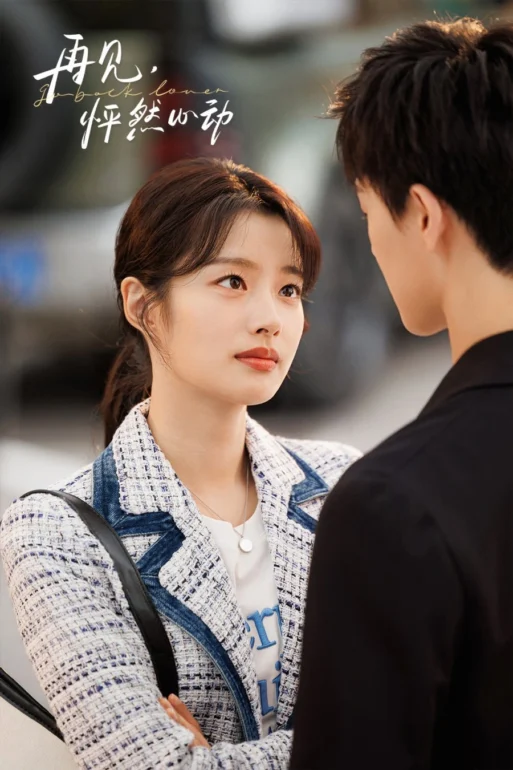
Part Two: 1900–1934, The Silent Speaks

The last item I packed into my duffel bag was “The Travels of Marco Polo.” It took me a long time to decide whether to bring this book along, so I ended up being the last soldier to board the deck. Some people suggested I take it: we were heading to Beijing to defend the legation and fight the Boxers with real swords and guns. We could die at any moment, so we should bring our valuable belongings. This might be your last chance to read it. And if you’re unlucky but fortunate enough to survive an attack and end up in a hospital recovering, you’ll need something to read.

There were also reasons not to bring it: we weren’t going on a vacation; we wouldn’t have time to read. Did I think I was Commander Seymour? In a life-and-death situation, focusing on a book would be suicidal. If the fighting got intense, I wouldn’t even know where the book had ended up. In the end, I decided to take it. Life and death are beyond our control, and carrying an extra book wouldn’t make a difference.

The sea breeze failed to cool us down. Everyone rolled up their sleeves and pant legs, exposing as much skin as possible. They rubbed their fists, not in preparation for battle, but eager to finally set foot on land after being cooped up on the ship, which could drive anyone mad. With no one behind me and enough space to place my duffel bag, I sat down, leaning against it. I was a bit tired, having just returned from the shore in the afternoon after taking some leave.

I had given the last five Manila square-headed cigars my brother sent to the officer. This was the fourth time. Five cigars each time. My brother taught me this, saying to use good steel on the blade’s edge and not to spoil those bastards all at once. When I couldn’t hold back anymore, I’d take out five cigars. I don’t smoke, but I needed to run around, and my brother knew it. I had come to China for this very purpose, determined to take every opportunity to see an extra foot of the Grand Canal.

To be able to move around freely, aside from having a passport that allowed me to enter and leave mainland China, I went to great lengths to clear all the necessary checkpoints. God bless me, the top officer was a heavy smoker; otherwise, if he casually coughed, I would never have been able to leave the warship. But I understood that giving him good cigars was only part of the reason.

More importantly, we were from the same hometown. He lived on the outskirts of Verona. Even though we had traveled a long way and crossed the ocean to China, he had never visited Juliet’s house, which was only thirty miles from his home. He rarely had the chance to go to the city. With a countryman’s curiosity, he made me describe every corner of Juliet’s house. When I humbly asked him for leave, his vanity was greatly satisfied, and he happily granted it each time. Everyone envied me.

It’s true that for a sailor to frequently leave the ship and go ashore is rather inappropriate. But I couldn’t help it; I just wanted to get off the ship. I didn’t want to be like them, constantly watching our superiors’ moods, making every day as orderly as military posture just to please the officers and climb the ranks quickly. I told them that the Chinese have a saying, “Being desireless makes one strong,” and that described me.

At first, I said this with confidence, but later, I felt a tinge of shame. It wasn’t that I had no desires; I had my reasons for going ashore. Running around near the warship and the base had its purpose, and I wasn’t embarrassed. It felt so noble to see China’s beautiful scenery, like Marco Polo; it was incredibly lofty. But recently, these last four times, I went ashore to see a Chinese girl, Qin Ruoyu.

Chinese characters are truly wonderful. When I couldn’t sleep in the middle of the night, I would silently turn those three characters over and over in my mouth, biting my teeth to prevent accidentally speaking them aloud. A name that you think about day and night but can’t openly say is no lighter than carrying Mount Vesuvius on your back. I truly wanted to hold those three characters in my heart.

I spent the past few days near Qin Ruoyu. Most of the time, I watched her from afar, and rarely, for a brief moment, I could be close enough to feel her warmth and catch the fragrance her dress stirred as she passed by. She did only one thing every day: she colored the dolls, lotuses, and big carp on the paper. Her family made Yangliuqing New Year pictures. She painted the dolls, David Brown painted her, and under the pretense of watching David paint, I watched her. I watched both the painted Ruoyu in David’s art and the real Ruoyu painting.

I used to believe David could become Britain’s greatest painter. Now I have my reservations. His painted Ruoyu doesn’t compare to the real Ruoyu standing before the rice paper, painting chubby dolls with her braids tied up. It’s true. But I wouldn’t bluntly tell David that. I still give a thumbs up to his painted Ruoyu, saying it looks just like her and is beautiful. I don’t want him to get petty and refuse to bring me along next time or choose a different place to sketch. Of course, I could come alone, but what would I say? I can’t just say I came to see her. I can’t even say that in Chinese. Ruoyu’s father wouldn’t allow a foreigner who’s only interested in his daughter to visit their home. He still harbors some hidden hostility towards foreigners.

David is my excuse and my translator. He knows some Chinese, at least enough for basic daily communication. That’s why I always thought this Brit was a genius. If he wanted to do something, there was nothing he couldn’t accomplish. Everyone knows Chinese is the hardest language to learn, yet he could freely interact with Chinese people after only six months in Tanggu. When he first arrived in China, he was temporarily assigned as an aide to a high-ranking officer in the British fleet and lived in the foreigner-concentrated city of Tanggu. He shouldn’t have had many opportunities to interact with Chinese people, but for a linguistic genius, that time was sufficient.

The first time I saw Ruoyu was in one of David’s paintings. He asked me if she was beautiful. I said she was, pointing out her eyebrows, eyes, nose, mouth, hands, and neck. Ruoyu’s pose while washing clothes in the Bai River was captivating—half-squatting and sideways, her movements formed a perfect Chinese Tai Chi circle in the water. David clarified that he was asking if the painting was beautiful. I replied, of course, it was. His paintings were always beautiful. He asked if I was just flattering him. I said I was just genuinely admiring, with no ulterior motives. David mentioned that my words sounded familiar. I realized I had praised him the same way four years ago in Venice, not a word different.

We became friends in Venice. My father was in the gondola business, with several boats ferrying tourists along the canals and lagoon. David was studying at the University of Venice and was close to graduation, spending his free time painting by the Rialto Bridge. He aimed to capture the changing scenes of the Rialto Bridge through the seasons.

One day, out of sheer boredom, I volunteered to row a gondola. In the mid-afternoon, a heavy downpour scattered the tourists, who dashed for their inns, turning Venice into a ghost town. I donned my raincoat and leisurely rowed through the canal, enjoying the rare solitude in the rain. Under the Rialto Bridge, exhausted, I stopped to rest in the archway. Above me, a young man was painting under an umbrella. Venice had many painters, as common as beggars in China, but painting in a heavy rainstorm was rare. I watched him paint.

After half an hour, the rain stopped, and I disembarked as he finished his painting. He had included me and my gondola in his artwork. That’s how I met David Brown, a student from England. During the time my father and I spent in Venice, we had many opportunities to meet. He showed me his previous works. We were the same age. One painting depicted an Italian girl glancing back. I commented on its beauty and the skill with which it was painted. He asked my purpose in praising it so highly, and I said it was just genuine admiration, with no ulterior motive. Through him, I met one of his female classmates. I had never had a girlfriend before. Unfortunately, the girl from Naples already had a boyfriend.

After leaving Venice, David and I lost contact. Unexpectedly, we reunited in China. One day, we disembarked from our respective ships and took a launch across ten miles of choppy sea to the mouth of the Bai River. From there, we switched to a smaller boat to cross the sandbars. Once past the sandbars, we could see the Chinese town of Dagu on the southern bank of the Bai River, with the city of Tanggu opposite. After disembarking in Tanggu, a two-hour train ride was required to reach Tianjin, covering about thirty miles. This was the tedious journey we had to undertake to get to Tianjin.

On that small boat, crammed with sailors from four or five different countries, David ended up sitting next to me. We hadn’t seen each other in four years, and we both had changed, but the tuft of golden hair behind his left ear remained the same. Those ten or so gleaming English curls were unique to him. I called out, “David, David Brown,” and he immediately recognized me. He insisted my voice sounded like it had a piece of sandpaper lodged in my throat, a mix of allure and torment that even a master of sound imitation couldn’t replicate.

He had arrived in China a year before me and was practically my teacher in this ancient and vast country. All my knowledge about China came from Marco Polo and the rivers, lakes, and seas that crisscross the country like blood vessels; especially the Grand Canal. My Italian compatriot, Marco Polo, traveled south along the canal from the capital, witnessing a wondrous country unimaginable to a European sitting at home.

David and I shared a heartfelt embrace on that boat. He had joined the service, while I had volunteered out of curiosity about China. Regardless of our reasons, we both knew that once you cross the ocean armed, you’re an invader. The longer we stayed in China, the clearer this became. We talked the entire trip, or rather, we talked all day until we returned the same way to our ships. We spent the entire day together, visiting the same shops, drinking the same alcohol, and eating the same food. He was still painting, and I still loved rivers and wandering.

Due to the strict rules on the ship and the frequent patrols, our opportunities to meet were limited. We agreed that whenever we went ashore and knew the next time we would be on land, we would leave a note in a tree hollow on the sandbar. Starting from the willow tree by the dock, it was the third tree on the right, halfway up the trunk, where there was a hidden, narrow hollow. If one of us left a note there, it would stay until the other retrieved it. This primitive method of communication proved surprisingly effective. Each of the four times I visited Ruoyu, it was with David. He went to sketch, taking any boat from the sandbar or renting one to row himself, stopping wherever he felt inspired along the Bai River. This had been his routine during his two years in China.

Once, while we were shopping in Tanggu, I told him that his real purpose wasn’t sketching but finding a refined excuse to wander and relax. He tilted his head and thought for a moment, then agreed. He often returned without a single line on his paper, despite being out all day. Staying cooped up on the ship was indeed stifling. However, his trip to Fengqi Dian was different; he had painted a dozen sketches there.

Fengqi Dian was a place that was part village, part town—larger than a village but smaller than a town. Homes lined the Bai River on both sides and though the dock was not very large, it sufficed for passing boats to stop. David had seen Ruoyu washing clothes by the riverbank, and the interplay of movement and stillness, the relationship between the whole and the parts, inspired him. He set up his easel across the river and started painting. If not for my curiosity about Fengqi Dian and my secret hope to see that ethereal girl again, David might not have gone back after finishing his painting. But because I wanted to go, he went again, and because I wanted to keep going, he continued to accompany me.

When we arrived at Fengqi Dian, we went straight to the place where the girl washed clothes, without detours. Naturally, her home had to be nearby; who would go far to wash clothes in front of someone else’s house? There were four or five houses lined up by the riverbank. Because they faced the river, none of them left their gates wide open, all were tightly shut. David gave me a mischievous grin. Emboldened, I said we should knock on each door, joking that we might find dynamite inside.

I hadn’t even thought about what we’d do once the doors opened. Later, we learned that the locked doors were not just to avoid prying eyes from passing boats, but also to prevent trouble. The Boxer Rebellion was in full swing in Fengqi Dian and those who could still get by hoped for peace and stability. Opening their doors would only invite disaster.

We decided to knock on the door closest to the laundry spot because it had two particularly attractive door gods pasted on it: Qin Shubao and Yuchi Gong. David remarked that these were in the style of Yangliuqing New Year paintings and took the opportunity to explain what Yangliuqing New Year paintings were. He had once accompanied a high-ranking officer he served to the ancient town of Yangliuqing, where they watched local artisans create these festive paintings.

I knocked three times. Without hearing a single footstep, the door opened. Since I was close to the door with my right foot on the threshold, the face of the person opening the door was almost touching mine. We both jumped in surprise. A woman’s voice cried out. I didn’t need to see her face clearly; just from her voice, I knew she was the laundry girl. Later, Ruyu told me that we scared her badly. Seeing two faces at the door, and foreigners at that, she thought she had seen ghosts.

This was a bit exaggerated. No matter what, David and I look better than those ferocious door gods. Ruyu insisted that Qin Shubao and Yuchi Gong were more handsome; she wasn’t used to foreigners with high noses and deep-set eyes. I don’t look as foreign as David. At least my hair is straight and black; thanks to my ancestors for this unique heritage. David, on the other hand, has a head of blond hair, big curls entwined with small curls, looking exactly like a curly-haired poodle.

She asked who we were. I couldn’t understand her. David said we were tourists who noticed the lifelike door gods on the gate and, finding them rare works of art, dared to disturb them. David translated his awkward but understandable Chinese into English for me. I thought this guy was truly talented; after less than two years in the army, he had picked up some bad habits, saying such sappy things without batting an eye. But I was very grateful to him. In such an emergency, if I had to answer, I would have probably said something like, “I wanted to see you, so I knocked to see if this was your home.” Given Ruyu’s shyness and temper at the time, she would have slapped me twice, called me a rogue, and kicked me into the river in front of the house.

Unexpectedly, complimenting the door gods worked well. Ruyu’s father was in the spacious hall with Ruyu and another apprentice, coloring New Year pictures. Qin Shubao and Yuchi Gong were old Qin’s works. Old Qin didn’t like foreigners, but praise is praise, and he enjoyed it. Since then, David and I have visited many times without being turned away, partly thanks to David’s flattering introduction. Brother David, wherever you are, I will always be grateful to you. They invited us inside. The father, daughter, and apprentice were coloring the same New Year picture called “The Three Stars.”

There were three identical pictures, each depicting three oddly shaped old men: one with a flower in his hat representing “Fu” (Good Fortune), one with an official’s hat representing “Lu” (Prosperity), and one bald with a large lump on his forehead representing “Shou” (Changshou). Each old man was accompanied by a chubby child: one holding a big peach, one carrying a jade scepter, and one holding an official seal. The old men and children looked so plump and kind that you couldn’t help but want to pinch them. In addition to these three, many other New Year pictures printed from woodblocks were pasted around the doorway. Old Qin was coloring the old men and children himself while explaining to Ruyu and the apprentice.

Coloring New Year pictures was no small matter. On our third visit, I decided to try my hand at it. I colored the simplest ones, like “Lotus Giving Birth to Sons” and “Lotus Year Abundance,” each about the size of a book. If a stroke went wrong, nobody made a fuss. Chinese people buy New Year pictures for the festive spirit; as long as there’s plenty of red and green, the colors are fine. David was skilled; coloring wasn’t much of a challenge for him. He tried his hand at a picture of “The Three Stars,” and both Ruyu and Old Qin’s apprentice praised his work.

But David’s main task wasn’t coloring; it was painting. He painted Old Qin, his apprentice, and Ruyu. This scratched Old Qin’s itch a bit; as fellow artist, David painted exceptionally well, even capturing the difference in Old Qin’s left and right arms. After years of carving New Year pictures, sanding pear wood blocks, and carving with a knife, Old Qin’s right arm had naturally become thicker. Old Qin used David’s painting to teach his daughter and apprentice: this was the eye’s judgment; the details determined the success or failure of a painting, and the details also determined the success or failure of an artist. It was entirely thanks to David that I had the chance to visit Ruyu again and again.

Old Qin must have let us in out of respect for David. He probably saw David as a disciple who had come from afar to pay his respects, expecting the foreign disciple to take him to the master’s seat, then step back three paces, bow, and offer tea, performing the ceremony of paying respects to the master. At that time, tensions were high in North China; the Boxer Rebellion was raging, with cries of “Support the Qing, Eliminate the Foreigners.” Old Qin was certainly aware of this, so he closed the door to avoid trouble. He probably didn’t have a favorable opinion of foreigners either, but at this moment, having one more disciple, especially a foreign one who had come from afar to admire him, he thought it might improve the reputation of the Qin family’s New Year pictures.

During turbulent times, only two families were making New Year pictures in Fong-chien: the Qin family and the Yuan family. Old Qin and Old Yuan competed. In the bustling town of Yangliuqing, every street and alley was filled with New Year picture makers. If you wanted to compete, it meant you were picking a fight with all of them. That would make you enemies with everyone and invite unnecessary trouble. Instead, if you just focused on competing with each other, the world would remain peaceful.

In Fong-Chien, only two families were making New Year pictures, both of whom had moved from Yangliuqing in the previous generation. With each glance, you only saw each other. It was hard to remain calm; if you didn’t come chasing after each other, the neighbors would start comparing you, and once they concluded, it was hard to stay indifferent. The difficulty was too great.

In recent years, with droughts, bandits, and unrest, life has become difficult. However, the festive atmosphere during the New Year only seemed to grow stronger, and the market for New Year pictures kept soaring. Old Qin and Old Yuan had been at odds for a long time before their rivalry finally escalated. They had been under the scrutiny of the villagers of Fong-Chien for years. Old Qin’s craftsmanship surpassed Old Yuan’s, but it wasn’t so obvious to outsiders, which made the villagers of Fong-Chien even more eager to pit them against each other. Therefore, the war caused by competition had been ongoing, but there was no way to have a confrontation in public. Then came the year of Gengzi (1900), and the tensions suddenly surfaced.

Old Qin spent a year carving a block and printed a New Year picture titled “Dragon King Bringing Rain.” This picture suddenly set Old Yuan apart. I examined it closely at the Qin’s residence. After Old Qin carefully colored and mounted it, the picture was hung in the center of the main hall, measuring exactly six feet. The drought of the past few years has persisted until now. For the people of Northern China, the most precious thing was not money but rain.

They longed for rain more than they dreamed of getting rich. “Dragon King Bringing Rain” vividly expresses this pent-up desire accumulated over five or six hundred days. The head of the dragon was extremely clear, with the rest of its body and tail sprawling across half of the paper. The other half depicted abundant rain and the flourishing life nourished by it. This subject matter went beyond traditional New Year pictures, touching on real-life issues.

Compared to other New Year pictures, it seemed more solemn, but Old Qin skillfully incorporated round, cheerful children climbing onto the dragon’s claws, reminiscent of the iconic Yangliuqing New Year pictures. It was a joyous scene. The sales of “Dragon King Bringing Rain” set a record in the history of the Qin family’s New Year picture sales and left the Yuan family trailing by two miles. Old Yuan was not pleased and friction began. When David and I visited, it was a showdown between the next generation of both families.

In China, many family traditions are passed down through workshops, typically from father to son, and from the eldest to the youngest son, emphasizing the importance of the eldest son in inheritance. Throughout the Tang, Song, Yuan, Ming, and Qing dynasties, this tradition was also followed by emperors, where the eldest son would inherit the throne. Only if the eldest son was incapable would they consider the younger ones or even someone else’s son who had closer blood ties.

The Yuan family flourished with three sons, regardless of their capabilities, all engaged in the family trade. Additionally, Old Yuan took on two apprentices, withholding their unique skills from outsiders and mainly engaging them in menial tasks under the guise of apprenticeship. The Qin family, on the other hand, faced a more difficult situation.

Old Qin only had one daughter, Ruyu, who was skilled and talented, but Old Qin still harbored doubts. He believed that men were more reliable for carving woodblocks, considering strength as a crucial factor. Old Qin hesitated to pass on his craft, waiting to see if his daughter was capable. If she couldn’t bear the responsibility, he would have to consider a son-in-law. Fortunately, Old Qin was younger than Old Yuan, and Ruyu didn’t feel pressured to marry yet. He reluctantly took on an apprentice and also enlisted help to search for a suitable son-in-law from Yangliuqing.

When we arrived at Fong-Chien, we found both families competing to see whose team was larger. In terms of sheer numbers, Old Yuan’s team won, of course. But if Old Qin were to take on a foreign apprentice, it would significantly change the dynamics, attracting at least three or five locals. Coincidentally, this foreign apprentice was also skilled, sparing him from starting from scratch. Old Qin allowed the two of us to enter with this intention.

Ruyu later revealed this to me. However, at that time, he never imagined that I had come for Ruyu. Firstly, because I was a foreigner, he never even entertained the idea of marrying Ruyu off to a foreigner; it was akin to desecrating his ancestors’ graves. Secondly, even if he had considered foreigners eyeing Ruyu, he would only have thought of David. If it came down to it, he might reluctantly agree to his daughter marrying David. As for me, Federico Di Marco, an Italian, he wouldn’t even have considered me in his worst nightmares; he surely saw me as David’s lackey.

Over the next thirty-four years of my life, whenever I thought of David Brown, I would ask Ruyu the same question: How did you know it was me pursuing you and not David? Ruyu would patiently repeat the same answer: It’s all in the eyes. In this world, only your gaze never wavers. Is there anything else? I would continue to ask. Well, there’s also the fact that every time you both came, David would find an opportunity to ask me to teach you Chinese. Ah I see.

Without those sessions of intensive Chinese language learning, along with my humble inquiries to David and diligent self-study during the long days when I couldn’t see Ruyu, two months later, when I returned to Fong-Chien, I would have been utterly mute. At that time, dressed in rags, armed with only a few broken Chinese phrases, after a journey by water and land, I knocked on the shattered door of the courtyard and said to Ruyu, “I’m here.”

I waited for over an hour, awakened by a string of curses. I had fallen asleep leaning against my luggage. The person ahead said, “Go back to your cabin and sleep comfortably; we’re not leaving tonight.” There weren’t enough boats for everyone to disembark, and we were at the back of the line. The sky had turned dark, with multinational warships and vessels anchored nearby. Shadows moved beneath the lights, and I could see small boats heading towards the mouth of the river. The deep sea was so dark you couldn’t see your hand in front of your face, a complete, absolute blackness. Even the unseen wind was black. The officers ordered us to return to our cabins, rest, and await further instructions. We could depart at any moment.

Everyone was a bit excited when it came time to disembark; nobody could sleep, and conversations buzzed with heads close together. I climbed into bed and fell asleep instantly. Rowing the boat upstream along the Baihe River was quite a physical task. As dawn approached, someone kicked me awake. Outside, voices were shouting, urging us to bring our supplies and disembark immediately. I slung my bag over my back and groggily climbed onto the small boat, continuing to doze off in the dim light of dawn. Two and a half hours later, we arrived at the mouth of the Baihe River.

The row of Krupp cannons on the Dagu Fort glinted majestically in the sunlight. As our lengthy convoy passed by, Chinese soldiers curiously gathered on the shore to watch. One fellow ahead of me remarked, “Look all you want, but one day it might be blades and guns facing each other, and then you’ll wish you’d seen less.” I didn’t think it was much of a problem; finding a good spot to sit down, what couldn’t we discuss?

At the Tanggu train station, the officer ordered us to unload the supplies, ammunition, and water bottles into the carriages assigned to us. We were on the fourth train, which was to transport our Italian troops, along with Russian and French troops. The first three trains were arranged as follows: the first carried half of the British troops, all of the Austrian troops, and American troops, while the remaining carriages were filled with railway equipment, sleepers, and a large group of Chinese laborers, intended for road repairs in case of problems with the rails.

The second train carried the rest of the British troops, all of the Japanese troops, and some French troops, while the third train exclusively transported German troops. The sun was scorching as it rose, and we sweat profusely as we moved various supplies into the carriages, our clothes drenched with perspiration. I had never seen such rudimentary train carriages; they didn’t even have roofs.

If you removed the carriages and hitched a couple of horses or cows to the front, I would believe it was a horse-drawn or ox-drawn cart. Loading the trains was a frenzied affair, with officers from each country pushing us to hurry. Once everything was loaded, there was suddenly a delay of two hours. Soldiers from various countries, mostly sailors, sang their national anthems and marches in their formations. After one song finished, they started another, and after three songs, some began searching for toilets, causing chaos in the queue.

We scrambled onto the train amidst the clattering noise and around four-thirty, we arrived in Tianjin. The Tianjin station had organized a grand welcoming ceremony, and all the foreigners who could attend were present. They were well aware that if there were mistakes made by the Beijing legation, their days wouldn’t be any easier. The Germans were generous, cheering wildly for their soldiers and thrusting hundreds of bottles of beer into their arms.

We swallowed our saliva in our formations, enduring the scorching sun and swirling dust, feeling like our throats were cracking like dry earth. There were too few Italians in Tianjin, and I only managed to drink half a bottle of water. Judging by the spectacle of the farewell ceremony, it seemed we wouldn’t be leaving anytime soon. I leaned against my luggage and slouched, seeking comfort for a while.

Suddenly, a pair of feet approached, and as I looked up, I saw David giving me a wink. I picked up my bag and followed him.

David had somehow acquired six bottles of German beer and led me to hide beside the first train to drink. The train provided a comfortable shade for us. I told David, “When we get back, let’s go to Fong-chien again.” But he advised against thinking about such pleasant things, urging me to pray to God to return alive first. He was quite pessimistic about this journey. With over two thousand men mobilized, according to embassy reports, it still wasn’t enough to give them a sense of security.

They hoped the numbers would double or triple. “What’s there to fear?” I asked. “Haven’t you been to Beijing?” The crowds there, you can’t even walk a few steps on the street without pushing and shoving; with two thousand people entering Beijing, it’s like a drop of rain falling into the Baihe River. And then there’s the Boxers. He had his doubts about them too. Rumor had it that those people were invincible, bullets couldn’t harm them; they could even catch bullets mid-air.

It was all too much for me to comprehend. “What are these people made of?” I wondered aloud. David’s terrifying deductions didn’t affect me. There was only one important thing in the world for me: to return to Fong-chien, push open the gate guarded by the door gods, and see Ruyu. We drank all six bottles of beer. The alcohol went to our heads, and a little man was spinning around in my mind. David didn’t hold his liquor as well as I did. We lay side by side, our heads resting on my luggage, chatting aimlessly by the railway tracks until eventually, one of us slipped into the realm of dreams.

The chaotic noise of boarding the train went unnoticed by both of us. It took the shrill blast of a whistle right next to our ears to jolt us awake. An English officer stood there with a whistle between his lips, wearing a mischievous grin as he looked at us. Beside him stood a higher-ranking officer, hands clasped behind his back, his lips curled downward, eyes piercingly cold. Shiny black military boots added to his imposing stature.

David scrambled to his feet, snapped into a salute, and said, “Good morning, sir!” Morning? I was still a bit groggy. Such a high-ranking officer? I had only heard that the overall commander of the Allied forces was a British Major General, Seymour. I asked David, “Seymour?” David smirked at me. My drunkenness evaporated instantly, and I leaped up from the ground, saluting Seymour too. “Reporting, sir!” I said. “Reporting what?” Seymour’s shoulders relaxed, and his knees quivered slightly. “There’s nothing to report,” I said. “Reporting, sir, I’m returning to my unit.” “Which unit?” “The Italian.”

David dragged me towards their first train. The officer with the whistle remarked, “The Italians are at the back.” David replied, “Well, we’re all going to war. It doesn’t matter which train we’re on.” Seymour chuckled softly, “True. In this business, whether you live or die is a toss-up. Get on the train.” The officer with the whistle said, “Sir, isn’t this inappropriate?” “What’s there to differentiate in war? We’re all soldiers here,” replied Seymour.

“When you meet the Italians, let them know.” “Have you been to Britain?” I asked. “Yes.” “Then you’re one of us. Remember, the sun never sets on the British Empire. That includes here,” Seymour gestured with his scabbard.

I followed David onto the first train. In the many years that followed, Ru Yu often asked me, “If it weren’t for those few bottles of beer if we hadn’t encountered General Seymour if I hadn’t mixed with David but had returned to the fourth train car where I should have been, would my experiences have been different? Would my life have turned out differently?” “No,” I told her, “unless I died in battle, as long as I drew breath, I would still seek her out; no matter how stifled, I don’t regret my current life. Having endured a long war, slaughter, and plunder, I know how fragile and contingent life is, so I also understand how precious love is, and how difficult it is to remain together.

At first, I treated war too lightly, setting off for the battlefield amidst laughter and banter. I mingled among British, American, and Austrian soldiers, with a Chinese train driver who knew what we foreigners, armed to the teeth, were up to. He played dumb, feigning issues here and there. His assistant even discreetly discarded coal and let water drain out; without coal and water, the train would have to stop. We stationed people to monitor the Chinese driver from the coal and water car. Along the way, we encountered the Boxers. They poured oil on the sleepers and set them on fire; some sleepers were already charred, with smoke billowing from many places. We signaled with our guns and promptly drove them away. Orders from above: don’t fire unless necessary; our mission was to reach Beijing as quickly as possible.

Halfway through, we came across a Chinese military camp. Qing soldiers slept at their posts, only waking when the train passed by. Nie Shicheng, the plump, mustachioed governor of Zhili Province, rode a tall horse, leading a group of men, inspecting the camp of over four thousand soldiers. About a month later, I saw Governor Nie again at Baliqiao. That day, we turned back to attack Tianjin, and the Allied Forces clashed with the Qing troops at Baliqiao. It was a fierce battle, just the thought of it still makes my heart tremble.

Before Baliqiao, there was a small bridge where Nie Shicheng, mounted on his horse, stood overseeing the battle personally, and none of Nie’s soldiers dared to retreat. The battle dragged on for days, and we were all nearly exhausted, but thankfully, fresh reinforcements kept pouring in. Nie Shicheng wasn’t as fortunate; his forces dwindled with each passing hour. Yet, he held his ground, though he changed horses four times, and bullets struck both his legs, rendering him unable to stand. A fragment tore through Governor Nie’s abdomen, spilling his intestines, which he pushed back in and continued to inspire and command his soldiers in battle. Later, one of our shells exploded beside him; a piece of shrapnel entered Nie’s mouth and exited from the back of his head, while another pierced through his chest, and one went straight into his temple. He fell from his horse, aged sixty-five.

He was our enemy, but it must be acknowledged that he was the greatest warrior I had ever seen. As the flames of battle subsided that day, we, a group who admired him, respectfully removed our hats in mourning for him.

On the evening of June 10th, around seven o’clock, our train stopped not far from Luofa Station because the railway bridge ahead had been blown up by the Boxers. The one hundred Chinese coolies and the materials we had brought along for repairing the railway came in handy. While the coolies worked, we dined and camped by the railway side. We ate bread, and there was a bit of salted meat. Without tents, David and I spread the waterproof sheet on the ground, wrapped ourselves in blankets, and lay down together.

The days were scorching, but the nights were icy cold. Moonlight bathed the vast expanse, with three long trains surrounded by soldiers from various countries camping in between. Some tossed and turned, some talked in their sleep, some burped and farted, some stumbled half-asleep to relieve themselves just a few steps away, and some, like me, lay awake, gazing at the surroundings and the night sky. I saw many Chinese stars beside the Chinese moon. The fourth train carrying Italian soldiers had yet to arrive.

At four in the morning, the wake-up call sounded, and the air carried a scent of dew-covered hay, with the sky appearing less imposing than the night before. The aroma of coffee drifted over from where the officers were dining, and David and I each swallowed a mouthful of saliva.

At seven o’clock, we hit the road, with frequent stops due to the need for railway repairs. The Chinese coolies were skilled workers and, under the guidance of civilian engineers, worked efficiently. Of course, this was also because the Boxers typically only destroyed one rail, and materials from the other could be used to repair the damaged one.

Before reaching Luofa, the most horrifying sight was a pile of bodies, scattered and mutilated near a burnt-out waiting shelter. Soldiers who investigated reported back that they were four Chinese railway officials, likely dismembered by the Boxers for trying to prevent railway destruction, with one person’s heart even gouged out. One of the inspecting soldiers vomited on the spot, earning some laughter from the rest of us. As I joined in mocking him, my heart suddenly clenched as if someone had grabbed it. David remarked that my face turned as white as paper.

Finally, we arrived at Luofa. A small British contingent from the cruiser “Endymion” remained at Luofa, using the station as a defensive position to prevent Boxer attacks, which we called “Fort Endymion.” David and I continued with the rest of the troops toward Beijing. The heat was intense enough to roast a person alive, and the air seemed to shimmer with heat haze. We had to resort to using bamboo sticks to prop up our blankets over our heads to create some patchy shade.

The train carriage was already crowded, filled with supplies, ammunition, and luggage, making the air thick and stifling like porridge. At six in the afternoon, just as we were dozing off, the shrill whistle of the steam engine sounded. We repeated the alarm and quickly assembled. A large group of Boxers had appeared. We jumped off the train, and several Boxer members suddenly emerged from a small grove. David quickly slapped my hand holding the gun.

“They’re within our range,” he said sharply.

Almost instinctively, I raised my gun. I didn’t know if I hit any of the Boxers, but within ten seconds, all of them were lying on the ground, like several trees felled by the same gust of wind. We pushed forward across the open ground towards a row of houses, where it sounded like a significant gathering of Boxers had congregated.

It was our first taste of real combat, David and I, both with parched throats. We were assigned to a small team, with the left flank circling to the back of the houses to join forces with the second team from the right flank, launching a sudden attack on the defending enemy. David was ahead of me, and nearby, sporadic gunfire erupted, causing us both to crouch. As we rounded the corner of the house, we found ourselves on flat ground, where a group of Boxers waved their darts, spears, and swords, performing various bizarre movements.

Most of us were dumbfounded at the sight. If they had charged at us directly with weapons or opened fire from cover, our reaction would have been much swifter. While we had witnessed Boxer members performing erratic movements akin to epileptic fits before, seeing it on the battlefield was a different experience altogether. These individuals wore red headbands, scarves, belts, and leg bindings. Suddenly, one Boxer leaped into the air as if struck, only to fall straight to the ground.

Just as we wondered who had fired the shot and who possessed the ability to penetrate his “golden bell cover iron cloth” technique, he sprang back up from the ground, seemingly resurrected. Startled by this dance-like performance, at least ten members from our team and the circling second team opened fire simultaneously. Bang, Bang, Bang! The Boxers fell in droves. They charged at us with darts and swords, and we responded with another volley of gunfire, and they fell again.

The subsequent support from the third and fourth teams arrived, and before we could comprehend their frenzied shouting, all the Boxers on the flat ground lay defeated. Their blood stained their once-white clothes red, turning their headbands, scarves, belts, and leg bindings black. Our team leader retrieved a talisman from a Boxer’s pocket, a red plaque embroidered with four yellow characters: “Support the Qing, Exterminate the Foreigners.” It was said that this talisman made them invincible against blades and bullets. The leader stuffed the blood-soaked talisman back into his pocket and kicked one of the bodies, cursing, “Damn it, stop with the theatrics!” We planned to press forward with the search when the signal to regroup sounded behind us. The Boxers were assembling for the next assault on the neighboring village.

Back on the train, the sun had sunk below the horizon, and I felt a level of exhaustion and thirst I’d never experienced before. Every nerve and muscle in my body was tense. I found a spot to lie down. Everyone found a spot to lie down. With limited space, my legs rested on your hips, and your head lay on my stomach. The passengers in the carriage were piled up in a tangled mess, not a sound escaped anyone’s lips.

A nineteen-year-old British sailor rested his head against my ribs, slowly inching upward until his head nestled into my armpit. I raised my head to look at him, and he looked back at me, his eyes still filled with lingering fear. He said, “I killed someone.” He raised his right hand slightly as if it still bore traces of blood. I opened my left arm to give his head a more comfortable place to rest and said, “I did too. At least one, I’m sure of it.” I could even smell the gunpowder and blood in the air.

Officers paced along the railway, loudly delivering speeches to us, summarizing the skirmish we had just endured. They believed that sailors, accustomed to naval combat, lacked experience and training in land battles. For the upcoming fights, they urged everyone to drop their backpacks whenever possible and go into battle lightly, as there might be a lot of running involved. I said to David, lying diagonally at my feet, that I had to take my baggage with me, partly because I might need to rejoin the unit at any moment and partly because I couldn’t afford to lose “The Travels of Marco Polo.” I came to China to be Marco Polo, not a killer.

When Marco Polo was seventeen, he left home with his father and uncle and headed east to China. He spent seventeen years in China, befriended Kublai Khan, and held high positions in the Yuan Dynasty. His legendary experiences in China sparked Europe’s imagination about China and the world, leading explorers to chart new routes and eventually creating the first world maps. I didn’t envy such grand achievements, nor could I achieve them.

I just wanted to be my own Marco Polo, a Marco Polo on the canals, traveling by water, living by the riverside; to be friendly with the Chinese like he was. And if possible, maybe a little more, like marrying a Chinese girl. David said that when we returned from Beijing if we were still alive, he would borrow my copy of “The Travels of Marco Polo” and read it thoroughly.

Close to eight o’clock, as night fell, the train began to move again. After a short while, it came to a stop, and we were notified to camp where we were. It was still wilderness. The northern wilderness all looked the same—desolate, with wild grass, trees, and the incessant, hysterical chirping of unseen cicadas. Even the moonlight seemed to stir up the dry earth, sending dust flying with every beam. Everyone was exhausted, yet strangely devoid of appetite. It wasn’t that dinner couldn’t go into our mouths; it was as if our eyes couldn’t take it in. Only as we neared the end of the meal did appetites slowly return, as if awakening from a stupor.

No one took walks. Those on guard duty dispersed to various corners to prevent any nighttime attacks from the Boxers. Those without tasks lay down, while the insomniacs sat and smoked. There were noticeably more smokers that night. Though I didn’t smoke, I asked David for one and took a puff. It made me cough instantly, but exhaling the bluish smoke in wisps felt oddly satisfying. It felt like being alive. And you could entirely prove it to yourself.

I slept beside David, with the nineteen-year-old British sailor laying the waterproof sheet next to me, smiling. Many years later, I could still recall his shy and trusting smile, illuminated by the moonlight, revealing his perfectly white teeth. Trust was quite simple to earn; it just required lifting an arm. That night, I slept soundly, with only occasional false alarms triggered by sentries firing their guns, but there were no real disturbances or attacks. It was said that the Chinese feared ghosts, so the Boxers dared not lurk about at night. Other than the chirping and biting of mosquitoes, the only other thing that disturbed our sleep was the nightmares each of us individually endured.

As dawn broke, the train slowly made its way towards Langfang. With frequent stops, there were scarcely any intact railway tracks or stations along the way. The unseen enemy had sabotaged them in advance. Repairing them became increasingly difficult. Beyond the railway, new problems arose. The water towers were destroyed, leaving the locomotives without water. The train became a machine on the verge of dying of thirst. The officers ordered us to search nearby villages for wells.

We entered the village with our rifles, but the streets were deserted, and the few houses we checked were empty; the villagers had all fled. They must have heard the rumors or perhaps were instigated by the Boxers to evacuate. The only living creatures left in the village were the poultry—chickens, ducks, geese, pigeons—and pigs that couldn’t be taken away. There wasn’t a single horse, cow, or sheep to be seen. The village was quite large, and after circling it for a while, we still hadn’t found a well.

Some of us eyed the poultry hungrily, imagining the succulent taste of roasted meat. However, the officer warned us to focus solely on finding water and not to deviate from our mission. Those with cravings could only endure. Someone found a few eggs hidden in a bamboo basket and secretly cracked one open, slurping up the raw contents to avoid detection by the officer. Soon, the basket was empty. As we continued our search, everyone became more vigilant, checking rice jars, cabinets, and even under pots for hidden food like eggs.

Then, in one kitchen, we discovered an elderly woman paralyzed and sitting blankly on a cushion. Since she couldn’t move, we decided to leave her there. We gestured for water, and she pointed to a water barrel beside the stove. We shook our heads and gestured again, miming fetching water, but she pointed in all directions, completely confusing us. I asked her to speak slowly, relying on my limited knowledge of Chinese to decipher her vague directions.

The captain instructed us to carry the old woman to the well. After drawing up a bucket of water, we let her drink first to ensure it wasn’t poisoned. She scooped up a ladle and drank calmly. Returning to the train, news of the well spread instantly to the other carriages, and a crowd rushed into the village. When they emerged from the village, they carried not only water but also chickens, ducks, geese, pigeons, and even a small black pig, courtesy of an American soldier.

In the afternoon, David and I lay beneath the train, dozing off and on. Whenever we woke up, I asked him to teach me Chinese. It was cooler under the train. I asked him how to say “I love you.” He said that Chinese people are shy and don’t say “I love you”; instead, they say “I like you” or “I will treat you well.” So, how would one say “Marry me”? “Come with me.” Come with me. I silently repeated it twenty times in a row.

A message came from the previous carriage underneath the train: a messenger from the American embassy had arrived from Beijing. The news of the Allied forces heading to Beijing had caused a stir in the capital, and people from all nations were eagerly awaiting our arrival as saviors. The messenger also brought a map of the gates of Beijing and intelligence on the feasible attacks.

We couldn’t see the specific intelligence due to our rank, but the captain disseminated the news to boost our morale: Look, how important you are! Keep it up! Captain Winning commanded the “Griffin” contingent to establish a “Griffin Fortress” similar to the “Endymion Fortress” established here. General Seymour’s intentions were clear—he was steadily advancing, aiming to have our presence everywhere. The sailors from the “Griffin” were now acting as laborers, and we watched as they erected machine guns on the water tower and rooftops, wondering how long this fortress could hold out. The situation didn’t look promising. Various reports indicated that the Boxer rebellion was of a magnitude far beyond our imagination.

Despite the grim news, there was also cause for celebration that afternoon: a train loaded with supplies arrived from Tianjin. It carried my favorite salted meat, bread, beer, various canned goods, cigarettes, and most importantly, water stored in large earthenware jars, along with straw mats to serve as shelter for the carriage roofs. The latter two items were especially crucial. The village wells were running dry, and the water quality was deteriorating. Another piece of good news was that we could finally rest easy for a few nights; the Boxers had completely removed the rails ahead of us.

It took three days to fix. During those three days, David and I had a lot of free time. I wrote a love letter to Ruyu, though I couldn’t send it. I just worried that when we met, I wouldn’t be able to say many things clearly. After finishing, I asked David to help me translate it. He’s not very good at writing Chinese characters, so he used phonetic symbols instead.

During those three days, there was also a battle. Several hundred members of the Boxer Rebellion suddenly attacked the Fortress of Griffin. We were washing clothes by the village well when we heard gunfire near the camp. Clothes hadn’t been changed for days and were starting to stink. I barely managed to clean them with half a bar of soap when the gunshots rang out. I hurriedly put on the wet clothes, grabbed my gun, and followed the British sailors back.

By the time we reached the Fortress of Griffin, the battle was over. The heavy firepower from the machine guns on the water tower had stopped the Boxers’ attack. Eighteen Boxer rebels lay dead beneath the fortress. Five members of the allied forces died; they were caught off guard during the Boxers’ ambush and were chopped into pieces on the spot. As the sun set, we held a solemn funeral for the five fallen soldiers. Besides those on guard duty, the rest of us lined up, received a review from the officers, and then saluted the deceased with our guns. We had already dug graves in front of the locomotive shed at the station and, under the prayers of the British army chaplain, buried our five comrades.

The news came from the Fortress of Endymion that they too had been attacked by the Boxers. At Lofa, the Boxers gained nothing and left behind over two hundred bodies, a few flags, and two old rifles. But the message also hinted at another layer of meaning: just like what everyone saw in the battle at the Fortress of Griffin, these Chinese people wielding rudimentary cold weapons were so fervent that their courage in attacking, even at the cost of their lives, frightened us.

In subsequent confrontations and skirmishes with the Boxers, or through observation, I became more confused. I couldn’t understand what kind of people they were. They were brave yet cowardly, cunning yet ignorant, sincere yet hypocritical, hardworking yet deceitful, noble yet vulgar, public-spirited yet greedy, warm and friendly yet cold and cunning, far-sighted yet narrow-minded, and so on. These qualities, completely contradictory, could be endlessly listed, yet they were all embraced and harmoniously fused into one body.

Every moment in war is crucial; half a second from the barrel of a gun means a life lost. But war pays no heed to time. We were left hanging, consumed by anxiety every day as we struggled to repair the railway. Suddenly, news arrived that the railway ahead couldn’t be fixed. We had to abandon our northward advance and turn back to Tianjin. We were all surprised; after days of effort, it seemed all for naught. Furthermore, there was another urgent plea for help from a diplomat in Beijing.

They said the Boxers had surrounded all the foreign legations, turning them into fortresses. With the Boxers constantly firing shots and artillery at the legations, thousands of refugees crowded into any safe space they could find, gasping for air being a luxury. The messenger was Chinese; only a Chinese person might stand a chance of safety on the roads. Just a few days ago, Sugiyama, the secretary of the Japanese legation, was killed.

In two days, the German minister, Ketteler, would also be shot dead. Anything non-Chinese in Beijing was in danger. The messenger dismounted, breathless; they said their horse had collapsed by the roadside, exhausted from the mad dash. Between Beijing and Tianjin, all the telegraph poles had been chopped down, wires torn out, leaving communication stranded in the age of marathons. We had to return to Yangcun. Even upon return, we would have to rebuild the railway and remain vigilant against sudden attacks from the Boxers. If a rail were raised, our train would grind to a halt.

Colonel McKellar of the American detachment was tasked with repairing the railway. We followed Colonel Zelicke of the flagship Seymour, dispersing nearby Boxers. They were holed up in a village. We first fired three shells into the village with our nine-pounder guns, destroying the earth-packed houses and raising a cloud of smoke. Then we stormed the village. The squad leaders issued orders: aim at the flags and shoot at anyone you see.

There were two types of Boxer flags stuck atop village rooftops: large rectangular ones and small triangular ones. Later, I saw many such villages in northern China. They called them “stockades”: the entire village was enclosed by a long wall, with only a few fixed gates for entry and exit. If you could seal off all the gates, you’d have the fish trapped in the jar, with no escape. But that day, we couldn’t seal off all four gates of the stockade in time. After we stormed in, most of the Boxers had already fled.

The captain reiterated Vice Admiral Seymour’s instructions: Any houses found to conceal weapons or railway materials were to be burned on the spot. As the enemy engaged and retreated, we set fire to the buildings. Some people smuggled chickens, ducks, geese, and other goods under their arms, trying to curry favor with the captain. With a wave of his hand, the captain signaled, “Do what you can. Take what you can carry.”

This marked our final battle before returning to Yangcun.

In the afternoon, our train arrived back in Yangcun, only to find the railway ahead severed. The scale of destruction made everyone doubt it was solely the work of the Boxers. David said, “Even with your knee, you’d figure out that the regular Chinese army must be involved.” When I asked for his reasoning, he replied, “Do we need a reason for this? If someone’s running around with guns and cannons in your backyard, acting like they own the place, you wouldn’t be pleased, would you? Your brother wouldn’t be pleased, and your parents certainly wouldn’t be pleased.

Anyway, if someone messes with us at home, our whole family won’t let them off lightly.” “But they’ve offended us,” I argued. “If one day they offend you in Rome or offend me in London, I’ll agree with you,” David replied. He pulled out a squashed cigarette from his pocket, turned it around before handing it to me, then fished out another one, leaving only the butt in his mouth. We lit up and smoked. I trusted David’s words. “I want to pick a Chinese name; can you help me brainstorm?” I asked. “Mafeide,” David suggested, then shook his head. “Still not Chinese enough.”

“Mafude,” he said. “Yes, Mafude. That’s your name.”

On June 18th, a heavy rain fell. Everywhere that received rain rejoiced. The prolonged drought had broken the trust of the Chinese people in their dragon king, worshipped for thousands of years. We didn’t rejoice; we only lamented. While sunny days were uncomfortable, rainy days were even worse. The grass mats barely shielded us from the rain; droplets leaked through the cracks incessantly. Rain poured outside while a drizzle seeped into the carriage. Just as I was about to fall asleep, a large droplet landed on my face, jolting me awake. We had to move under the carriage to sleep. While it reduced the dripping, the ground was colder, and the chill penetrated to the bones in the latter half of the night. People started sneezing, coughing, and blowing their noses before dawn.

The only piece of good news on June 18th was that the German army managed to snatch four boats from the Boxers. These four flat-bottomed boats became our most crucial tools for leaving the area the next day. With the railway broken before Langfang and after Yangcun, we were stranded, lacking any means of transportation to move. If we couldn’t find suitable transport, we would be trapped here. The Germans were patrolling the railway bridge towards Tianjin when they spotted a Chinese flat-bottomed boat loaded with railway sleepers.

They hailed the boatmen, but they ignored them and sped up. The Germans opened fire. Several other boats nearby were also being loaded with railway materials by Boxer militants. The German troops acted decisively, engaging in a short but intense battle and capturing the four flat-bottomed boats. Fourteen Boxer militants lost their lives. On the boats, the Germans found weapons used by divers, a flag, and the Boxers’ red armbands.

Leaving was imperative; otherwise, the lack of drinking water alone could defeat us. The thirst was unbearable, and we had to resort to the murky river water. The heavy rain had washed down mud, debris, vegetation, and even corpses from upstream. We were issued small charcoal filters, with every three people sharing one. However, the complex composition of the river water was too much for a simple filter to purify completely. Many people started having diarrhea, with some suffering from dysentery so severe they couldn’t even pull up their pants. The young British lad who slept curled up in my armpit had an accident in his trousers. He walked around bare-bottomed when drying his pants. No one made fun of him; instead, a few envied him. How convenient it must be, not needing to take off your pants to relieve yourself, just squatting down whenever needed.

The commander passed on the message: Vice Admiral Seymour chaired a military conference of the Allied forces, deciding to abandon the trains and retreat along the Bai River. Four flat-bottomed sailboats would carry the wounded, some firearms and ammunition, supplies, and luggage. The remaining soldiers would only bring essential items and march southward along the riverbank. Our task now was to load the belongings from the train onto the flat-bottomed boats. After spending ten days on the train, we had developed some attachment to it.

The gloomy weather added a touch of melancholy as we left the carriages. All the spoils captured during these days were thrown into the water: various Boxer flags, tokens, peculiar weapons, and some curious items pilfered from village houses. I dare say, anyone who could collect all the discarded items could open a decent museum. But firearms, ammunition, and essential supplies had already burdened us. David and I were assigned to the boat carrying mostly ammunition and supplies because we had traversed the Bai River a few times and had some experience in operating civilian boats. The officer instructed us, “Stay sharp.” In the evening, the boats set sail, and the queues on the shore also departed. The British troops led the way, followed by the French, American, and Russian troops, then the Germans and soldiers from other countries.

Sailing downstream from north to south was challenging. We were still navigating through the smaller rivers connecting to the Bai River, where the shallow waters made it difficult for the heavy boats to pass. The boatmen had to exert all their strength to paddle. When that wasn’t enough, we had to figure out ways to shuttle supplies between the four boats. We also tried not to follow the same route with all the boats to avoid all of them getting stranded at the same spot. The troops who had marched along the shore before now looked back at us, still paddling in the rear, and began to take pleasure in our misfortune.

Apart from exhaustion, there was inevitable sorrow on board. Two British soldiers on the medical boat succumbed to their severe wounds during the night. We carried them ashore and buried them where they lay. There was no music, only the prayers of the military chaplain as we raised our rifles, wishing them peace in God’s embrace.

Intermittently, we encountered both the Boxers and the regular army of the Qing government. It was the troops on land who dealt with them, leaving us isolated between the enemy and the four flat-bottomed sailboats, creating a safe zone. Sometimes, we could hear the gunfire intensify, indicating clashes with the regular army. They employed horses to maneuver lightweight modern 5cm Krupp field guns, giving them a broader operational range.

In contrast, lacking horses, we had to drag our coastal guns with soldiers. From the deck, we could witness the shells hitting houses on both sides, and flames engulfing wherever the war reached. We gauged the intensity of the battle by the number and frequency of wounded brought on board: the more and the more frequent, the harder the fight; if after prolonged gunfire, only a few with superficial wounds were brought, the battle likely went well.

Another challenge onboard was drinking water, mirroring the dilemma on land. We relied on water sources along the shore. Even on the Bai River, we couldn’t directly access the water; war had severely contaminated it. Corpses of Boxer members and innocent civilians swollen from soaking often drifted past. Our comrades on shore were tasked with finding wells in the villages along the way. Their water supply was our lifeline.

We also had our share of terror on the water. Suddenly, a shell landed on our boat. Everyone closed their eyes, and for a moment, I even had a thought: would the time left be enough for me to think of Ruyu? It was a dud. They forgot to insert the fuse into the shell. This incident made us all more vigilant. Any slight movement prompted us to look up, knowing we could well be within the shell’s range. This heightened alertness proved crucial. The boat behind us narrowly escaped disaster by hoisting a pole in time when a shell fell. But some things couldn’t be avoided no matter how we tried; they lingered over our heads: Ours.

Upon reaching Xigu, Admiral Nie’s troops disagreed with our attempt to dock and opened fire with various weapons. By then, David and I had already been reassigned from the ammunition boat to overseeing the boat for the wounded.

Admiral Nie’s refusal stemmed from the fact that the arsenal in Xigu had been occupied by the Allied forces, and the Qing army had previously lost the front line at Military Granary City to both the Allied forces and their reinforcements. Whoever was blamed for these losses was undoubtedly furious. The significance of seizing the Xigu arsenal cannot be overstated. Simply put, if the Allied forces hadn’t accidentally taken the arsenal, history might have been rewritten.

The term “accidentally” is entirely because the Allied forces stumbled upon this Chinese ammunition depot. After the withdrawal from Yangcun, where they were ambushed along the way and supplies couldn’t keep up, the Allied forces had become a weary and ragged bunch. With Nie Shicheng’s tens of thousands of troops in hot pursuit, the Allied forces’ days seemed numbered. However, luck was on the Allied forces’ side when they discovered the Xigu arsenal. Just take a look at what the arsenal contained: 38,000 Mauser rifles, 38 million bullets, German-made swords, cannons, and Maxim machine guns, medicines and bandages from the Kiel pharmacy, ammunition belts with instructions from Ismael, hundreds of bags of rice, and plenty of high-quality drinking water.

The vast stockpile alone was enough to make the Allied forces jubilant, not to mention the arsenal’s incredibly sturdy walls, easy to defend and difficult to attack. For Nie Shicheng’s army to capture this fortress was no easier than building a new one. Vice Admiral Seymour would chuckle in his dreams about this.

Our flat-bottomed boat zigzagged beneath the walls of the arsenal, dodging the indiscriminate cannon fire. If one had hit us, David and I might not have had a chance to become wounded; we might have gone straight to meet God. It was the most perilous boat journey I had ever endured in my life, with cannon fire and rifle shots pounding like drums, bullets raining down from the sky. Thankfully, we managed to find a safe corner, where the Allied forces from inside the arsenal came out to greet us and usher us into the courtyard.

The wounded were placed on beds made of louvered wooden boards, covered with blankets underneath. When David was helping the wounded, he tripped and fell onto the blanket, laughing heartily when I asked if he was hurt. “Damn it,” he said, “even a soldier’s backside craves this soft cushion.” David and I usually assisted in tending to the wounded, but in emergencies, we had to grab our rifles and head to the front lines.

Admiral Nie’s troops attempted to retake the ammunition depot, sending twenty-five battalions to pressure the Allied forces. The battle was brutal and bloody. Fortunately, the Qing soldiers’ marksmanship was lacking; otherwise, we would have suffered even greater casualties. Wave after wave of attacks were repelled, and the Chinese finally relented. After nearly two days of respite, the gunfire and artillery ceased, and sandstorms swept in. On the morning of the 25th, the Russian relief forces arrived, ending our ordeal. At three in the morning the next day, we broke camp and left the Xigu arsenal, carrying two hundred and thirty wounded soldiers towards Tianjin.

Vice Admiral Seymour ordered a team of British soldiers to stay behind and set fire to the arsenal, leaving nothing of use to the Chinese. As we moved away, the arsenal erupted in a deafening explosion. The sound echoed in my ears as we marched for six hours to Tianjin, the buzzing still not ceasing.

Tianjin was shrouded in smoke, with ruins and charred bodies everywhere. No language in the world can aptly describe the smell of death and decay emanating from this city.

I skirted around every corpse I encountered, feeling as if I had killed them myself when I saw their mangled limbs. David attributed it to exhaustion, much like the ringing in my ears that lasted for over six hours. But I didn’t see it as a hallucination; their deaths were somehow linked to us. If a group of foreigners with high noses and deep-set eyes hadn’t arrived in this manner, would the Chinese have perished like fallen leaves? But discussing death amid war was untimely; guns were firing, cannons were booming, and the cries of battle never ceased.

On the 27th, we divided into three columns to attack the Eastern Arsenal outside Tianjin, known to the Chinese as the “Eastern Bureau.” This place manufactured firearms and gunpowder, guarded by thousands of Qing troops. It was a powder keg stationed in front of the Tianjin Concession, and it had to be neutralized. Surprisingly, it went smoother than we anticipated; the arsenal’s ammunition depot was blown up, and as the Qing troops withdrew, we occupied the Eastern Arsenal. The explosion at the ammunition depot was a mystery; it was unclear whether it was hit by Allied artillery or if the Qing troops, fearing it would fall into our hands, set it ablaze themselves. Either way, things suddenly quieted down afterward.

Both sides were regrouping. We sprawled on the ground in all directions, and I volunteered to read “The Travels of Marco Polo” to David. I read with my eyes to the sky while he listened, and even if he dozed off, I continued. Sometimes I’d read in Italian, sometimes translate it into English, and sometimes mix all three languages. The unexpected silence amid war had a chilling effect; it felt particularly surreal, with an inexplicable sense of absurdity.

The thunderous cannon fire that had vanished often reverberated in your mind, amplified because there were no other noises to drown it out. Occasionally, you could even feel warm gusts of air hitting your face. A nineteen-year-old sailor said he hoped I wouldn’t return to my unit so he could sleep beside me every night. I didn’t want to go back either; fighting was everywhere, and if bullets were flying, nationality hardly mattered.

Many people began writing letters home, fearing they might be struck down by a bullet without leaving a word for their loved ones. I, too, considered writing a letter, but what could I say? The only time I wrote to my family was when I asked my brother to send Manila cigars back home.

On July 1st, the sound of gunfire erupted once again. The Qing army launched an attack on the concession, and in retaliation, we fiercely bombarded Tianjin city with our cannons, the skirmish continuing well into the night. I suspect our cannons may have turned Tianjin city into a sieve. In the following days, there was back-and-forth action, but both sides were hesitant to make any bold moves. Scouts brought word that the Qing army and the Boxers were at odds. This was good news. Whether it was the formidable Qing regulars or the fervent Boxers, each posed a significant challenge on their own. With them joining forces, our precarious situation in these days of constant danger was only amplified, which is why I can’t help but feel that this turn of events might not be unfavorable for us.

Nie Shicheng looked down on the Boxers for their constant posturing, and the Boxers, in turn, resented being treated as cannon fodder by the regular army. During the attack on the concession, the Qing army drove the Boxers forward and showed no mercy in retreat, resorting to violence and leaving the Boxers vulnerable from all sides. The casualties were devastating. Fed up, the Boxers took action while Nie Shicheng was engaged in battle with the Allied forces, seizing the opportunity to kidnap the families of high-ranking officials.

The tensions finally came to a head. Nie Shicheng dispatched troops to pursue the Boxers, but sympathetic local allies of the Boxers counterattacked Nie Shicheng’s forces and spread rumors of rebellion within his ranks. It’s said that this incident deeply affected Nie Shicheng, igniting a fervent sense of self-disgust. He dedicated himself even more fervently to the cause, loyal to the end, yet internally rejected by his peers and humiliated by the rebels, leaving him feeling lost and disillusioned. This ultimately led to the Battle of Bali Tai, where he sustained severe injuries but refused to retreat, ultimately sacrificing himself for the Qing Empire.

The Battle of Bali Tai also marked my final confrontation. Nie Shicheng’s death left me profoundly shaken. However, I must admit, his heroic demise didn’t stoke my fighting spirit but instead awakened an urge to “escape.” My brother always resented this tendency of mine, despising my inexplicable disappearances. In his letters, he admonished me, urging me to stay put since I had already ventured off to China, to be honest, and dutiful, to write home regularly: “Do you know how worried sick Mother is for you every day? Do you know Father, who never believed in God, now attends church twice a week?” Of course, I knew. But still, I continued to wander.

And now, I just want to disappear. On the evening of July 9th, on my last day of battle, in the final hour of my participation, just as I had planned my escape, a bullet pierced through my left leg, shattering the bone. Damn it, it felt like a blow to the head, followed by the growing weight of my left leg and ultimately the excruciating pain that forced me to stop.

During a lull in the gunfire, David glanced at me and noticed my bandaged leg was soaked through with blood. He crouched down, untied the bandage, and expertly wrapped the wound before helping me behind a nearby rock, ensuring I lay down comfortably. Then, he went off to find medics and a stretcher. By the time he returned with a French surgeon, I was drifting in and out of consciousness from the blood loss. The sound of gunfire seemed distant, echoing as if from a year ago, and David’s face, hovering before me, appeared blurred like an overexposed photograph. The French doctor applied a tourniquet and placed me on the stretcher. David and a Russian soldier lifted me and carried me to the makeshift field hospital.

As David prepared to return to the front lines, two British soldiers carrying another stretcher approached him, informing him that the battle was over. They placed the wounded soldier next to me, a young sailor of nineteen. A bullet had pierced his heart. The young sailor struggled to open his eyes; I couldn’t tell if he managed to see me or if his effort was because he recognized my presence. A German doctor, stethoscope hanging around his neck, approached and stood beside the young sailor for no more than two seconds. He bent down, gently closing the sailor’s half-opened eyes with his fingers. The sailor’s eyelids lacked the strength to move again; he was gone.

Using my elbows to prop myself up, I shifted my entire body closer to the young sailor. Once in the right position, I lifted my arm, allowing his dust-covered, smoke-stained, bloodied head to rest snugly in the crook of my elbow. Then, I let out a wail, mourning uncontrollably. At that moment, all I could do was cry. I didn’t want to do anything else. Nothing at all.

The wounded were transferred onto a flat-bottomed boat. My lower leg underwent surgery, where the bullet and bone fragments were removed, and then it was bandaged, medicated, and splinted. I couldn’t do much but reread “The Travels of Marco Polo.” The doctor informed me that given the severity of the bone fragmentation, keeping the leg was feasible, but I shouldn’t expect it to function like a normal one; the terrain would be unpredictable for me. “So, I’ll be a cripple?” I asked. The doctor nodded affirmatively, “A cripple.” Then he added, “Consider yourself fortunate to become one, compared to those young men who lost their lives.” It seemed that my life’s highest aspiration was to be a happy cripple. I managed a smile at him.

News trickled in from the front lines. The British brought in two terrifying cannons called “Lydite guns”; one shot could kill anyone within a hundred yards just by the smell. Though such gas guns had been used once in African battles and were forbidden by the laws of war, they were used again. David came to confirm this.

Three hours after Tianjin fell, they patrolled the streets and alleys, encountering many Chinese soldiers standing against the walls, staring at them defiantly. A poke with a bayonet sent them collapsing to the ground, lifeless for some time. The concession suffered destruction by the Chinese, and post-battle Tianjin faced even more frenzied retaliation. Bullet holes and cannon scars littered everywhere, and countless corpses of Chinese civilians lay unattended on the streets, left for flies and scavenging animals. The Allied forces looted all the remaining businesses, pawnshops, and wealthy households in Tianjin, even the government offices were stripped bare. Once thriving with prosperity and grandeur, the city was now reduced to rubble, a wasteland of devastation.

As the end of the month approached, David visited me again. Our hospital had relocated from the boat to the banks of the Bai River. He informed me that they were gearing up to head to Beijing soon, pending the appointment of a commanding officer by the Allied forces; every nation was vying for the position, making negotiations as intense as the battlefield. Before departing, our superiors advised us to send letters promptly if we had any, as there might not be another chance for a while. David asked if I wanted to send one too, and offered to mail it for me. After a moment’s thought, I agreed.

On August 4th, David accompanied the Allied forces as they marched northward along the Bai River towards Beijing. He came to the hospital before departing to collect the letters. I folded mine neatly and tucked it inside “The Travels of Marco Polo.” I figured it would give him something to read during any downtime when he could put down his rifle. In a country like this, for an outsider like him, it seemed like essential reading. “And what about you?” David asked. “I can almost recite it from memory,” I replied.

We made a pact that if we both survived, we would continue leaving notes in the hollow of the old locust tree by the riverbank; if one of us didn’t make it, the other would write a letter to their family on their behalf. In the letters to my parents and brother, I explained that I had become a cripple, but the war was still ongoing, and we were still killing people. I confessed my weariness with this life, which held no more appeal than death. If one day I were to disappear from this world, they need not grieve, but please forgive me. And so on.

David helped me out of bed, and we embraced by the bedside, saying our goodbyes. My left leg had improved significantly; I could now hobble around nearby with crutches every day. The external wounds had long since healed, and once the bones had sufficiently mended, the splint could be removed altogether. I waved to David as he departed into the distance, leaning on my crutches. I waved for a long time, fearing it might be my only chance to bid him farewell.

David Brown went to Beijing. The next day, I slept for a whole day, and by evening, I was as lively as a bull in the ring. I slipped out of the field hospital without the doctor’s knowledge. I knew the way and how to remain undetected. In a thicket, I changed into the spare Chinese clothes I had prepared in advance and affixed a fake braid to my hair. I was aware of my doubtful resemblance to a Chinese person, and the braid wasn’t very convincing, so I wore a hat, pulling down the brim low over my face. I followed the Chinese custom of carrying a bundle slung diagonally across my body.

Inside were two clean garments, basic medical supplies for wound care, a few pieces of Chinese flatbread that wouldn’t spoil easily, a military canteen, all the loose change I had, a revolver with several rounds of ammunition, and a military knife tucked into my waistband. The clothing and accessories were purchased from the Chinese, costing very little money. They were even willing to give them away for free, as long as they weren’t asked for their lives. In their eyes, even a foreigner on crutches was as fearsome as a demon. Chinese pants had ample room in the crotch, causing a breeze while walking, effectively acting as a built-in fan for the hidden regions. I hopped along on my crutches, making my way towards the Bai River in the dark.

Just as the sun was rising, around six in the morning, still some distance from the riverbank, I encountered a goat herder leading five goats along the dirt road through the wilderness. I quickly ducked behind some bushes at the roadside. Half a mile away, there was a patch of woods. Once the shepherd had moved on, I crossed the field and slipped into the forest. Traveling during the day was inconvenient; my armpits had been sore and swollen from propping myself up with crutches all night, feeling like two unfermented Chinese steamed buns. I dozed intermittently in the woods throughout the day, ate two pieces of flatbread, drank from my canteen, and by evening, felt refreshed and energized. I resumed my journey to the riverbank with my crutches. When I reached a village by the river, it was completely dark.

The village was low and dilapidated, with several dozen scattered households lying still in the darkness. There were no lights, no sounds of human activity, only a few dream-like barks from dogs, faintly floating on the surface of the darkness. I had passed through this village several times with David; I knew where each family’s small dock was and which boat looked the sturdiest. I drew a bucket of water from the well at the village entrance, drank my fill, filled my canteen, and then headed straight for the boat with the character “Meng” carved on the prow. Thankfully, the oars and paddle were still there. I left some money at the modest dock of the Meng family, enough for them to purchase a better boat if they wished. After finding a half-brick to weigh down the boat, I untied the mooring rope and paddled north against the current.

I had a good understanding of the Bai River’s currents. When encountering rapids or dangerous shallows, I hugged the riverbank tightly and slowed down. Whenever I felt tired, I found a suitable place to pull ashore and rest. I steered clear of any night boats coming towards me and let faster boats behind me pass first. Nighttime navigation on the water was inherently perilous, especially given my status as a foreign deserter. If passing boats mistook my little vessel for a floating leaf, that would be ideal. Sailing at night was akin to traveling on foot at night, requiring constant vigilance; the darkness demanded that my arms remained active, keeping the boat on course, while my mind worked overtime.

I had to prepare for various scenarios of meeting Ruyu, finding the most appropriate words to say, preferably in Chinese. It was the aspect I felt least confident about. In the latter half of the night, most of the time, I was the only boat on the Bai River. The solitude and the sense of heroism were magnified by the darkness, even moving myself to tears. It felt as though not only was I alone on the Bai River, venturing into an unknown love affair, but also in the entirety of Tianjin, Zhili Province, and the entire Qing Empire, I was the only one navigating the August nights of 1900.

As dawn approached, I arrived at Fengqi Dian. Seeing the gate of the Qin family’s courtyard, I suddenly felt nervous and lost all the courage I had imagined while on the boat. Knocking on the door, I imagined sitting calmly at the steamy breakfast table across from Ruyu, gentle, virtuous, and welcoming. She would extend her slender, fair hand across the table, offering me a fragrant golden pancake. The boat was idling in place, and eventually, I reminded myself to stay calm.

It had been over fifty days of separation, enough time to contemplate most matters in the world. Caution was paramount. Just then, a boat approached, adorned with red and yellow, likely members of the local Boxer Rebellion. I quickly maneuvered my boat into a nearby reed bed to conceal myself. The river mirrored my disheveled appearance, my unkempt hair, and my rugged countenance, portraying the image of a fugitive in need of tidying up.

I bathed in the depths of the reed marsh. It was quite challenging, lifting my legs to prevent the wound from getting wet, then changing my clothes and putting on the splint again. Without any tools to trim my hair or beard, after a thorough wash, I glanced at my reflection in the water and still looked somewhat presentable. Near the edge of the reed marsh, there was a dead tree partially submerged. I paddled the boat over and climbed up to get a view of the Qin family’s gate. The sunlight was intense, casting a heat haze between the dead tree and the Qin residence, distorting the air.

I could faintly see the gate open and people coming and going. Climbing down from the tree, I washed my dirty clothes and hung them on the handle of the boat oar, then entered the cabin and lay down. A nap seemed in order. If it weren’t for a curious wild duck that pecked at my ear when it ventured into the cabin, I might have slept until evening. I opened my eyes to find a peculiar little head before me, tilted to the side with its round eyes staring at me. In its right eye, I saw my face. I jolted upright, hitting my head on the cabin ceiling, startling the duck, which flapped its wings and flew out of the cabin. The boat swayed gently.

It was well into the afternoon, and the sunlight had weakened. I ate half a piece of bread, drank the last sip of water from the kettle, and pushed the boat out of the reed marsh. The dense and vast reeds echoed behind me, cheering me on my way. I practiced the five characters “Ru Yu, I’m here” repeatedly along the journey, my tongue never quite cooperating.

As the wind picked up, boats from the Dian family began to move—vendors, shoppers, visitors, and those plotting mischief. I lowered my straw hat, tucked my crutches into the cabin, and placed my injured left leg behind my right. When the boat reached the Qin family pier, there was no one around. I quickly moored the boat, propped up my crutches, and knocked on the brass door handle.

Someone had torn off half of Yuchi Gong’s face from the right door panel. After the sixth knock, the door hesitantly opened. Ru Yu took a step back, clearly not recognizing me immediately. Once she did, she covered her mouth in surprise. Motioning for me to hurry inside, she swiftly waved me in. As soon as my crutches crossed the threshold, she slammed the door shut and bolted it. It took considerable effort for me to speak, and I said, “Ru Yu, I’m here.”

Old Qin, sitting in front of the hall door, drinking tea from a purple clay teapot, recognized me and flung the pot aside, shattering it on the cobblestone path. Fragments of the pot scattered at my feet. Ru Yu’s mother hurried over, gave me a cold glance, and then squatted down to pick up the pieces of the teapot, muttering, “Husband, we can’t be angry, let’s talk it out.” Ru Yu wanted to reach out to support me, but withdrew her hand, “What happened to your leg?” These two sentences were later repeated to me by Ru Yu when she explained, at the time, I only caught a word or two, but their expressions and reactions conveyed enough: something went wrong, and I wasn’t welcome. I stood there unsure of what to do, unlike any scene I had rehearsed in my mind.

Here’s what happened next:

Old Qin pointed outside and said to me, “Get out!” Mrs. Qin pushed him back into the hall, whispering, “Lower your voice, are you afraid others won’t hear?” “Ru Yu let him in first, don’t let others see!” In the hall, Ru Yu closed a door behind her, and I sat on a chair in the shadow. Next to me was a row of doors, adorned with two half-colored New Year pictures titled “Four Seasons Peace”: two chubby kids playing with four fluffy chicks, and on a table behind them were two blue-and-white porcelain vases, each with four blooming peonies.

The paint cups had dried into clumps, at least two days untouched. I wanted to ask Ru Yu what had happened, but I couldn’t find the words. After struggling for a while, what came out of my mouth was, “I like you.” Ru Yu’s face flushed instantly, and Old Qin and his wife looked even more displeased. I knew I had made a mistake, and in my panic, I remembered three words: “What’s the matter?” They understood, but explaining it to me became the issue. They couldn’t speak English, let alone Italian, and I could only understand a little Chinese. Ru Yu saw the New Year pictures on the door and got an idea.

She fetched rice paper and ink and began to draw. I understood as soon as she started. Three heads: two Westerners with prominent noses and deep-set eyes—David with curly hair, and me with straight hair, looking very alike—and a Chinese person wearing a Boxer Rebellion headscarf. It was because David and I had caused trouble for their family. I had a question though: what would it mean if a Chinese person happened to see two Westerners? I gestured to Ru Yu with an open hand, shaking my hand five times, indicating that this was only our fifth encounter.

Ru Yu drew two more heads: one was Old Qin’s apprentice, her senior martial brother, with an unfocused gaze that looked eerily real; the other was an old man, with a beard blacker and longer than Old Qin’s, with arched eyebrows, someone I didn’t recognize. Ru Yu said, “Yuan.” She drew two hands on each of their heads: Old Qin’s apprentice gripping one of Old Yuan’s hands, while Old Yuan held a string of money in his other hand. Vivid imagery. I understood: that their competitor, Old Yuan, had bribed Old Qin’s apprentice, who had betrayed us and handed our dealings with David and the Qin family to Old Yuan. Old Yuan poked at the Boxers, just the term “Westerners” made them furious, thus the current situation, where various unsavory characters kept coming to cause trouble. No wonder Old Qin looked so dignified.

I picked up the first drawing and hobbled over to Old Qin. I clasped my hands together, the way Chinese people do when begging for forgiveness, although I could have knelt if my leg hadn’t been injured. Then I bowed to Old Qin and Mrs. Qin, apologizing in the Western manner. Next, I pointed to the splint on my leg and then to the Boxer Rebellion symbol in the drawing, miming a shooting action with my hand. I didn’t know if it was the Qing army or the Boxers who fired the shots, but this connection seemed to reassure Old Qin somewhat, and his expression softened a bit.

In this courtyard, we were in the same boat. Ru Yu came over and said, “Dad, it’s Uncle Yuan’s problem, it has nothing to do with David and Feder.” Old Qin’s facial muscles, which had just relaxed, tensed up again. “Shut up! It’s getting dark, hurry up and let him go!” Mrs. Qin gave her daughter a meaningful look, signaling her to take me aside.

We returned to sitting in front of the door. I gestured to Ru Yu, suggesting we color the New Year pictures; otherwise, I didn’t know what else to do. I thought about reciting the half-baked Chinese love letter David had helped me translate, but with the current situation, if I recited it, I’d probably never get a chance to enter the Qin family’s door again.

Old Qin, who was coloring the New Year pictures, turned a blind eye. Since I couldn’t leave at the moment and we were all idle, adding some color to the New Year pictures brought us closer to the finished product. Why not let this big silly foreigner do it? I enjoyed this painting activity because Ru Yu was by my side. I had cleaned myself thoroughly before coming, but still, when I caught a whiff of Ru Yu’s fragrance, I couldn’t help feeling that I stank from head to toe.

She made a stroke, and I followed suit; she didn’t speak, and neither did I. No need for words; no words were necessary. If we could remain silent like this forever, I wouldn’t trade it for anything in the world. Ru Yu. Ru—Yu. I rolled her name on my tongue slowly, like two precious gems. Ru Yu. Occasionally, she glanced at me, smiling faintly. I didn’t know what she was smiling about, but I liked seeing her smile. I waited for her to glance at me again, and then maybe one more time. My coloring skills were quite mediocre.

I had dinner at the Qin family’s house, but unfortunately, I didn’t get to sit opposite Ru Yu. According to Chinese etiquette, Old Qin, as the head of the family, sat at the main seat facing the door. The seats on either side of the main seat were also considered prestigious and usually reserved for guests. Mrs. Qin intended for me to sit on Old Qin’s left side, where David used to sit, with me facing David’s former seat, but Old Qin blocked me and insisted that I sit across from him, with my back to the door, the lowest position. It didn’t matter; I was already overjoyed to sit at the same table as Ru Yu.

During the meal, Mrs. Qin asked me to help myself with the dishes. She always forgot my name, and Ru Yu reminded her, “Feder, Feder Di Marco.” I tried to pronounce it in twisted Chinese, “Oh—Jiao—Ma—Fu—De.” Ru Yu burst out laughing. She wasn’t laughing at my Chinese but at my name. She said that hearing my name, she thought I was from Fengqiadian. I chuckled in response. Old Qin slammed his chopsticks onto the table, “Eat!” Ru Yu lowered her head, and I suppressed my laughter.

Night descended swiftly by the water’s edge. Darkness crawled out of the Bai River and was the first to reach the Qin household. The wind in Fengqiadian seemed as if it had suddenly been silenced. There was no need for Old Qin to cough; Mrs. Qin had already gestured with her chin to Ru Yu that it was time to see the guest off. We all sat in darkness, each holding a palm leaf fan to both fan ourselves and chase away mosquitoes. The smoldering mosquito-repelling incense stick offered little relief; without wind, its ash-gray smoke lazily rose into the sky. No lights were lit. Later, I discovered that nobody in Fengqiadian lit lamps at night, so as not to attract the attention of the Boxers. In chaotic times, everyone who desired a peaceful life buried themselves deep in the darkness.

Old Qin smoked his pipe with a troubled expression. Ru Yu filled a water jug and accompanied me to the dock where no one was around. I said, “I like you.” She replied, “Get on the boat.” I said, “Tomorrow, I’ll come again.” She shook her head. I asked, “Then when will you come?” She urged, “Get on the boat quickly.” I boarded the boat and said again, “I like you.” She waved her hand and asked me, “Where do you live?” She also stuttered, mimicking a sleeping gesture with her hand.

I pointed to the dark expanse of the reed marsh in the distance. She asked me to wait and returned home to fetch a dozen or so dry incense sticks. The mosquitoes in the reed marsh were as big as flies and could bite. I rowed away, nearing the reed marsh, and glanced back to see a shadow sitting on the Qin family pier. I raised an oar, and she stood up, waved once, and then turned and walked back into the courtyard.

Without wind, the reeds still swayed, as if ordered to tilt from east to west and then back again. They swayed endlessly throughout the night. I wasn’t afraid of the damp chill on the water at night, the mosquito bites, or the strange sounds in the darkness. But I dreamt that my little boat drifted downstream, crossing the mouth of the Bai River into the Bohai Sea, then through the Yellow Sea and the East China Sea into the Pacific Ocean. I woke up startled. In the dream, I knew I was getting farther and farther from Ru Yu. No matter how hard I paddled, the boat steadfastly headed southeast, and the more I paddled, the faster it went. I was afraid of getting farther and farther from Ru Yu.

After waking up, I couldn’t sleep anymore and suddenly felt like smoking. I found a few dried reed leaves by the light of dawn, crushed them, and stuffed them into a reed stem pipe. I lit a match with the smoldering incense stick and took a drag. It was the most bitter smoke I’d ever tasted.

As dawn broke, I started considering food. I needed something nutritious; otherwise, my bones would grow too slowly. I paddled slowly through the reed marsh, startling quite a few wild chickens and ducks. Catching them was too difficult, and I dared not use a gun—if a shot rang out, I’d have to bid farewell to the reed marsh altogether. Fishing was even more challenging; even if I managed to catch some, I might not eat them due to too many bones—I’d been stuck by fish bones several times.

I truly admired the Chinese; they could put a piece of fish in their mouths, and with a flick of the tongue, spit out all the bones. After circling empty-handed, I realized I had missed out on a delicacy—I could have collected all kinds of bird eggs: pheasant eggs, duck eggs, and various other bird eggs. Bird eggs were smaller than chicken eggs but tasted even better, whether eaten raw or cooked. At first, I ate them raw, cracking a hole and pouring them straight into my mouth. Later, Ru Yu brought a clay pot, and I boiled the bird eggs in water. That wide-mouthed clay pot had not only boiled various bird eggs but also fish.

I quickly mastered the skills of fishing and eating fish. Ru Yu also brought fishhooks and a piece of fishing line, sneaking them from her father, Old Qin. Living alone on the water was indeed not easy, but I got used to it. Ru Yu brought various materials sporadically, and I renovated the cabin, so I didn’t have to worry about water flooding in when it rained. In a month of life on the water, two things were crucial: timely relocation of the boat to another reed marsh and Ru Yu’s occasional visits to my small boat, always at night.

Let’s start with the first incident.

One afternoon, I was studying Chinese using the love letter David had translated for me. Two Fengqiadian youths were rowing into the reed marsh to hunt birds. One of them paddled the boat while the other held a long-handled net, ready to pounce on any living creature they saw. The net had a huge opening, big enough to catch a goose without a problem; when they struck, they hit with precision. Whenever I heard a noise, I’d row away to avoid revealing my whereabouts. If it weren’t for that wild duck, they wouldn’t have spotted me. To avoid making too much noise, I dared not row too quickly, but I could still hear the two youths’ voices getting closer, their boat’s passage through the reeds growing louder. They were excitedly shouting, chasing after some wild prey. I sped up. They sped up even more. “Ahead, ahead!” they shouted.

A wild duck flew out of the reeds, landing on my boat before I could even see its face, and then disappeared into the cabin. Despite my attempts to paddle away slowly, they caught up to me, shouting for me to stop. I had no choice but to halt. “A wild duck flew onto your boat,” they pointed out, gesturing. Though I couldn’t understand them, I could sense their meaning. I lowered my hat and shook my head, palms open, indicating that I hadn’t seen anything. They asked me what I said, and I replied, “Nothing, nothing.” My voice was already hoarse, and speaking Chinese was difficult for me; they mistook me for a mute.

The boy paddling the boat said, “Oh, a mute.” The boy catching ducks stopped talking to me and instead gestured at my cabin as if dealing with a mute person. He motioned for me to search the cabin. I set down the paddle, bent over, and crawled into the cabin. Something was moving under a piece of clothing. Carefully lifting a corner, I found a wild duck—the same one that had pecked my ear. We locked eyes in mutual recognition; there was no mistaking it. I let the clothing fall back into place and emerged from the cabin, shaking my head and gesturing to them. I strained my voice to sound even more hoarse, “No, no.” The duck catcher probably cursed and angrily tugged at his braid. Fortunately, the reed marsh was abundant with resources, and with a few bird calls, they turned their boat around and headed elsewhere.

I released the wild duck from beneath the clothing; it stood still, not moving. Removing my hat, I lowered my head to offer my ear, and without hesitation, it pecked twice before happily quacking. Then, it leaped into the water and swam into the reeds. Before disappearing, it glanced back at me. I knew I had to find a new spot.

The boat spun until darkness fell, finally settling on a good spot, nestled in a backwater far from the shipping lanes and the gusts of wind. The reeds were dense, and from the rustling leaves to the chirping birds and the swirling wind, there was a vibrant sense of wilderness. This hideout was just right. The next day, I heard the voices of duck hunters. They brought an adult with them, but they never expected to find a boat tucked away where I was. One of the boys said he saw a mute person yesterday but didn’t know where they went.

Now, onto the second matter.

For the first few days, I went to the Qin family almost every evening. I’d knock six times on the door, and if there was no response after a while, I’d row away. It was only on the third day that the door remained closed, and Yu still hadn’t told me why. The next evening, I tapped on the door knocker, and Yu opened the door. She motioned for me to enter the courtyard and wait.

Soon, she handed me a filled water jug, along with some steamed buns and a small jar of pickled vegetables, and then pushed me out the door as if I were a beggar. I nearly cried on the way back. I consoled myself, thinking Yu still cared for me—after all, she gave me food and drink. On the third day when the door stayed shut, I told myself, “If it doesn’t open tomorrow, then I’ll cry.” The next time the door opened, I drank water from the Bai River.

On the fourth day, the door finally opened. Qin Shubao’s head was missing from the left door. I knocked the fifth time, and Yu opened it, carrying a piece of coarse cloth. Dry rations, vegetables, and water were all ready, and she even poured me a jug of cold boiled water. She didn’t speak, and I only said one thing. I said, “Yu, I like you. Come with me, and I’ll treat you well.” I managed to fit several rehearsed sentences into one. She escorted me out, and as I boarded the boat, she suddenly cried, then turned and walked away. Before I could react, she had closed the door.

The fifth day. The sixth day. The seventh day. The eighth day.

On the ninth day, both door gods were gone. A red and yellow triangular flag of the Boxer Rebellion was stuck on the lintel of the Qin family’s door. You escorted me to the pier and began untying her family’s small boat. I asked, “What are you doing?” She reached out and tugged on my beard, “It’s getting long, just like my father’s.”

Never had I seen moonlight so bright. We rowed the boat to the edge of the reed bed. With no one around, she jumped onto my boat, took out scissors, and snipped away. I closed my eyes, hoping for something soft and warm to touch my face. Of course, that wouldn’t happen. This wasn’t Italy; Yu was a Chinese girl. She didn’t shave off all my beard; she thought a stylish beard could mask my foreign features. She trimmed my hair, even took out a razor, and shaved the front half of my head bald, so when I attached the fake braid, I looked more like a Chinese man. “Okay,” she said, gesturing for me to open my eyes and look into the water.

There was a full moon reflected in the water, surrounded by white clouds. The river surface seemed like it was coated in silver, and I could see my reflection. I was once again a twenty-four-year-old lad, though I felt much older. On that day, Yu was nineteen and a half. The moon shone brightly, the clouds drifted without restraint. Italy didn’t have such a perfect moon. I urged Yu to return quickly, but she insisted on seeing where I lived. Leading the way, I took her to the safe and secluded reed bed. She nodded in approval. After the tour, she paddled the boat out. I followed her out, escorting her back to the small pier.

From that evening onward, Yu no longer let me go to her house; instead, she came over in the evenings, bringing food, water, and everyday items and tools I might need for my life on the water. Things like a clay pot for boiling water and cooking, bowls, chopsticks, salt, needles and thread, a mosquito net, a fish spear, a length of fishing line with a few hooks, and two bags of white flour. I chopped some good-quality wood from the shore and made a makeshift sail for my boat.

These materials more or less settled my life in the reed bed; when we fled northward together, they met our basic needs, though it was tough, we managed to survive. I had become quite proficient in using Chinese chopsticks. Now and then, Yu would come over, saying very little, never explaining why she hadn’t come the day before or the day before that.

We communicated only in the simplest, most basic Chinese. If I couldn’t express myself clearly or didn’t understand, she would repeat it several times; I could remember almost all the words and sentences she repeated. One night, Yu told me that with a bit more effort, I could catch up to David. She was encouraging me. I knew my Chinese pronunciation wasn’t as good as David’s, but I believed her words were sincere. From the beginning, when we couldn’t communicate at all, to now, when we could communicate most things through speaking, gesturing, and guessing, she was still quite happy.

We sat in the reed bed, the boat swaying gently, the reeds swaying like waves in the darkness, and water birds calling in their sleep. In the black of night, it was just us and the vast expanse of water; the Qing Dynasty, the Boxer Rebellion, and the allied forces led by Waldersee were all in another world. During the times when we couldn’t meet, we talked about our respective lives, mostly me. If I didn’t speak, we could sit facing each other all night without saying a word. Between us was a burning reed torch, and she wouldn’t let me reach over.

For a Chinese girl to come over to a man’s boat alone was already a huge concession. I couldn’t say much. Without leaving the reed bed, and with no one else around for days, all I could do was tell her stories about the water, the reeds, the water birds, wild chickens, and ducks, and my fishing adventures. Later, I told her stories about my love for the canals in Verona and Venice. She didn’t know where Verona and Venice were, nor did she know what European canals looked like. Marco Polo was a name she heard for the first time. Excellent, I had stories to share with her for a lifetime. When she got tired of listening or perhaps tired of my gestures, or when it got late, she would stand up, and I would accompany her home.

On the pitch-black Bai River, not a single boat could be seen. There was still a distance from her house to the pier. She asked me to stop. I watched her row to the pier, dock the boat, return home, close the courtyard gate, and then raise the sail to head back to my Eden. In the long night, I had plenty of time to gradually master the tricks of using the sail. I called that reed bed my Eden.

It was only after our escape that Yu told me why they hadn’t allowed me to come over during that time. At that time, the Boxer Rebellion was at its peak, and Lao Yuan had struck a deal with a senior member to target the Qin family. They began smearing their name, accusing them of being Christian because foreign devils often visited. Lao Qin invited the local leader of the group to his home, treating him to lavish food and drink.

After drinking quite a bit, he asked the leader to inspect their family’s foreheads. Lao Qin asked, “See anything?” The leader replied, “Nothing.” Lao Qin said, “Then you can confirm that we are not Christians, right?” The leader had fallen into Lao Qin’s trap. At that time, there was a bizarre method popular among the Boxers for identifying Christians, looking for a cross on the forehead.

Of course, there was no such cross; it was just an excuse to accuse and frame others. If they weren’t Christians, it was hard to take action against them, so the matter was put on hold. At that time, there were also many incidents involving Christians, and the Boxers were busy. Whoever they didn’t like, they would discreetly pass a note accusing them, and that family would be labeled Christians. They might face public criticism at best, or if unlucky, they would be dragged out and killed.

In the area where the Boxers were active, there was a small team specialized in killing. They even invented a method called “monkey climbing trees” for execution: they hung the braids of the “Christian” who committed severe crimes on tree branches. To prevent the scalp from being ripped off, the victim had to grab onto the branches with both hands, hanging themselves on the tree like a monkey, while the executioner aimed between their waist and armpits with a double-bladed axe, hanging the upper body on the tree and dropping the lower body on the ground.

The inventor of the “monkey climbing trees” execution method was quite proud because after the execution, the internal organs wouldn’t spill out messily, it was clean. The victim would grip the branches tightly until death, so there was no worry about them falling off the tree during the long public display, and there was no need for post-processing, such as tying their hands to the tree. Because the braids were also hung on the tree, the victim looked like the half-figures popular in Europe, hanging straight and dignified on the tree.

This method of execution indeed had a certain artistic flair, but it required a high level of skill from the executioner and the axe. During that time, because there were too many people to be executed, the execution squads were exhausted, with sore arms from hacking through two rows of ribs and a sturdy spine with each blow—it was far from an easy task.

The axes would often lose their edge after chopping two or three people, so not only did the executioners complain, but the knife sharpeners also lamented endlessly. Due to these difficulties, the Boxers decided to spare the Qin family. They were well-respected in the village, and Lao Qin had even drawn a willow charcoal portrait for their door. Lao Qin was also generous, always waiving small debts. To show support for the Boxers, Lao Qin even hung a triangular flag at the entrance of his courtyard.

However, Lao Yuan was not convinced. During this time, there was suddenly an outbreak of dysentery in Fengqidian, with many people unable to pull up their pants. Rumors started circulating again: someone had poisoned the wells. Since many people in Fengqidian drank from those wells, it indicated that the poisoner was an outsider. Many boats were passing through Fengqidian, but the only recurring visitors were guests of the Qin family—two foreigners.

Back then, all foreigners were called “foreign devils.” Anyone associated with “foreign” things had to change their names: foreign medicine became local medicine, foreign cloth became local or western cloth, foreign stores became general stores, Japanese cars were renamed peace cars, foreign currency was called devil money, foreign cannons were called devil cannons, foreign guns were called devil rifles, foreign gunpowder was called scatter powder, even railroad tracks were renamed iron centipedes. Even the character “洋” for “foreign” had the character “火” (fire) added to its right side, to symbolize the conflict between “water and fire.” It was evident that foreigners were undoubtedly bad people.

The foreigners hadn’t visited the Qin family during this time, so the Qin family’s proxies might have poisoned the wells. Either way, the Qin family couldn’t escape suspicion. Despite all three members of the Qin family trying to explain, they had also drunk the well water in Fengqidian. If there was poison, wouldn’t they be affected too? The people of Fengqidian argued that this could only mean that the foreigners had given them an antidote.

The poisoning of the wells was different from the Christian incidents: the Christians were the concern of the Boxers, while poisoned wells affected the daily lives of all Fengqidian residents. The Qin family had become widely hated, leading to the continuous destruction of their door gods. The Qin family had recently stopped allowing me to visit, hoping to avoid further trouble. They prayed and made offerings every day, hoping for an end to the dysentery outbreak in Fengqidian.

But with the heat, it was normal for dysentery to spread; heatstroke could cause vomiting and diarrhea, and drinking cold water could also lead to stomach upset. Fengqidian’s sanitation issues were similar to those in other areas; Tianjin City was filthy to the extreme. Along the Bai River, there were sporadic sightings of decapitated bodies drifting by due to war and famine; the fact that there hadn’t been a large-scale epidemic was considered a blessing from God. However, they didn’t believe in science but were curious about the possibility of foul play. Over the past two months, the Qin family had been trying to navigate through the twists and turns of fate to protect themselves.

Then came a new development: Yu had promised to come the next evening but failed to show up. She said she had some free time and planned to bring some New Year prints for me to color. When she didn’t show up the following evening, and I waited until midnight on the third evening, there was only the sound of the wind rustling through the reeds. I thought something might have happened. At dusk on the fourth day, I prepared the boat, had a hearty dinner, loaded bullets into the revolver, and headed for Fengqidian.

As the evening wore on, the boats became fewer, and occasionally a corpse would brush against the boat’s hull; I lowered the brim of my hat as low as possible. The gate of the Qin family’s courtyard was wide open, torches lit inside. After parking the boat and securing the pistol at my waist, I hobbled ashore with a pair of crutches. The three members of the Qin family sat side by side in the courtyard, with two Boxer members holding dart guns standing beside them. Two Boxer leaders sat on chairs nearby, one with his legs crossed, chewing on a dry tobacco pouch, and the other swatting mosquitoes on his arms.

You saw me first and shouted, “Quick, leave!” The Boxer behind her was dozing off but suddenly woke up, reaching to cover Yu’s mouth. The dart gun fell to the ground, and his other hand drew a large knife from his back, holding it against Yu’s neck. One of the Boxers responsible for watching Lao Qin and his wife didn’t know how to react, lifting the dart gun to point at me, seeming to think it would intimidate me. The two leaders, however, remained composed, standing up and leisurely picking up their knives from beside their chairs. “He’s finally here!” one of them exclaimed. They had been waiting for me with the bribe money from the Yuan family.

On the second evening, Yu did go out. As she neared the reed beds, she habitually glanced around and noticed another boat following her at a distance. There were at least two people on that boat. She made a turn, skimming past another patch of reeds, circling, and then headed back home. The boat also followed her in the same pattern. On the third evening, as she untied her boat, she spotted people nearby also untying a boat. Two individuals had been squatting on the dock smoking cigarettes. When she started rowing, they did too; when she stopped, they stopped.

You decided to row across the river to the grocery store and bought a cleaver. Knowing they were watching, she forcefully chopped the cleaver onto the back of the boat. She suspected they were sent by the Yuan family to tail her. She wasn’t sure if it was her or myself who had exposed our movements. I couldn’t figure out where the mistake was, but with the vast river and numerous eyes, it was understandable if there was a slip-up. The Yuan family had paid off some Boxer members to keep an eye out.

They caught us. One said, “Reveal your face.” Since we were here, whether we revealed our faces or not didn’t matter, so I took off my hat and hung it on my back. The leader chuckled in the firelight, a true foreign devil. Another said, “Zhuang Wang Zaixun has issued a notice, offering rewards for killing foreigners. Fifty taels of silver for killing a male foreigner, forty taels for a female foreigner, and twenty taels for a child foreigner.

We’re going to cash in tonight.” They approached me, holding their knives, as I leaned on my crutches. Holding my crutches horizontally, I blocked their path. Two knives wouldn’t gain an advantage against my crutches; these two, with their weathered complexions, looked to be around ninety years old combined. Their tactics were too straightforward, or perhaps the Yuan family couldn’t afford decent Boxer members. I slowly moved towards Yu, and the two guards hesitated, torn between continuing to watch over the Qin family or aiding their superiors.

The situation took a sudden turn in that half-minute. One of the leaders shouted, “Take her and get reinforcements!” The thug holding the knife against Yu’s neck snapped into action, grabbing her by the clothes and pushing her towards the exit. The Qin couple wailed, begging their daughter not to go, but the blade of the other thug’s knife was held menacingly close, immobilizing the elderly couple. The two leaders had me pinned down, and if I didn’t act soon, Yu would be taken out the door. I drew my pistol from my waist and fired a shot, hitting the thug pressing Yu from behind in the back.

These rural thugs, accustomed to lawlessness, hadn’t heard many gunshots before. With their comrade instantly dropping dead, they were momentarily stunned, howling in panic before realizing they needed to flee for their lives. The three of them bolted towards the door with their knives. I discharged two more shots, dropping two thugs in the Qin courtyard. Before I could fire a third shot, Yu grabbed my arm. “No more killing,” she said firmly, covering her ears. Distracted by her plea, I let the remaining small-time leader slip out the door.

At the time, I grumbled about Yu’s compassion towards her enemies. Would the outcome have been different if we hadn’t let one informant go? Upon reflection, whether that person lived or died, the result would have been the same. The quiet nights of Fengqiandian were disrupted by the three gunshots, unable to be concealed. The elderly Qin couple would never have left under any circumstances. For people of their age in China, while death was frightening, it wasn’t as terrifying as leaving their homeland. They would rather die at home than live as fugitives.

Mr. Qin slumped onto a chair, watching his wife and daughter embrace each other in tears. I dragged each of the corpses outside and tossed them into the river. When I returned to the courtyard, panting, the Qin couple emerged from a room. Mr. Qin carried a large rectangular package wrapped in cloth, while Mrs. Qin held a heavy bundle. She thrust the bundle into Yu’s hands, and Mr. Qin handed me the large rectangular object. As I took it, I instantly recognized it as the woodblock printing of “The Dragon King Bringing Rain.”

The elderly couple spoke, and though I didn’t catch every word, the gist was clear: they entrusted Ruyu to me. Madame Qin’s sincerity shone through; as long as I treated her daughter well, she deemed me trustworthy. Mr. Qin, on the other hand, seemed more reluctant; his expression and tone indicated that entrusting his daughter and the woodblock to me was out of necessity. Nevertheless, as I slung the woodblock behind me, he tightly grasped my hand. Suddenly, tears welled in his eyes, trembling, as if about to kneel before me in gratitude, startling me into steadying him. I bowed to him in return. It was a man’s trust in another man, a promise exchanged between us. Stammering, I urged Ruyu to come along. But Ruyu shook his head; they wouldn’t leave under any circumstances. The three of them embraced each other, weeping inconsolably.

In the distance, the clamor of battle echoed, accompanied by a cacophony of footsteps. “Go!” urged the elderly couple. I took Ruyu’s hand and guided him outside. “Which way?” Ruyu asked. Glancing at my empty armpits where crutches once rested, I realized I no longer needed them. Then I noticed my left leg; I couldn’t help but limp as I walked. I had indeed become a cripple.

As soon as we boarded the boat and pushed off, dozens of Boxer rebels rushed towards us. They stood on the dock, shouting and hurling spears and arrows at the boat. I instructed Ruyu to steer while I hoisted the makeshift sail and adjusted its angle. Riding the increasingly gusty night wind, the boat sped away, deflecting all incoming projectiles into the water. The Boxers receded into the distance. The Qin family receded into the distance. Fengqiandian receded into the distance. The reed marshes receded into the distance. The direction of the Qin family was ablaze, the fire growing larger and brighter, a wound in the darkness of the riverside night, bleeding profusely.

Ruyu ceased crying and pulled me to the stern of the boat, insisting, “Call them.”

I nodded, “Father, Mother, I’ll take good care of Ruyu, you—” At that time, I hadn’t yet learned to say “Don’t worry.”

Ruyu had thought ahead; now that we were husband and wife, traveling would be easier. Poor Ruyu, she now only had me, a foreign man who could barely string a sentence together.

The boat sailed through the night. Ruyu cried incessantly until he finally slumped over in the cabin and fell asleep around dawn. I fought to keep my eyes open, pushing on as far as possible. When exhaustion threatened to overwhelm me, I splashed some river water on my face; it carried an eerie stench of decay. As the sky brightened, numerous bodies drifted downstream from upstream. Another battle or massacre had taken place. When Ruyu woke up and saw the floating corpses occasionally bumping into the boat, men’s faces downward, women’s faces upward, their swollen bellies bobbing, she thought of her parents and began crying again. Her tears stirred within me a vast sense of emptiness and desolation. I steered the boat, trying my best to steer clear of each corpse; if avoidance was impossible, I aimed to minimize direct collision.

On the battlefield, people were mowed down like crops in a field. I had never felt the fragility of life so acutely, as if it could be snuffed out with a mere breath. I held Ruyu close. “A few deaths mean nothing, and no one’s death means anything.”

We traveled along the river, passing through Wuqing, then Xianghe, and finally arrived at Manziying in Tongzhou, near the end of the Beiyun River. The weather was clear, and we could see the beacon tower standing tall to the north. It was the beacon tower of the canal boats; seeing it meant we could breathe a sigh of relief, knowing that our mission of escorting grain shipments was over. I decided to head to Tongzhou when I saw a group of Boxer rebels scrambling to board boats heading south. At the time, we were hiding in a thatched shed in Xianghe, with the rushing canal in front of us.

Ruyu asked, “Is it dangerous to go to Beijing now?” I replied, “Actually, this is the safest time. With a large number of Boxers heading south, it means they’ve stirred up trouble and can’t stay in Beijing anymore.” Indeed, it turned out that Empress Dowager Cixi had issued an edict to eradicate the Boxers while she fled westward. Even before the Allied forces entered Beijing, the Qing government had already begun collaborating with them to hunt down the Boxers. We set out on our journey northward. If the canal could reach the North Pole, I would have gladly continued forever.

Manziying is situated to the southeast of Tongzhou City, where a group of people from southern China congregated. Southerners were often referred to as “Nanmanzi,” while foreigners were called “Manyi.” The southern Chinese had little interest in the Boxers and didn’t spend their days shouting about killing foreigners, making this place suitable. It was said that when Lord Macartney had an audience with Emperor Qianlong, he was arranged to disembark here to understand his place. Ruyu and I rented a dilapidated courtyard by the river. After half a month, the village registrar responsible for daily affairs came to register our identities. Ruyu handled all interactions with him.

“What’s your name?”

“Qin Ruyu.”

“And the man?”

“Ma Fulde.”

“Let him speak for himself.”

I stepped forward and croaked, “Ma—Fu—de.”

“Why does he sound like a mute?”

“That’s just how he is. His family called him a mute when he was young.”

“Oh, then I’ll just write down ‘Mute.’ Not Han, nor Manchu. A camel herder from the Western Regions?”

“He’s from the northwest. He used to herd over a dozen camels, but in troubled times, and not being able to speak, he gave it up.”

After that, the people of Manziying knew that the new arrival, the limping mute, was a camel herder from the northwest named Mute Ma. There were many Mas from the northwest. Northwest was the northwest, mute was mute, and a camel herder was a camel herder. I could venture outside now.

The neighborhood gossip, Hui Sao, remarked to Ruyu, “Your husband’s skin is quite fair.” Sometimes I wore a bamboo hat when people were around, but I took it off when no one was present and even removed my jacket to bask in the sun. A wheatish complexion was healthier. I even plucked out my chest hair when it bothered me, striving to blend in with Chinese men. By the time I started eating and working shirtless like them, most of my chest hair was gone.

The landlady asked Ruyu, “Is your husband, Laoma, much older than you? Is he twenty years older?” Ruyu replied, “Not that much.” I decided to keep my beard.

Foreigners who have children with Chinese people are called “Ermaozi.” In bed, I asked Ruyu, “Aren’t you afraid of having an ‘Ermaozi’?” Ruyu grabbed my lower body, saying, “Quit talking nonsense and come here again.” She was a decisive woman.

Ruyu had a mole under her left eye, which she said the Chinese called a “tear of a wounded husband,” indicating bad luck for me. I told her that was a Chinese superstition and didn’t apply to Italians. I liked her mole; it gave her eyes and expressions a serene sadness. Sad yet not painful. In Italian and English, we call that sexy. She asked what it meant, so I closed the door, letting the light from the small window shine on her face, and then began to undress her. That’s what it means. You’re my only light.

We cultivated a plot of land on the riverbank, planting crops and vegetables. Ruyu knew a little, and I followed her lead, doing as others did. Sowing, watering, fertilizing, pest control, harvesting. The yield was poor. The riverbank was unpredictable; you never knew when the water would rise. We worked hard for a season, only for a flood to wash everything away. Sometimes, thieves stole our crops, often by boat. Spring onions, garlic, and radishes were most popular; pull them out, wash them in the water, and they were ready to eat. One year, we planted radishes on two plots, and half of them were stolen within two days.

Across from Manziying, on the other side of the canal, there was a village called Yangtuo, mostly inhabited by northern refugees, some of whom had been Boxer rebels. They thought I looked foreign and would jeer at me when I ferried them across the river. I remained silent. There were no bridges on the Beiyun River; it was too troublesome to dredge the channel for one. To cross from one side to the other, you needed a ferry. The landlord’s elder brother used to do this job. He was fond of alcohol, and after earning some hard money, he’d buy liquor.

One day, he drank too much and tried to ferry himself across, but he fell into the river and drowned. His body was found in the reed marshes south of Zhangjiawan. Robbers frequented that area, so some said the landlord’s elder brother died at their hands. Regardless of how he died, he was dead. The landlady hoped I would take over this job, with the condition that one-quarter of the ferry money went to her and her daughter. It wasn’t easy for a widow and her daughter, so Ruyu and I agreed. It was a profession for me. I did this job for decades.

In the past, the landlord’s elder brother ferried using brute force, relying solely on his arms to contend with the current, which was risky when the water was high. I chose two large trees on either bank of the river and bought a thick, sturdy rope, tying one end to each tree trunk. This created a sort of operating rope across the river, allowing me to pull the boat from one side to the other by simply grabbing onto it. It was labor-saving, convenient, and safe.

When a small boat approached, I could lift the rope for it to pass underneath, and for larger sailboats, the ends could be untied at any time. After the cessation of canal transportation, the number of large vessels passing through decreased significantly. The people of Yangtuo, having received no response to their provocations, gradually became friendlier. They had no choice but to use my ferry. In this section of the canal, from the Xiaosheng Temple Pier northward along the riverbank, hardly anyone had not used my boat; you could count them on less than ten fingers.

On the Manziying side, there was a Dongyue Temple, and near the Xiaosheng Temple, they worshiped the Dragon King, and the people coming and going on both sides, my boat served as their bridge. They would say, “Crossing the river? The mute is here,” or “The cripple is waiting,” or “That camel herder, he’s an honest man.” Ruyu worried that the constant coming and going would bother me, but I reassured her. I enjoyed the feeling of sailing on the water. It reminded me of my time in Venice when I snatched an oar from the gondoliers’ hands, saying, “Let me help you row but don’t tell my father.”

I constantly reminded myself that Marco Polo was first and foremost a fearless man.

When I went to Tongzhou City to buy salt, I also picked up a set of tools for painting and calligraphy, including rice paper, watercolors, ink, brushes, and a seal carving set. Additionally, I needed a carpenter to make a door, so I asked Ruyu to inquire with the landlady about which carpenter in Manziying was skilled. Ruyu stopped me from packing away the painting and calligraphy supplies. She didn’t want to make New Year prints anymore; it reminded her of her parents and a big fire. When I asked about the woodblock, she said it was still stored away and hadn’t been touched since.

Paul Di Marco. I always suspected my brother stole my name. My parents said it was nonsense; my brother’s name was chosen when he was born. Well, Paul Di Marco’s brother could still learn from Marco Polo.

Life by the canal was indeed far from what I had imagined. We were trapped in a corner of the world by circumstances and livelihood, or rather, we were excluded from the world because of them. Occasionally, I thought about returning to Italy, and I regretted it too. I had oversimplified the world and life. I could think this way, but I couldn’t let Ruyu think like this; she was innocent. The thought of being with such a woman, even if it meant going to hell, was worth it. One night, I woke up and looked at the mole under her left eye in a small patch of moonlight. Suddenly, she opened her eyes, and we both jumped. I nestled into her arms. It wasn’t me who cried; it was her.

When the ferry was idle, I would join a group of men in pulling barges upstream on the Beiyun River. Each step of a large vessel required dozens or even hundreds of people to drag it along. They knew the lame mute never shied away from exerting himself when pulling ropes.

Pulling barges was the heaviest task Ruyu could accept. Hui Sao’s brother invited me to go to Mentougou to dig coal, but when I asked Ruyu, she said, “Only if I’m dead.”

Marco Polo spoke Uyghur, Arabic, Persian, and Syrian but not Chinese. I spoke Chinese.

Going to the reed marshes in the south to pick reed leaves for making zongzi, I liked eating the cooled zongzi; the refreshing fragrance penetrated to the bones. When we went ashore, I picked a bunch of wildflowers for Ruyu, and she blushed as if it were the first time I had undressed her, not knowing what to do. I said, “Every woman deserves such a gift, but unfortunately, I can’t give you anything prettier.” She plucked a piece of dogtail grass from the bouquet and waved it in front of me. “This one is the most beautiful.”

Marco Polo and his party set out from Venice, first visiting Acre to meet the newly elected Pope, then proceeding to Laas, and then directly to the Turkish city of Erzurum via the port of Leiasos. From there, they traveled through the Persian cities of Baghdad, Sava, Yazd, the Kingdom of Kerman, and Hormuz, all the way to the Persian Gulf. They continued northward, crossing the Pamir Plateau, and finally arrived at the palace of Kublai Khan. This journey lasted four years.

In November 1900, the weather started to get cold. Ruyu wanted to return to Fengqidian to see, in her dream at night, her parents walking in the strong wind dressed in willow green as if to leave earlier than later, as the cold river water would freeze soon. I packed all the bedding and winter clothes into the cabin, rigged a new sail, and sailed downstream with the wind and current. The late autumn in the north was the last bustling time of the year, and seeing it in winter would make one cry. The reed tassels were as white as snow, and the red and yellow leaves on the trees looked like flames burning.

As expected, the Qin family’s home had become a ruin, with even the gatehouse collapsed. Old Mr. and Mrs. Qin had perished in the fire; they had no intention of surviving in this world. I wanted to go and find their ashes, but Ruyu stopped me. Since her parents didn’t want to leave, this was the best resting place for them. Let them be buried in a large grave. We landed at the dock at night and followed the custom of Fengqidian, burning three sheets of paper, kowtowing six times, and then leaving in the darkness.

Then we went to the mouth of the Baihe River and found a letter left by David in the hollow of an old locust tree on the sandbar. It wasn’t addressed to me but to my parents. He had transcribed a copy. Did he think I was still alive, or had I died?

Dear Mr. and Mrs. Di Marco,

I am a friend of Feder’s, an Englishman named David Brown, who has just returned from Beijing to the warship stationed off the coast of Dagu. I am unsure if writing this letter is appropriate. Feder and I agreed that when the war came to an end, whoever survived should write a letter to the other’s family. I managed to survive the brutal war in Beijing, though I lost an arm.

Compared to the soldiers from various countries, both Allied and Chinese, who lost their lives in the fighting, I consider myself among the luckiest. I hope Feder is also among the fortunate, but from the moment I left Beijing until my return to the warship, I have not heard anything about his survival. Neither the English nor the Italians know, I did not see him on the battlefield, nor in the hospitals.

Without intending any disrespect, I must explain to you that countless unknown individuals have silently perished along the lengthy frontlines and vast battlefields of China—Chinese and foreigners alike. The rivers are filled with unidentifiable corpses, staining half of this country’s land and rivers with blood. If this letter brings you lasting sorrow, I apologize. I sincerely hope it is an entirely unnecessary correspondence.

I do not know if Feder set off for Beijing after our parting at the hospital; I hope he did not. Death is a cruel affair, but surely there are things in this world even more merciless than death, and this journey to Beijing was one of them. We marched from Tianjin to Beijing, a journey of unparalleled hardship for me since joining the military. We traversed endless sandy deserts and crossed marshes overrun with weeds, where the foul-smelling stagnant water felt like walking through a massive steaming pot.

Apart from the Japanese and Russian soldiers, who managed to march on despite the conditions, British and American soldiers collapsed by the roadside, unable to continue. The intense heat even overwhelmed the Indian mercenaries. Many fell ill with dysentery from drinking contaminated water, leaving us like empty shells drifting along. As we marched, I couldn’t help but think that Feder should be recovering his left tibia in the hospital; this was no place for a man. We captured a large number of Chinese laborers to transport military supplies, using whips, bayonets, and rifles to force them to take larger strides, thereby accelerating our progress. We commandeered two hundred sailing boats on the river, loaded with ammunition and provisions, similarly employing force to coerce Chinese laborers into serving as boatmen, dragging the vessels slowly upstream.

We’ve been fighting all the way. I can’t even remember how many battles we’ve been in. One night, I fell asleep standing with my gun in my arms. We fought against the Boxers, against the Qing army; we killed countless, and others killed us. People died like weeds. It reminds me of those ants I used to crush underfoot when I was a child – we were like that cruel foot sent by the Grim Reaper. On the night of August 13th, we reached the outskirts of Beijing, when suddenly a fierce storm broke out, lightning flashing and thunder rumbling.

I thought, this is it, we’ve provoked such sinful slaughter, and now God is finally angry. Beneath the shaking of the storm, I prayed at the foot of the city walls, and a whole platoon prayed along with me, begging for God’s forgiveness. We told God that we aimed our guns at the Chinese people to rescue our compatriots trapped in the embassies. Was this reason sufficient? Anyway, God calmed down, and the storm subsided. And then we began our attack. Rows of cannons were set up, and the shells rained down like another heavy shower, densely hitting the ancient gates and towers of Beijing.

The next morning, the Russian army broke through the Dongbianmen Gate and stormed into Beijing, followed by the Japanese and French troops. The British entered Beijing through the Guangqumen Gate. We entered the embassy district through the sewers. The envoys were saved.

I thought the war would end there. But the slaughter and looting had only just begun. On the 15th, Empress Dowager Cixi fled west with Emperor Guangxu, and the next day, we seized control of the major palace gates. From that day on, the bodies of Qing soldiers and Boxer rebels piled up beneath the city walls, and the ancient and beautiful buildings began to burn, turning into ruins or about to become ruins. We began to search for and shoot the Boxers.

They had once arbitrarily accused others of being “foreign religion members,” and now we began to arbitrarily accuse innocent people of being “Boxer supporters.” If someone rubbed us the wrong way or we wanted to grab something from them, we would point our fingers at them with righteous indignation and say, “You’re a Boxer.” And then the knife would come down. An American commander said he was certain that for every Boxer killed, fifty innocent people were buried alongside.

The French army captured more than twenty people in Wangfujing Street because they refused to give any information, and none of the twenty were spared; one corporal stabbed fourteen people to death in one breath. There was also a pair of Frenchmen who forced the Boxers, Qing troops, and civilians into a dead-end street, shooting continuously for fifteen minutes with their guns, leaving not a single survivor. American troops ambushed street corners and shot every Chinese man who appeared like target practice.

The Russians and Japanese had a hysterical lust for women, raping and torturing, little girls no less. Thousands of women committed suicide to save themselves from abuse; twenty-nine girls were thrown into a well in Tongzhou; a mother preferred to drown her two daughters alive in a large pond. The mortal sins of rape and murder, which even the most heinous of men would dare to commit in the dark, abound in broad daylight. How is it that Europeans and Americans, who have always claimed to be civilized, have suddenly lost their shame, goodness, and dignity, and have become as brutal as animals? Dear Mr. and Mrs. Dimak, I wish I could deny all this, but I have to admit that it is all true.

When the allied forces entered Beijing, they openly authorized their soldiers to loot for three days. The looting did not stop until we left Beijing. In the name of capturing Boxers and searching for ordnance, we traveled the streets and alleys, kicking in doors and robbing them. Bedrooms, chambers, stoves, toilets, anything that looked good, we looted it all. I have never seen people so frightened. The civilians in Peking hurriedly made all sorts of flags and white flags to put on their doors or asked someone to write a note to say that their homes had also been looted, or that their property had been taken over by some European or American, in the hope that they would be spared. One German soldier played a prank and wrote a note to a

A German soldier played a prank and wrote a note to a family: I have ten thousand dollars, a beautiful wife, and two tender daughters, come to my house! The Chinese man, who did not know the language, proudly posted it on the gate of the courtyard; a group of foreign soldiers rushed into their house with wild laughter, and he was completely confused as to what had gone wrong.

Dear Mr. and Mrs. Dimmock,

Allow me to recount an incident that still fills me with profound sorrow and shame to this day. One day, two Russian soldiers and an Italian soldier encountered me on the street and invited me to “take a look” at a Chinese household. The house seemed to be doing well. The homeowner was a remarkably composed Chinese man, who, despite his despair, remained calm upon seeing us. He opened his chests, revealing valuable items, freely inviting us to take whatever we wanted. We filled our pockets.

When the two Russian soldiers spotted the hostess and her fifteen or sixteen-year-old daughter hiding in the kitchen, they suddenly became interested and instinctively loosened their trousers. The Chinese man was terrified, standing in front of the kitchen door, but he was grabbed by the collar by one of the Russian soldiers and thrown aside.

His Russian companion began to undress. Meanwhile, the Italian soldier and I lingered in the courtyard, unsure whether to intervene and pull him away or simply turn a blind eye and walk away. Suddenly, the sound of a flute echoed behind us. The Chinese man got up from the ground, retrieved a flute from his room, and began playing the Russian national anthem. The two Russian soldiers suddenly stood up straight, quietly listening to the entire melody. Then, they took out the jewels they had looted from their pockets and left the house, stepping onto the street. The Italian soldier and I returned the items to their rightful owner.

It must be admitted that this was the only touching glimpse of humanity I witnessed amidst the chaos of this catastrophe. I am also a guilty participant. It is precisely for this reason that I loathe myself even more. In the name of civilization, justice, dignity, and rescue, we once again became slaughterers and bandits. Forty years ago, the great writer Hugo criticized the looting of the Old Summer Palace by the Anglo-French allied forces: “One day, two bandits broke into the Old Summer Palace.

One of the victors filled his pockets, and the other filled his trunk: arm in arm, they laughed their way back to Europe… We Europeans are civilized people; we regard the Chinese as barbarians. And this is what civilization does to barbarism… History records a plunder and two thieves.” Now, history records another plunder: this time, not with fewer thieves, but with more; not with two, but with eight. Even the benevolent missionaries and elegant diplomatic ladies have turned red-eyed; they are collecting and transporting the wonders of China in caravans.

The war is still raging, and the slaughter and looting continue. Our targets are not only Beijing but also Zhili, Shaanxi, and the whole of China. Everywhere there are dead, everywhere there are corpses, foxes roam in broad daylight, and packs of wolves and wild dogs roam around, no longer satisfied with just eating the dead. Dear Mr. and Mrs. Dimmock, as I ponder upon these countless sins, I feel fortunate for Federl; life is not necessarily better with length, and compared to hands stained with blood, I would rather see my dear brother ascend to heaven with a clean conscience. That is something I can never achieve. Federl saw Marco Polo as a model for life, hence he came to China; I will leave this land burdened with the shame of a murderer and a bandit.

The expeditionary force marched into Baoding, and I returned to the ship in Dagukou. Being wounded was just an excuse; I hoped to return to England as soon as possible, not wanting to stay another day. The sea breeze carried the distant scent of blood. War would never cease.

Dear Mr. and Mrs. Dimmock, I wish you safety and good health. Dear Brother Federl, wherever you may be, fate determines life and death; may you find peace. David Brown forever embraces you!

After reading David’s letter, I tore it into pieces and scattered it onto the water’s surface. Federl was now a new Federl, and David was also a new David. As Yu said, it was meant for you. I nodded. I embraced Yu, grateful that you saved me.

Marco Polo’s father, Niccolò, and his uncle, Maffeo, did business in the best city of the Chagatai Khanate, Bukhara, for three years. The finest porcelain came from China to Bukhara, as did the finest silk, and some exquisite and valuable gold products. When the people of Bukhara commented on women, they often said, “She’s as beautiful as a Chinese woman”; when they spoke of Chinese craftsmen, they said, “They have two eyes, while Frankish people have only one.”

Language is the most important path to delve into a heterogeneous life and culture.

Marco Polo was a frequent visitor in the felt tents of Kublai Khan. He told the Great Khan about Palestine, Pamir, deserts where horses sank into the sand, and even about hermits in the mountains. When Marco Polo was by Kublai Khan’s side, people from Madagascar brought the Great Khan the finest gifts: ivory and ambergris extracted from the intestines of whales; the most precious of all was the feather of a bird, known as the bird of destiny in Arab legend, which measured ninety inches long.

When my son was young, he often coughed in the middle of the night, and each cough shook my heart. I held onto my son’s little hand, while I had to hold onto Ruyu’s hand with the other. I thought Ruyu was stronger, but she said, “When you’re not home, I’m always worried that our son’s next cough will bring the sky crashing down.”

Marco Polo traveled across the vast land of China for six months, remembering everything and recounting it all to Kublai Khan upon his return. The Great Khan was both amazed and amused, calling Marco Polo a sage, and began sending him to different countries.

Marco Polo arrived in the kingdom of Zardandan, where the people had mouths full of golden teeth. When a wife was in labor, the husband would also lie on the bed, his cries louder than the woman’s. After the wife gave birth, the husband would still lie there, accepting congratulations from others. He would pretend to be very exhausted to prove that the child was his own. There were no written characters here; their currency was gold, and small change consisted of shells. They counted with small sticks.

When my son turned fifteen, I took him to Beijing. Somehow, we ended up at Taiji Factory, a lane called Marco Polo Road by foreigners. The Italian embassy was here, next to the British embassy. I heard there were two bronze lions in front of the main embassy building. We weren’t allowed in. An Italian gentleman was entering the embassy area, and I avoided my son, whispering to him in Italian that we were compatriots. The gentleman, dressed in a white suit and wearing white gloves, glanced at me and replied in fluent Chinese, “You’re a lunatic if you think we’re compatriots!” before entering the embassy area. A group of patrolling soldiers approached, and he stopped them, cautioning them in English to be careful and not let random people infiltrate our territory.

He pointed at me, saying, “That Chinese man is very dangerous, he even speaks Italian, although not very well.” I realized my own Italian was rusty; I hadn’t spoken it in over a decade. I took my son away. He asked, “What did that man say?” I replied, “I don’t know, couldn’t understand bird language.” Then I asked my son, “Do I look like a Chinese man?” He said, “Dad, you look a bit foreign.” I laughed; finally, I was a genuine Chinese man. “Son, let’s go eat donkey rolls with my injury, and then we’ll go home. Your mother must be worried sick.”

I wonder if there’s still hope for me, this cripple, to become Marco Polo, or perhaps by staying here, I am already Marco Polo?

In January, I heard they started fighting with the Chinese army at Shanhaiguan, and by April, I could hear the sound of artillery right at my doorstep. They bombarded Tongxian County across the canal. These little Japanese, move fast; they came prepared. Ever since the news of the September 18th Incident, I knew this day would come. David said, “War will never cease.” David was right.

On this land where Ruyu and I live, war has never ceased; when others don’t fight us, we fight among ourselves; if there’s a period without visible war, it’s only because the guns are being reloaded behind us, bayonets are being sharpened, and bullets are silently being loaded. I tell Ruyu, “Stay indoors if there’s nothing urgent, especially with the children, and keep a close eye on the grandchildren.” Women often don’t grasp the concept of war; she says, “What does all this killing have to do with us common folks?” I reply, “There are no common folks in war, only the living and the dead.”

We’ve both grown old. Over the years, we’ve avoided countless wars. We’ve huddled in our home, watching war pass through the canal, from the village entrance of Manziying, past our doorstep—after renting from the landlord’s wife for five years, we finally built our own house and courtyard. I don’t want to look at war even for a moment. But this time is different; I have no confidence in escaping. Thirty-three years ago, I knew what the Japanese soldiers were like.

Among the coalition forces, no soldier from any country dares to say they are more disciplined, tougher, more resilient, and more combat-ready than the Japanese soldiers; perhaps no soldier from any country dares to say they are more cruel, greedy, and destructive than the Japanese soldiers. Since they’ve come, they must be determined to either win or die. This nation is like a spring, either gentle or suddenly taut, leaving no room for maneuvering.

By May, orderly footsteps were passing by the Dongyue Temple early in the morning. I was still lying in bed. With old age, sleep is scarce; I wake up before dawn and linger for a while before getting up, just to catch a glimpse of my granddaughter. The little girl sleeps with us, the old couple.

After their son got married, he lived separately, just a wall away. Both of them felt there was no need to divide the house, but I insisted. We should each live independently, saving on expenses. When we were dividing the house, I didn’t realize that it was my Italian roots stirring within me. Over the years, I’ve fully embraced Chinese culture: when Chinese men wore braids, I wore braids; when they cut their braids, I cut mine; when they wore baggy pants, bound their legs, and wore cloth shoes, I did too; when they smoked a pipe, I smoked a pipe; my chopstick skills were as good as any Chinese person’s, and I could expertly remove fish bones.

I can’t even remember what champagne, wine, whiskey, or beer tastes like anymore. Now, I drink baijiu, sip by sip, cup after cup. I still speak little; as I’ve aged, my voice has become hoarser. Others still call me mute, but I can speak almost all Chinese dialects, though writing remains a challenge. But that’s okay; most men of my age in the village can’t read either.

One day, Ruyu said to me, “Grandpa, why does your nose look shorter?” I looked in the mirror and indeed, it wasn’t as high as it used to be when I was younger. My skin had turned bronze, and beneath the wrinkles, it was all dark. Ruyu went to the mirror, and she was still so fair, even more like a white person than me.

It was probably the first time we both stood in front of a mirror together in over twenty years. Back then, Ruyu used to worry about the differences between our facial features. Now, to our surprise, the two faces in the mirror resembled siblings. Our differences had diminished infinitely, and our faces and expressions were growing towards the same standard. As the Chinese saying goes, years of friendship make one like siblings, and years of marriage make one like siblings. I always thought it meant that married couples living together for a long time develop an unbreakable bond akin to blood relations. But there’s another layer of meaning, that our appearances also converge, like siblings inheriting the facial features of their elders. Ruyu and I embraced each other and laughed heartily. “My dear wife,” I said, “you no longer need to worry that I’m a foreign devil.” Ruyu kissed me.

If I were to say I’ve made any changes to Ruyu over the years, it’s successfully getting a Chinese woman accustomed to kissing and hugging in daily life. Ruyu once said, that in Chinese marriages, apart from intimacy in bed, even a touch of fingers when getting out of bed feels novel; even in bed, it’s only when engaging in “private matters” that skin-to-skin contact occurs, and once done, each retreat into their cocoon of covers, sleeping separately; if one gets too old for “private matters,” the latter half of life becomes like being of the same sex, repelling each other like magnets, with no physical intimacy.

That morning, I woke up but didn’t get up, propping myself up to watch my granddaughter. She always runs over to our bed at night, climbing in between Ruyu and me to sleep. We had been wanting a granddaughter. With two grandsons already, and another on the way with our daughter-in-law, the whole family hoped for a girl. As luck would have it, Ruyu and I were overjoyed; we wished we could carry the little girl around with us every day.

She’s affectionate with us too. The genetics skip a generation; the girl looks like me. People say the traits of the Lo family have returned, and good deeds have their rewards. My son resembles Ruyu. Thank goodness he takes after his mother; otherwise, it would’ve been hard to tell. That morning, as I woke up and watched our granddaughter with Ruyu, we heard the orderly footsteps heading towards the Dongyue Temple. “Uh-oh,” I said, “the Japanese must be here.”

“Why couldn’t it be Chinese?” Ruyu asked.

“The boots,” I said, “the Communist Party doesn’t have such good boots, nor does the Nationalist Party have them so neatly.”

I had Ruyu pack up some decent things into a jar and bury it. Tomorrow is the big market day in Tongzhou City, so I’ll go stock up on food and supplies.

The next morning, I first ferried people on both sides of the river who were in a hurry to cross, then went home for breakfast, and hurriedly took the borrowed donkey to town. Before leaving, I reminded Ruyu and the family not to wander around, especially not to let my daughter-in-law and the children go out. A small squad of about a dozen Japanese soldiers had been stationed nearby. When I was ferrying in the morning, I also ferried three Japanese soldiers and an interpreter.

As soon as the boat reached the other side, I wanted to rest and smoke a tobacco pouch. Four men in military uniforms walked out from behind the trees. The one in the front had a waist knife, his trousers tucked into his boots, not very tall, with a small potbelly, his goatee like a black paper stuck to his lips, and he was holding a large wolfhound with a tongue nearly half a foot long sticking out. He rattled off something to me.

The skinny monkey behind him was the interpreter, who said, “The Captain says, hey, you, Chinese man smoking, stand up, the Imperial Japanese Army needs to cross the river.” I flicked off the ashes and stood up to untie the mooring rope. They also saw me as Chinese, which made me quite pleased; otherwise, given that goatee and the nodding hayseed interpreter, I would’ve surely told them the boat belonged to someone else and I couldn’t manage it. While crossing the river, the interpreter asked me, “Is the Dongyue Temple powerful?” I said, “That depends on what you’re asking for.” They didn’t say what they were seeking.

You never know when trouble will arise. On my way back from town, I met Hui’s grandson, Er Dan. Fifteen-year-old Er Dan was out of breath, his words stretching out as he gasped for air, “Mute grandpa, mute grandpa, something happened!” I asked what happened. Er, Dan said, “Ruyu grandma was bitten to death by the Japanese soldiers’ dog!” My head buzzed, and my right leg tripped over my bad left one, and I fell to the ground. Er, Dan helped me up, finally straightening out his tongue, “Mute grandpa, let’s go home first before we talk.” I handed the donkey and the saddlebag to Er Dan and sprinted home.

No one had ever seen an old crippled man run like this before. His beard was white, his hair was white, only his skin was dark, and his running posture resembled that of a skinny worm with a broken bone. He felt like the sky was falling. Yes, I felt like the sky was falling. In thirty-three years, I had never been this panicked, I couldn’t even remember how to lift my other foot before one touched the ground. A lost cripple ran on the last stretch of his life.

Ruyu was gone. I had never thought about what I would do if Ruyu died, not once in thirty-three years. I was afraid to think, I couldn’t think. She was my only connection to this world. I once thought Marco Polo was important, and the canal was important, but later I found out that compared to Ruyu, nothing else mattered. The world could do without Marco Polo, without the canal, even without Italy, but it couldn’t do without Ruyu. I ran crookedly, swaying, and crying loudly.

I didn’t mind an old man crying uncontrollably in public. He didn’t cry, just hadn’t reached the point of crying, just like in the past thirty-three years, except for crying bitterly at the age of nineteen for the death of a British sailor in a mobile field hospital during the war, I had never cried so much. Now it was time to cry. This was the only chance in my life to let me cry freely. Let me cry out the remaining tears and voice.

The yard was full of neighbors. Ruyu’s body lay on a grass mat in the yard, covered with our whitest cloth. My son, daughter-in-law, and two grandsons knelt beside the body, holding the granddaughter in the daughter-in-law’s arms. She didn’t know what her brother and the adults were doing, just looked in horror at the silhouette of her grandmother under the white cloth. Blood seeped through the white cloth, turning it purple-black, shocking to the eyes. The neighbors made way for me, but my legs gave out, and I fell to the ground. Ruyu. In my hoarse voice, I had never shouted such a sturdy and powerful voice in my life, and I even burst my throat. Ruyu.

I only lifted a corner of the white cloth, it was unbearable to look at. Ruyu’s face and body were torn apart by that wolfhound. The wolfhound was released to attack the granddaughter, Ruyu stood in the middle, the wolfhound leaped up and pounced, Ruyu grabbed the wolfhound’s two front legs and was knocked down, no matter how the dog bit and scratched, but she never let go. Ruyu’s hands were like two clamps firmly fixed on the dog’s legs until she was torn apart and her internal organs were scratched until she died. Because Ruyu held onto the wolfhound, the granddaughter was able to escape and was carried back home by the eight-year-old grandson.

The three Japanese soldiers returned from the Dongyue Temple and needed to cross the river to the other side. The interpreter asked the villagers where the ferryman lived and went straight to my door. Ruyu was playing with the granddaughter with sandbags. The door of the neighbor’s son’s house was half open, and the daughter-in-law was embroidering in the main room. The best way to prevent any unexpected trouble was to quickly send the Japanese away, so Ruyu decided to ferry them.

When the water wasn’t too fierce, Ruyu often helped me with the ferry, her hands becoming robust from it, making her grip strong. She carried the granddaughter into her son’s house and closed the door, then went with the Japanese and the interpreter to the ferry. As they neared the pier, the granddaughter caught up, followed by the grandson, who had been sent by his mother to watch over his sister. The daughter-in-law had no idea that the Japanese had come to the door for a ferry.

The Japanese went fast and had already boarded the ship. Rendan’s mustache clapped his hands and said my little granddaughter looks like a Western doll. The Japanese soldiers in the back then began to shout, the interpreter translated their request to Ruyu, they wanted to see the woman who gave birth to the doll, it must be a beautiful Western woman.

The Japanese soldiers’ voices, expressions, and movements were full of eroticism and lewdness as they spoke of a Western woman. Ruyu said, no, her mother was a skinny, short Chinese woman. The interpreter translated their Japanese again, so the child is a bastard of a Western man, that’s all the more reason to see what kind of woman can sleep with a Western man. Ruyu told the youngest grandson to hurry up and take her sister home, she had to head for the ship; when the ship moved, the matter was closed. The little grandchildren back on the back of the sister to go back, but this time the Japanese soldiers holding the dog lost the leash, the wolf-dog quickly jumped ashore to go after the little granddaughter. Ruyu dodged to block the path of the wolf-dog, the wolf-dog was stimulated, jumped up, and pounced on Ruyu.

The house nearest to the edge of the Manzi Camp was still some distance from the river, so when the neighbors heard a few cries that quickly ceased, they didn’t think much of it. When the two children returned home and awkwardly called for my son, Ruyu was already lying dead in the wild grass, face up, her body exposed, torn apart by the wolfhound. To pry her hands from the dog’s legs, the Japanese had gruesomely broken Ruyu’s finger joints. The Japanese themselves ferried the boat to the other side without securing the mooring rope, then jumped ashore and fled. The boat drifted downstream and got stuck in a curved bend.

Death is inevitable for humans, but even if you gave me ten thousand heads, I couldn’t fathom such a cruel, violent, and senseless way to die. We endured through one chaotic era after another, weathering countless storms and hardships, only for a new era to begin emerging, and she didn’t even have the chance to stand firm, to endure, before she died. What makes life meaningful? What kind of death is worthwhile? No matter who says it, it doesn’t matter. If it’s your time to go, you can’t escape it; if it’s not, worrying about it is pointless. Take your steps and follow your fate.

I kept watch over Ruyu for two days, sitting by her side day and night. It was getting hot, and she couldn’t stay unburied any longer. I asked my son, grandson, and Erda to gather all the wildflowers from the riverbank and place them in Ruyu’s grave. Her body was covered with flowers underneath and on top. I wanted her to smell as fragrant as when I first met her, to leave this damn world with the scent of flowers. My son and I dug another hole beside her. My son asked, “Why are we digging this?” I said, “Bury me when I die.” The grave was on the riverbank, and neither my son nor Hui’s wife agreed; it could easily be washed away if there was a flood. I said, “If it washes away, it’s good to go with the flow and return to the windblown silt.”

After burying Ruyu, my life could also come to an end. Marco Polo said, “China is the end of the world.” I carefully circled near the camp where the Japanese soldiers were stationed, then came back to dig up the urn where Ruyu was buried under the ginkgo tree in the yard. The revolver was still there, just like new after thirty-three years of disuse; the bullets were still full of vigor, without a hint of rust. After dinner, I held my granddaughter in my arms and told my son, daughter-in-law, and two grandsons that I was going to see their mother and grandmother. I asked my son and daughter-in-law to take care of the three children and the two grandsons to look after their sister; it was too dark outside. They thought I was going to sit by Ruyu’s grave for a while.

Indeed, I went to Ruyu’s grave. I sat beside her and smoked a bag of cigarettes, speaking a few words to her. In the end, I didn’t know what else to say to her. As I stood up, I said, “Ruyu, wait for me, I still need to be good to you over there.” I felt my waist and pocket, the gun was hard and the bullets rattled.

Part One: 2014, The Song of the Little Museum

During his half-hour lunch break, he missed six calls, all from the manager of the Jining store. Zhou Haikuo settled at the bow of the boat, preparing his revitalizing tea. He glanced at his phone. If Cheng Nuo called again within five minutes and couldn’t provide a compelling reason for his urgency, he’d consider giving him a few months off to rest at home. After working with Cheng Nuo for five years at the Gold Brick Museum, Zhou thought he had managed to wear down his impulsive nature.

But after just one year, the fiery temperament resurfaced. The “Little Museum Boat” meandered slowly along the canal. Even though it was slow, it was still faster than a cargo ship. At this pace, it would take two hours to reach the Jining store. The “Little Museum Boat” was somewhere between a pleasure boat and a speedboat, with two floors and a modest appearance. It didn’t look luxurious from the outside, nor was it extravagant inside, but it was comfortable and simple.

The name “Little Museum Boat” was borrowed from Mi Fu’s calligraphy. This was Zhou Haikuo’s designated mode of transportation for inspecting his chain of boutique guesthouses. The twelve chain guesthouses were all located along the canal, stretching from Suzhou southward to Hangzhou, Shaoxing, and Ningbo, and northward to Jining. If he continued further north to Liaocheng and Linqing, he would dock the “Little Museum Boat” at the small pier of the Jining store. Since the canal was impassable beyond that point, they would have to travel by car.

The guesthouses were also called “Little Museums,” part of the chain of boutique guesthouses.

Zhou Haikuo had barely taken his second sip of tea when, four minutes and thirty seconds later, Cheng Nuo called again.

“Has the sky fallen or has the guesthouse collapsed?”

Cheng Nuo must have detected a hint of chilliness in his boss’s tone, but he had no choice. “Mr. Zhou, that gentleman is pressing too hard. He’s hoping to redeem the compass within half a second. He’s breathing down my neck at every turn.”

“Two questions: Firstly, it’s not called redemption, it’s called buying; we can sell, or we can choose not to sell, there’s no obligation to do so. Secondly, can’t we find an excuse to delay?”

“Mr. Zhou, I’m sorry. I know you might be on your lunch break, but that guy is in a hurry to hit the road. The boat is waiting at the dock and every minute counts. He used the word ‘redemption,’ and I just followed suit. I wasn’t conscious enough, my mistake,” Cheng Nuo’s voice grew softer.

It was a rare virtue to attend to others’ urgencies. Zhou Haikuo thought about it and decided to let it go. “Tell him I need to discuss this in person. If it can’t wait, we’ll talk next time I pass by; or, find out how much the two-hour fee is, I’ll pay him shortly.”

He put down his phone and continued to sip his tea. There was a book titled “Museum Without Walls” on the nearby chair. The canal in late April was beautiful. Coming from Suzhou, the journey was adorned with blossoms and scenic views, deepening the spring atmosphere with each step. Especially the locust flowers in the northern regions, clusters of them, half of them pure white. Whichever direction the wind blew from, the rich and sweet fragrance wafted past his nostrils, almost good enough to suffice as a meal. The willows on the banks were tall and flourishing, and the canal flowed like a tamed python, gliding gently. At times like these, Zhou Haikuo felt like he was flowing within the veins of the earth.

The guy planning to “redeem” the compass was named Shao Xingchi, and he had only been sold to the Little Museum Guesthouse for a year. The transaction had been effortless, a doorstep delivery. One day, Zhou Haikuo was in the tea bar of the guesthouse arranging a pair of couplets he had purchased from a teacher’s home seventy kilometers away. The content was a late-life academic self-encouragement from Mr. Feng Youlan: “Elucidate the old country to assist the new life, to reach supreme wisdom and follow the Middle Way.” The characters weren’t written by Mr. Feng himself, nor were they from any renowned calligrapher or scholar.

Zhou Haikuo searched online based on the signature but found no information about the calligrapher. He had consulted Mr. Tian, who was equally clueless, mentioning it was an heirloom from his father, who must have had it for twenty years or so. Mr. Tian’s father was a geologist, and he had traveled extensively throughout his life, making friends with calligraphers from out of town entirely possible. The characters were indeed excellent. Mr. Tian asked for five thousand, and Zhou Haikuo gave him eight thousand: five for the couplets, and the remaining three for their content.

This self-encouragement was something only Mr. Feng could have written. He hung it in the most prominent public space of the guesthouse, where guests could see it while drinking tea or reading. As the staff had hung it crookedly, he was correcting it while Cheng Nuo entered the tea bar. A young man arrived outside, with something to sell.

The young man pulled out something from his bag. Opening a red cloth, then a layer of yellow cloth, revealed a round box made of huanghuali wood. Before even opening the box, Cheng Nuo whispered in Zhou Haikuo’s ear softly, “Compass.”

Indeed, it’s a compass. The Italian words on the compass made Zhou Haikuo’s heart suddenly race. Even though the glass surface of the compass was covered with capillary-like cracks, he could still tell it was something good. Something good in an old object. The young man selling the compass was Shao Xingchi. He said he urgently needed money, thirty thousand.

“Where did it come from?” Zhou Haikuo asked.

“It was passed down from my great-grandfather. My dad passed it on to me.”

“Why do you want to sell it?”

“I’m going into business with a friend, but we’ve run into some trouble and need to fill a hole.”

Zhou Haikuo poured Shao Xingchi a cup of sunlit green tea and asked him to sit for a moment in the small conference room. He called Cheng Nuo outside. Cheng Nuo said that six months ago, a female artist staying at the inn, both painted and photographed, walked along both sides of the canal from early morning until late at night. When she returned early in the evening, she would order a pot of aged Pu’er tea at the tea bar, read a book, or edit photos.

On a rainy day with few guests, when he finished his work, he sat down opposite the female guest and started chatting. He covered the tea expenses. The reputation and returning guests were crucial for the inn. The female artist was importing photos from her digital camera into her computer, and he took a look at a few. Among them was a photo with this compass.

She had captured the wedding of boat people, a series that was quite beautiful. Because of the small museum, he considered himself half a canal person, and the canal life in the photos sparked his imagination: she accurately depicted what you could only vaguely sense with your eyes. The sense of history, vicissitudes, and destiny of a thousand-year-old river. An artist is an artist. She told the story of this compass, capturing the moment of its inheritance and passing in a photo.

“Do you know this is an Italian compass?” Zhou Haikuo asked.

Cheng Nuo shook his head, “We’re not like you, Mr. Zhou, born into an Italian-speaking family.”

The two returned to the small conference room, and Shao Xingchi’s tea was long gone.

“A family heirloom, are you sure you want to sell it?” Zhou Haikuo asked.

“No matter how good something is, if it’s not useful, it’s just trash.”

“Do you know this is a foreign-made product from Italy?”

“Whether it’s local or foreign, as long as it points in the right direction, it’s useful. If it points in the wrong direction, even if it’s made by aliens, it’s worthless.”

“With all due respect,” Zhou Haikuo said, “this is a family heirloom, so it’s best to consult your parents’ opinion.”

Shao Xingchi stood up from the sofa. “If the cracked glass affects its appearance, we can lower the price a bit. Twenty-eight thousand? At least twenty-five thousand. Can’t go any lower. It’s already lucky it didn’t break completely when it fell.”

Zhou Haikuo refilled Shao Xingchi’s tea. “No rush, finish this cup before making a decision. Take your time to think it over.”

Shao Xingchi picked up an empty cup, poured the tea back and forth between two cups twice, blew on it, then drank it in one gulp.

“Alright,” Zhou Haikuo said to Cheng Nuo, “pay him.”

Behind the inn’s bar was a wall with a built-in alcove, and the compass was placed at the center of the alcove. If one were to choose a signature collection for the Jinjing Museum Inn in Jining, it would undoubtedly be this compass. Cheng Nuo had custom-made a wooden stand for it, tilting it outward with the broken glass facing out. Good things weren’t afraid of being damaged.

Every guest who first entered the inn would be puzzled by its name, but once they stayed, they would quickly appreciate it. “Jinjing Museum” indeed didn’t sound like an inn’s name, but once you understood the inn’s specialty, you wouldn’t fuss over the name. Its specialty was its collection, like a museum, featuring locally sourced vintage items. Currently, the inn has twelve branches, stretching from Ningbo, Shaoxing, and Hangzhou along the canal north to Linqing.

Each branch only collected rare and valuable vintage items specific to its location. These items had deeply participated in the local historical development, daily life, and spiritual construction. Before disappearing from the world entirely, “Jinjing Museum” endeavored to preserve a vivid micro-history of the local area. The inn sourced vintage items through various channels categorized them, and decorated the lobby, guest rooms, tea bar, and small conference rooms accordingly. Each inn had only about a dozen guest rooms, no more than twenty, so the antiques had to be carefully selected—rare, precious, and with regional characteristics.

Zhou Haikuo was an expert in collecting. The Jinjing Museum had been operating for eight years and was a rising star in the themed museum industry, with ingenious concepts in collecting, venue design, and display arrangement. This “Jinjing” was not the “big yellow fish” or “little yellow fish” found in banks and jewelry stores, but unique bricks fired specifically, also known as imperial kiln gold bricks, treasures in the traditional Chinese kiln brick industry. In ancient times, they were exclusively used for paving important buildings such as imperial palaces, measuring two feet square, with a solid texture that produced a metallic sound when tapped, hence the name “gold brick.” There were 4718 gold bricks laid in the Hall of Supreme Harmony in the Forbidden City.

People in the know would know that gold bricks were produced in Suzhou because the fine texture and abundant colloids in Suzhou’s soil made it highly malleable, resulting in dense and sturdy gold bricks when fired. Suzhou was also close to the Grand Canal, making transportation convenient. After being packaged, they were shipped out, heading straight to the capital. Good things also had their misfortunes.

By 1908, during the thirty-fourth year of the Guangxu Emperor’s reign, the era of gold bricks as a special commodity for the imperial garden ended; that year, Emperor Guangxu passed away, and gold brick production ceased. Pu Yi, the emperor who followed, didn’t rule for many years, and the Qing Dynasty ended, with no need to repair the imperial city of the capital. Fortunately, the craftsmanship of gold brick production was passed down and survived to this day.

Suzhou still retained several gold brick kilns as production bases for luxury items, although they had long become sunset industries and museum artifacts, some of them thrived because palaces in the capital and many ancient capitals needed occasional repairs, in addition to the beautiful new buildings and the lavish home renovations.

Among these, there was a kiln owned by the Zhou family. The Zhou family kiln was not considered a major taxpayer in Suzhou, but it was well-known in the industry. The Zhou family’s kiln started somewhat unexpectedly. Zhou Haikuo’s father had experienced the turmoil of the “Cultural Revolution” when he was young. He fled to the northeast and hid in the primitive forest, burning charcoal with the locals for several years. After the chaos subsided, he returned to Suzhou with the skill of charcoal burning.

After one of the gold brick kilns was destroyed during the “Four Olds” campaign, it had not recovered. Seeing that the kiln fire had completely died out, Zhou Haikuo’s father came to the kiln site and reignited the fire with the same passion and skill as charcoal burning. The fire burned brighter, and more bricks were produced. The kiln grew larger, and Zhou’s father took over the kiln. It started as a factory, then became a company, and now it is a group. In addition to kiln firing, they ventured into the catering industry, real estate, healthcare, and education.

They initially earned money as thin as bamboo poles, but now it rolled like a snowball, turning into a big shot. His father had started grooming Zhou Haikuo early on, the family business, to be taken over by the eldest son eventually. But Zhou Haikuo didn’t like it; he wanted to do something leisurely and quiet. Negotiating with his father, he delegated gold brick handling to his younger brother. Balancing production and marketing overwhelmed him. Desiring a museum role, he envisioned preserving gold bricks historically.

His father’s refusal left him with no choice. Counting money, like any other profession, required passion; otherwise, it wouldn’t work. The more he counted, the slower he would become, and the less he would count. His father was very supportive of his idea to start a museum, although he hadn’t finished college due to being influenced by his father, who was an Italian language professor. Zhou Haikuo ended up being a rough person, but the Zhou family was ultimately a scholarly family, with both historical and present-day sentiments. His father pushed a check toward him, urging him to continue the legacy, as it was a matter of a century, and he should fill in the amount himself. Zhou Haikuo found a piece of land near the old dock where the gold bricks were loaded onto ships and built the Jinjing Museum.

Collecting was his passion, so the museum was well-made; collecting was his expertise, so the Jinjing Museum Inn was well-managed. One year, he went to Dali and stayed in a chain of inns called “Buddha’s Smile.” After staying at “Buddha’s Smile” in Dali, he went to stay at “Buddha’s Smile” in Lijiang, then in Chengdu and Hangzhou. This chain of inns inspired him.

The innkeepers were intellectuals, well-versed in a wide range of knowledge and with profound insights, and they perfectly utilized the element of “books.” Most decent inns were filled with books, mostly bought by weight from old book markets, neatly stacked on shelves or arranged in racks, for show. Rarely could “books” be organically integrated into an inn, becoming an integral part of it. “Buddha’s Smile” achieved this. Books were embedded in the courtyard walls.

The stones on the garden paths were opened books. Glass-framed mirrors adorned the walls of the corridors, holding valuable ancient editions upright. Each inn had a uniquely styled reading room, with books carefully selected by experts, where you wouldn’t find any common titles. The coasters for tea and coffee in the book bar were shaped like the shadows of “The Iliad,” “The Divine Comedy,” “Faust,” “War and Peace,” and “Dream of the Red Chamber.” Each guest room had a differently shaped bookshelf, with ten books recommended by a renowned author from home or abroad.

If the author of any of these ten books was still alive, the book in your room would surely be a signed copy by the author. The proprietor explained that obtaining these signed copies alone had cost them a considerable amount of manpower, resources, and funds, but they considered it worth it. After checking out, guests could take any one of the ten books with them free of charge, while signed copies and rare, valuable editions required payment of the necessary costs.

Because of the books, “Buddha’s Smile” stood out from numerous other inns. This inspired Zhou Haikuo. During the preparation for the Jinjing Museum, he visited all the ancient kiln sites along the canal where bricks and tiles were fired for the royal palaces, such as several ancient kilns on Dayao Road in Wuxi and the kiln sites in Dezhou where bricks were fired for the Forbidden City. While exploring these ancient kiln sites, he unexpectedly salvaged many historical details lost over the centuries along the canal.

These historical details materialized into objects, scattered bits and pieces. Zhou Haikuo understood the importance of historical details and couldn’t bear to discard them, so he categorized them and brought them back to Suzhou. However, keeping these things at home wasn’t feasible; they kept accumulating. And since he had tasted the sweetness of uncovering lost historical details along the canal, he couldn’t stop himself; he always wanted to hop on a boat and venture out.

It was an obsession, a very refined one, but still an obsession. Especially for Zhou Haikuo’s father, this obsession needed to be cured. The Jinjing Museum only burned money without making any, but that was necessary work and had to be done. But running around along the canal all day buying these odds and ends, burning money without making any, that wasn’t right. Even landlords didn’t have surplus wealth; no matter how much money, it was earned through hard work and sweat; it couldn’t be squandered like this. Friends suggested either doing it or not doing it at all, just building a museum in one place. But that wasn’t feasible either; public museums were grand and luxurious, and their collections could directly link to archaeological excavations.

According to the law, anything dug up thousands or even tens of thousands of years ago had to be sent to such museums. Even if you built something grand and magnificent, you weren’t qualified to touch it; you could only pick up odds and ends that others didn’t want. Zhou Haikuo was frustrated; he came to express his unfulfilled ambitions between Cangshan and Erhai, staying at “Buddha’s Smile.” Seeing so many “books” in the inn, his mind brightened, just like when his father lit a fire in the cold kiln pit all those years ago; why couldn’t he damn well build a chain of inns himself?

He visited several other distinctive inns and then consulted experts in detail. When he returned to Suzhou to meet his father, he held a feasibility report in his hands. His father brought his younger brother, and the three of them had a meeting. His younger brother said, “Feasible. Brother likes it, so we can do it.” His father asked, “The inn industry has been booming in the past two years, which is a good sign. But it involves management; do you have any problems with that?”

“Interest is the best internal drive,” Zhou Haikuo replied.

“Perfectly, Brother likes traveling along the canal,” his younger brother said. “If you start a chain of inns, you can be on the boat every day.”

Finally, their father asked, “What do you plan to name it?”

“If the registration is successful, it will be called ‘Little Museum.'”

Just because of this name, their father was reassured; that his son would take it seriously as a career. With the Jinjing Museum leading the way, the three of them raised their tea cups to toast to the new industry opened by the Zhou family, tasting the latest Biluochun tea.

The Jinjing Museum was a public welfare undertaking, open to the public for free. With daily management in place, Zhou Haikuo could step back from administrative work and devote most of his energy to selecting locations, construction, trial operation, and normal operation of the chain of inns. Over four years, twelve “Little Museums” were gradually established along the canal, and now most of them were operating smoothly. Every one or two months, he would take the “Little Museum” boat from south to north for routine inspections. If any of the stores encountered special problems, he would handle them accordingly, sometimes making two or three trips in a month.

He had a special attachment to the Jinan store. When choosing the location, he went against everyone’s advice and placed it in the current location that no one thought highly of. To secure this location, he got drunk for the first time in his life, waking up and pondering where he was for half a day before realizing it. Among the twelve inns, he was most satisfied with the collection at the Jinan store—not because the items were rare or valuable, but because the existing collection could already outline the historical context of daily life in Jinan as a major town along the canal. He valued the Jinan store and assigned Cheng Nuo, who had been with him for five years, as the store manager there.

The Jining store was located near an ancient town by the canal. For the sake of foot traffic, existing inns were clustered in the town itself. However, the “Little Museum” was set a bit further away, situated at the intersection of the main river and a tributary. This location had an open view, surrounded by reeds and cattails that grew as tall as a person, green in spring and summer, and yellow in autumn and winter, creating a naturally pleasant environment. Zhou Haikuo was attracted to this spot because of its wild charm. As he repeatedly walked this section of the waterway, he noticed many young people coming to the reed marshes to watch wild pheasants and ducks and to take photos. But the area was so wild that they came cautiously and left early, especially in the evening.

Zhou Haikuo thought that if an inn were located here, it would naturally attract people and, with some light landscaping and design to enhance the wild charm, it could become a small natural park, attracting visitors on its own. He enlisted a friend from Tongji University who specialized in design to create a simple design plan. After reviewing it together, they found no issues and decided on it. He gave his father and brother because the potential of inns needed to be explored in all directions.

This decision proved to be entirely correct. Within six months of opening, a second inn opened nearby, followed by a third—“Little Museum” had pioneered a new area and naturally became the leader.

After choosing the location came the land acquisition. This piece of land belonged to a village three miles away and was owned by several villagers. Because it was far from the village, it had been left uncultivated for years. While it could lie fallow, using it was another matter, and a mutually satisfactory price had to be negotiated. Initially, subordinates were sent to negotiate, but after three attempts, the villagers remained firm, asking for an outrageous price. They didn’t understand the market but saw an opportunity to ask for a hefty price.

Zhou Haikuo decided to handle it personally. He parked his car at the village entrance and walked to the home of the villager named Lu.

Lao Lu was the same age as Zhou Haikuo, but the hardships of life under the sun and wind made him look forty. It was an August evening, and Lao Lu, in his large shorts and bare upper body, was sitting on a millstone in his yard, staring at the sky. He had recently argued with his wife, who had angrily taken their child back to her parents’ home. Lao Lu wanted to go get her, but his pride held him back.

When Zhou Haikuo entered, Lao Lu was stewing in his anger, with his hastily prepared dinner stuck in his chest. He knew this visitor was another one here to negotiate the price, and he also knew that if he lowered his price a bit, the deal would be done. But he had to hold his ground. His wife’s habit of going back to her parent’s home every time they fought was because he hadn’t held firm in the beginning, spoiling her. Now, she wouldn’t come back unless he went to get her.

Zhou Haikuo was a straightforward person. He started, “Brother, how about we talk again?”

Lao Lu glanced at him with one eye, the other still fixed on the sky. “Let’s drink first, then talk.” He remembered he had two bottles of homemade grain liquor under his bed, originally intended as a gift for his father-in-law, but now his craving was too strong to resist.

Zhou Haikuo usually only drank a symbolic amount of red wine, and only from South America. But he decided to go along with it, “No problem, I’ll drink with you.”

Lao Lu jumped off the millstone and went inside to fetch the two bottles of liquor. Zhou Haikuo didn’t need to look closely to know it was cheap, blended liquor from a local, unlicensed distillery. Lao Lu put down the bottles and went back inside to get two unwashed white porcelain bowls. He bit open the cap and poured half a bowl for each of them. Then he lifted one and said:

“Drink.”

“We’re just drinking it straight?” Zhou Haikuo was a bit taken aback. “Should I go to the store and buy some snacks to go with it?”

“Still need some snacks to go with the drink?” Old Lu thought to himself, city folks sure have a lot of requests. He pulled a sickle from under the millstone and said, “Wait a moment.” Then he headed out the door with the sickle. Five minutes later, he returned with two sunflower heads tucked under his arm. “Here, one for each of you.”

They both sat opposite the millstone, cracking sunflower seeds while finishing off two bottles of liquor. The alcohol was incredibly strong, going down like a burning wire. Zhou Haikuo felt as if his esophagus was scorched, and he could smell something charred when he opened his mouth. He had never consumed such potent liquor, nor had he indulged to such excess. Drinking until he vomited and blacked out, he recalled everything before losing consciousness. He felt as if he had multiple faces, akin to layers for a Sichuan opera face-changing performance. When he touched his face, it indeed felt thicker. He said to Old Lu:

“Brother, we’re both this drunk, how about the price?”

“You see me as a brother, so you are my brother.” Old Lu’s speech was slurred, and his eyes were trying to look at the sky but couldn’t quite make it. He patted Zhou Haikuo’s shoulder with feeling. “Brother, you name the price, it’ll be that.” Zhou Haikuo opened his hand, his five fingers wobbling. Old Lu grabbed Zhou Haikuo’s fingers and said, “Whatever it is, it’s settled.”

Zhou Haikuo’s memory ended there. The next day, it took him half the day to realize he was in a hotel. His colleague, who had driven him, was waiting outside the village, left and right. With no sign of Zhou, he had to come looking. It was already dark when he found Zhou and Old Lu, both heavily drunk, each asleep on their half of the millstone. The colleague carried Zhou to the car and took him to the hotel, a process Zhou was completely unaware of. When he woke up, he asked his colleague what he had said while drunk. The colleague replied, “You didn’t say much, just said the deal was done, and it was done in no time.” Zhou laughed, clutching his throbbing head.

There’s not much to say about collecting; finding something good is a matter of luck, and not finding it is normal. He had always been proud of acquiring that Italian compass, which opened up a new dimension to the history of the local canal. Since Marco Polo, there must have been a constant stream of foreigners passing through, but having tangible artifacts is different from not having any. This compass gave him a justified reason to let his imagination run wild. Every time Zhou Haikuo visited the “small museum” in Jining, he would stay an extra day or two just to take a few more looks at the compass.

The current issue was that the guy who sold the compass was determined to buy it back.

Two hours later, Zhou Haikuo met Shao Xingchi at the small museum’s inn. Shao was cradling his right arm with his left, holding a phone in his right hand as he paced the lobby, glancing occasionally at the compass on the display shelf. “Mr. Wu, just wait a bit longer,” Shao said. “It’ll be ready soon, very soon.” Seeing Zhou Haikuo, he said into the phone, “He’s here, he’s here.” He hung up and extended his hand to Zhou. “Sorry, Mr. Zhou, but I have to buy back the compass.”

“What do you mean by ‘buy back’?” Zhou Haikuo sat on the sofa and invited him to sit as well. “Bring Mr. Shao some tea.”

Cheng Nuo said, “I offered him tea earlier, but he refused.”

“That was then, this is now,” Zhou Haikuo said to Shao Xingchi. “Nothing so urgent that a cup of tea can’t fix. Let’s talk over tea.”

Shao indeed calmed down a lot, holding the teacup and rotating it in his palm. “You’re right, Mr. Zhou. As you said, no reason is big enough to serve as an excuse to buy back the compass. I understand that very well. But if you’re interested and patient, I’d like to briefly explain why I need to.”

“Sure, I’m all ears. Let’s talk over tea.”

“Two reasons: first, as you know, this is a family heirloom; and second, I’ve started sailing again, and a sailor can’t do without it.”

“Go on.”

Shao Xingchi didn’t hold back. Circumstances had brought things to this point. He had been forced to sell the compass because his partner wanted to withdraw from their ship repair business halfway through. Back when he was sailing, he thought the master mechanics at the repair yards were incredible. Even the regular workers did their jobs based on their mood—if they were in a good mood, they’d spend more time on repairs; if not, they’d rush through. If you didn’t treat them well and made them unhappy, you’d end up paying more. They’d replace parts that didn’t need replacing, and you couldn’t refuse, because the cost of having your ship break down midway would be even higher. If it stopped, it was bad enough, but if it sank instead of moving forward, what then? His partner had high hopes.

But once they actually started the business, they realized things were different. There weren’t many ships needing repair. Most of the boats on the canal were running smoothly. Sometimes, the shop would go ten days or half a month without a single customer. In the past, on the boat, they were constantly surrounded by the smell of gasoline and diesel. Now, he had to open an oil drum himself just to get a whiff of it. When he was sailing, he’d spend day and night at the control panel, barely having time to relieve himself. He dreamed of the day he could sit on shore, sipping tea with his legs crossed for twenty-four hours straight. Now, he could indeed drink tea all day, but the more he drank, the more anxious he became. Drinking tea all day, what would he eat?

After six months of operation, his partner reviewed their business volume and calculated the shipyard’s financials, even multiplying the results by an optimistic factor to project their future operations. After complex calculations, the results were disheartening. Shao Xingchi was more optimistic than his partner, constantly painting a grim picture of the declining water transportation on the canal, trying to bolster his partner’s morale. The partner held on for another three months before giving up. He recalculated and showed Shao the big picture. Unless some unforeseen event occurred—like the canal water suddenly becoming corrosive and damaging all the machinery, or an alien attack on the canal boats—their business would see a 50% reduction in assets due to low demand. This didn’t even account for equipment depreciation and wear. If those were included, they’d be lucky to retain a third of their assets.

The numbers were stark, and the partner pushed the report in front of Shao Xingchi.

“Usually, things aren’t better than we imagine,” Shao Xingchi said, “and they certainly aren’t worse.”

“What about when they aren’t ‘usual’?”

“What do you suggest?”

“Quit.”

“Our entire fortune is tied up in this,” Shao Xingchi said, walking around the factory and touching each piece of machinery.

“If we quit now, we’ll only lose our assets. If we keep going, we might lose everything.”

Shao Xingchi sat back down across from his partner. “What will we do then? Go back to sailing?” His nose itched intensely as if a tiny bug was crawling inside. He pinched it hard with his fingernails, trying to squeeze the imaginary bug out like a pimple. “There are fewer and fewer boats on the river. River transport is already a sunset industry.”

“If river transport is a sunset industry,” his partner said, “then ship repair is completely over. We have even less reason to continue.” His partner suddenly burst into laughter, pounding the table and knocking over a cup of tea, spilling Pu’er all over the floor. Shao Xingchi forgot about the oil on his hands from touching the machines and ended up with a black nose. But even a black nose wasn’t something to laugh so hard about. He just watched his partner laugh. After what felt like the time it takes to smoke a cigarette, his partner finally stopped, tears streaming down his face. Wiping away the tears, he said nasally, “Brother, I don’t want to give up either. This is my first independent venture. It’s not that we didn’t work hard, but it’s come to this.” He was now crying tears of sadness.

Shao Xingchi, who had been angry a moment ago, also felt a wave of sadness. He patted his partner’s hand on the table with his oily hand. “We were just born too late.”

The golden age of river transport has passed. The golden age of the canal is also over.

“Is your only standard for judgment slowness?” Zhou Haikuo refilled Shao Xingchi’s tea.

“Isn’t one slow enough?”

“Speed is just a state of mind,” Zhou Haikuo said. “I like slow. Sometimes, what seems slow might be fast, and we just don’t realize it. Similarly, what seems old might be new. Take this compass, for example. Placing it in this new inn hasn’t made the inn old; it has made it new. Because of these old items, our little museum has gained a stellar reputation in the industry.”

Zhou Haikuo was speaking the truth. Due to the valuable collections at the Jining branch, the small museum had become a star in the bed-and-breakfast industry. Not only guests, but professionals from all over the country often came to visit and learn. The old items were the most valuable new additions to the establishment.

His fondness for slowness was also genuine. Every year, when new employees joined, he would tell them a story about a boat and a bicycle.

He grew up by the river in his grandfather’s secluded water town. The primary mode of transportation was by boat, and every house had a small dock behind it. Untie the rope, jump into the boat, and he could row to any place with water. He was ten years old, and it was a slightly overcast Dragon Boat Festival day. He remembered it clearly because a Japanese painter had come to the town to sketch, spending the entire morning at his family’s dock. At noon, his mother cooked zongzi and asked him to deliver three to the painter.

The painter bowed repeatedly to express his thanks, and in his flustered state, Zhou kept bowing back until he felt dizzy and then ran away. Many years later, he saw a book titled China’s Canals and realized that the painter was Mitsumasa Anno, a world-renowned picture book artist who had won the Hans Christian Andersen Award for illustration. In Anno’s watercolor paintings, Zhou found his family’s boat and Hu Tou’s bicycle.

In that pre-modern water town, bicycles were rare—not because they couldn’t be bought, but because they were unnecessary. Despite being impractical, bicycles, as a significant modern transportation tool, were highly regarded. His classmate Hu Tou had one and boasted daily about how fast it could go. Finally, fed up, Zhou said:

“Can your bicycle fly?”

“Even if it can’t fly,” Hu Tou said, raising his eyebrows, “those two wheels are like wind and fire wheels compared to your boat. Let’s face if you don’t believe me.”

And so they did. Zhou put on the electronic watch his father had bought and practiced in the canal every chance he got, timing how long it took to row from his dock to Zhuangyuan Bridge. The Dragon Boat Festival was the day of their showdown. That morning, his boat was at the dock, and Hu Tou’s bicycle was on the stone road by the river. Both were sketched into Anno’s painting. Zhou gave Anno three zongzi and ate five himself; he needed to be full for the afternoon race. He won in the end. The bicycle was indeed faster, but Hu Tou had to dismount and carry the bike up and down the stone steps at Xiucai Bridge and Jinshi Bridge, which took time.

If the route were smooth, Hu Tou could have won, but near Zhuangyuan Bridge, his front wheel got stuck in a four-finger-wide gap between the stones, and he was thrown into the canal. Zhou tried to pull him onto the boat, but Hu Tou refused, insisting on swimming to shore to continue the race. By the time Hu Tou climbed ashore, Zhou had already calmly rowed his boat under Zhuangyuan Bridge. The kids who had been watching and cheering along the way erupted in excitement.

“I was very proud of that race when I was ten,” he would often tell the newcomers years later. “Not because I won, but because I maintained my rowing rhythm throughout the entire race. To others, it might have seemed slow, but I knew that every stroke was full and steady, like walking step by step with solid and secure footing. This feeling made me realize I was moving quickly. And indeed, I was fast.”

So now, he told Shao Xingchi, “Slow can also be fast.”

“Mr. Zhou, you’re right. In many things, slow can indeed be fast,” Shao Xingchi said. “But in freight transport, fast is just fast. Can I smoke?”

“Go ahead.” Zhou Haikuo pushed the ashtray towards him. “I understand that perfectly. What I’m trying to say is, why has speed become the only metric in this world? Or rather, do we still have the ability to turn slow into fast?”

“That’s something for intellectuals to ponder.”

“Then why did you start sailing again?”

“We broke up. My friend refused to continue no matter what. He quit, and I couldn’t hold it up alone; even if I tried, I wouldn’t last long, so we just split up.”

“You could do something else.”

“I can’t. I’ve been tied to the boat and this river since I was a kid. To be blunt, Mr. Zhou, I know a boat better than a woman’s body.”

“Are you willing to keep wasting away like this?”

“Of course, I’m not willing to accept it. If there’s a workaround, I’d rather not do it. I’m adjusting my mindset, as Mr. Zhou suggested, pondering if we can transform slowness into efficiency. While I can’t accelerate the boat, I can reassess why I compare its speed to airplanes and trains. Sailing a boat, why must I compete in speed? If I find the best cargo within the suitable range for shipping and the best route among all routes, isn’t that equivalent to turning slow into fast? In the past, I always compared the speed of swimming in water to running on land and flying in the sky. Now I realize they’re not the same thing. Each has its characteristics and limitations, as well as its advantages. Instead of condemning it outright, I should recognize its limitations and expand its strengths.”

“So you want to reclaim the compass?”

“I must.”

“As far as I know, from Hangzhou to Jining, there’s only one road to follow; you don’t need a compass at all.”

Shao Xingchi pointed to Zhou Haikuo’s neck, where only a black string was visible, with the pendant hanging beneath it. “Not everyone has to wear a pendant, but I believe Mr. Zhou’s pendant is not optional.”

Someone peeked their head outside the shop door and quickly withdrew. Zhou Haikuo didn’t see who it was. Shao Xingchi noticed Zhou Haikuo looking towards the door, so he turned to look as well, but there was no one there. The faint sound of the wind blowing over the canal waters flowed into the inn. Facing this young man with a weather-beaten face, Zhou Haikuo realized he hadn’t gained any advantage; he was right—his pendant never left his body, year-round.

Each descendant of the Zhou family had a pendant made of gold, silver, or jade, shaped like a tiny book crafted from various materials. Engraved on each book was the same Italian word: “lingua.” Regardless of the font, it always read “lingua.” It was said to be a rule set by their ancestors. Their family was indeed known for their proficiency in Italian, even if they weren’t engaged in professions related to Italy or the Italian language. His “lingua” was made of ancient jade from the pre-Qin period.

The jade to him was as important as the compass to Shao Xingchi, but Zhou Haikuo still couldn’t bear to part with the compass. It was the treasure of the inn; without it, the Jining branch of the small museum inn would suffer greatly. Rumor had it that the inn industry was preparing to hold a “Most Authentic Inn” competition, and with the compass, the inn had a good chance of competing for the “Most Distinctive Award.”

“I understand the importance of the compass to you, but…” Zhou Haikuo said, rubbing his chin awkwardly, “We have a rule in our inn that once an acquired item is sold, it can only be bought back at twice the price.”

“You didn’t mention this rule before,” Shao Xingchi replied.

Cheng Nuo instantly understood and explained to the boss, “We didn’t expect you to change your mind. Initially, you couldn’t wait to get rid of it.”

That was indeed the truth, and Shao Xingchi couldn’t deny it. He pulled his right earlobe, which had been said to be auspicious since he was a child. One pull was worth ten thousand, and five pulls were worth fifty thousand. It wasn’t a small amount, but he had made up his mind. Shao Xingchi slapped his knee suddenly, “Alright, fifty thousand it is. Agreed?”

Cheng Nuo looked at Zhou Haikuo. Zhou Haikuo closed his eyes in anguish and nodded. He didn’t need that fifty thousand, but he had already committed. He should have demanded triple, quadruple, or even quintuple the price before he could change his mind.

Shao Xingchi’s phone rang again. He answered, “Boss Wu, I’m not taking it. I’ll be right back.”

Zhou Haikuo shuddered, but he reminded himself to stay calm.

Cheng Nuo asked, “Mr. Shao, are you saying you’re not taking it?”

“Yes, the money isn’t enough,” Shao Xingchi stood up, slinging the old leather bag diagonally across his body, “I’ll come back when I have enough money. We’ve already agreed. Don’t you trust me?”

Zhou Haikuo felt his gut twist at these words. It’s not that I don’t trust you; I don’t trust myself. As Shao Xingchi left the inn, Zhou Haikuo couldn’t even bring himself to stand up. He just waved goodbye from his seat. When Shao Xingchi disappeared outside the door, he let out a heavy sigh and collapsed back into the armchair, muttering a curse in Italian.

A thin, elderly man walked in through the door. His hair, streaked with white from river winds, spoke of a lifetime’s passage. His skin, not dry, held wrinkles etched by the wind. A slightly hunched back, likely from rheumatism, hindered his agility. The knuckles of his hands, grasping the faux leather strap of his bag, were swollen and twisted, unmistakably indicating a severe case of rheumatism to an outsider like Zhou Haikuo. The man who had just bobbed his head earlier was him.

“I am Shao Xingchi’s father,” the old man said, pulling out a card from his pocket, “My name is Shao Bingyi, and this is my ID card. How much is needed to redeem the compass my son bought? I’ll make up for it.”

Zhou Haikuo stood up and took off his coat. He had been talking to Shao Xingchi in a suit for quite some time, which explained why he felt a bit warm. Now, with Shao Xingchi’s father suddenly appearing, he felt a sudden layer of sweat on his back. Cheng Nuo took the boss’s coat and said to the old man, “Sir, it’s not redemption. We don’t run a pawnshop.”

“Sorry, I meant to say buy it back,” the old man apologized humbly.

Zhou Haikuo invited the old man to sit down, but Shao Bingyi insisted on standing, saying a few words standing would suffice. Zhou Haikuo reminded him that standing for too long could worsen his rheumatism, so Shao Bingyi reluctantly sat down. “It seems the boss understands the canal quite well, to have noticed my rheumatism at a glance. Thank you,” Shao Bingyi said. “Then the boss must also understand why my son wanted to buy back the compass.”

Zhou Haikuo asked Cheng Nuo to serve tea to the old gentleman. As Cheng Nuo brought the tea, he whispered to Zhou Haikuo, “This old gentleman has been here before, asking about the price of the compass, wanting to buy it.”

Shao Bingyi’s hearing was sharp, catching Cheng Nuo’s whisper loud and clear. “I have been here before. To be honest, I wanted to buy it back the last time,” he admitted.

Three months ago, Shao Bingyi learned that his son had sold the compass. A fellow boatman heard from a relative who was aboard that there was a Western compass displayed in this inn. He informed Shao Bingyi, saying there was also one in a small museum, perhaps related to theirs. At first, Shao Bingyi paid no heed, but when Xingchi came aboard their small boat to visit, Shao Bingyi casually inquired about the compass. His son’s evasive response made him realize something was amiss. Without a word, he observed for a while before coming here alone by boat.

Upon seeing the cracked glass surface, he recognized the compass as theirs. When he asked about the source and purchasing price, Cheng Nuo insisted on keeping it confidential for the party involved. When he inquired about the resale price, Cheng Nuo stated that they generally did not sell, but if they did, it would be at a price set by Mr. Zhou. Exiting the inn, Shao Bingyi felt the urge to give his son a good thrashing. However, after sitting by the riverbank for half an hour, his anger subsided. His son had it tough too, and he wouldn’t resort to such foolishness unless necessary. Yet, in his view, such foolishness should never be done at any time. Rising from the riverbank, he boarded another boat back, determined to find a way to redeem it himself.

He scoured every nook and cranny for money and arrived at the inn with his faux leather bag in hand. Passing by the river mouth, he saw Boss Wu’s boat anchored halfway, guessing that his son might be there. With Xingchi and his friend’s boat repair shop closed down, they couldn’t afford another boat with the remaining money. He didn’t intend to start afresh immediately; he planned to work on someone else’s boat for a while, sorting things out before thinking long-term. Coincidentally, Boss Wu’s boat lacked a helmsman. The thought of his son returning to the boat gave Shao Bingyi a glimmer of warmth. Arriving at the inn’s entrance, he peeked inside and indeed saw Xingchi. He hid outside, catching bits and pieces of conversation, waiting for his son to leave before emerging from behind the wall.

As Shao Bingyi opened his bag and took out the first bundle of money, Zhou Haikuo intercepted his hand as he reached for the second bundle. “Sir, is it necessary to retrieve the compass?” The bundle consisted of bills of various sizes and colors, ranging from one hundred to fifty to twenty to ten to five to one yuan and even fifty cents; the old man had collected all the money he could find.

“Don’t worry, boss. I have some big bills,” Shao Bingyi said. “There’s a bundle of one hundred yuan bills.”

Zhou Haikuo covered the bag. “It’s not necessary, sir. Please take the compass.”

“You haven’t counted the money yet,” Shao Bingyi insisted. “Even if I take it, let that little scoundrel come and pick it up. He’s trampled on our ancestors’ faces; he should pick them up himself. Don’t tell him I’ve made up the money, just say the price has been reduced.”

“It’s still twenty-five thousand. We don’t have a doubling rule,” Zhou Haikuo replied firmly.

Cheng Nuo hesitated. “Mr. Zhou…” He couldn’t just blurt out the truth.

Zhou Haikuo smiled at him and turned to Shao Bingyi. “Sir, our ancestors also worked on boats.”

Shao Bingyi’s eyes lit up as if he had heard a secret code. “Which generation? What kind of boats?”

“It’s been over a hundred years. Houseboats, some places call them stack boats, for passengers. They ran half the Grand Canal back in the day.”

Shao Bingyi reached out his hand, insisting on shaking Zhou Haikuo’s hand, not for himself but for their ancestors. The Shao family’s ancestors began working on boats over a hundred years ago. The first trip on the waterway took the Grand Canal from south to north. Though initially working as a chef on board, it was on the second trip that the Shao family’s ancestors truly began running boats. Even then, a handshake was necessary to honor their shared heritage of living on the water.

“How many years has your family lived on the water?” Shao Bingyi asked.

Zhou Haikuo couldn’t say for sure.

In theory, the history of the Zhou family should have been as clear as black and white, passed down from generation to generation, as they were all educated people.

It was said that after their ancestor Zhou Yiyun, every generation of the Zhou family spoke Italian. In the prosperous countryside around Suzhou, it was quite legendary for a small corner like theirs to have such an interest and ability. Yet precisely because they generated literary heritage, they understood better than anyone how to sever and erase history: what could be left behind was proudly and openly passed down to future generations; what was inconvenient was demagnetized by time, as if overnight silence could erase years of history.

Zhou Haikuo, of course, knew the reason. In the tumultuous history of the past century, speaking Chinese had often brought trouble, let alone foreign languages. For instance, his grandfather, a university professor teaching Italian, suddenly found himself labeled a reactionary. One morning, after brushing his teeth and washing his face, his grandfather habitually recited a passage from the original “Divine Comedy” before breakfast. A group of young people barged into the house, pushed his grandfather’s arms behind his back, and forced him onto a “plane.”

A tall paper hat, labeled “Reactionary Academic Authority” in the front and “Colluding with Foreigners” in the back, with “Traitor” on the left and “Spy” on the right, was prepared for him. Many years later, his grandfather told him about this experience, first expressing embarrassment and humility, saying the young revolutionaries had overestimated him. He wasn’t some reactionary academic authority; he was quite young and had only become an associate professor a few days earlier. Then he remarked that the fourteen characters on the paper hat were written quite ordinarily, but the layout was very reasonable, and the words were clear and neat, without conflicting with each other.

Zhou Haikuo’s grandfather was the elder figure who lived alongside him. Going further back, Zhou Haikuo had never met any of his ancestors and had no idea how many truths were buried with them. He heard that his grandfather had passed down an Italian-language notebook, with a cover made of lambskin, filled with handwritten entries. The earliest member of the Zhou family to learn Italian was Zhou Gong Yiyun, who ran boats over a hundred years ago, and the Italian-language notebook was handed down from him.

When Yiyun was just a teenager, his parents pulled him out of school to apprentice and make a living, following his master on long-distance trips by water. By a stroke of luck, they hosted an Italian guest traveling from Suzhou to Gaoyou by boat. The foreigner took a liking to young Zhou Yiyun, and they hit it off. Recognizing Yiyun’s linguistic talent, the Italians taught him Italian during their journey. When the Italian guest reached his destination, to thank Yiyun and to encourage him to continue learning Italian, he gave his notebook to Yiyun. That Italian, akin to Marco Polo, and his notebook filled with Italian became the source of the Zhou family’s proficiency in Italian.

For over a hundred years thereafter, not only Zhou Yiyun but also every generation of the Zhou family spoke Italian. Learning Italian became a family tradition, a compulsory subject. Those who had the means studied abroad; those who didn’t studied domestically. Those who could enter university studied in foreign language departments, while those who couldn’t had to self-study at home. Zhou Haikuo’s father, influenced by his father, left for distant lands early on and had no opportunity for university education. However, thanks to the little bit of martial arts he absorbed as a child, he managed to reach a decent level of proficiency in Italian during his time burning charcoal in the deep forests of Northeast China, using the few Italian books he carried with him. Now, when dealing with Italian clients, he didn’t need a translator at all.

Zhou Haikuo took out the jade pendant around his neck and showed it to Shao Bingyi. It was a thumb-sized piece of green jade with rust-red veins, crafted in the shape of a book. Zhou Haikuo pointed to the same word engraved on the front and back covers of the jade book: Italian, Language. Shao Bingyi stretched his neck, unfamiliar with foreign languages, and afraid of damaging the jade, so he withdrew his hand.

“Is that notebook still around?” Shao Bingyi felt a sense of inferiority about the cultural heritage of the Zhou family but also expressed his curiosity openly.

“No, it’s gone,” Zhou Haikuo shook his head regretfully.

Zhou Haikuo had asked his grandfather about this too. His grandfather had seen it when he was young; the lambskin cover still felt good to the touch. However, the pages had turned yellow, and some of the handwriting had become blurred. Even in the humid weather of the south, the paper remained crisp, but it was fragile, and flipping through it could easily damage it. After attending university, his grandfather would occasionally take it out and look at it. However, after becoming a teacher, he gradually forgot about the notebook.

It wasn’t until he became a “reactionary academic authority” and was dragged out for criticism sessions and public humiliation that he suddenly remembered the notebook. To be precise, it was his parents back home who remembered it. Both of them worried that someone would come to their hometown to search for evidence of their son’s reactionary behavior, so they quickly found the notebook and buried it in a safe place. They didn’t tell their son where they buried it, fearing he might accidentally reveal its location if he were tortured.

If the notebook were discovered, it would only be destroyed, but if it were found after being dug up, it would become evidence against him, making matters worse. They also worried that if their son found out, he couldn’t keep it to himself, which would constitute deceiving the organization. By the time Zhou Haikuo’s grandfather was completely rehabilitated, both his great-grandfather and great-grandmother had passed away, and no one knew what had become of the notebook. After his grandfather’s rehabilitation, he dug up every possible safe place around the old house in the hometown but didn’t find it. In his later years, one day while he was eating, he suddenly set down his chopsticks and said:

“Why didn’t I ever think that the notebook might have been burned?”

The family suddenly realized. Indeed, burying the notebook might have been just to comfort their son. Their cherished family treasure was endangered, and if it were destroyed, the ancestors would hold their son accountable. But leaving it in the world was like carrying a time bomb in their arms, never knowing when it might go off. So, the old couple willingly took on the role of villains and set it ablaze to prevent future troubles. By telling their children and grandchildren that they buried it, they also relieved themselves of their psychological burden. The more the family thought about it, the more it made sense—oh, the heartache of parents everywhere. The next day, their grandfather, a staunch atheist, took his children and grandchildren to the cemetery and burned two paper offerings for his deceased parents, then kowtowed three times.

“What was written in the notebook?” Shao Bingyi asked.

“I don’t know,” Zhou Haikuo replied, offering Shao Bingyi a cigarette. “Even my grandfather couldn’t remember. It was probably just a log of voyages on the canal, maybe mentioning Marco Polo. But for us descendants, what was written in the notebook is not important. It’s more like a token and a reminder, urging the Zhou family to carry on the legacy of the Italian language. Sometimes I wonder, if Zhou Gong Yiyun had encountered a French or German person and happened to be interested in French or German, would we, the descendants, have to learn French or German instead?”

“It’s still Italian,” Shao Bingyi exhaled a puff of smoke. “Otherwise, you might not even know where our compass came from.”

With Cheng Nuo joining in, the three of them burst into laughter together.

With that settled, they agreed that when Xingchi came next time, he could retrieve the compass at the original price. Zhou Haikuo implied that if Xingchi was short on funds, he could take the compass first, and they could settle the payment later, or even waive it altogether. Shao Bingyi firmly refused, stating that if that were the case, he wouldn’t want the compass anymore. Cheng Nuo chimed in, saying, “Hey, it seems like we’re back to square one. Is the compass important or not?” The three of them burst into laughter again.

When Shao Bingyi took his leave, he still felt a bit guilty, pondering how to make amends. He remembered chatting with the captain during his boat ride here about the collection at the Little Museum Guesthouse. The captain mentioned that in their region of Shandong, there was no shortage of antiques to be found. They were currently excavating, claiming it was for archaeological purposes. Sometimes they would say they found an ancient tomb, and other times they would claim to have unearthed a pile of porcelain. Both the government and private individuals were getting involved in the excavation frenzy. Where there was open ground, people were digging, and it was said that they had found plenty of odds and ends along with jars and pots. If someone liked collecting odds and ends, they could go there to collect, plenty to go around.

“It’s not far ahead, just a few dozen kilometers,” Shao Bingyi gestured, “I heard it used to be a tributary of the canal, but I’m not sure when it was abandoned. Right there.” Old Bingyi drew a circle on an imaginary map.

Zhou Haikuo glanced at Cheng Nuo. Cheng Nuo shrunk his neck and said, “I’ve heard about it too, Mr. Zhou. I’ve been so busy talking about the compass that I didn’t get a chance to report it to you.”

“Alright, after seeing off the guest, you better give me a detailed report.”

“Don’t worry, Mr. Zhou,” Cheng Nuo whispered to Zhou Haikuo, making a V-sign gesture and lowering his voice, “There’s good news.”